Architecture
318 places in Cologne
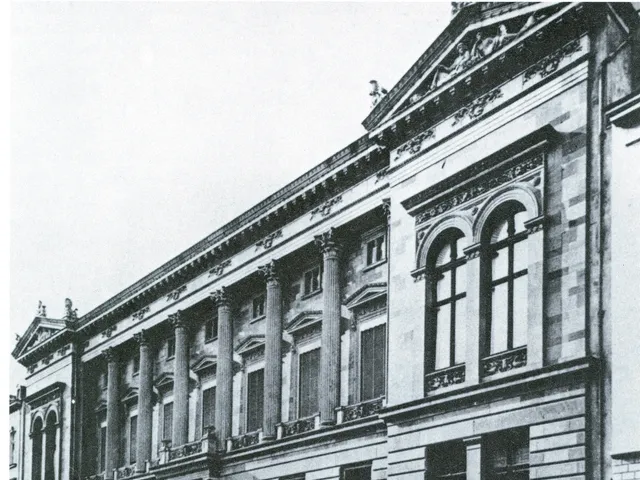
A. Schaaffhausen’sches Bank Palace
Cologne bank palace of 1859–1862 blending Neoclassical form with Italian Renaissance splendor—destroyed in the war.
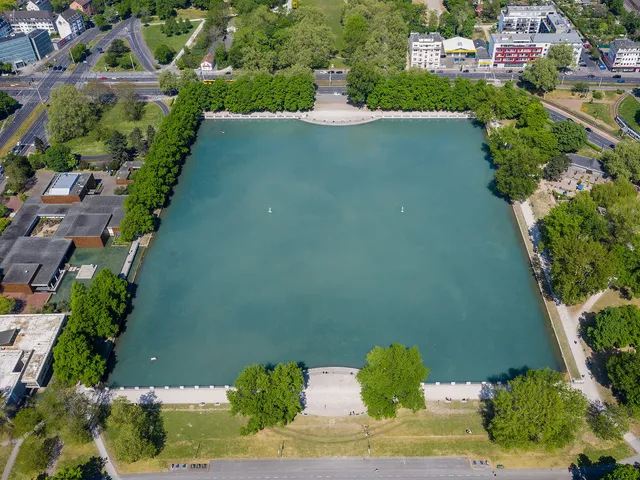
Aachener Weiher
A 1920s artificial lake in Cologne's Inner Green Belt, framed by a beer garden, East Asian art, and the Hiroshima-Nagasaki Park.
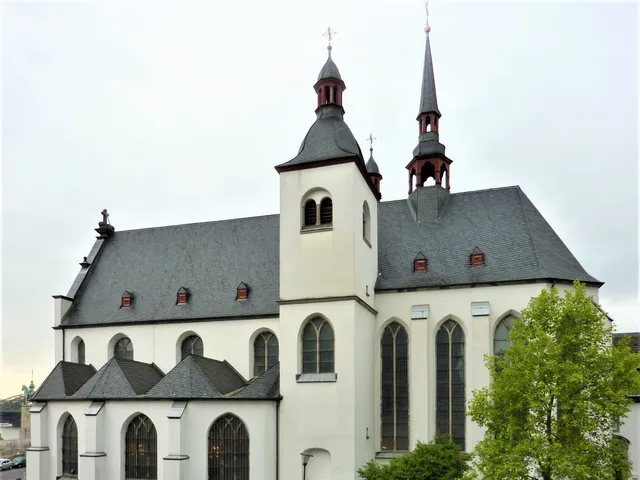
Deutz Abbey
since 1001Cologne's Deutz Abbey, founded in 1002, is the original home of the golden Heribert Shrine and today serves as a Greek Orthodox church.
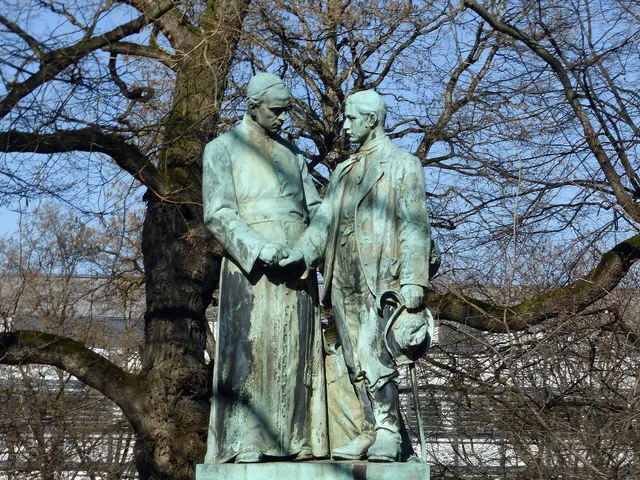
Adolph Kolping Monument
since 1903Bronze memorial to Adolph Kolping — the 'Father of Journeymen' and founder of the Catholic journeymen's associations — standing before Cologne's Minorite Church, where he is buried.
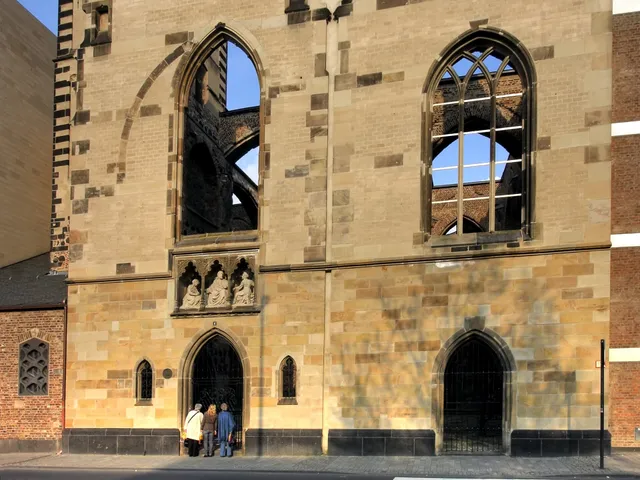
Alt St. Alban – Church Ruin and War Memorial at Quatermarkt
since 1200Preserved Romanesque church ruin at Quatermarkt; left unrestored after WWII bombing and consecrated as a memorial to the war dead in 1959.
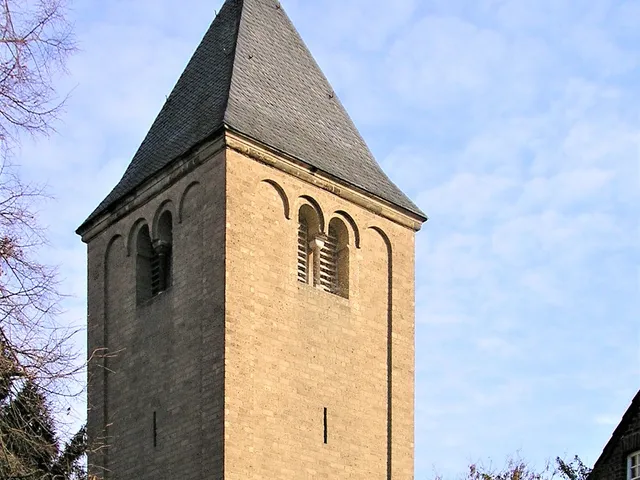
Alt St. Cornelius
since 1833Only the Romanesque tower survives from this former parish church in Cologne's Rath/Heumar district, a remnant of its medieval predecessor.
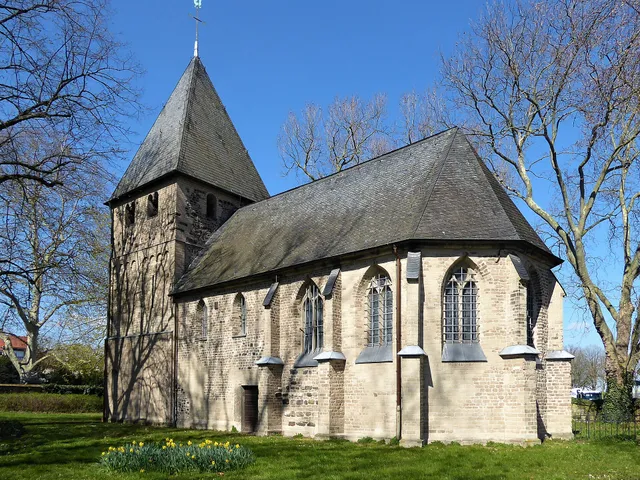
Alt St. Katharina (Cologne-Niehl)
The "Niehler Dömchen": a 12th-century Romanesque basilica on the Rhine riverbank, featuring a Gothic choir and listed heritage status.
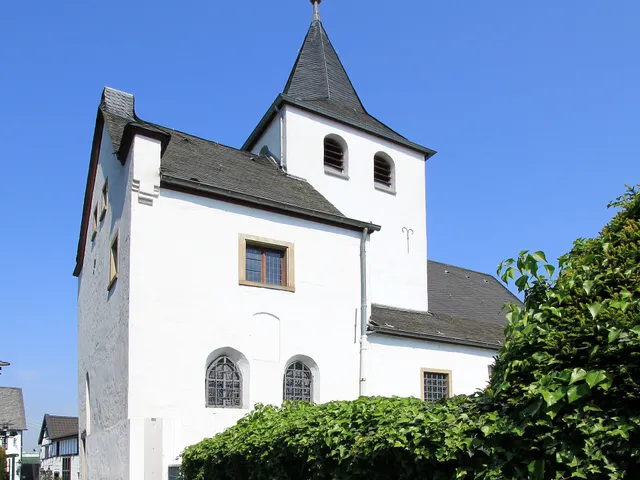
Alt St. Maternus
since 950Romanesque 'little chapel' on the Rhine — one of 13 small former village churches outside Cologne's medieval city walls.
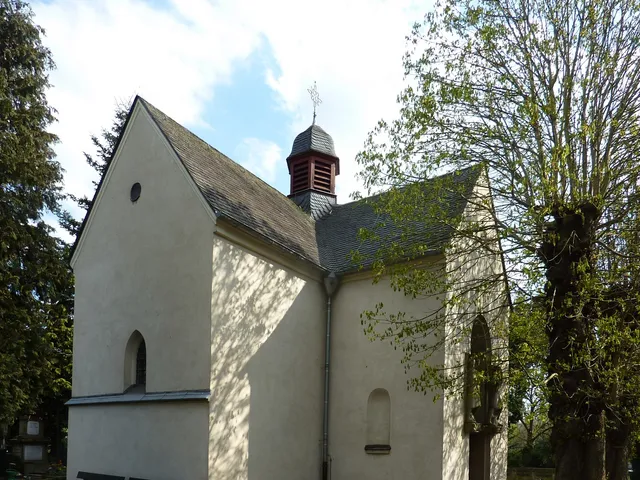
Alt St. Mauritius (Cologne-Buchheim)
Romanesque cemetery chapel and surviving remnant of Buchheim's former parish church — featuring a semicircular apse from around 1200.
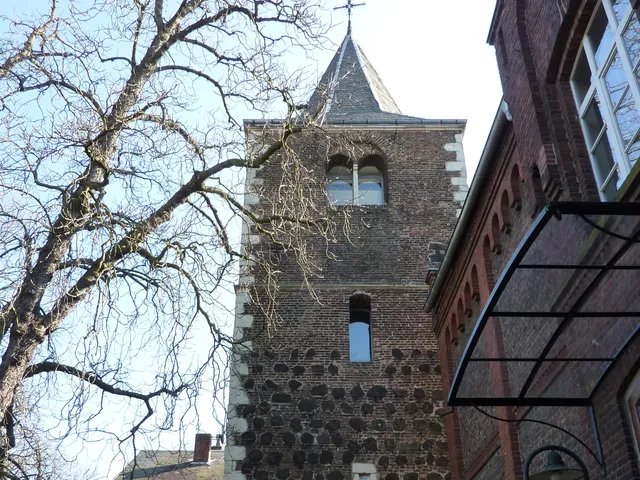
Alt St. Pankratius (Cologne-Worringen)
Former parish church of Cologne-Worringen with a Gothic nave and a controversially dated west tower — now converted into a residential house.
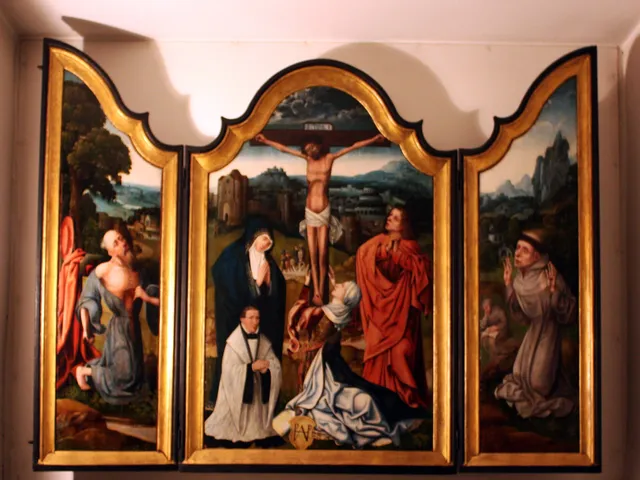
Alt St. Paul
Romanesque parish church in medieval Cologne, dissolved in 1803 and demolished in 1807 — remnants of its furnishings survive today in St. Andreas.
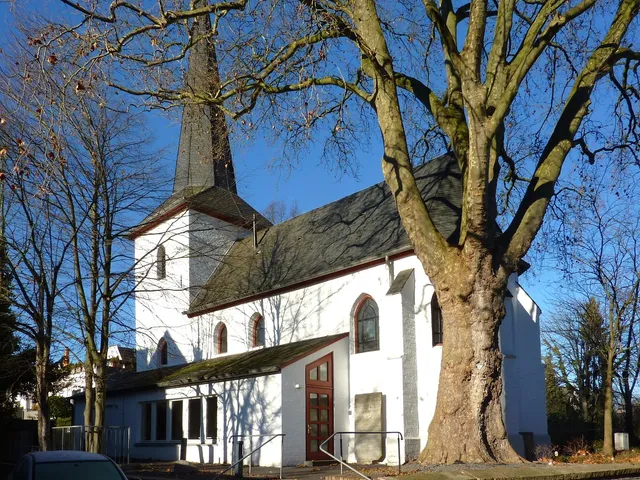
Alte Dorfkirche Köln-Junkersdorf
Medieval village church with a Gothic choir — once the parish church of St. Pankratius, now a small chapel after centuries of fire, war, and reinvention.
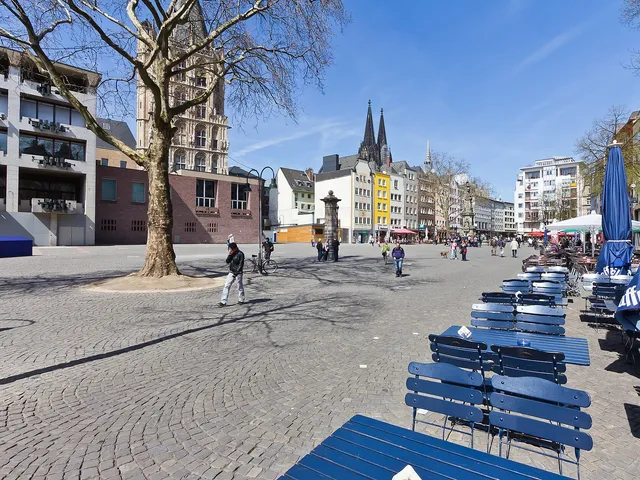
Alter Markt
Historic square in Cologne's Altstadt-Nord with a medieval-looking row of buildings — documented as Cologne's market since 922.
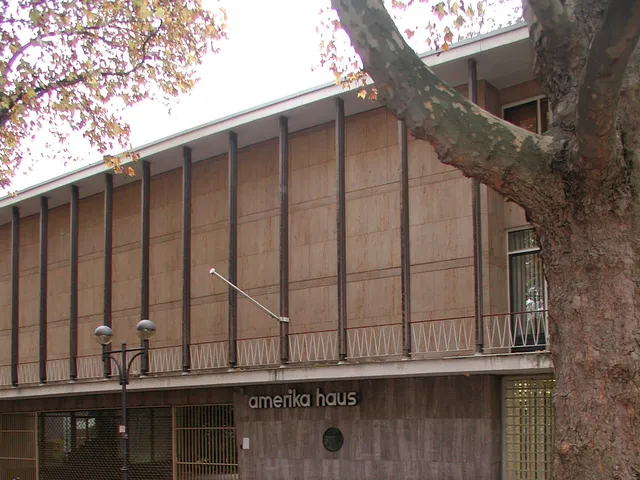
Amerika Haus
From 1955 to 2007 Cologne's hub for US cultural exchange — the last of the once 57 Amerika Houses still operating in Germany.
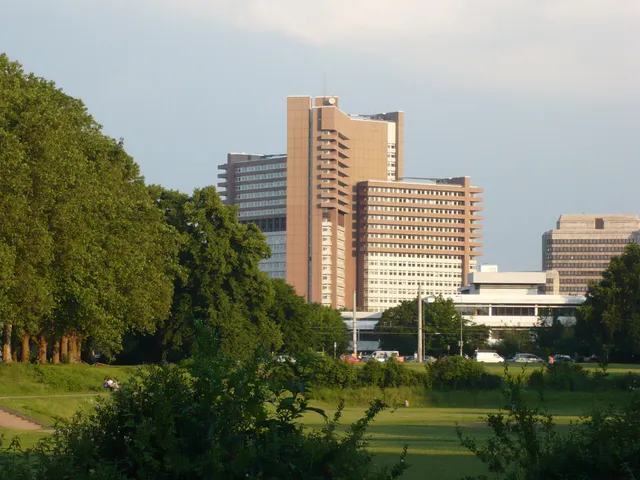
Amtsgericht Köln
The largest court in North Rhine-Westphalia and Germany's second-largest district court after Munich — also handling cases from Cologne/Bonn Airport.
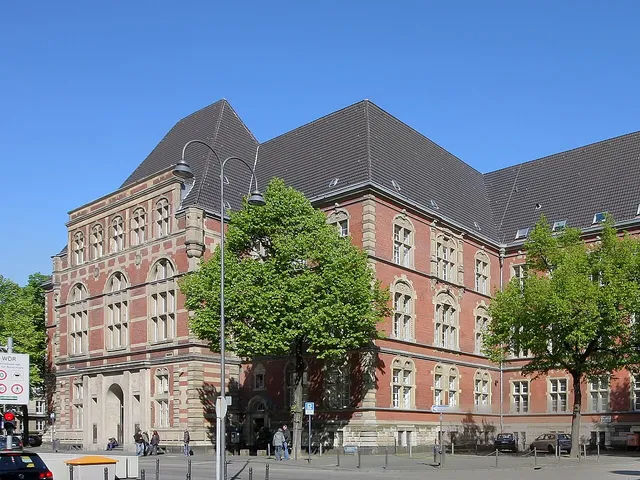
Appellhofplatz
Cologne square named after the Court of Appeal — built on the site of a Roman gate tower and shaped by centuries of landmark court cases.
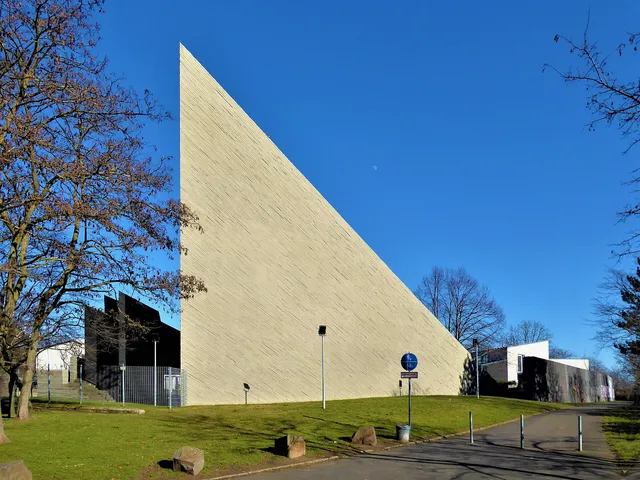
Auferstehungskirche (Cologne-Buchforst)
since 1965Listed Brutalist church from 1968 with a striking tetrahedral form, now operating as the 'Kulturkirche Ost' cultural venue for readings, music, and cabaret.
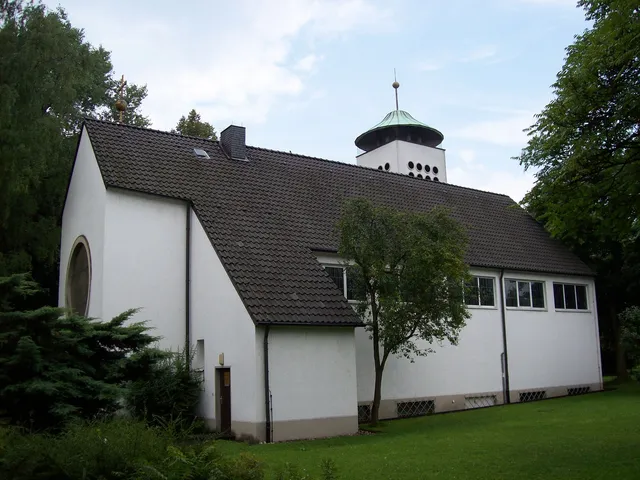
Church of the Resurrection Cologne-Ostheim
Protestant church with a round altar window and side light bands, consecrated in 1954 to a design by Gerhard Langmaack.
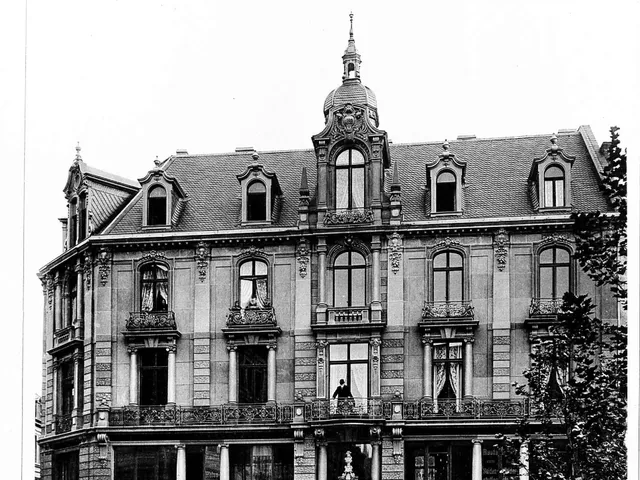
Augustinerplatz 12
On 20 April 1896, Germany's very first film screening took place here — twelve French short films in a rented hall.
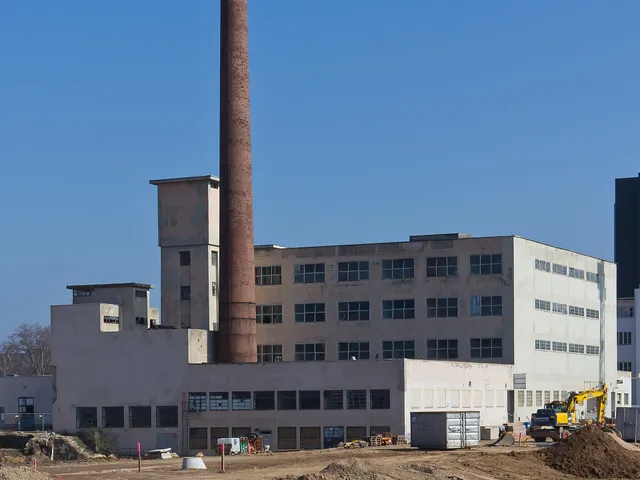
Autoren Galerie Kostka
A Cologne water tower transformed into a walk-in sculpture, hosting immersive image, sound, and light installations for nearly a decade.
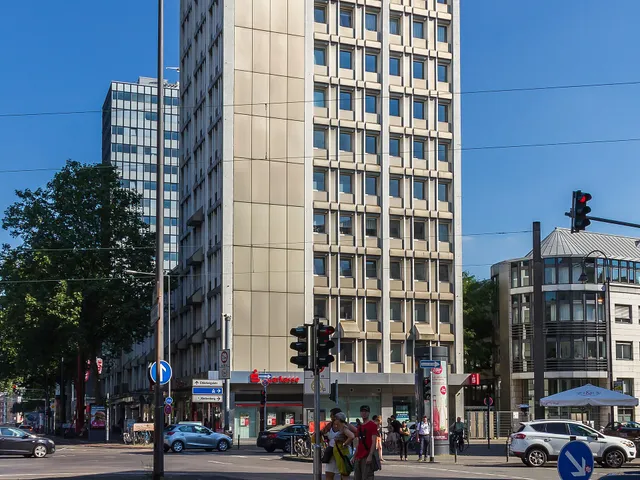
Barbarossaplatz
Traffic hub on Cologne's Kölner Ringe ring road, named after Frederick Barbarossa in 1883, with a tram stop encircled by multi-lane carriageways.
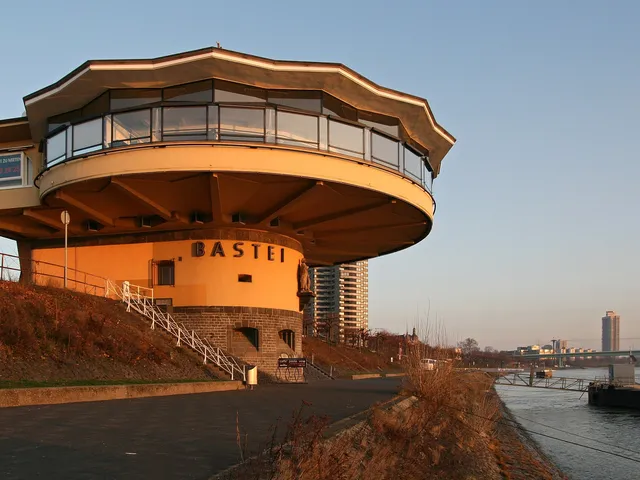
Bastei
since 1924Expressionist observation restaurant (1924) on a Prussian caponier — superstructure cantilevers 8 m beyond its footprint; closed since 2019.
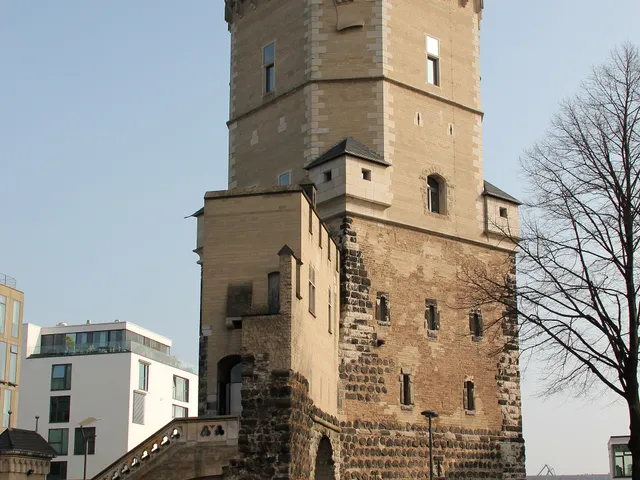
Bayenturm
since 1220One of Cologne's few surviving medieval fortification towers, built c. 1220 on the Rhine — today home to the FrauenMediaTurm foundation.
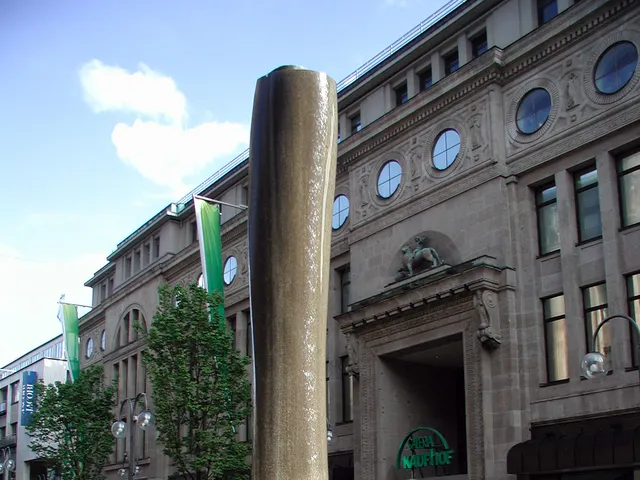
Bierbrunnen
since 1972A 1972 fountain on Schildergasse featuring a granite column wrapped in a thin veil of water — named after a brief beer tap that once operated at the site.
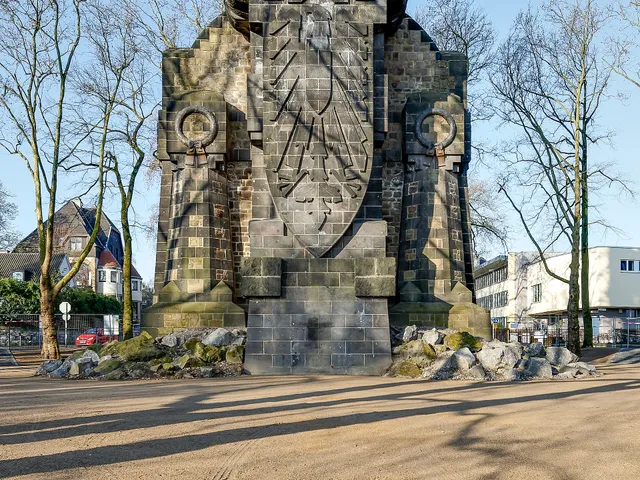
Bismarckturm
since 1902A Bismarck monument in Cologne-Marienburg designed as a fire column — featuring a monolithic figure of Bismarck as Roland in armour with an eagle shield.
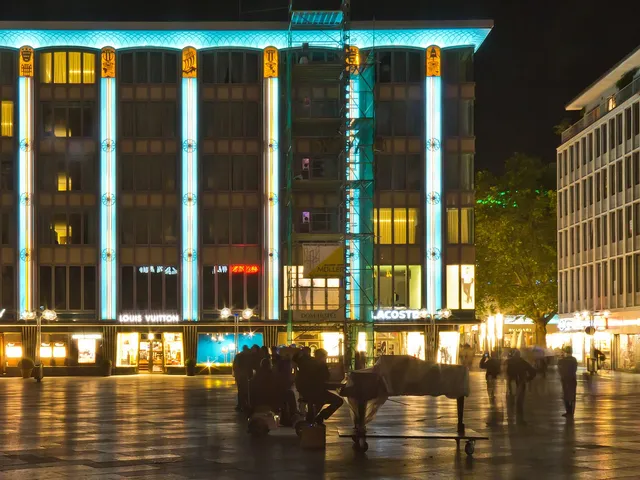
Blau-Gold-Haus
Right next to Cologne Cathedral stands the Blau-Gold-Haus, a turquoise-and-gold office and commercial building from 1952 that is a listed monument and a notable example of German post-war modernism, today home to hotel suites and luxury boutiques.
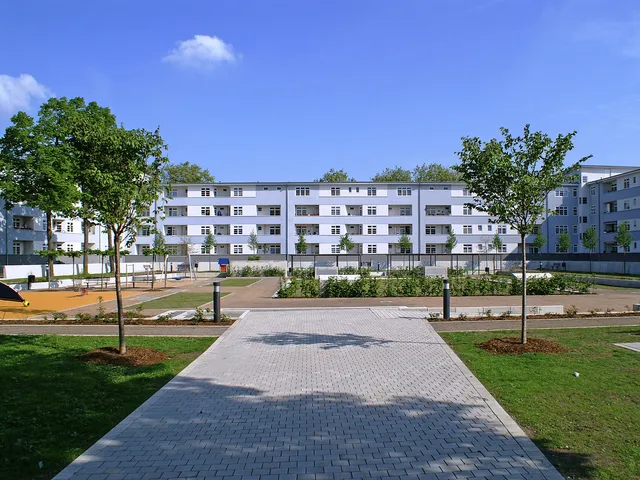
Blauer Hof
Housing estate in Cologne-Buchforst modeled on Dutch courtyard housing, famous for its blue-toned courtyard façades.
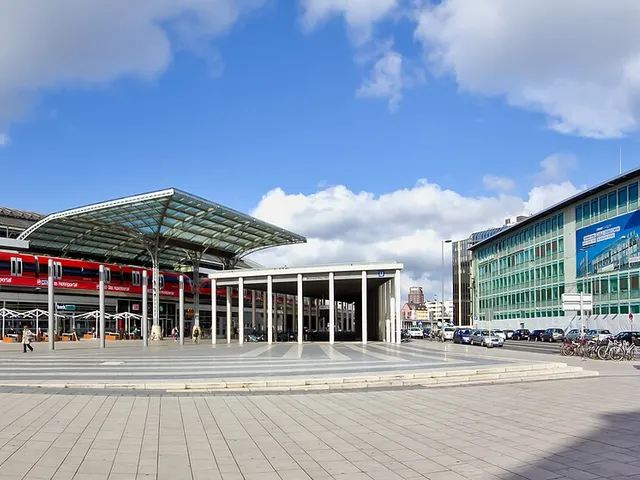
Breslauer Platz
The northern forecourt of Cologne Central Station — home to the city's main bus terminal and the Musical Dome, Cologne's largest theatre.
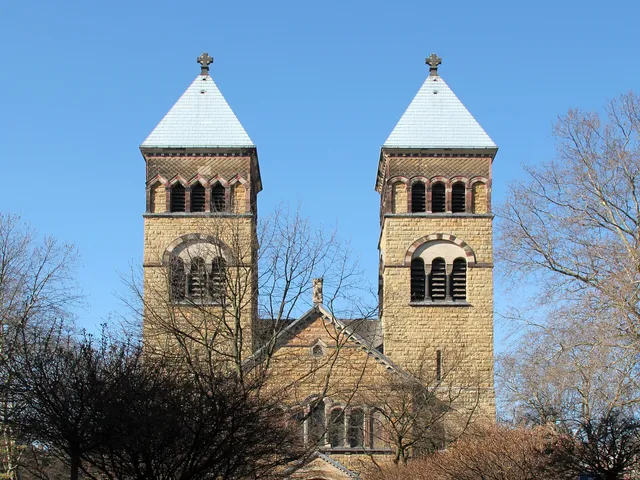
Brüsseler Platz
The heart of Cologne's Belgian Quarter, defined by the Neo-Romanesque church of St. Michael — a vibrant social hub and the scene of a long-running noise dispute.
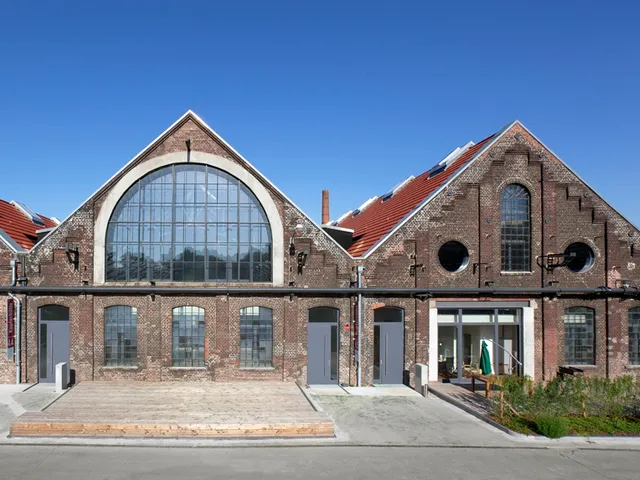
Carlswerk, Cologne
Former cable factory in Cologne-Mülheim where the first transatlantic telephone cable was made in 1904 – now a business campus and cultural venue.
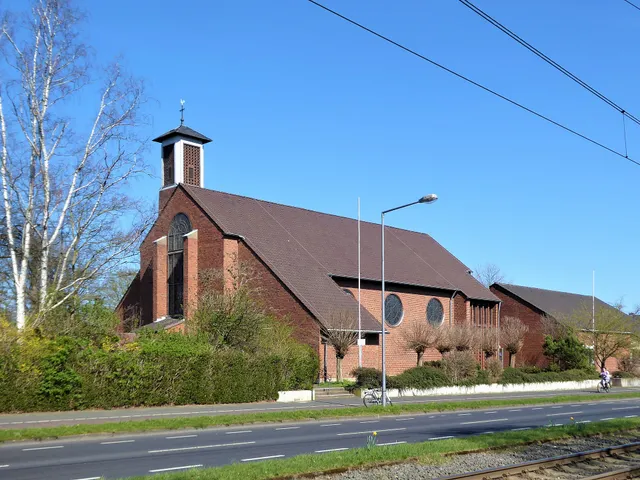
Christ König
1951 Cologne church whose V-shaped timber trusses evoke the Bethlehem stable — popularly known as the Christmas Church.
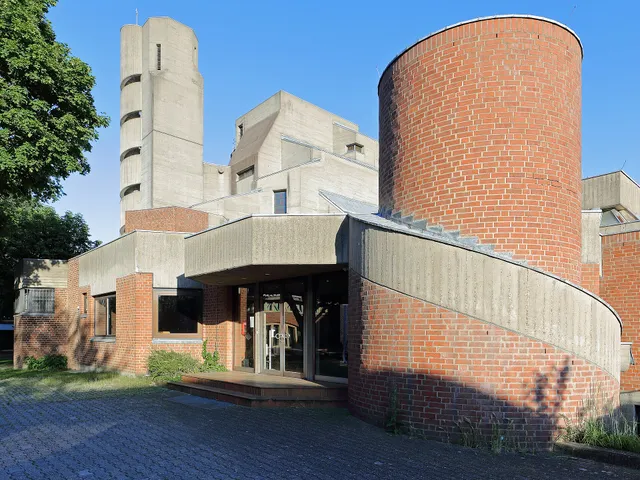
Christi Auferstehung (Lindenthal)
since 1968Sculptural concrete church by Gottfried Böhm at the head of the Lindenthal Canal – with a cave-like interior of branching pillars.
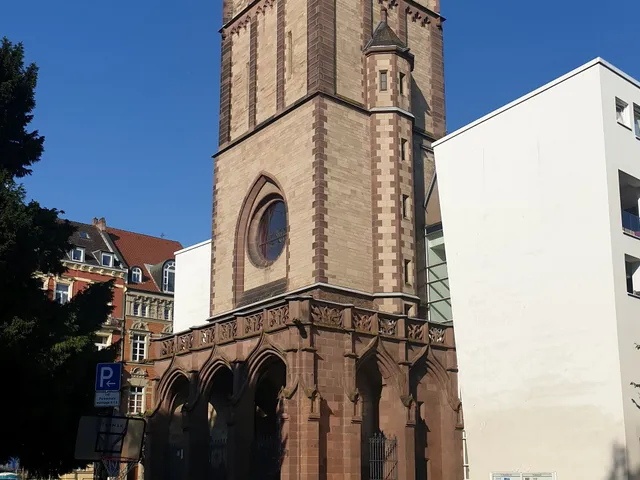
Christuskirche
since 1891Protestant church in the Belgian Quarter: a historic Neo-Gothic tower fronting a nave that was newly consecrated in 2016.
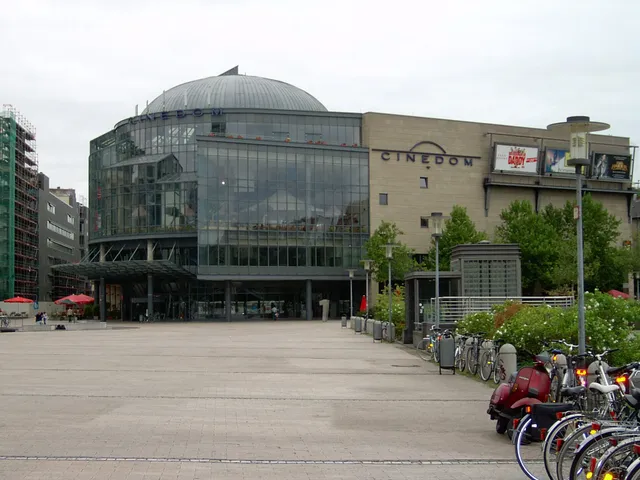
Cinedom
Multiplex cinema in Cologne's Mediapark — beneath the dome of its glazed rotunda, 3,200 diodes once traced the northern night sky.
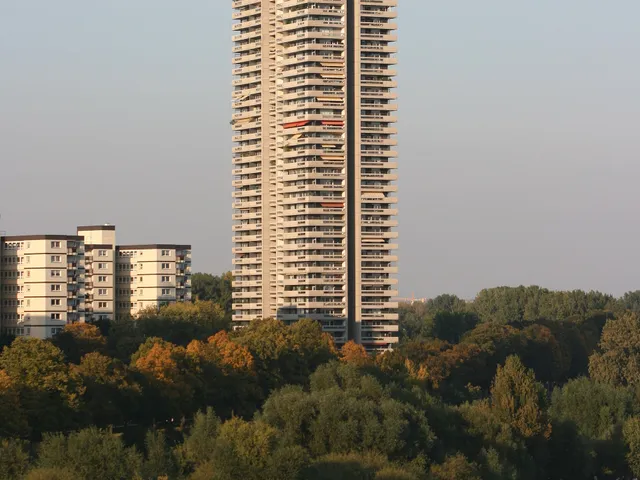
Colonia-Haus
since 1973Germany's second-tallest residential skyscraper, right on the Rhine in Riehl — at 155 m with antenna, almost as tall as Cologne Cathedral (157 m).
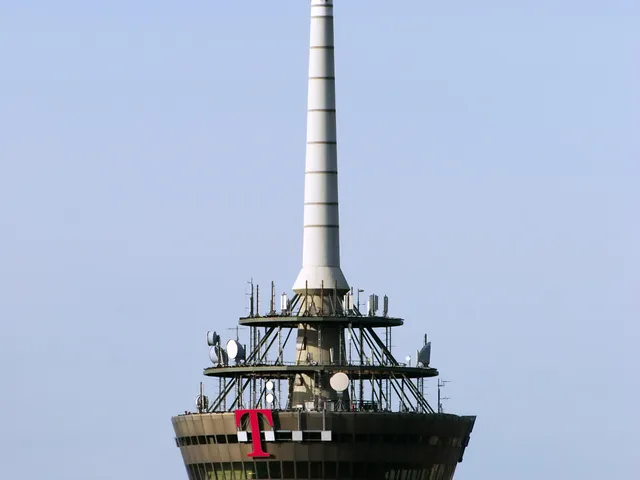
Colonius
since 1981At 266 metres, the tallest telecommunications tower in North Rhine-Westphalia — its revolving restaurant and observation deck have been closed for years.
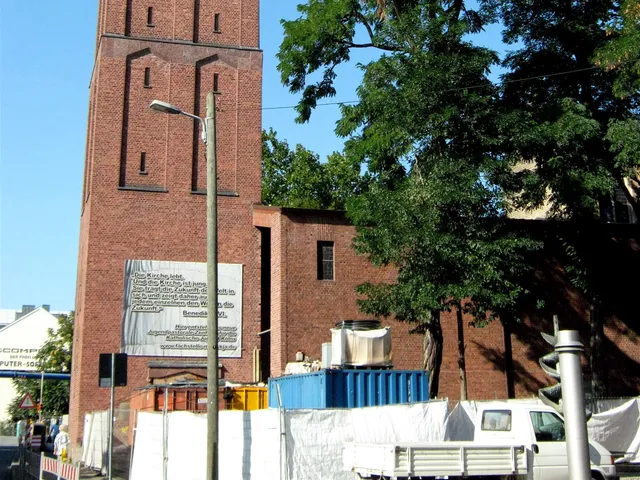
Crux (Youth Pastoral Centre)
Home of the 'church with the leaning tower' — Catholic youth pastoral centre in Cologne's Südstadt, combining a church, café, and community spaces under one roof.
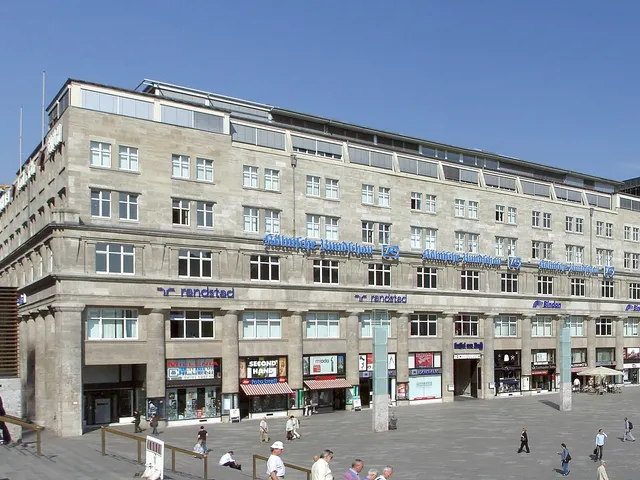
Deichmannhaus – Office Landmark by Cologne's Main Station
The Deichmannhaus is a seven-storey office and commercial building in Cologne's Altstadt-Nord, set right between the main station and the cathedral plaza. Its site on Trankgasse has carried more than five centuries of city history.
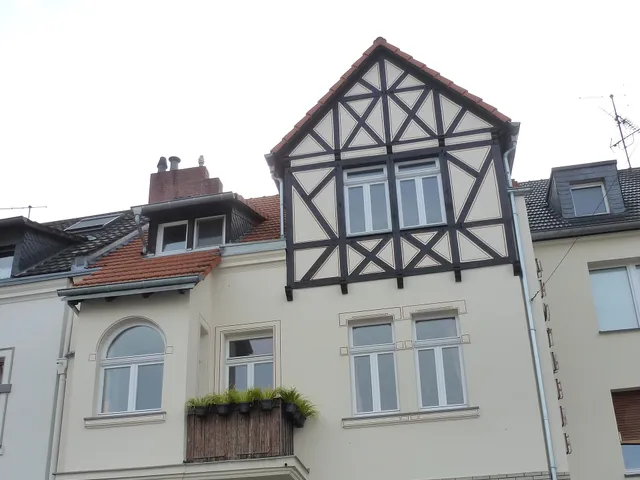
Dellbrücker Hauptstraße 143
Residential and commercial building from around 1907, blending Art Nouveau and Historicism with asymmetry and applied half-timbering.
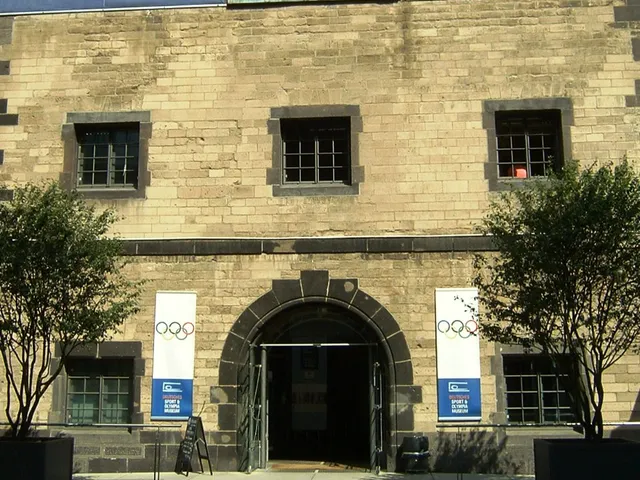
German Sport & Olympic Museum
since 1999Museum in Cologne's Rheinauhafen dedicated to the history of sport from antiquity to the present — with rooms on the Olympics, football, boxing, and more.
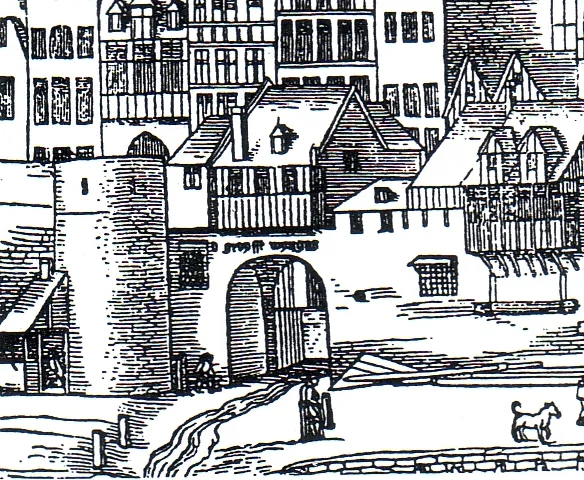
Deutschordenskirche St. Katharina
Long-demolished church of a Teutonic Order commandery in Altstadt-Süd; only the street An Sankt Katharinen preserves its name today.
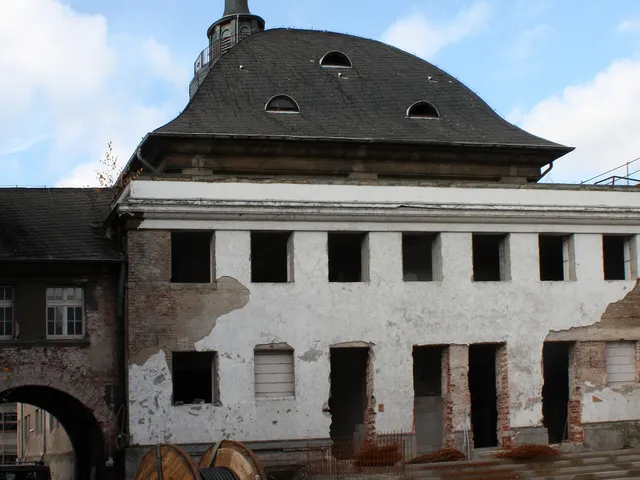
Deutz-Kalker Bad
since 1913A listed Art Nouveau indoor swimming hall from 1913 in Cologne-Deutz. Public bathing ended in 1996; the magnificent pool hall has been preserved.
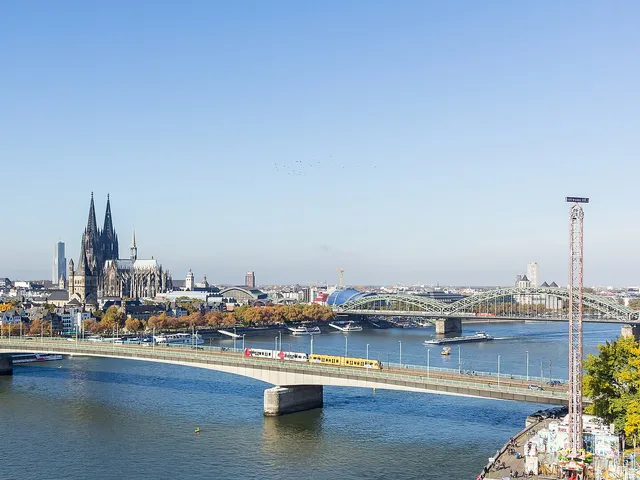
Deutz Bridge
The world's first steel box girder bridge (1947/48) – linking Heumarkt with Deutz; the Roman bridge once stood a few metres further north.
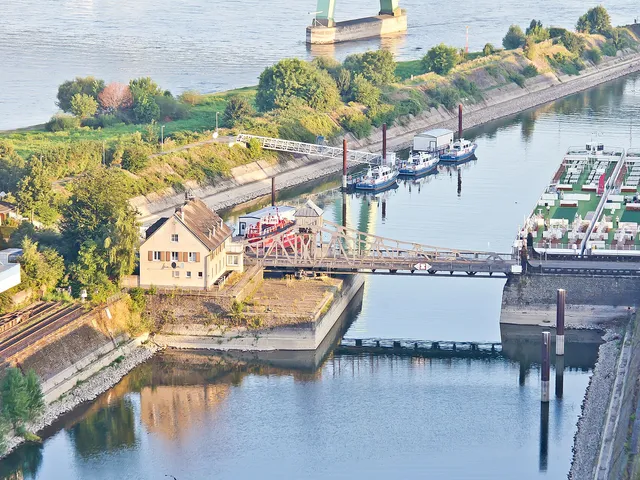
Deutzer Drehbrücke
since 1908Rotating steel bridge from 1908 over Deutz Harbour — one of two Cologne swing bridges, a listed technical monument with its original control house intact.
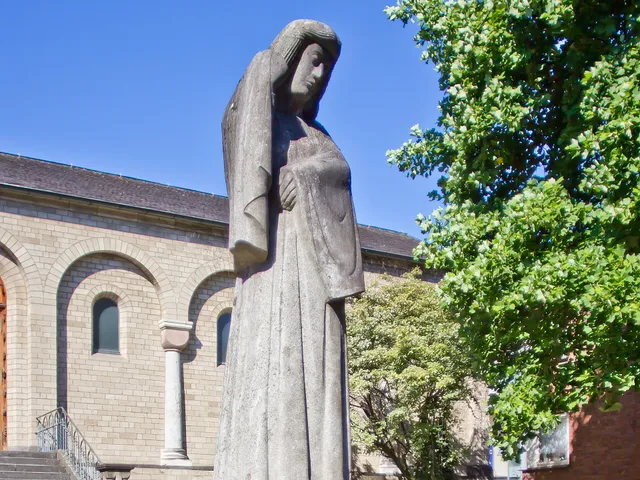
Die Trauernde
since 1949A 1949 sculpture by Gerhard Marcks standing in the churchyard of St. Maria im Kapitol, commemorating the victims of World War II.
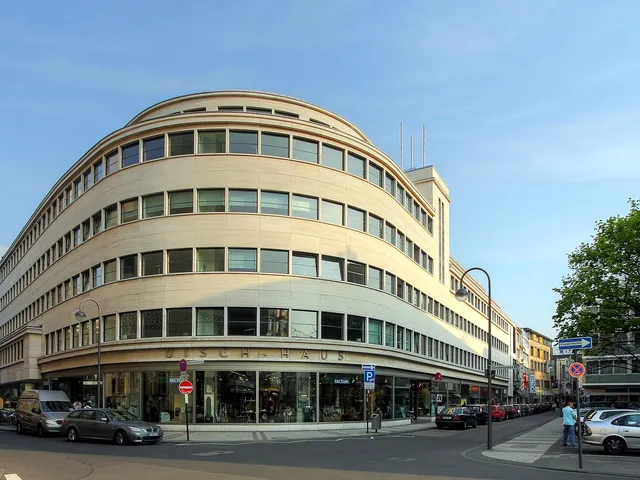
Disch-Haus
Cologne office and commercial building regarded as a major landmark of New Objectivity architecture, built on the site of a former luxury hotel.
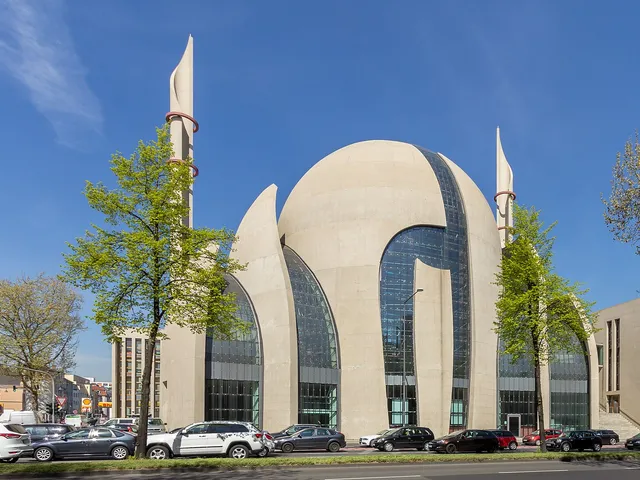
DITIB Central Mosque Cologne
since 2017Central mosque of DİTİB in Cologne-Ehrenfeld, inaugurated in 2018 in the presence of Erdoğan — with two 55-metre minarets and a grand domed hall.
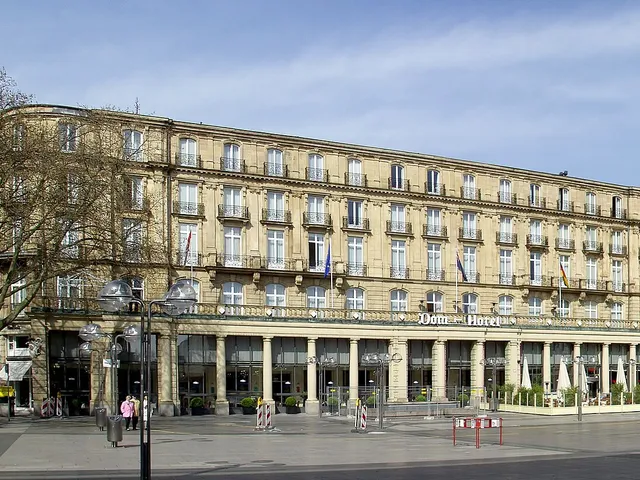
Dom-Hotel Cologne – a Grand Hotel by the Cathedral in Transition
since 1857Right beside Cologne Cathedral stands the Dom-Hotel, described as one of Europe's oldest grand hotels. It is currently closed and being rebuilt entirely behind its preserved façade, with reopening as the Althoff Dom Hotel Köln planned for 2027.
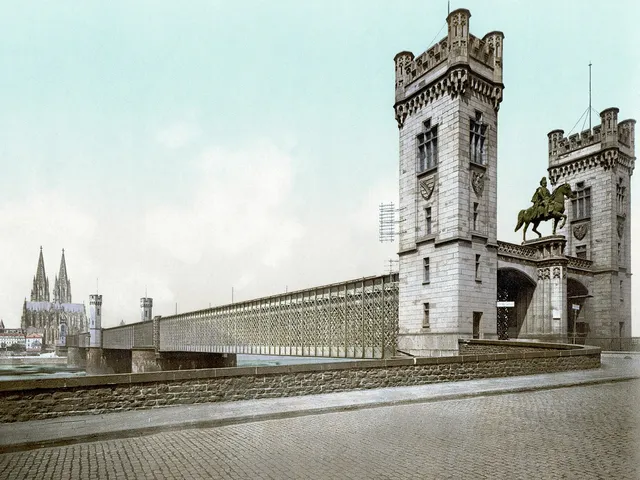
Dombrücke
since 1859Cologne's first permanent Rhine crossing since Roman times and direct predecessor of the Hohenzollern Bridge — nicknamed the 'Mousetrap' by locals.
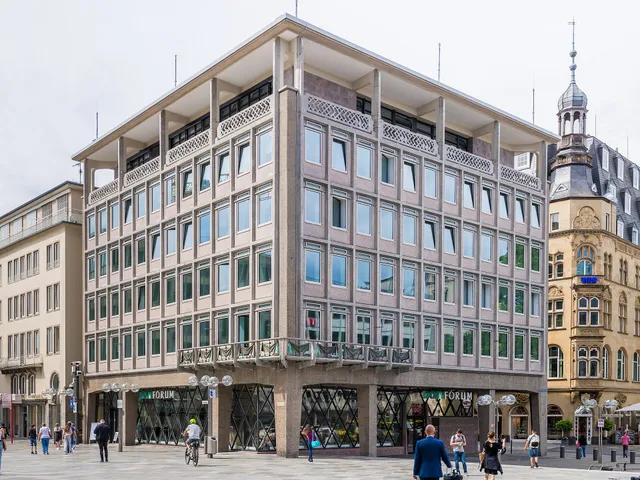
Domforum
Located on the Domplatte opposite the cathedral's west portal, the Domforum serves as the visitor centre of Cologne Cathedral and as a meeting and events centre of the city's Catholic Church.
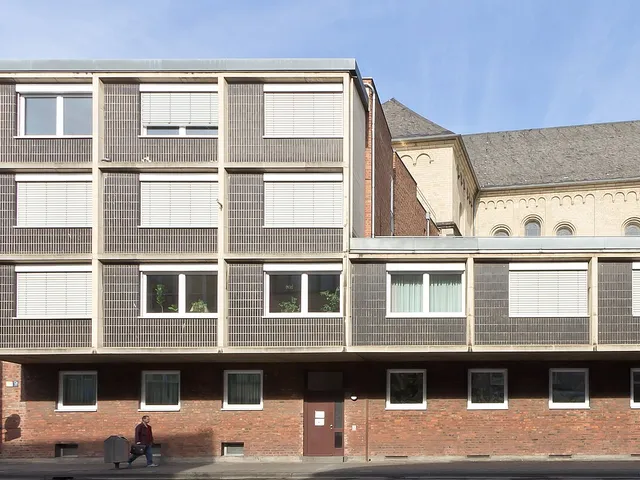
Dominican Monastery Cologne
Where Albertus Magnus taught and was buried: one of Germany's earliest Dominican monasteries, now lost to history.
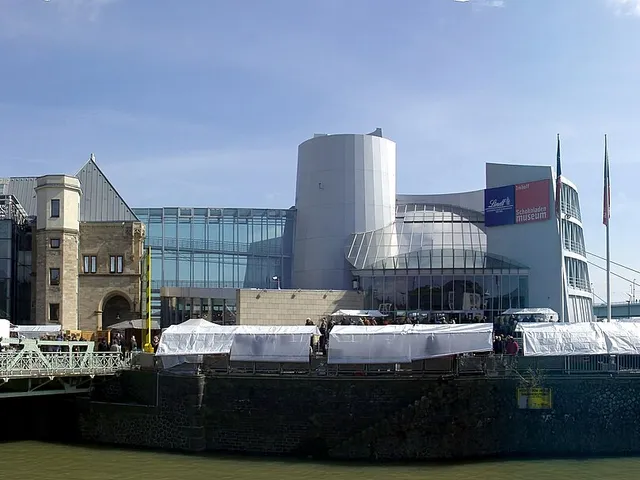
Swing Bridge in the Rheinauhafen
since 1896Cologne's oldest crossing over Rhine water: a listed swing bridge from 1896 that pivots aside using hydraulics powered from the Malakoff Tower.
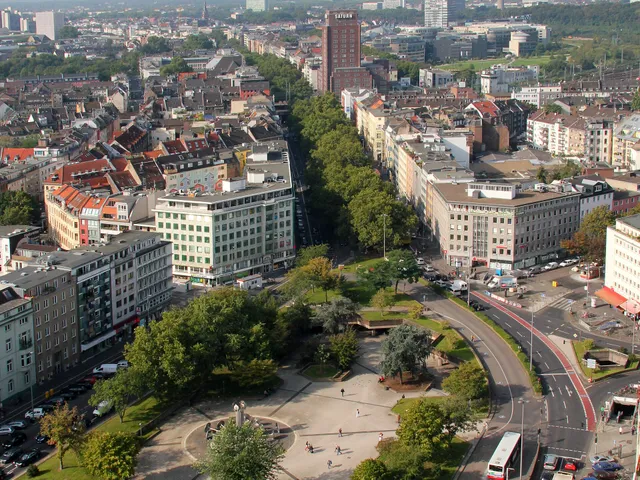
Ebertplatz
Square on Cologne's ring boulevards in Neustadt-Nord, laid out in the late 19th century where the city's demolished fortifications once stood.
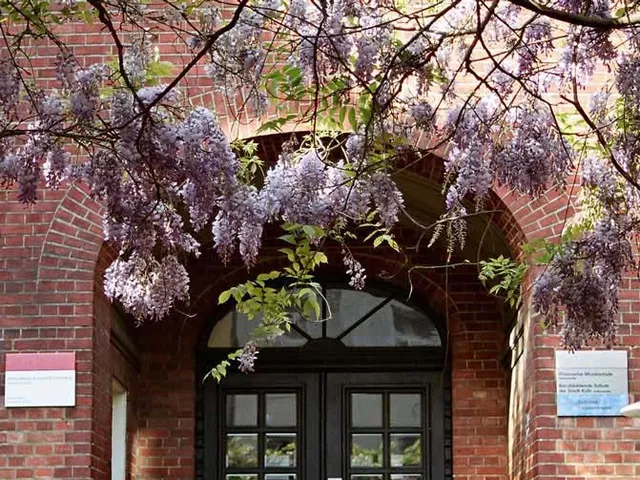
Former Straw Hat Factory Silberberg & Mayer
Listed 1912/13 factory building in Cologne-Sülz, its wings arranged around a white-tiled skylit hall.
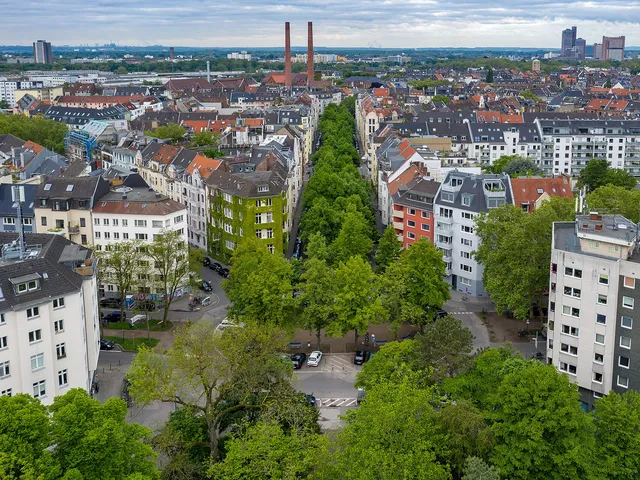
Eierplätzchen
A small oval square in Cologne's Südstadt where six streets meet like spokes — named not by city hall, but by the locals themselves.
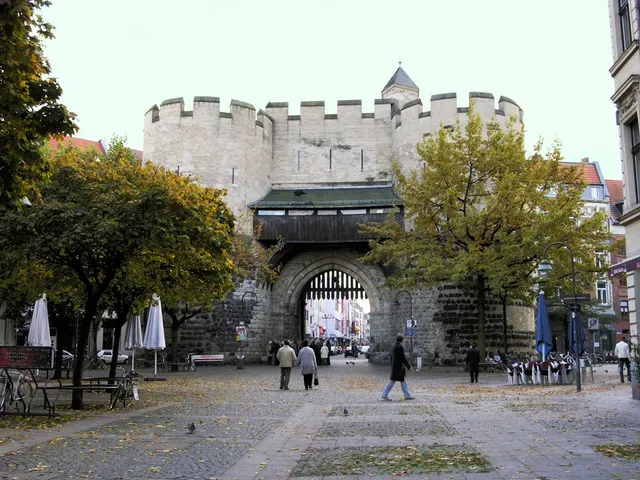
Eigelsteintorburg
since 1228One of four surviving gates of Cologne's medieval city wall — both Maria de' Medici and Napoleon once entered the city through this very gate.
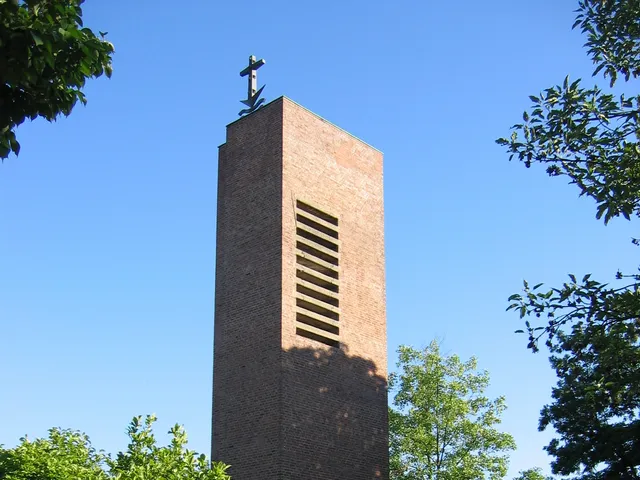
Church of the Redeemer (Rodenkirchen)
Protestant L-shaped church in Rodenkirchen with a 20-metre campanile; its three bells together carry the Christmas angels' greeting.
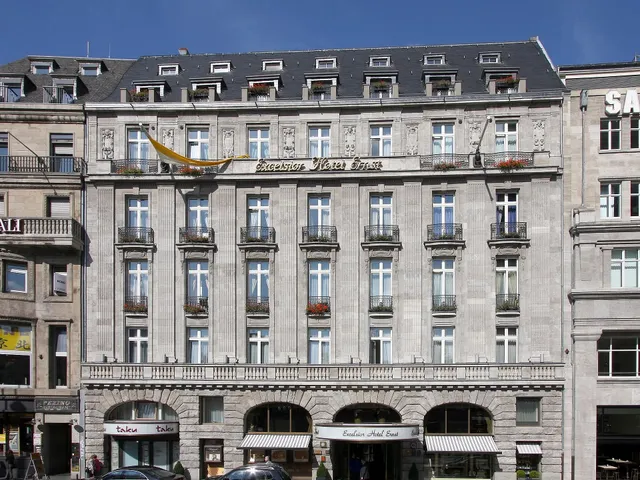
Excelsior Hotel Ernst
since 1863Storied five-star grand hotel dating from 1863, standing right beside Cologne Cathedral and family-owned for six generations.
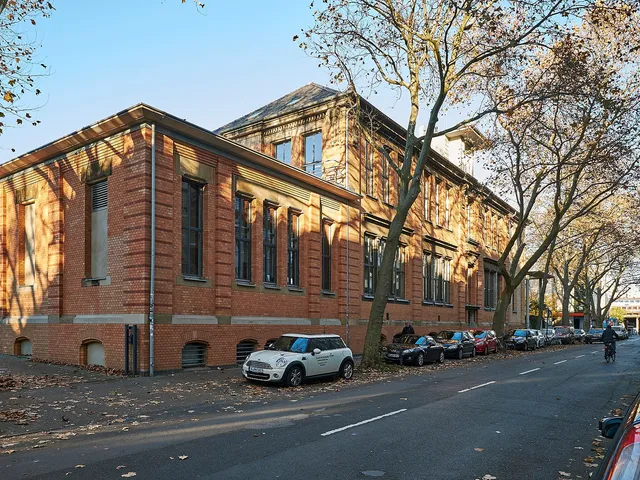
Filmhaus Köln
since 2021Hub for film culture combining a deliberately non-commercial cinema, film education, and professional training — housed in a former freight depot building from 1891.
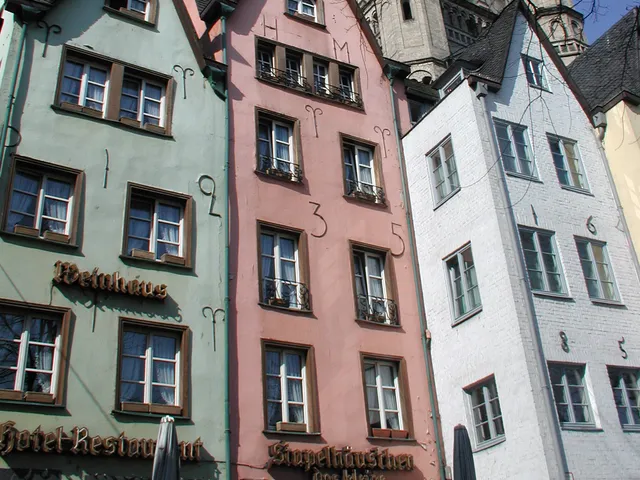
Fischmarkt
Historic square on the Rhine riverfront in Cologne's Altstadt — for centuries the heart of the city's fish trade, first recorded as "forum piscium" in the 12th century.
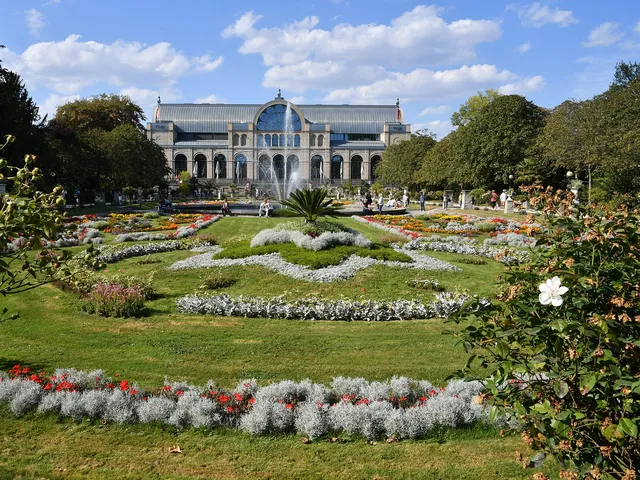
Flora
since 1864Cologne's botanical garden centred on the 1864 glass festival hall 'Flora' — a Lenné-designed park with over 10,000 plant species across more than 11 hectares.
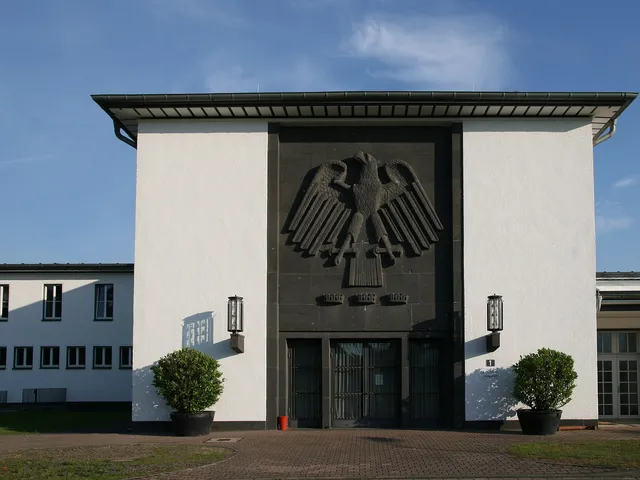
Cologne Butzweilerhof Airport
since 1926Cologne's first civil airport in the Ossendorf district — today a listed heritage ensemble and home to MOTORWORLD Cologne.
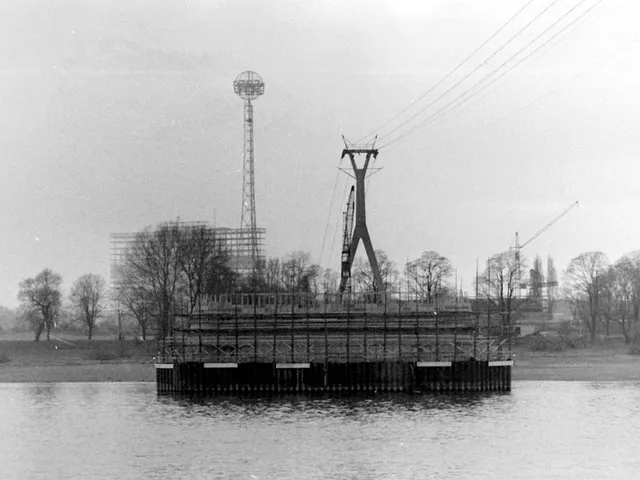
Fordturm
Former 112 m steel lattice tower in Cologne-Deutz, crowned by a rotating "Ford" globe — built in 1950 and demolished just thirteen years later.
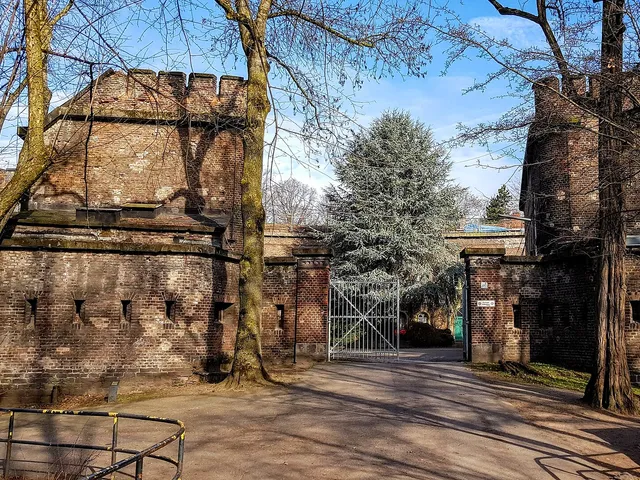
Fort X of the Cologne Fortification Ring
since 1819The best-preserved Prussian fort of Cologne's inner defensive ring — now a 'green fort' with a rose garden set within a generous parkland in Neustadt-Nord.
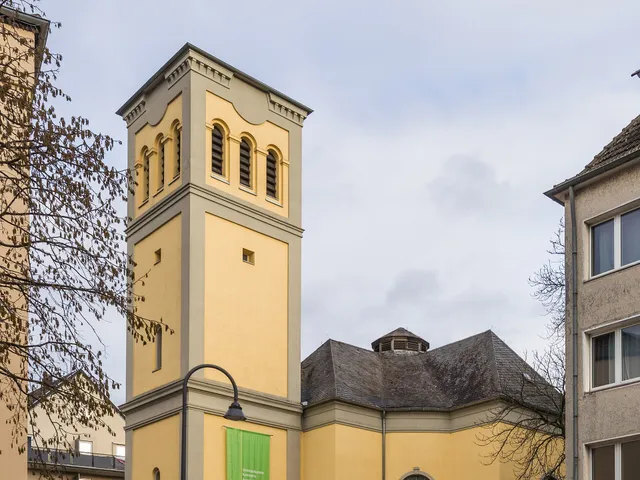
Friedenskirche (Köln-Mülheim)
since 1896Oldest Protestant church building in present-day Cologne – named after the peaceful union of two congregations in 1837.
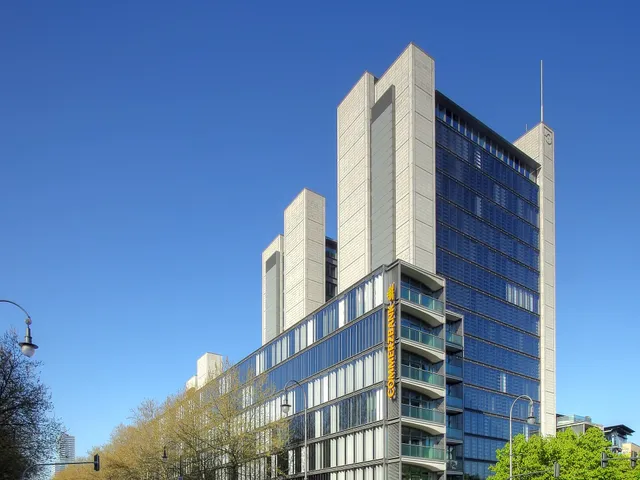
Friesenplatz
Square on Cologne's ring boulevards at the start of Venloer Straße — gateway to the Belgian Quarter and once the haunt of Cologne's underworld.
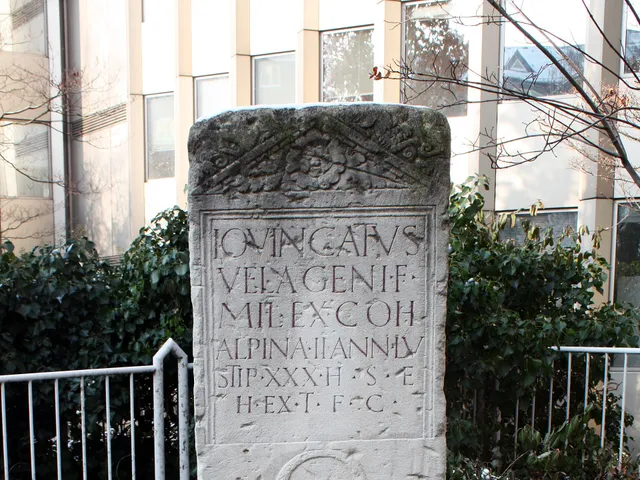
Friesentor
since 1244Cologne's only hexagonal city gate, built around 1244 at what is now Friesenplatz — a uniquely shaped landmark of the medieval fortifications.
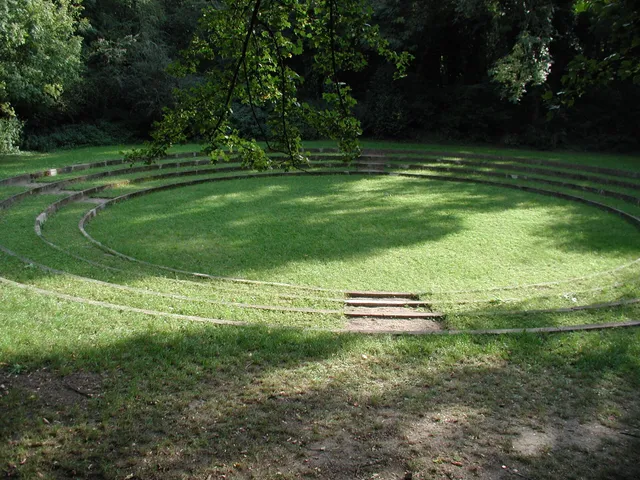
Volkspark Raderthal
Laid out by Fritz Encke from 1922, this listed park features a natural theatre, reading garden and dance lawn — a landmark of social green space in Cologne's south.
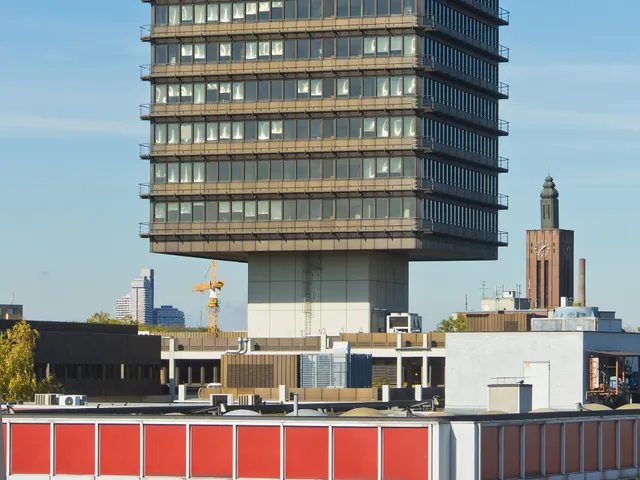
Funkhaus Köln (Deutschlandfunk Tower)
since 1978The 102-metre Funkhaus Köln in the Raderthal district has housed the studios and editorial offices of Deutschlandfunk since 1979. Listed as a protected monument since 2024, the tower with its unusual suspended structure can be explored on regular public guided tours.
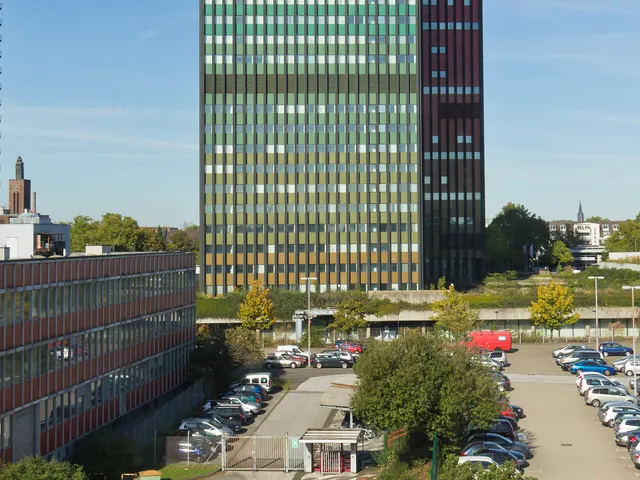
Funkhaus am Raderberggürtel
Former headquarters of Deutsche Welle in Cologne, and at 138 metres the tallest building ever demolished in Germany.
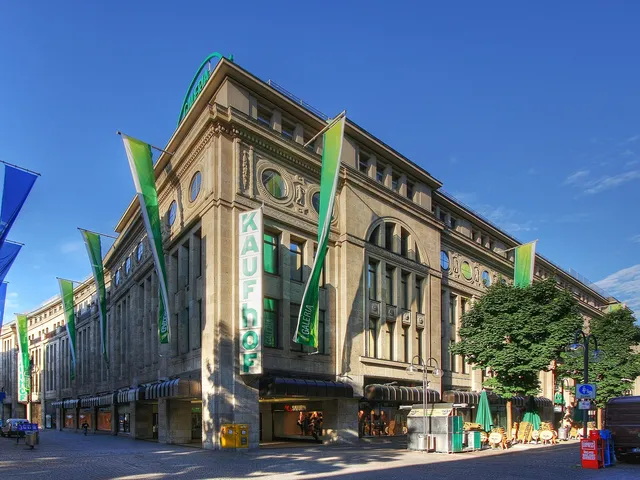
Galeria Cologne Hohe Strasse
1912–1914 department store where Germany's first-ever department store escalator went into operation in 1925.
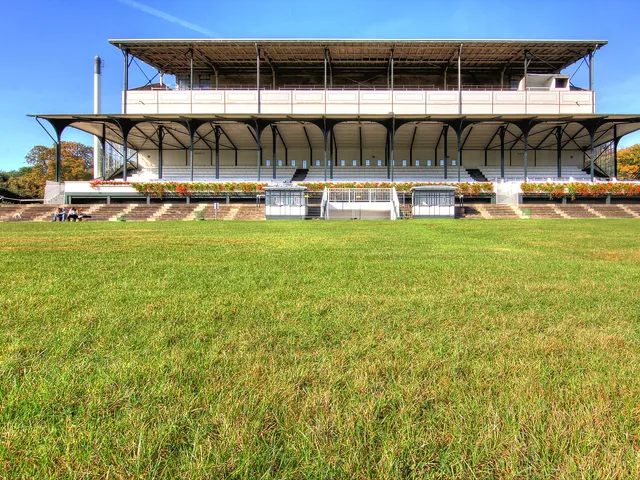
Galopprennbahn Weidenpesch
Cologne's oldest sports venue: a gallop racecourse open since 1898, hosting internationally significant races and a landmark-listed historic football stand.
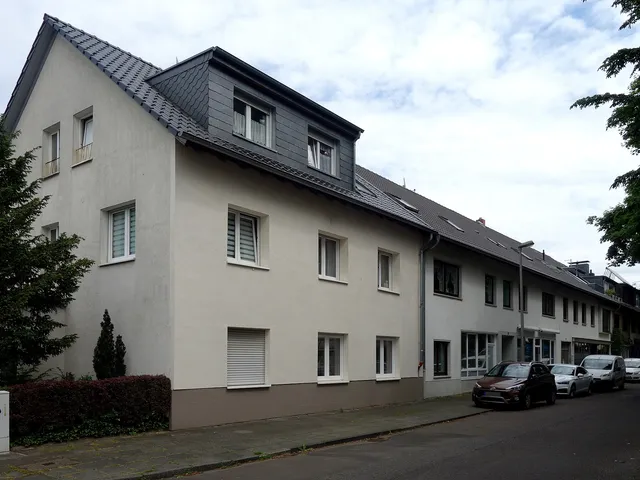
Gartenstadt-Nord
Residential estate in Cologne's Longerich district, whose newer section was built for the 1956 Katholikentag and is known as the Katholikentagssiedlung.
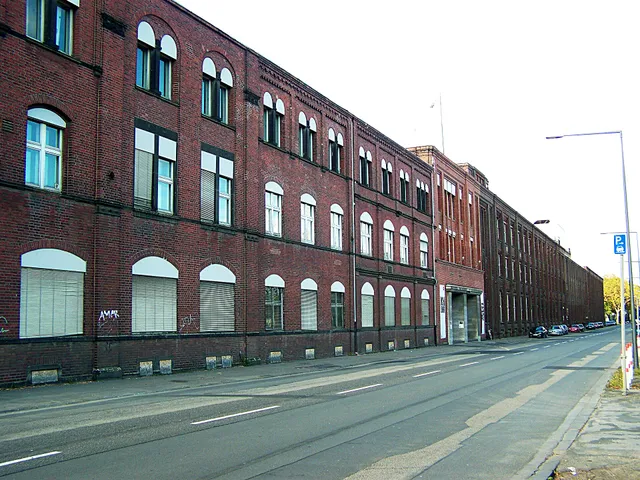
Deutz Gas Engine Factory
since 1864On this historic industrial site in Cologne-Mülheim, regarded as the „birthplace of global motorisation“, the raum13 cultural initiative is now at work – amid listed buildings such as the Möhring Pavilion at the Mülheim harbour.
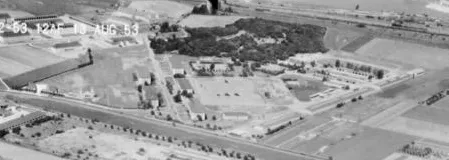
Gereon-Kaserne
since 1937Bundeswehr barracks in Cologne housing the military leadership assessment centre — renamed from Mudra-Kaserne in 2022.
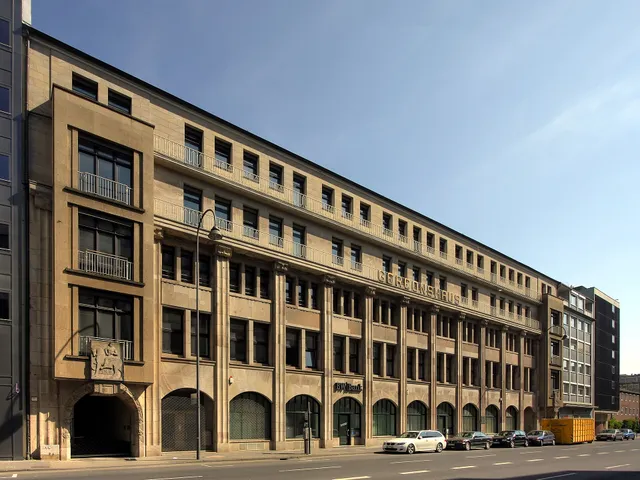
Gereonshaus
Monumental office building of 1909/10 by Carl Moritz, now home to the German Association of Cities and Towns.
 © Architecten- und Ingenieur-Verein für Niederrhein und Westfalen Köln · Public domain
Gereonstor
since 1215Medieval twin-tower gate of Cologne's city wall — bricked up for over 400 years, once the city's strictest prison, demolished in 1881.
Gerling Ring-Karree
since 2001A 55-metre office tower on Hohenzollernring designed by Norman Foster — with a hidden lake and garden reserved exclusively for residents.
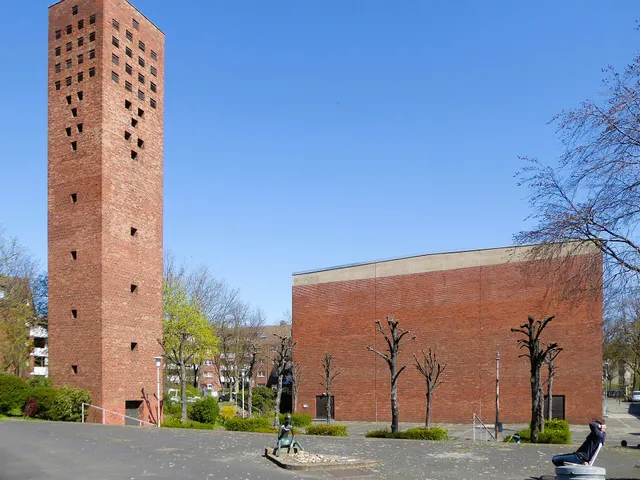
St. Bartholomew's Burial Church
since 1959Former parish church in Cologne-Ehrenfeld, used since 2014 as a columbarium with a prayer room.
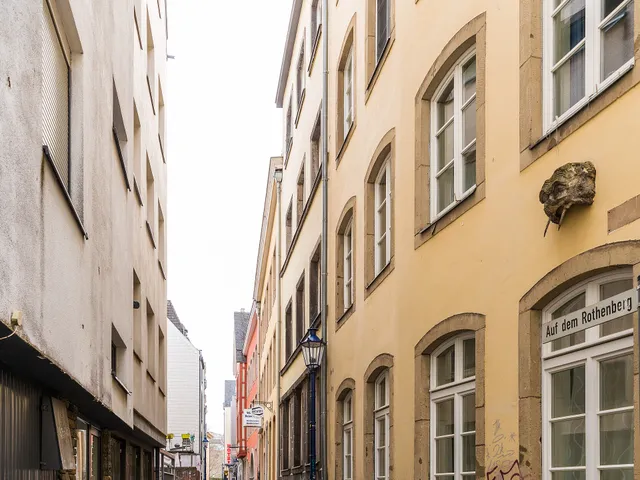
Grinkopf
Grotesque stone grimace masks adorning old Cologne houses—descendants of Roman terracotta masks made nearby 2,000 years ago.
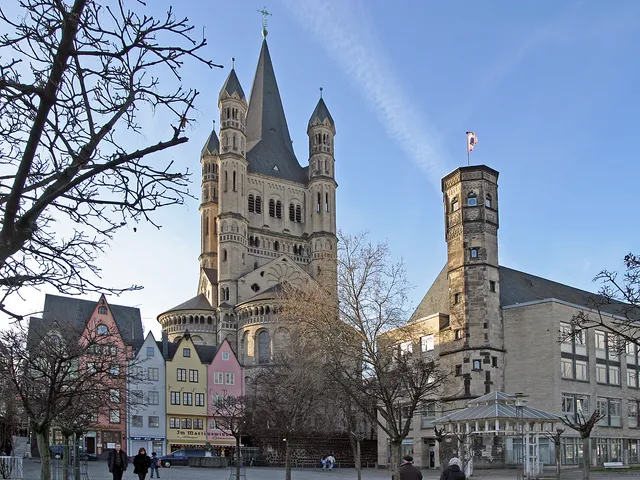
Groß St. Martin
since 1150Romanesque basilica in Cologne's Old Town with a cloverleaf-shaped east choir and striking crossing tower — built over Roman foundations.
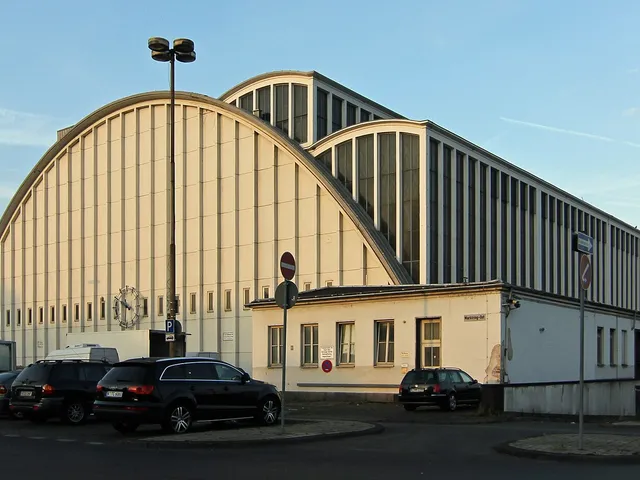
Cologne Wholesale Market
Former wholesale market in Cologne-Raderberg with a 132-metre parabolic vaulted hall — until its closure in late 2025, one of Germany's largest.
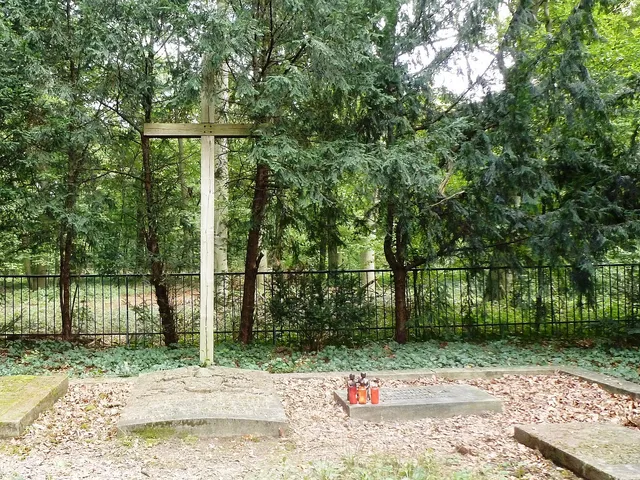
Gut Mielenforst
Former knight's estate at the edge of Königsforst, its Neo-Renaissance manor house now the heart of a residential complex.
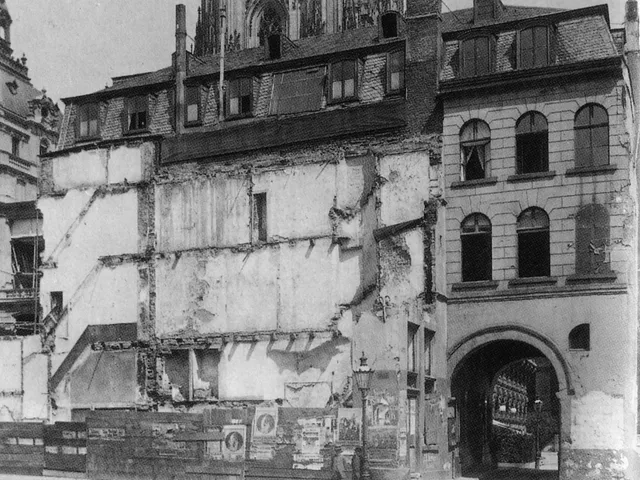
Hacht (Prison)
Archbishop's court and prison on today's Cathedral Square — criminals were locked up here and women tried as witches.
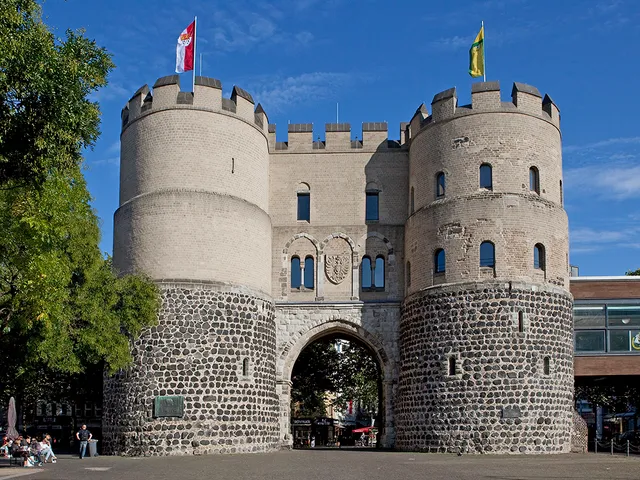
Hahnentorburg
since 1220Medieval twin-tower gate at Rudolfplatz — Cologne's western gateway, through which crowned kings entered the city after their coronation in Aachen.
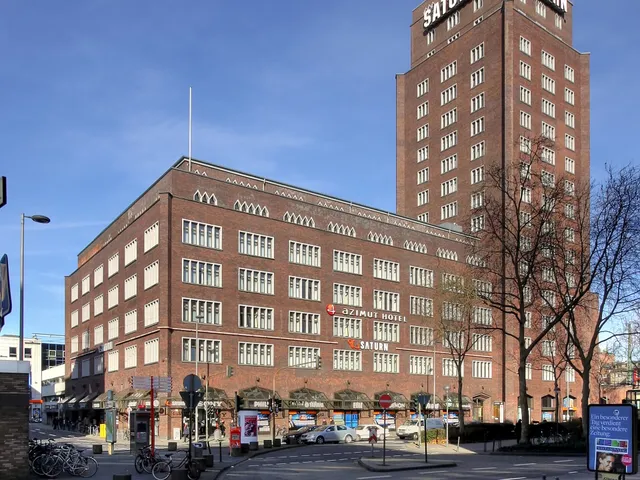
Hansahochhaus
since 1925Cologne's first skyscraper from 1925 — briefly the tallest building in Europe at completion, built in the Brick Expressionist style.
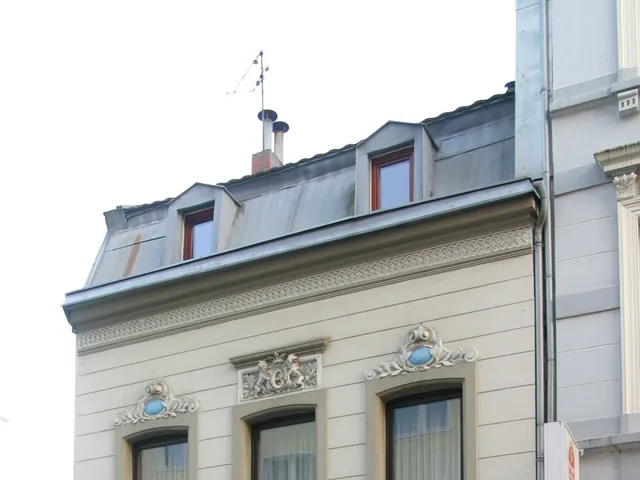
Residential and Commercial Building Hansemannstraße 2
A listed Cologne-Ehrenfeld building demolished in 2019 after structural damage caused by construction next door.
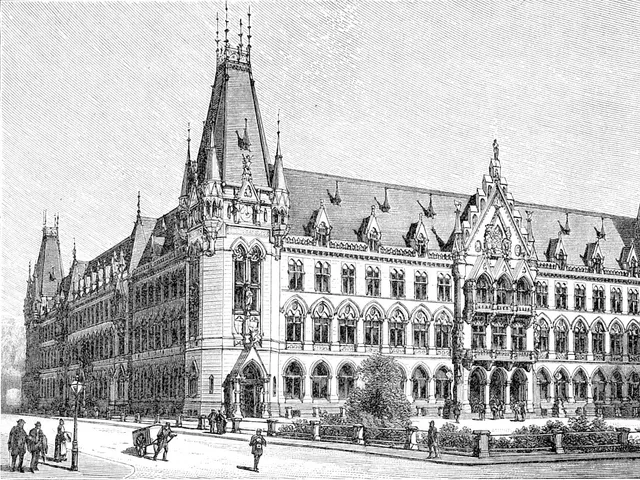
Main Post Office
A grand historicist post office built 1888–1893 on the ruins of Cologne's former Dominican monastery — demolished in the 1990s.
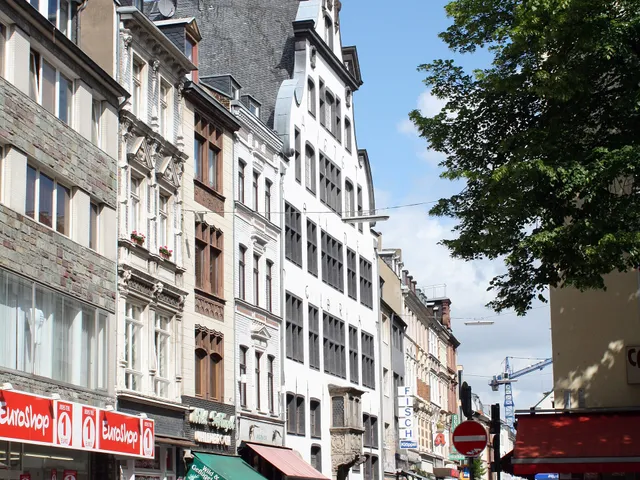
Haus Balchem
The only surviving Baroque house in the Severinsviertel, its statement bay window on Corinthian columns still turns heads on Severinstraße today.

Haus Hindenburg
Neoclassical corner building at Schildergasse and Neumarkt in Cologne, a listed historic monument since 1993.

Haus Neuerburg
Brick building on Gülichplatz disguised as two townhouses, with a stair tower in the courtyard echoing Cologne's old patrician houses.

Haus Saaleck
Medieval Cologne townhouse with late-Gothic corner turrets – today home to the city's Artothek, a lending library for art.
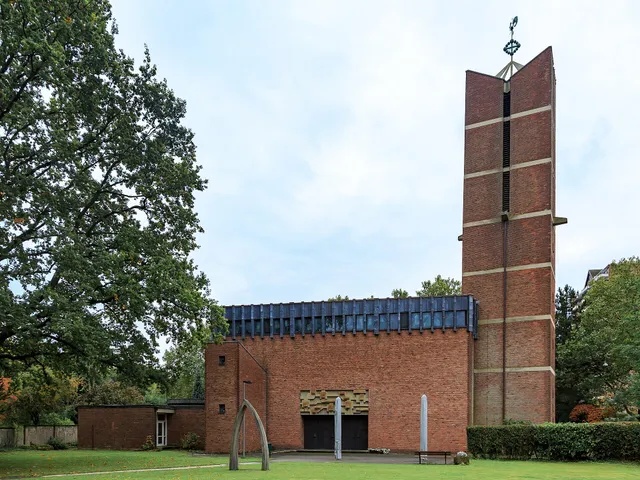
Heilig Geist (Köln-Weiden)
A closed brick church from the 1960s in Weiden, its ribbon window wrapping the whole building and converging into a point above the altar.
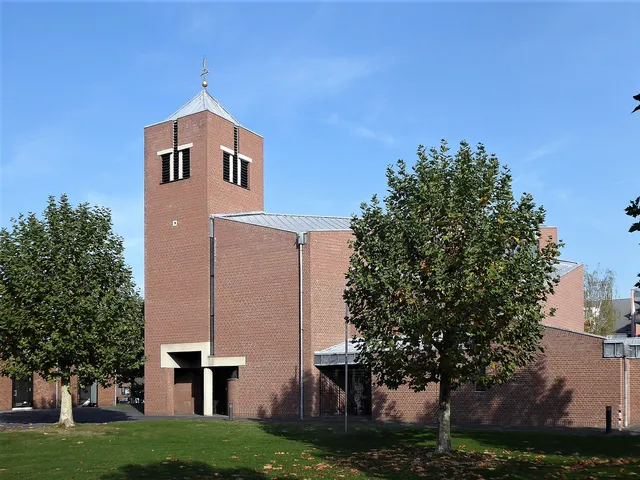
Heilige Drei Könige (Cologne-Rondorf)
since 1987A Roman Catholic parish church in Cologne's Rondorf district whose present building, erected in the late 1980s, replaced a neo-Gothic predecessor from 1898/99.
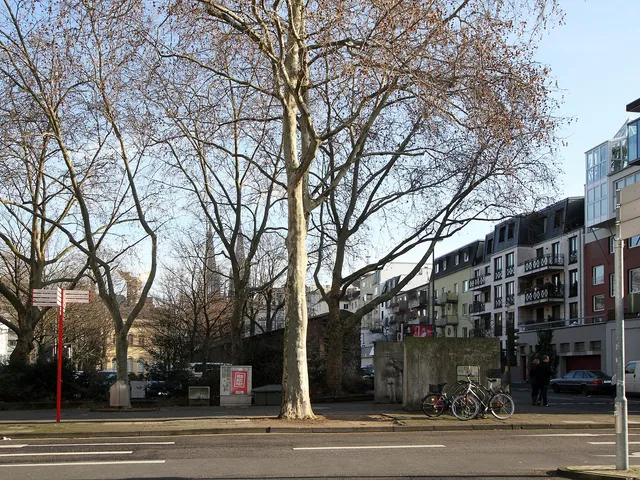
Heiligkreuzkapelle
Small 14th-century Cologne chapel whose south wall rested on the Roman city wall — demolished in 1818.
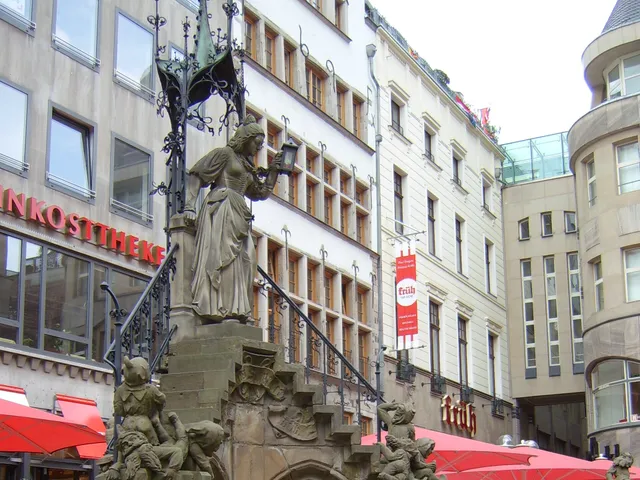
Heinzelmännchen – Cologne's Household Spirits and Their Fountain
since 1900Cologne's legendary household sprites who worked through the night while citizens slept — caught once, gone forever. Their fountain stands near the Cathedral.
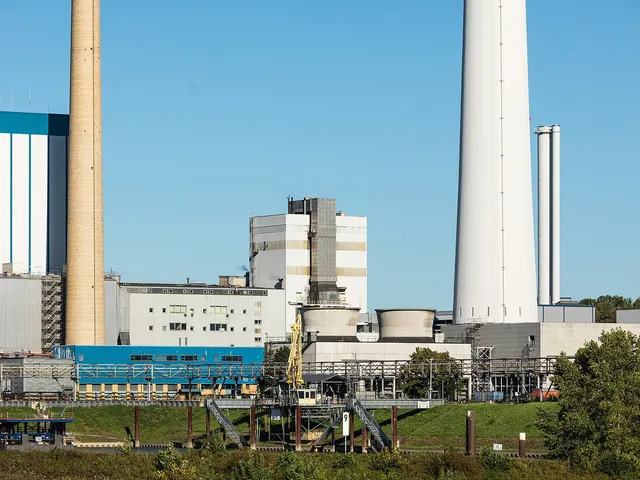
Cologne-Merkenich Combined Heat and Power Plant
At 250 metres, this power plant's chimney is Cologne's second-tallest structure after the Colonius tower — and the city's primary source of district heating for its northern districts.
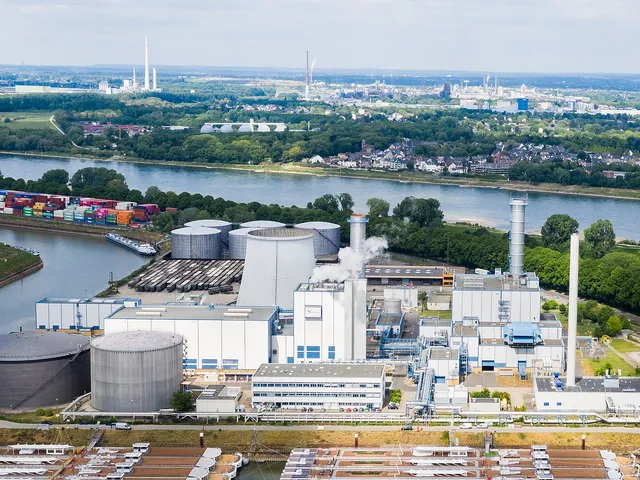
Heizkraftwerk Köln-Niehl
Rheinenergie's gas-fired combined heat and power plant in Niehl — supplying Cologne's city centre with district heating, with Germany's largest heat pump planned next door.
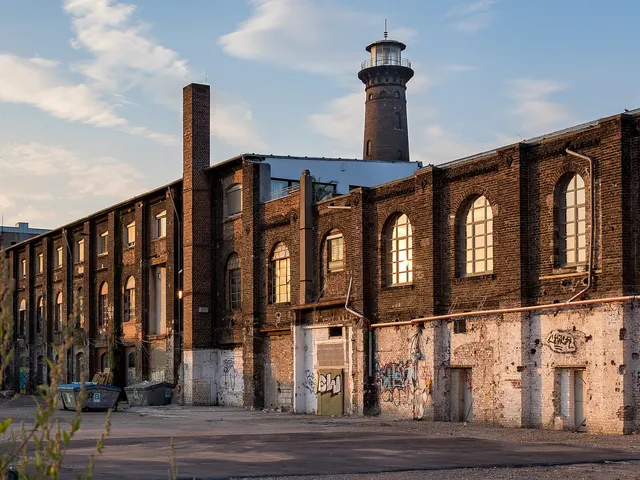
Helios (Electrical Engineering Company)
since 1882Electrical engineering pioneer from Ehrenfeld — its 44 m Heliosturm, a faux lighthouse, still defines the neighbourhood today.
Helios Tower – Ehrenfeld's Lighthouse Without a Sea
The 44-metre Helios Tower in Cologne-Ehrenfeld is a historic mock lighthouse built by the electrical pioneer Helios AG and, together with the Helios House and factory halls, forms one of Cologne's best-preserved industrial monuments.
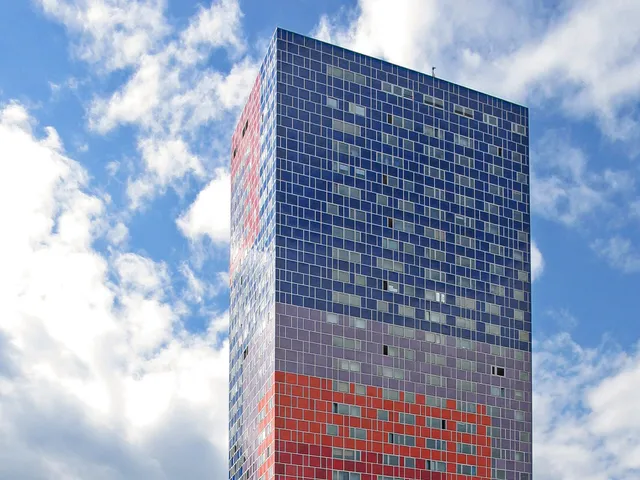
Herkules-Hochhaus
since 1972Nicknamed the 'Parrot House' for its vivid coloured façade, this 1972 residential tower in Neuehrenfeld stands 102 m tall — Cologne's ninth-highest high-rise.
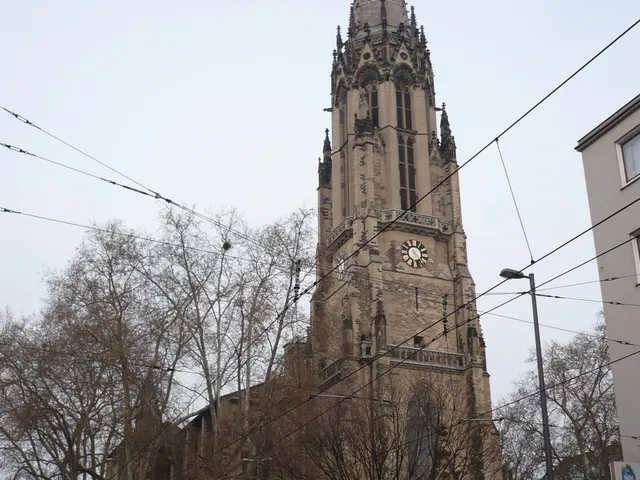
Herz-Jesu-Kirche
Neo-Gothic church on Zülpicher Platz whose tower was modelled on Freiburg Minster — rebuilt in a modern form after wartime destruction.
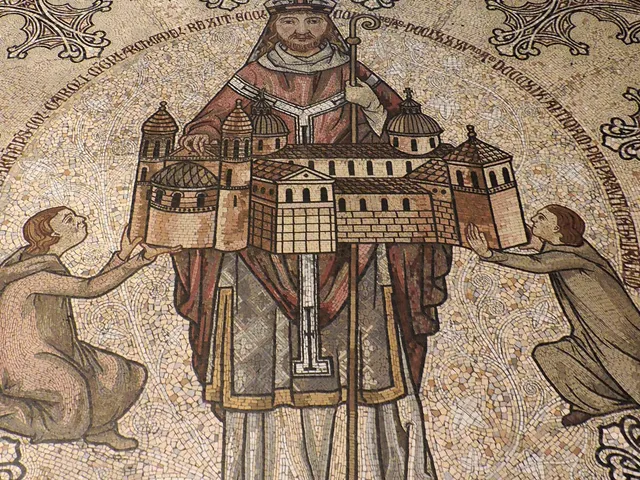
Hildebold Cathedral
Carolingian predecessor of Cologne Cathedral, which housed the relics of the Three Kings until its demolition in 1248.
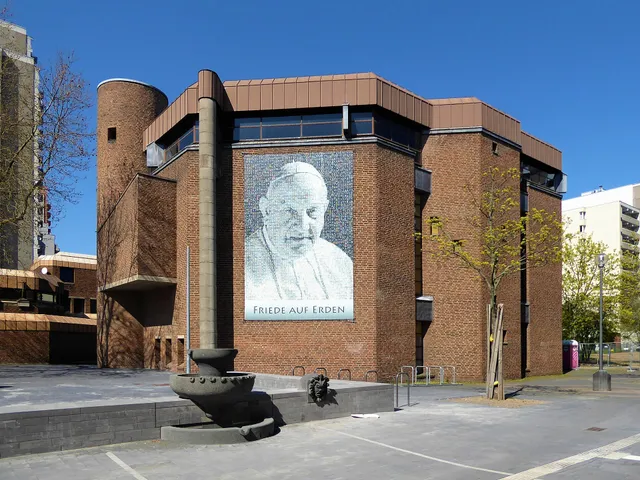
St. John XXIII (Cologne-Chorweiler)
since 1977A 1977 Catholic parish church in Chorweiler that stood unconsecrated for 28 years, finally named after Pope John XXIII in 2009.
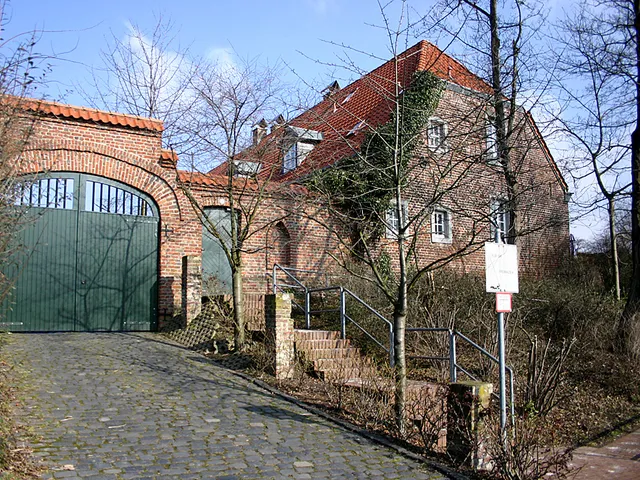
Arnoldshof Estate
Bocklemünd's oldest surviving farmstead – a listed heritage complex now home to a country-style residential estate.
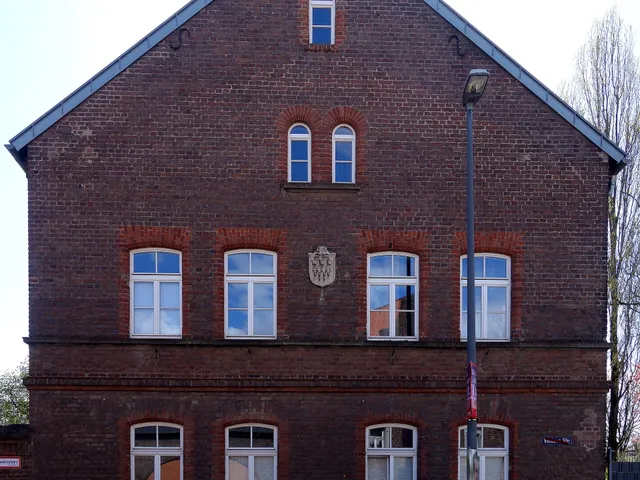
Fettenhof Farmstead
A four-sided farmstead in Cologne-Bocklemünd, first recorded in 1170, that later housed traveling young craftsmen for about three decades.
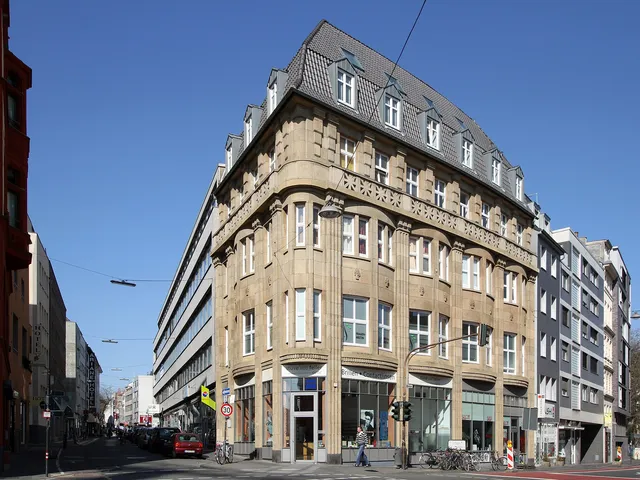
Hohe Pforte
Southern gate of Cologne's Roman city wall on the 'cardo maximus' — the origin of today's Hohe Straße.
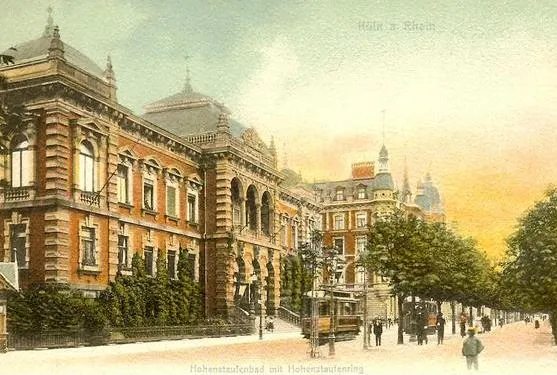
Hohenstaufenbad
Cologne's largest public swimming bath: a grand building on Hohenstaufenring — not lost to the war, but deliberately demolished in 1958.
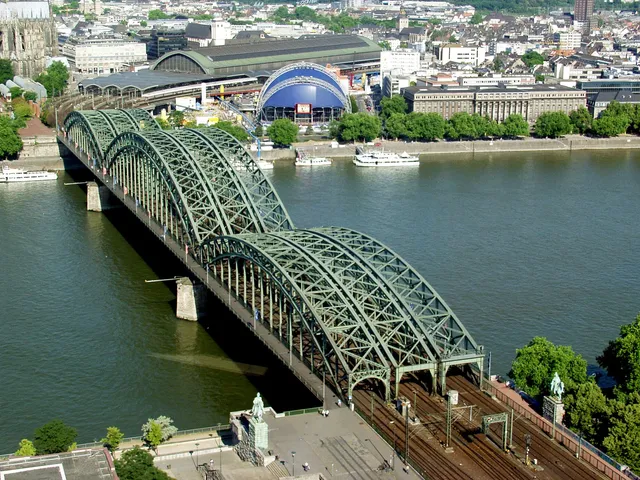
Hohenzollernbrücke
since 1911Germany's busiest railway bridge spanning the Rhine — a defining feature of Cologne's skyline alongside the Cathedral, and famous for thousands of love locks.
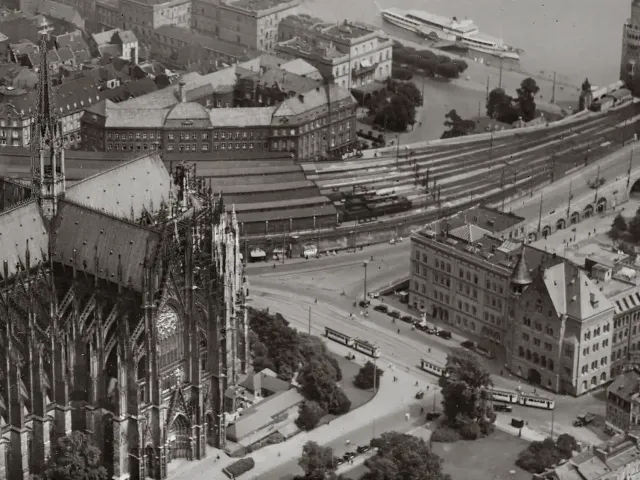
Hotel du Nord
Vanished 19th/20th-century Cologne grand hotel — Museum Ludwig and Heinrich-Böll-Platz now occupy its former site.
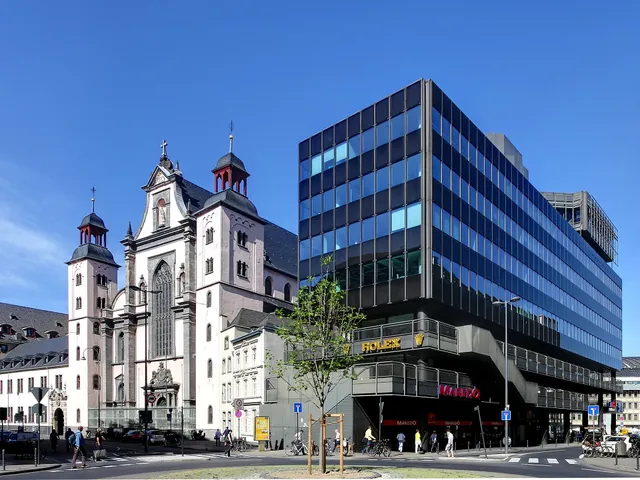
Hotel Kölner Hof
Grand late-19th-century Cologne hotel opposite the main station, demolished in 1973 to make way for the ABC-Haus office building.
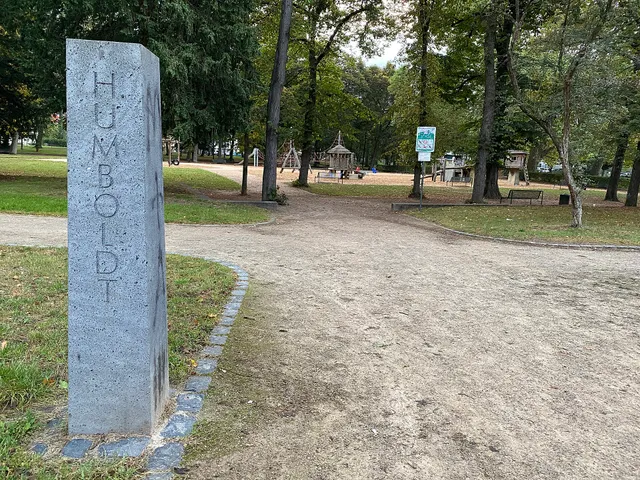
Humboldtpark
A listed 2.2-hectare park designed by Fritz Encke in 1913/14 — one of the few inner-city green spaces in the Kalk district of Cologne.
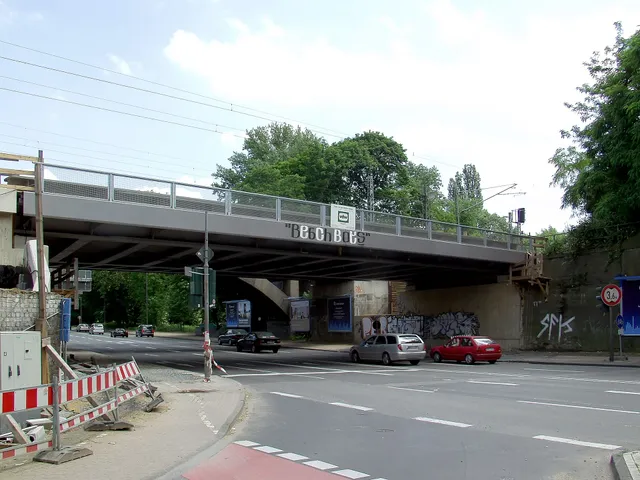
Idiotenbrücke
Nickname of a former Cologne railway bridge in Neuehrenfeld, where trucks repeatedly got wedged due to a clearance of only 3.9 m.
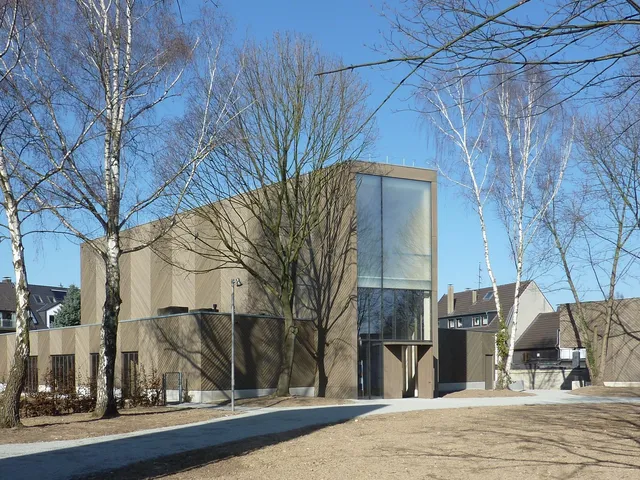
Immanuel Church (Cologne-Stammheim)
Multiple award-winning timber church of the evangelical Brückenschlag congregation in Cologne-Stammheim, consecrated in 2013.
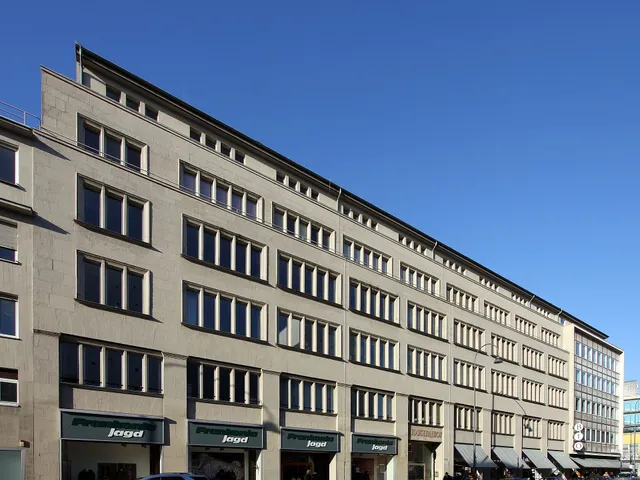
Industriehof
Landmarked 1923 office and commercial building in Cologne, built by architect Jacob Koerfer on his own initiative.
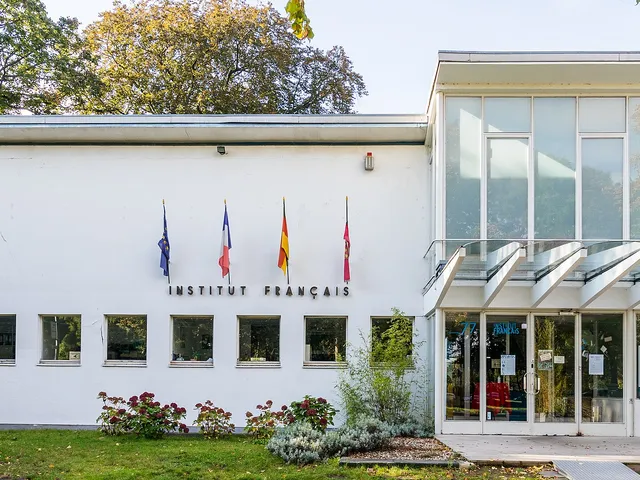
Institut français Köln
since 1952French cultural institute in Cologne's Südstadt — one of the first and now one of the last of its kind in western Germany; housed in Riphahn's 1952 building.
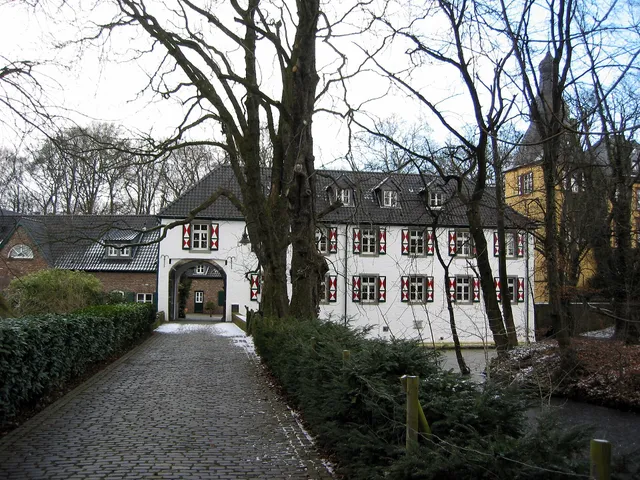
Isenburg
Moated castle on a water-encircled island in Cologne-Holweide, with a 16th-century tower and an 18th-century manor house.
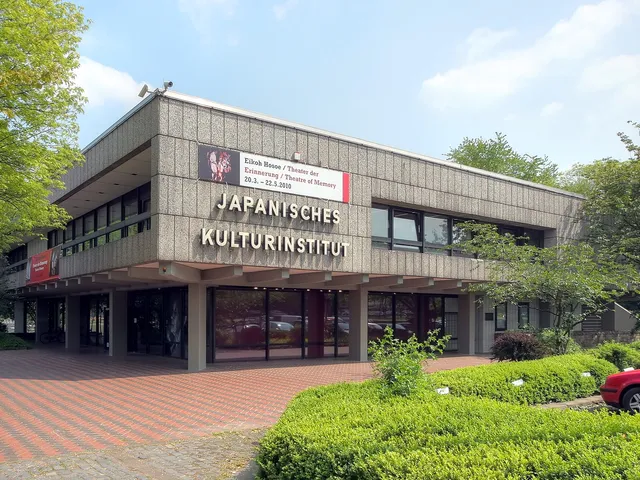
Japanese Cultural Institute
since 1969One of only three Japanese cultural institutes in Europe — Cologne's gateway to Japanese culture for the entire German-speaking world.
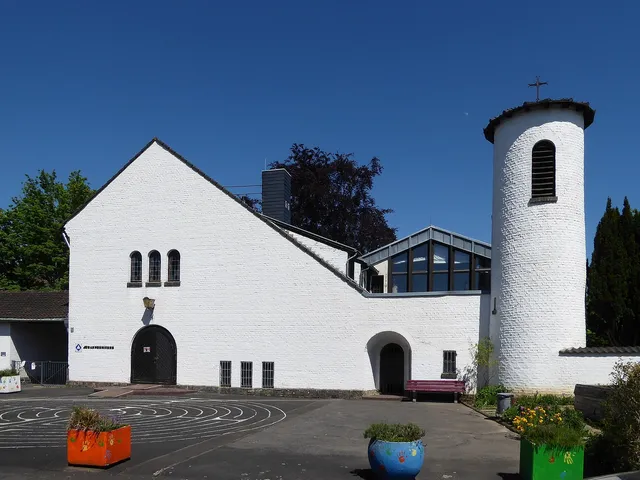
Johanneskirche Köln-Brück
1937 built Protestant greywacke church in Köln-Brück, prized for its acoustics and free-standing round tower, now a popular concert venue.
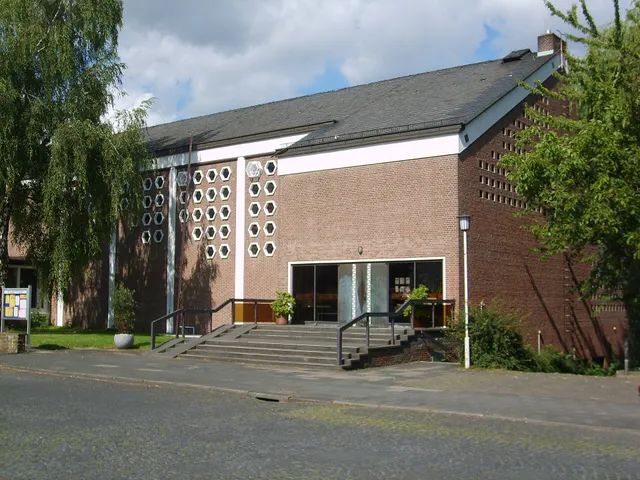
Johanneskirche (Cologne-Sülz)
Protestant church in Cologne-Sülz from the early 1960s, featuring colourful hexagonal concrete honeycomb windows and a baptistery separated by glass walls.
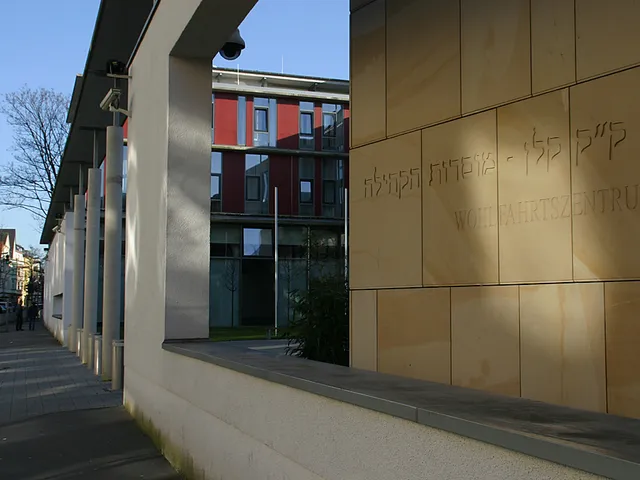
Jewish Welfare Center
Jewish social facility of the Cologne Synagogue Community in Neuehrenfeld — housed in the historic buildings of the former Israelite Asylum for the Sick and Elderly.
Court Building at Appellhofplatz (Appellhof)
since 1893Cologne's oldest court building – a monument to Rhenish legal history, from the Court of Appeal through the Nazi-era special courts to today's seat of the administrative and fiscal courts.
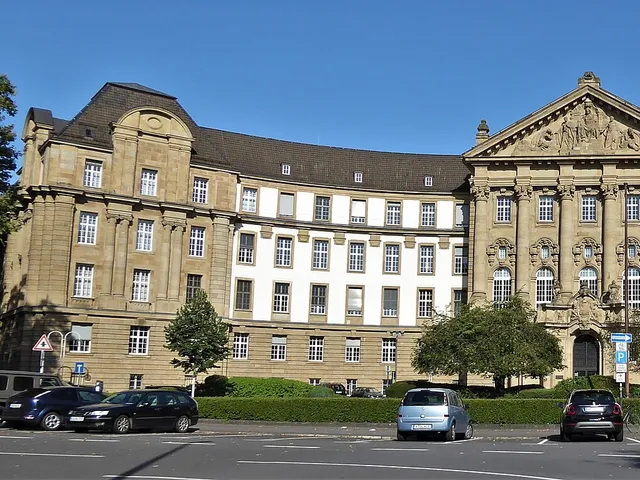
Reichenspergerplatz Court Building
since 1911Cologne's largest historic courthouse, opened in 1911 and still home to the Higher Regional Court – with an air-raid shelter beneath the forecourt, rediscovered in 2009 and open for visits on the first Sunday of each month.
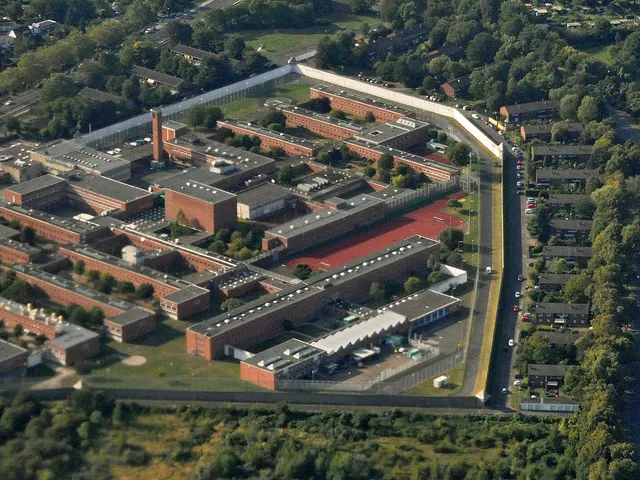
Cologne Prison (Justizvollzugsanstalt Köln)
Prison in Cologne-Ossendorf whose 1.3 km wall blends so well into the neighborhood it's barely recognizable as a jail.
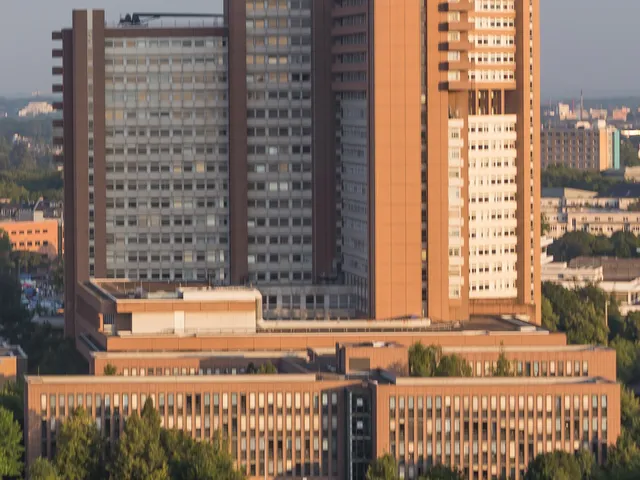
Cologne Justice Center
105-metre court tower in Cologne-Sülz housing the local and regional courts plus the public prosecutor's office on Luxemburger Straße.
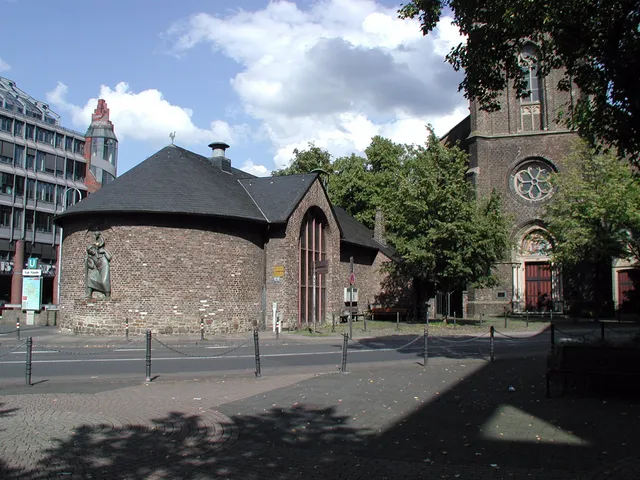
Kalker Kapelle
A pilgrimage chapel in Cologne's Kalk district, home to a 15th-century Pietà said to have miraculous powers — a destination for annual processions for centuries.
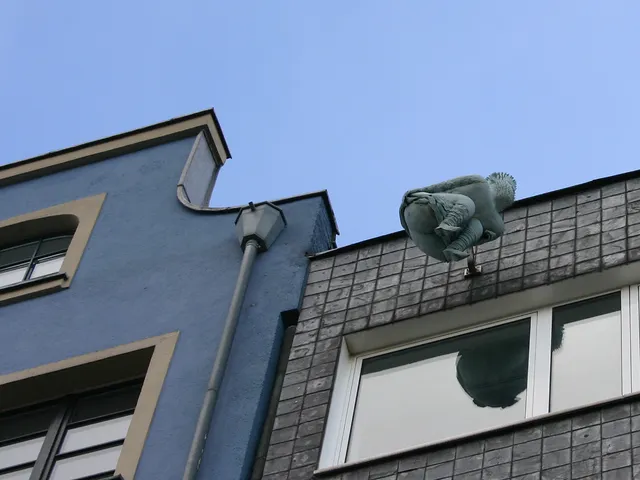
Kallendresser
Copper figure at Alter Markt that bares its backside to onlookers — a Cologne satirical motif with roots in the Middle Ages.
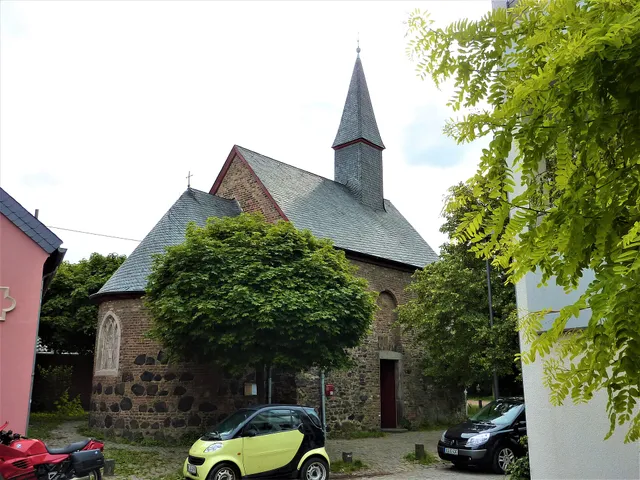
St. George's Chapel
Late Gothic chapel in Cologne-Weiß, first mentioned in 1433, featuring vivid murals from the 1980s.
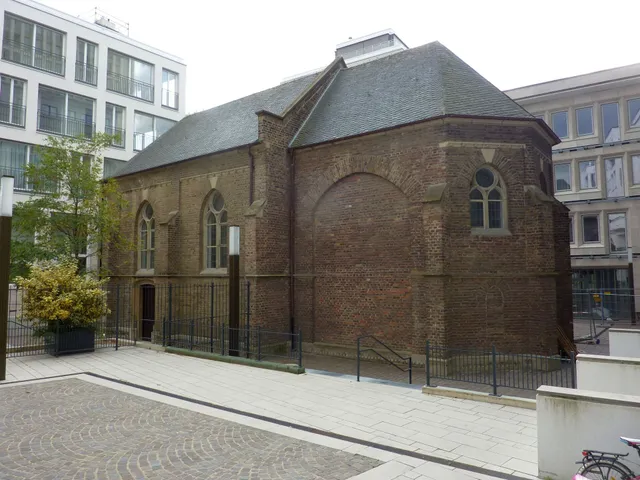
Karmel St. Joseph Cologne
Former Carmelite convent whose neo-Gothic chapel survives only as a truncated core embedded within a modern office complex.
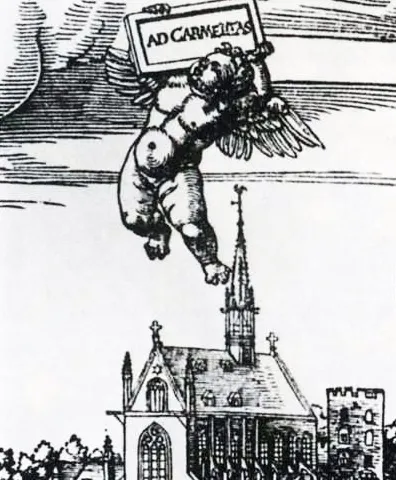
Karmelite Monastery Cologne
Former Carmelite monastery south of Cologne's Waidmarkt, founded in 1256 and secularized in 1802 – the female Carmelite branch still exists in Cologne today.
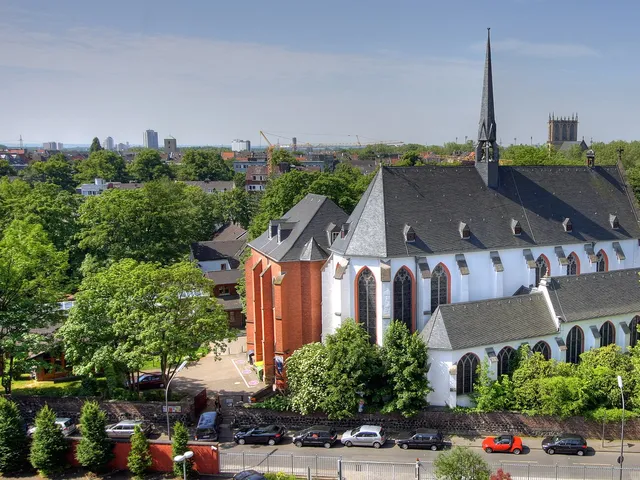
Kartäuserkirche
since 1350Gothic church of the 1334 Cologne Charterhouse — now an Evangelical parish church with stained-glass windows by Charles Crodel.
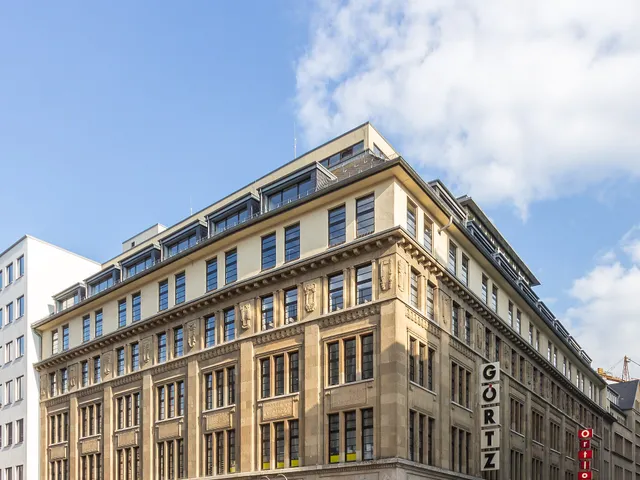
Kaufhaus Isay
Listed early-20th-century office and commercial building in Cologne, built 1911–1913 by Helbig & Klöckner for textile wholesaler Gebrüder Isay.
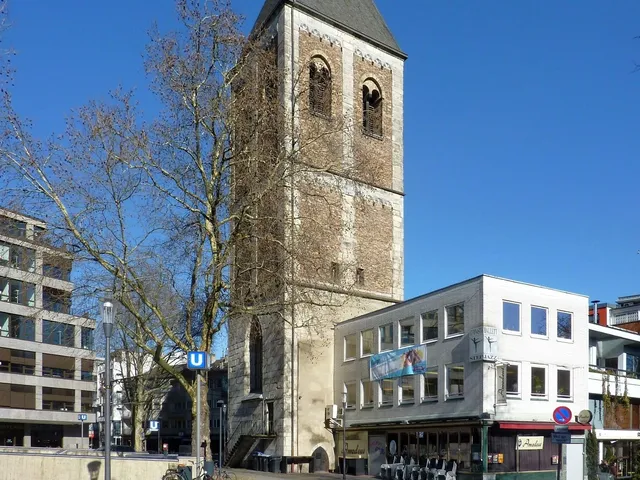
Klein St. Martin
since 1460A lone tower surviving from a demolished Cologne parish church — once crowned with a tall Gothic spire visible across the Rhine skyline, today capped by a flat pyramid.
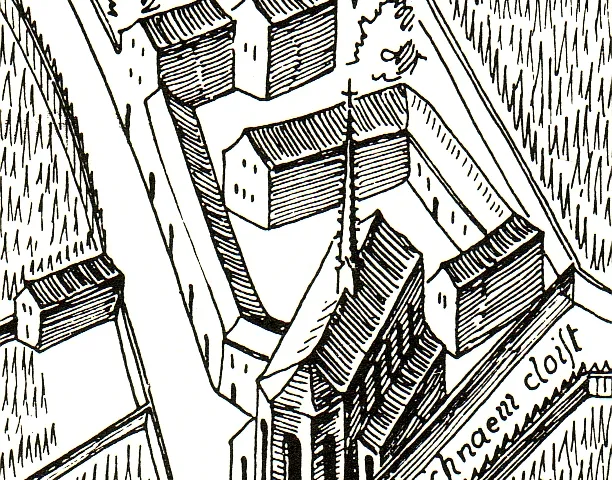
Kloster Herrenleichnam
An Augustinian canon monastery on Klingelpütz in Cologne's Altstadt-Nord, founded around a chapel commemorating a Eucharistic miracle.
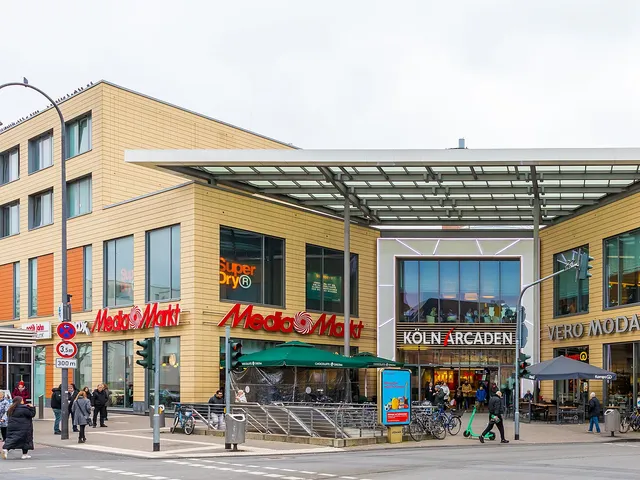
Köln Arcaden
Cologne's first shopping mall on the right bank of the Rhine, built on the site of a former chemical plant in Kalk.
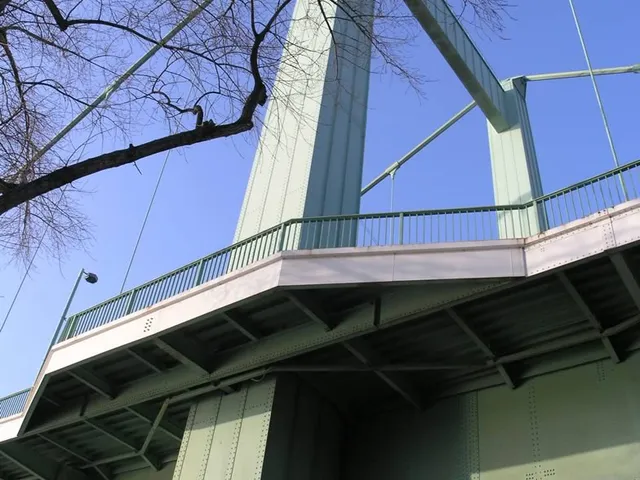
Cologne Bridge Green
The patina-green chromium oxide hue coating Cologne's Rhine bridges, introduced in 1929 at the request of Konrad Adenauer.
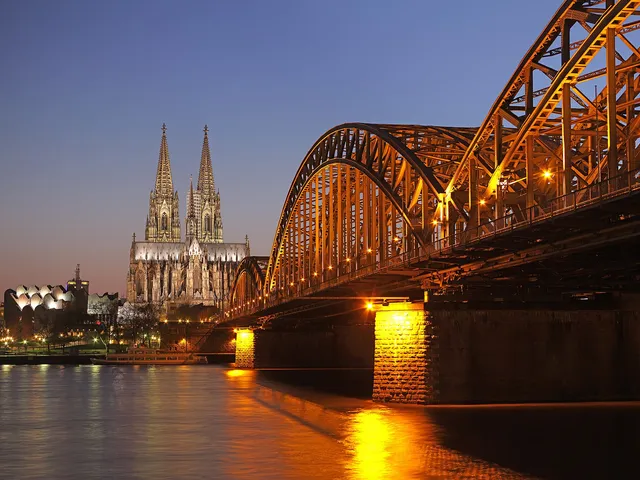
Cologne Cathedral
since 1248Gothic cathedral and shrine of the Three Kings — at around 157 metres one of the tallest churches in the world and a UNESCO World Heritage Site.
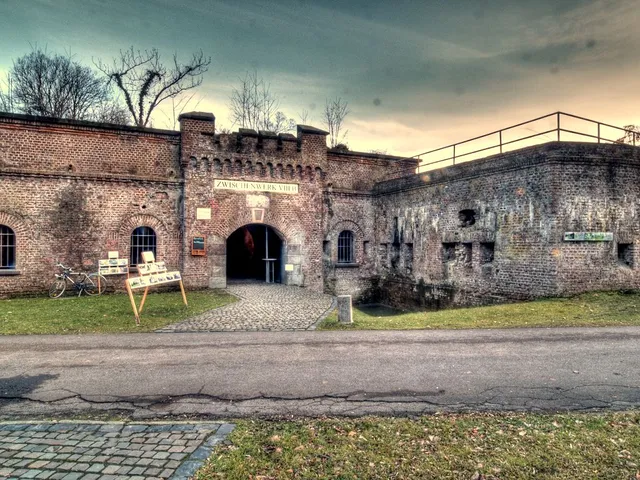
Kölner Festungsmuseum
Volunteer-run museum in Prussian fortification VIII b — home to Germany's last surviving drawbridge, moat, and sculpture park in Marienburg.
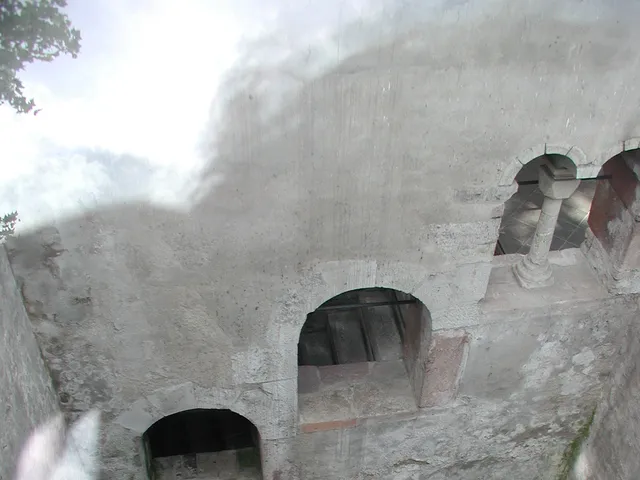
Cologne Mikveh
Medieval Jewish ritual bath beneath the Rathausplatz: the staircase descends inside the nearly 16-metre-deep shaft all the way to the water level.
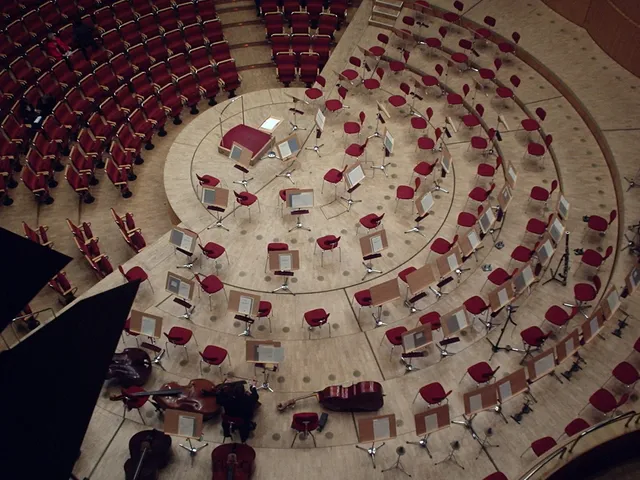
Kölner Philharmonie
since 1986Amphitheatre-style concert hall beneath Heinrich-Böll-Platz — a column-free auditorium for 2,000 with a celebrated Klais organ.
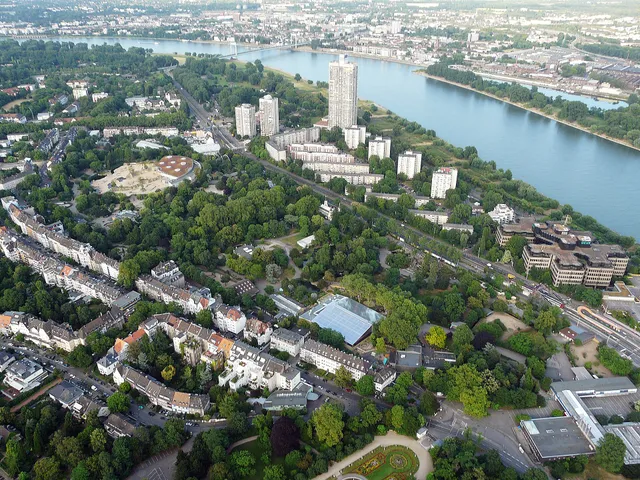
Cologne Zoo
since 1860Founded in 1860 in the Riehl district, Cologne Zoo is Germany's third-oldest zoo — famous for its century-old baboon rock.
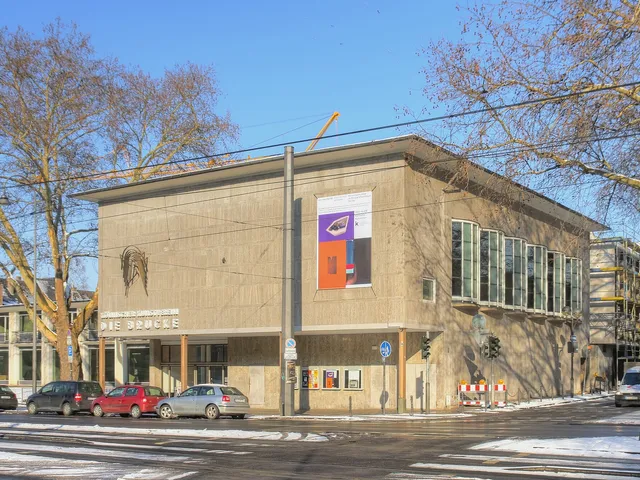
Kölnischer Kunstverein (Cologne Art Association)
since 1839Founded in 1839, the Kölnischer Kunstverein is one of the oldest and most respected institutions for contemporary art in Germany. Today it resides in the striking building "Die Brücke" on Hahnenstraße, presenting current international art in Cologne.
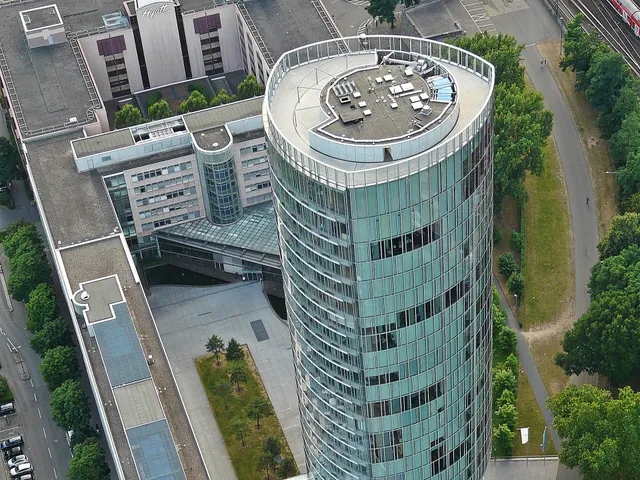
KölnTriangle
Triangular skyscraper in Cologne-Deutz with a fully glazed observation deck "Cologne View" at just over 100 metres, offering panoramic views across the city.
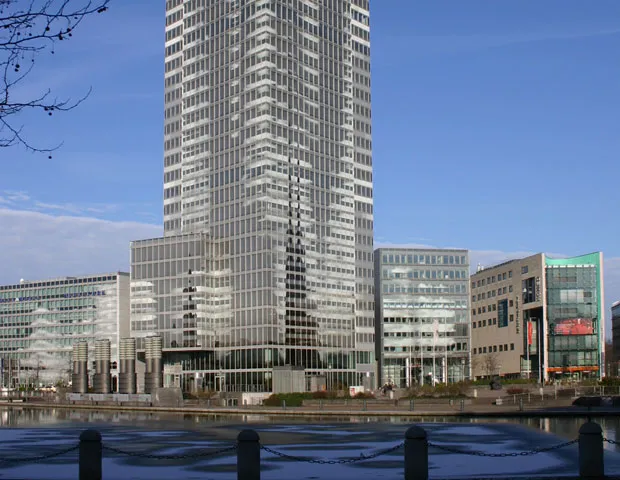
KölnTurm
since 2001Cologne's tallest office building in the Mediapark (148.1 m) — glass façade with fired-on cathedral motifs and a rooftop terrace on the 30th floor open to restaurant guests.
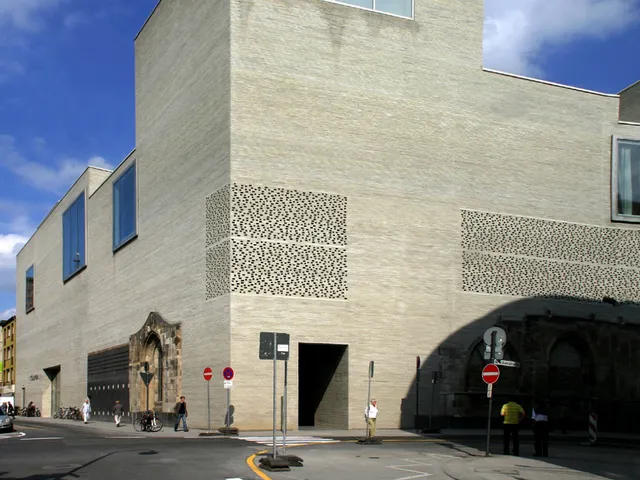
Kolumba
since 1853Peter Zumthor's landmark brick building for the Archdiocese of Cologne's art museum, built over the ruins of the war-destroyed church of St. Columba.
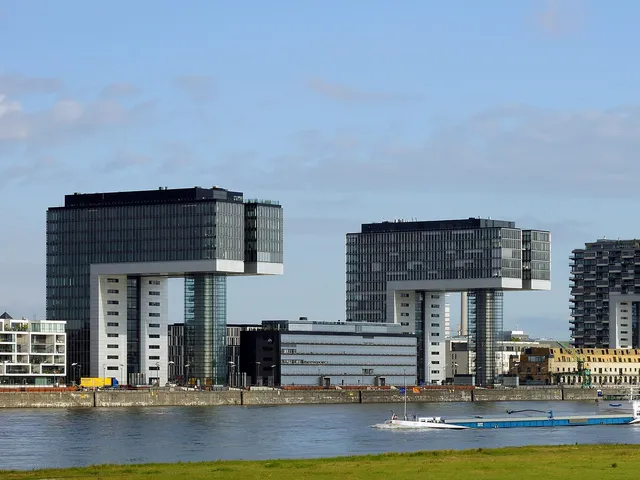
Kranhäuser
Three striking high-rises in Cologne's Rheinauhafen whose inverted-L silhouette mimics harbour cranes extending their jibs toward the Rhine.
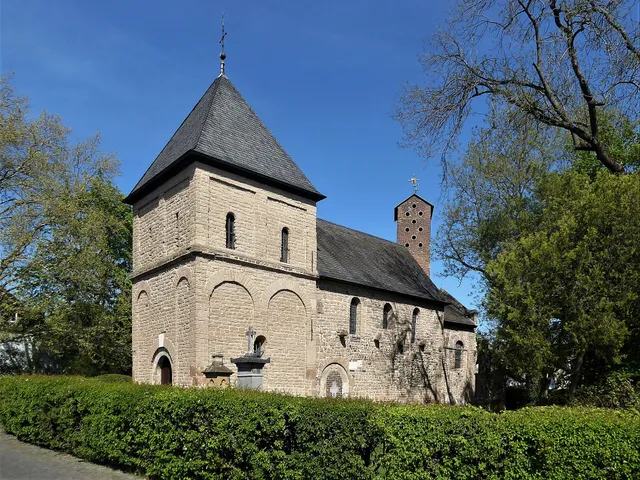
Krieler Dömchen
since 850Cologne's second-oldest church after St. Gereon — a small Romanesque village chapel in Lindenthal with roots stretching back to around 900 AD.
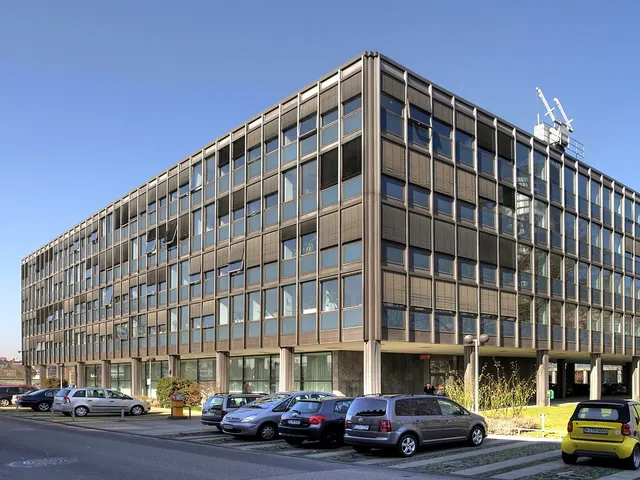
Landeshaus Cologne
Headquarters of the Rhineland Regional Council on the Rhine — a landmark of postwar modernism in the style of Mies van der Rohe.
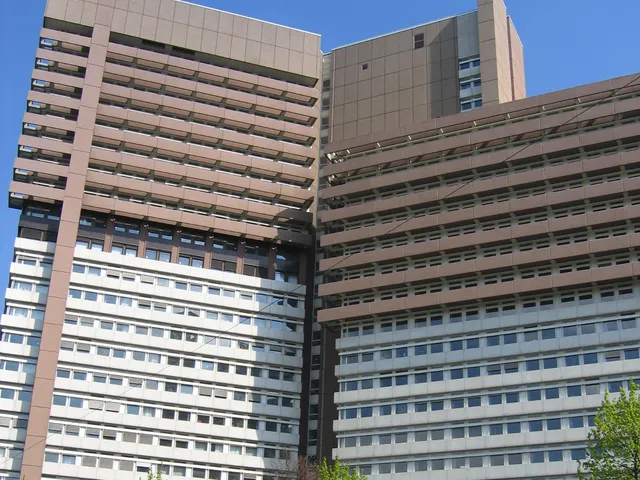
Landgericht Köln
One of Germany's largest regional courts – with a press chamber that journalists consider the strictest in the country.
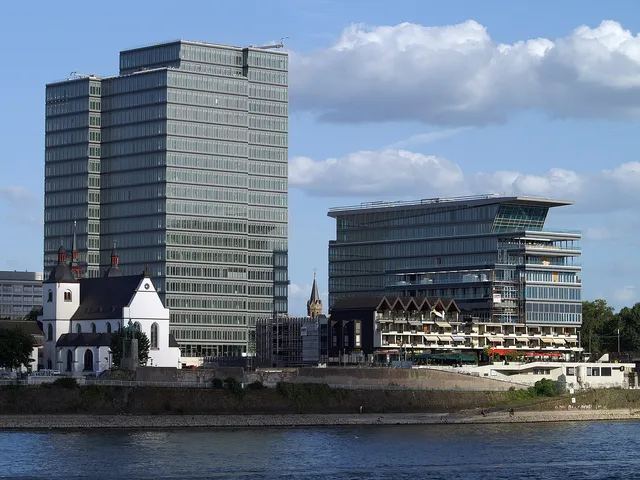
Lanxess Tower
since 1969Striking 95-metre office tower in Cologne-Deutz, originally built as Lufthansa's headquarters and now home to the global HQ of Lanxess AG.
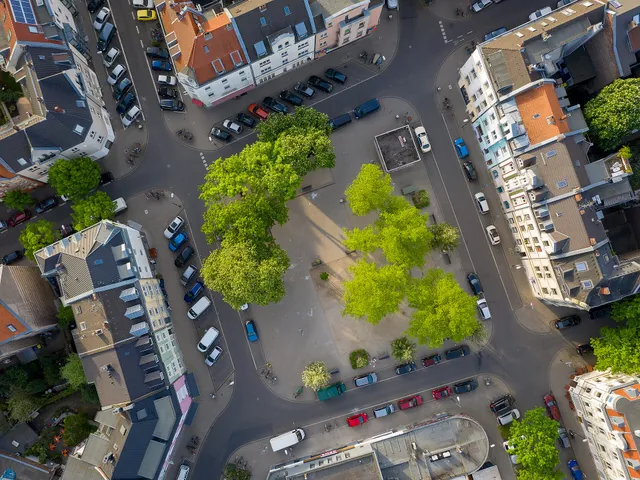
Lenauplatz
Neighbourhood square in Neuehrenfeld with the Max-and-Moritz Fountain — lined with lime trees and framed by Gründerzeit townhouses.
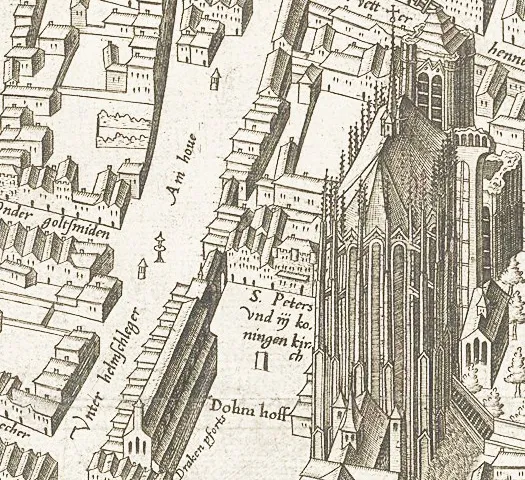
Linneper Hof (Reifferscheider Hof), Cologne
Former noble courtyard on Cologne Cathedral's precinct, originally the archbishops' residence — demolished in the 1740s, now part of the Roman-Germanic Museum grounds.
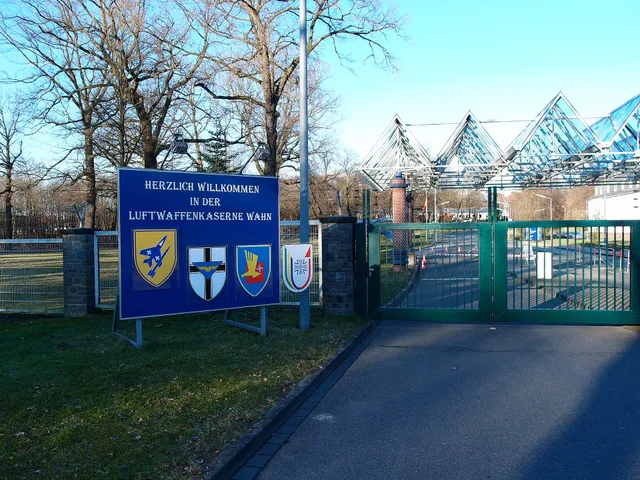
Luftwaffenkaserne
since 1870One of Germany's largest military bases at around 300 hectares — home to senior Bundeswehr commands, a NATO unit, and a Canadian operational hub.
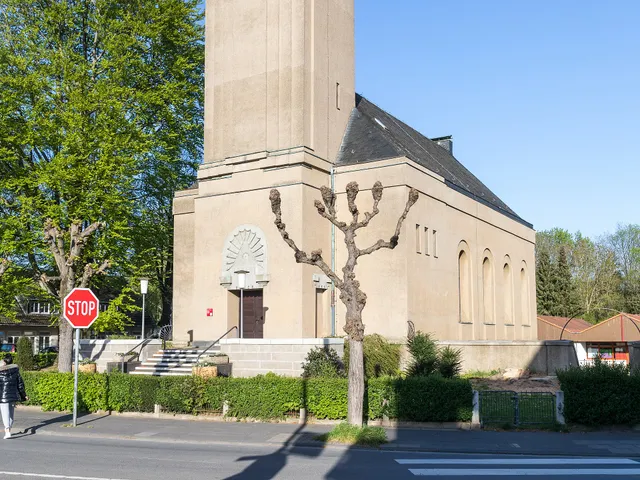
Lukaskirche (Cologne-Porz)
Protestant hall church in Cologne-Porz blending Art Nouveau beginnings (1914) with a striking Expressionist interior completed in 1927; listed heritage building since 1982.
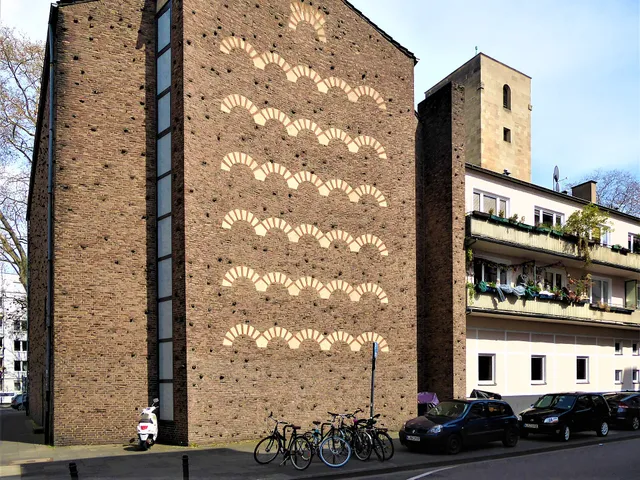
Lutherkirche
since 1904Protestant church in Cologne's Südstadt, its bells inscribed with Luther's chorale – bombed to its tower in 1944, deconsecration planned for autumn 2026.
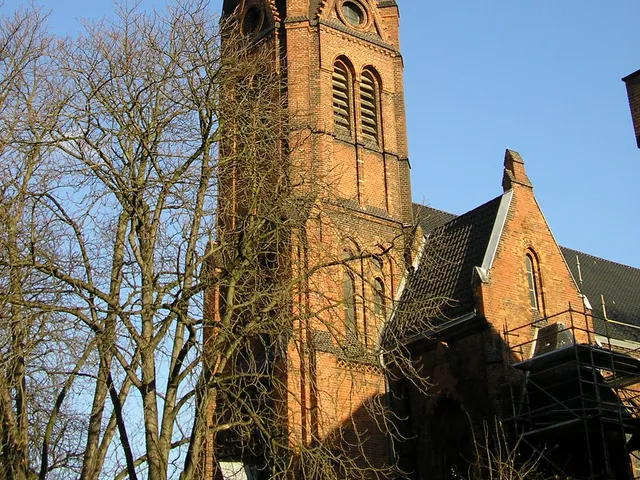
Lutherkirche (Cologne-Nippes)
since 1886Neo-Gothic Protestant church in the Sechzigviertel that has hosted concerts, readings and cabaret as Cologne's Kulturkirche since 2002.
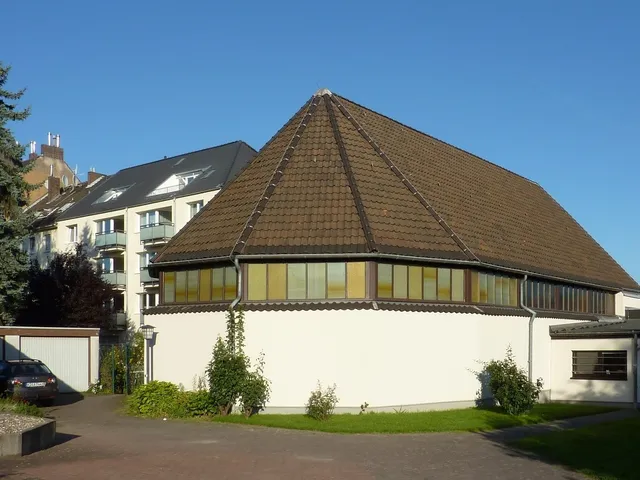
Luthernotkirche
Emergency church built from the rubble of the destroyed Lutherkirche, designed by Otto Bartning — the only one of its surviving kind fully preserved.
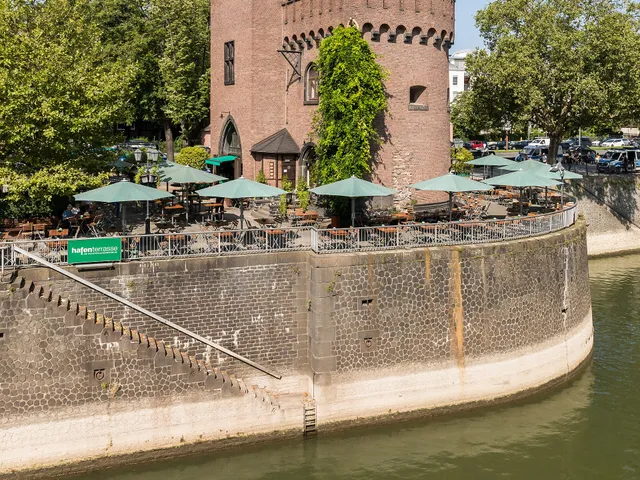
Malakoffturm
since 1855Brick gatehouse of Prussian Rhine fortifications at Rheinauhafen — now linked by a swing bridge to the Chocolate Museum across the water.
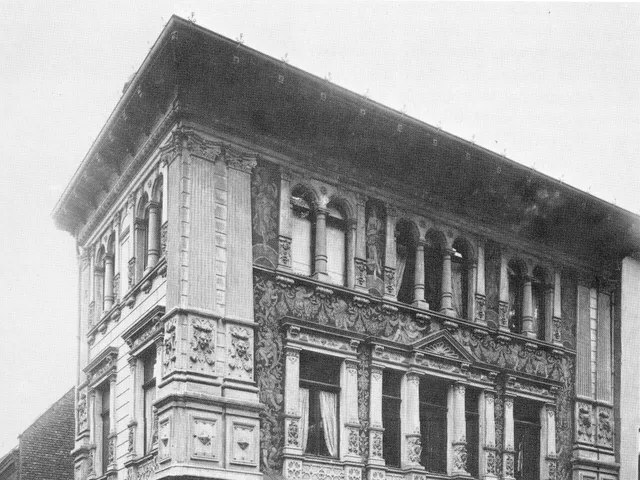
Markmannsgasse 2a
Cologne commercial building 'Zu den Vier Jahreszeiten', demolished in 1912 for the Deutz Bridge ramp, blending three Renaissance traditions.
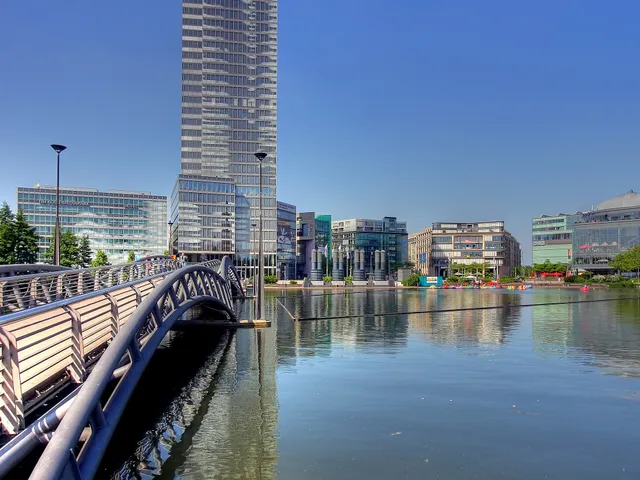
MediaPark
Car-free media business park on a former freight yard — built around a central square with an artificial lake, crowned by the soaring Kölnturm.
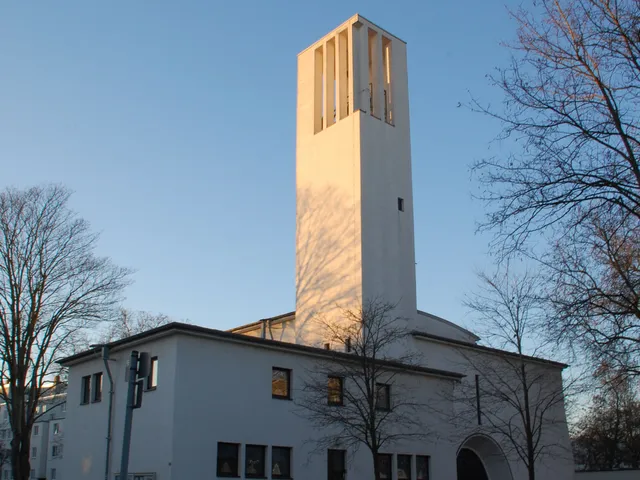
Melanchthonkirche
Protestant church from 1929/30 in Zollstock — one of Germany's early examples with the worship hall upstairs and a community centre below.
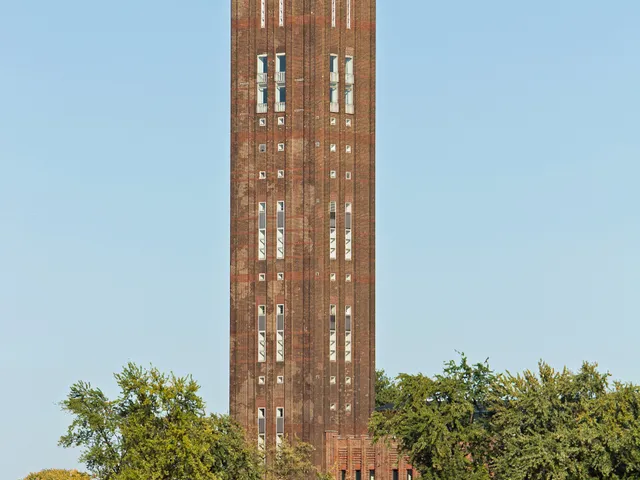
Messeturm Köln
since 1928An 85-metre brick tower from 1928 in Deutz — crowned by a three-faced Hermes sculpture and united with the Rheinhallen by its striking Expressionist façade.
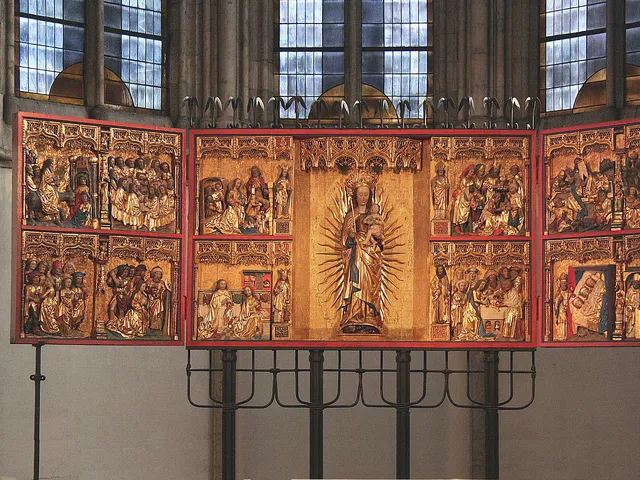
Minoritenkirche
Burial church of Adolph Kolping and Johannes Duns Scotus — a 13th-century Gothic mendicant church and place of pilgrimage.
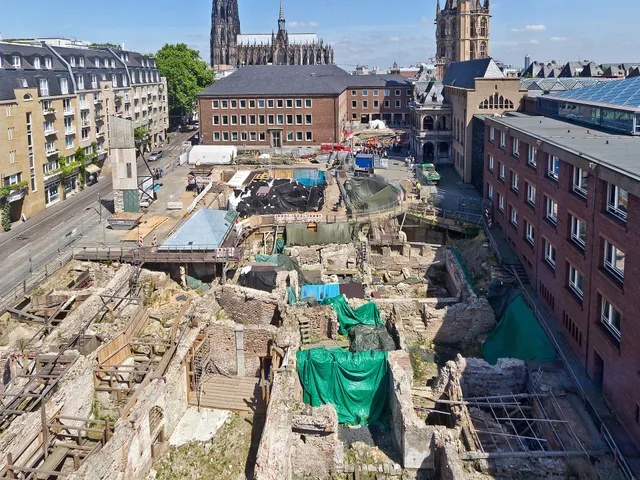
Medieval Synagogue of Cologne
Beneath the Archaeological Zone near City Hall: remains of a Jewish synagogue that stood from the 11th century until the expulsion of 1424.
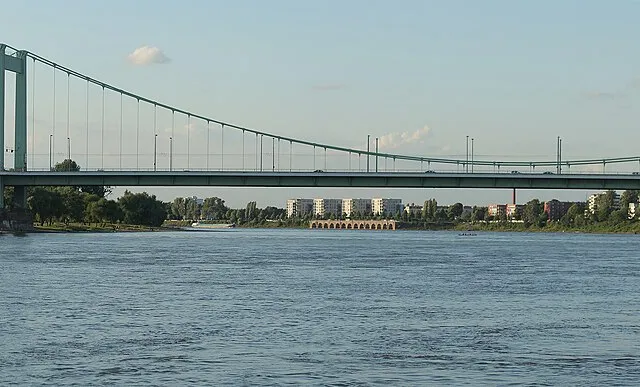
Mülheimer Brücke
since 1951Rhine suspension bridge between Mülheim and Riehl — the origin of Cologne's iconic bridge-green colour and Germany's first bridge with an orthotropic deck.
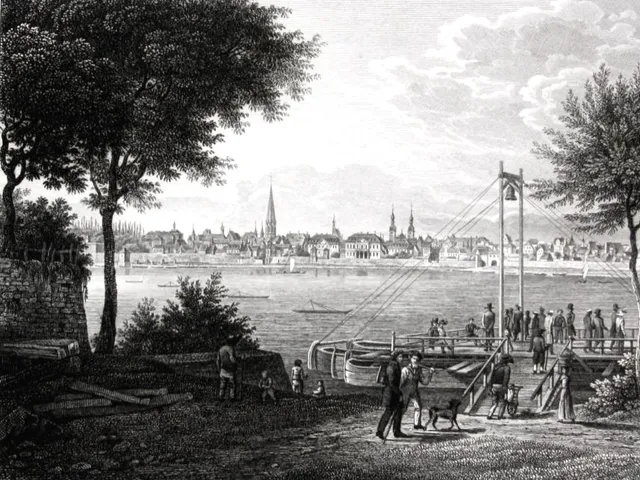
Mülheimer Schiffbrücke
since 1888Floating timber bridge on some 40 anchored pontoons (1888–1927), with an opening section for river traffic, that replaced the Rhine ferry crossing at Mülheim.
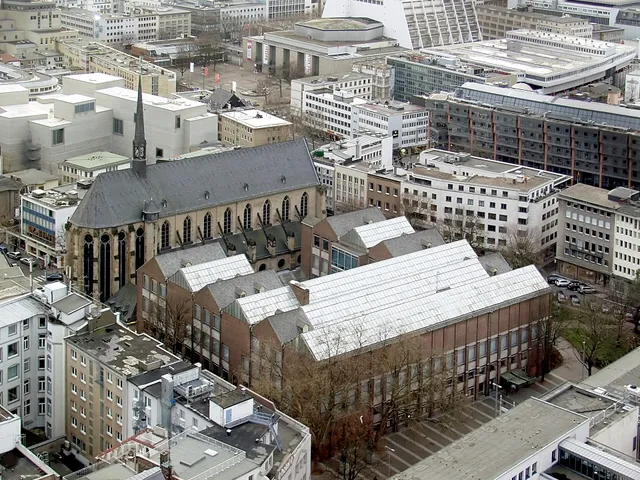
Museum of Applied Arts (MAKK)
since 1888Cologne museum of applied arts and design in the Schwarz-Bernard building — once dismissed as sterile, later celebrated as a 'third way' in postwar architecture.
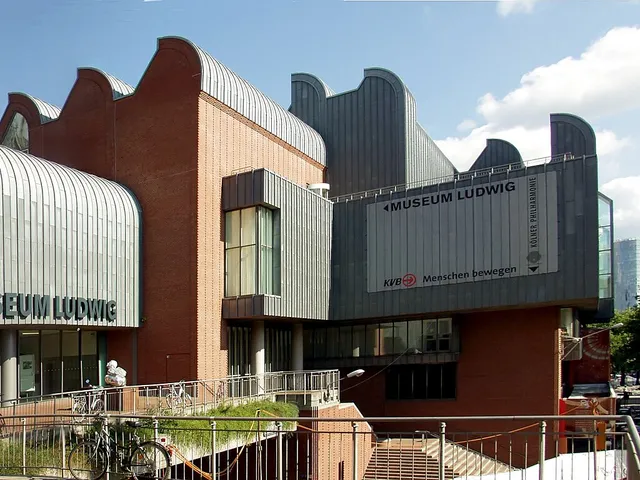
Museum Ludwig
since 197620th- and 21st-century art on Cologne's Cathedral Plateau — home to Europe's largest Pop Art collection and the world's third-largest Picasso collection.
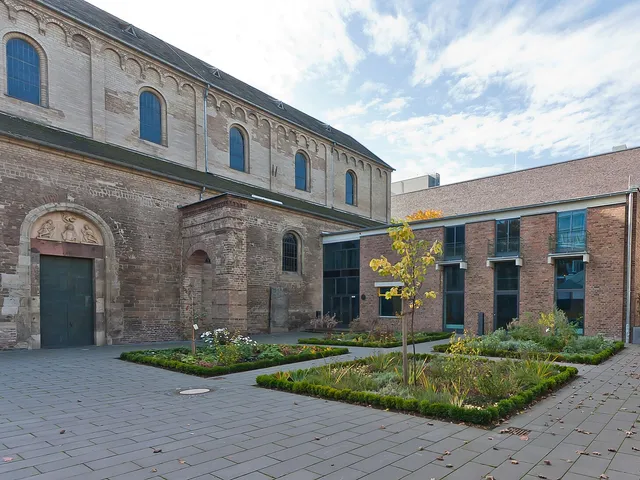
Museum Schnütgen
since 1910One of Europe's richest medieval collections, housed in the Romanesque basilica of St. Cecilia in Cologne's historic city centre.
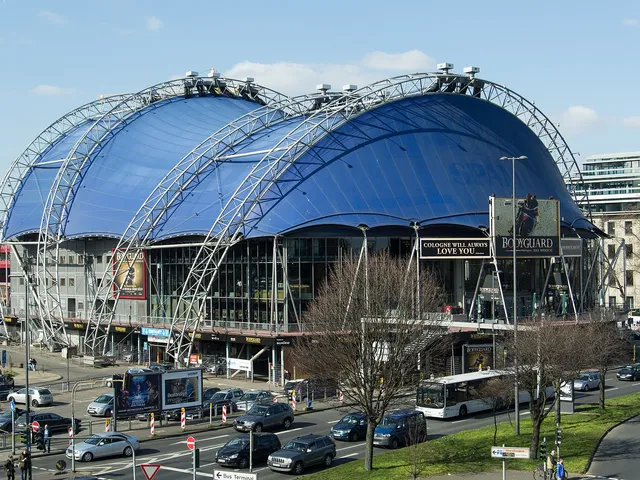
Musical Dome
Musical venue under a blue dome roof by the Rhine near Cologne's main station — home to long-running hits like 'We Will Rock You'.
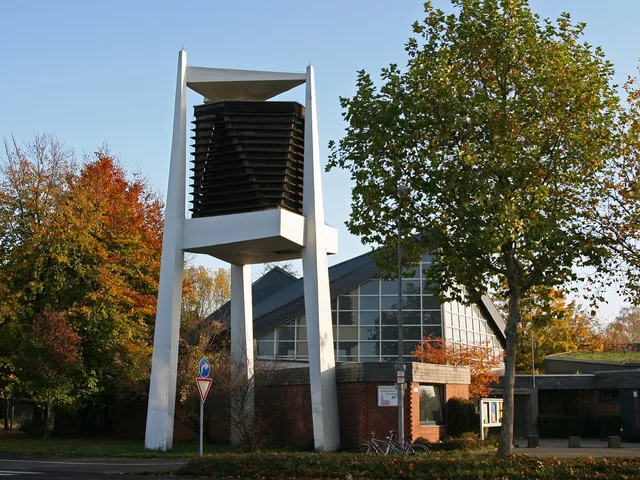
Nathanaelkirche (Bilderstöckchen)
A 1965 Protestant church with a hexagonal footprint, its free-standing campanile rises on three tapering concrete legs like a modernist sculpture.
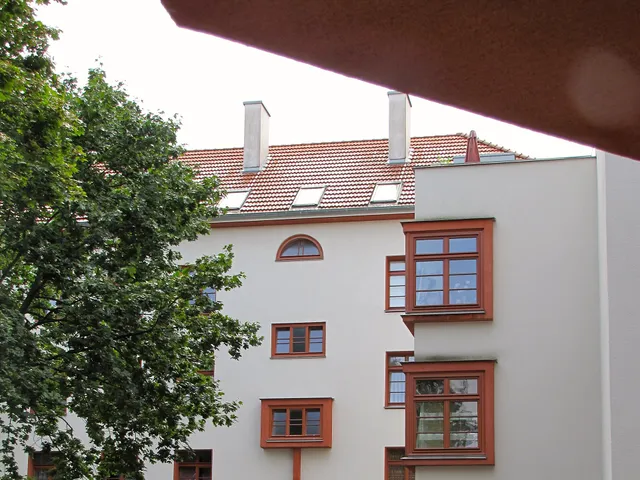
Naumannsiedlung Cologne
1920s social housing estate in Cologne-Riehl, famous for its loggia balconies and Neues Bauen design, built on a former brickworks site.
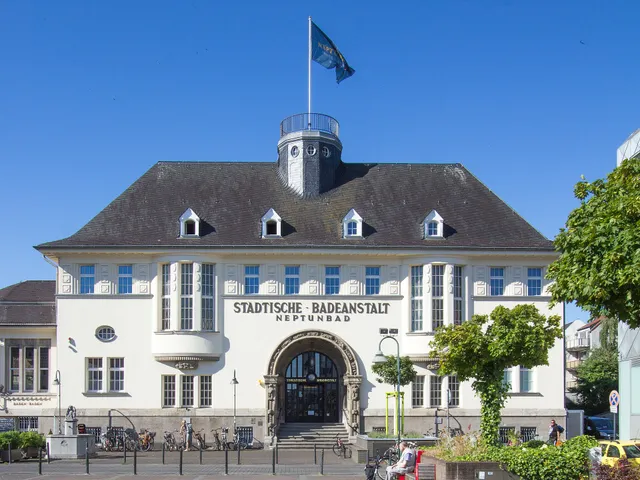
Neptunbad
Art Nouveau bathhouse from 1912 in Ehrenfeld — Cologne's first modern suburban public bath, now a fitness and wellness centre.
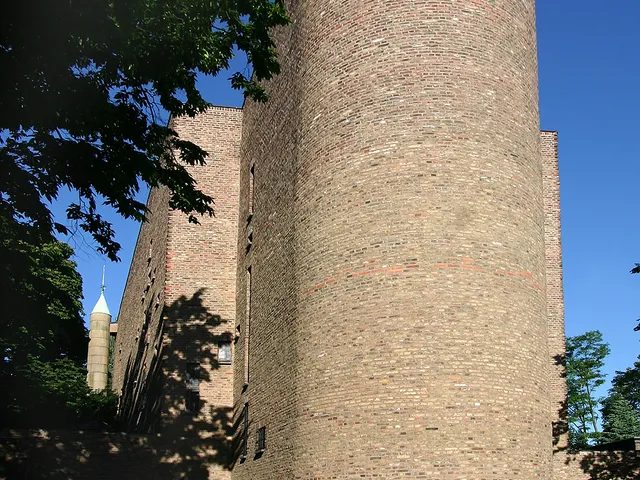
Neu St. Alban
since 1958Post-war church in the Stadtgarten built from rubble bricks of the destroyed Cologne Opera, with a pentagonal floor plan inspired by Le Corbusier.
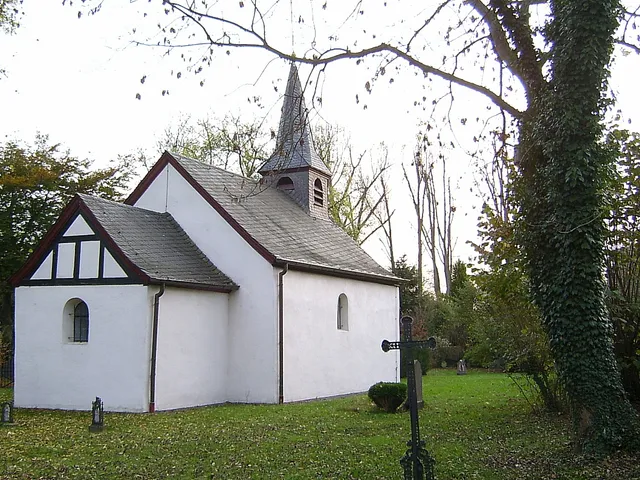
Nikolaus-Kapelle
Built around 1100 near the Rhine in Westhoven — Cologne's smallest surviving Romanesque village chapel, enclosed by an ancient churchyard.
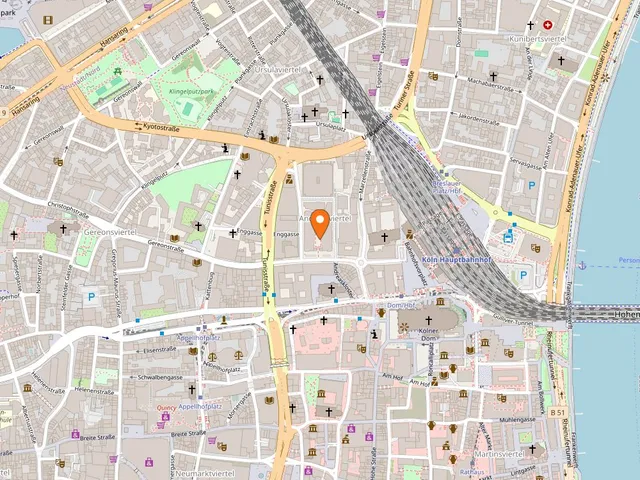
Oberpostdirektion Köln
Regional postal authority for the Cologne area from 1850 to 1993, headquartered in the Altstadt-Nord district.
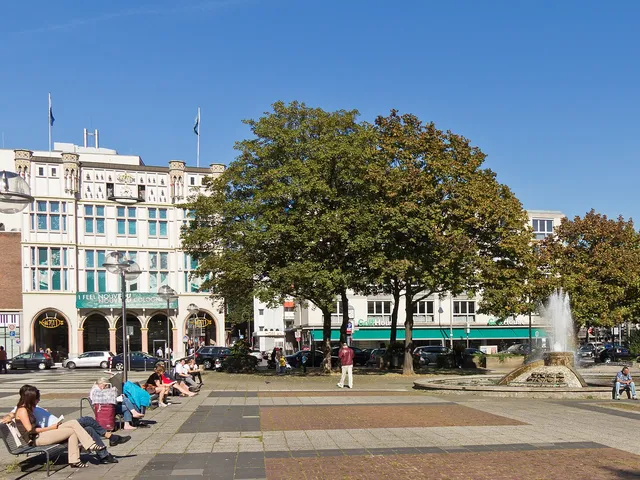
Offenbachplatz
The theatre square in Cologne's Altstadt-Nord, fronting the Opera House and Schauspielhaus, centred on the long-neglected Opernbrunnen by Jürgen Hans Grümmer.
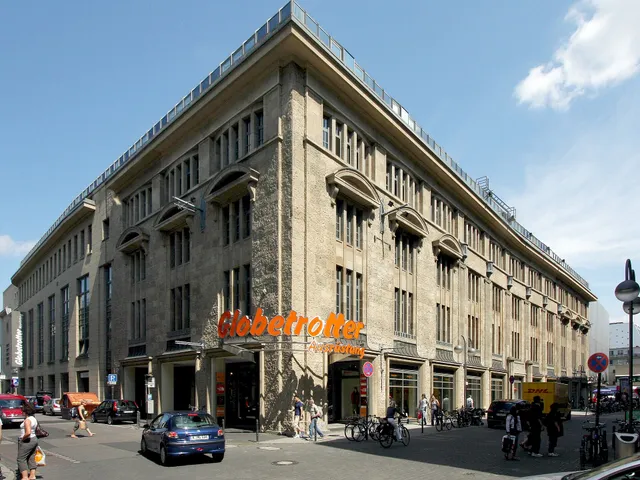
Olivandenhof
Commercial building in Cologne's Altstadt-Nord with a climbing wall, rain and cold chamber, and diving pool – Europe's largest outdoor specialty store.
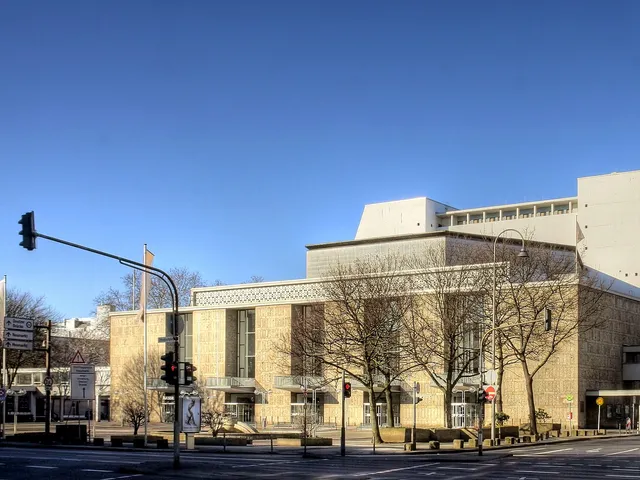
Oper Köln
Cologne's opera house at Offenbachplatz — a 1957 Riphahn landmark under major renovation since 2012, now performing at the Staatenhaus in Deutz.
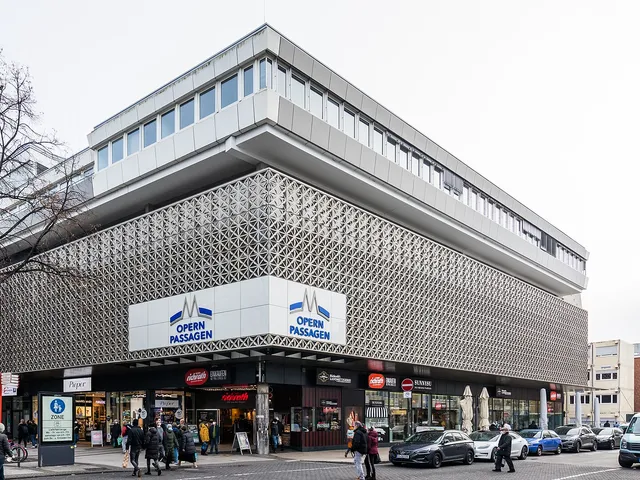
Opern Passagen
Opened in 1964 as Germany's first shopping arcade — today a shopping passage with the integrated Theater am Dom.
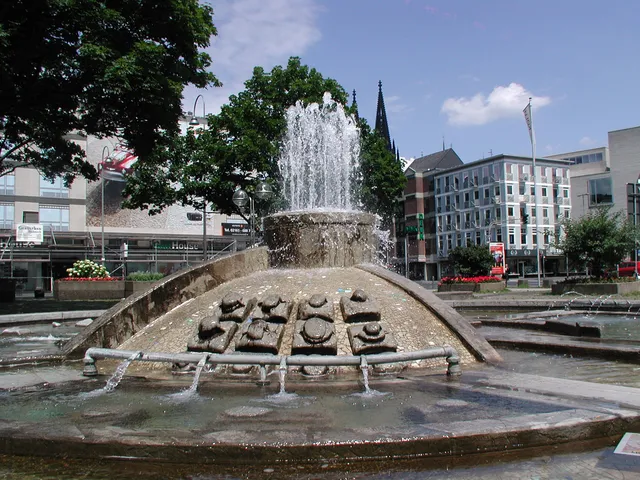
Opernbrunnen
since 1966Mosaic fountain in front of Cologne's Opera House, incorporating tiles from Aristotle Onassis's yacht and the bombed-out Kaiser Wilhelm Memorial Church in Berlin.
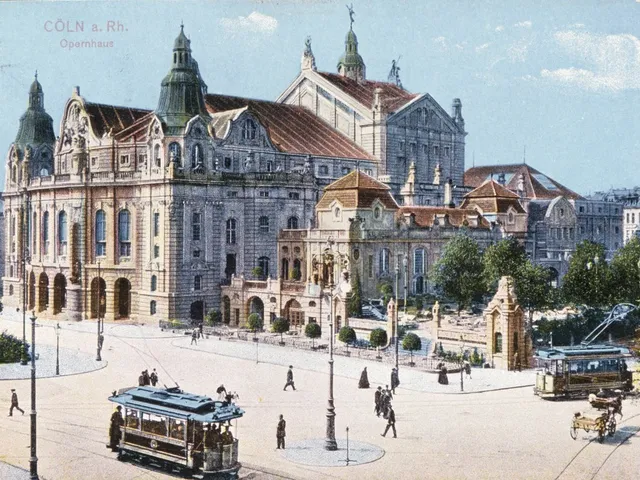
Opera House on Habsburgerring
One of the largest municipal theaters in the German Empire – opened in Cologne's Neustadt in 1902, demolished in 1958 after wartime destruction.
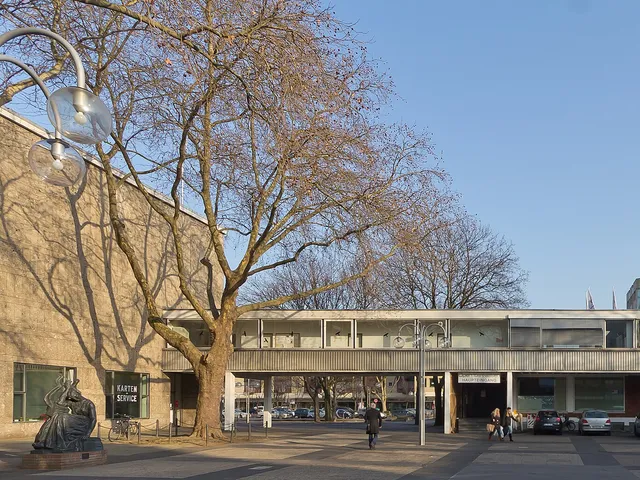
Opernterrassen
A 1957 dining pavilion by Wilhelm Riphahn — a rare surviving witness to Cologne's 1950s architecture at Offenbachplatz.
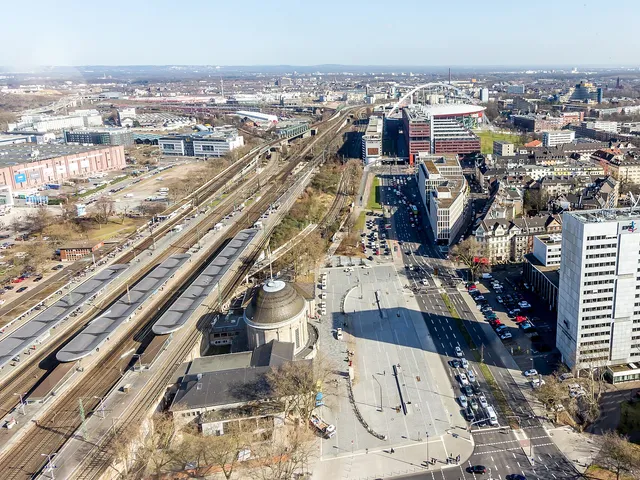
Ottoplatz
The station square in front of Köln Messe/Deutz, home to the Otto-Langen memorial and an award-winning landscape redesign.
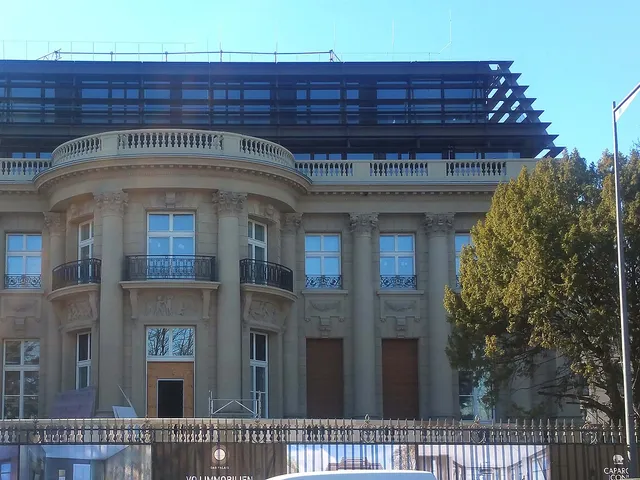
Palais du Rhin
French Baroque-classicist riverside palace built in 1908 for banker Emil von Oppenheim—today luxury apartments housing a Sotheby's location.
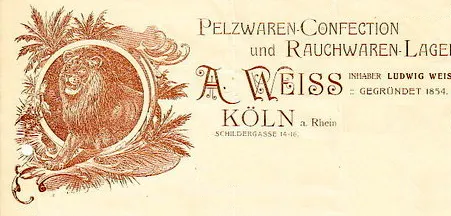
Pelzhaus A. Weiss
Former Cologne fur shop on Schildergasse, remembered today for its striking Klotz & Fieth commercial building, still standing.
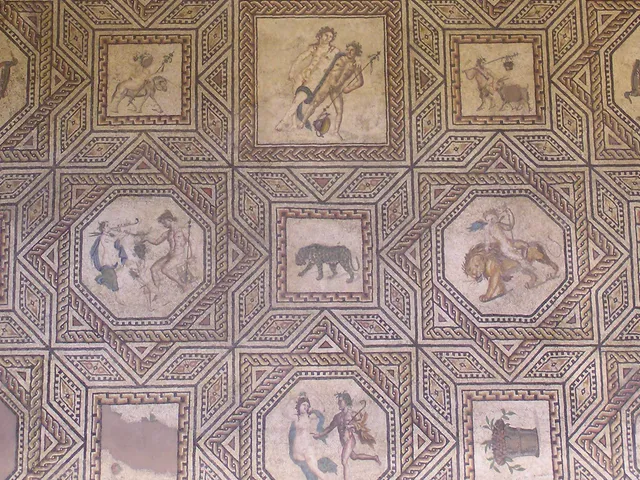
Peristyle House with the Dionysus Mosaic
Roman townhouse by Cologne Cathedral, its dining room floor paved with a 1.5-million-tile mosaic of the wine god Dionysus.
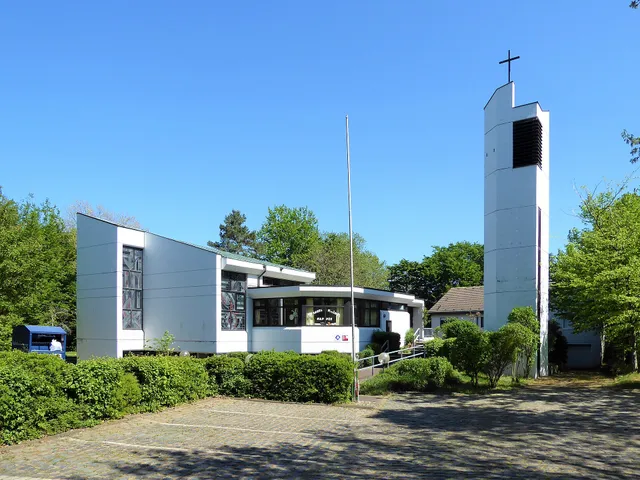
Petruskirche (Cologne-Merheim)
1979 Protestant church in Cologne-Merheim, featuring furnishings partly gifted by its partner parish in Zabrze, Poland.
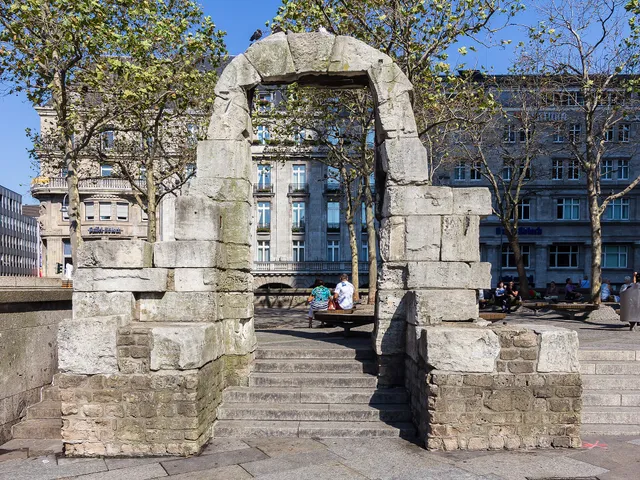
Pfaffenpforte (North Gate)
since 100Cologne's Roman north gate – once a three-arched main entrance, today preserved as a fragment on the Domplatte and in the Roman-Germanic Museum.
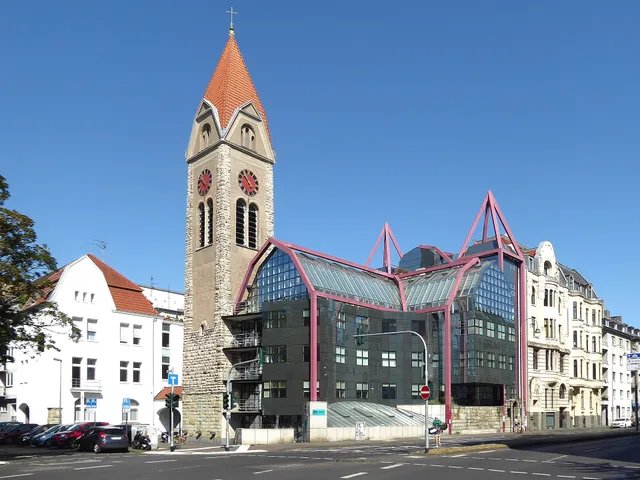
Parish Church of Christ's Resurrection
Old Catholic parish church in Cologne's Südstadt — a red steel frame on its 1990s successor traces the silhouette of the wartime predecessor at full scale.
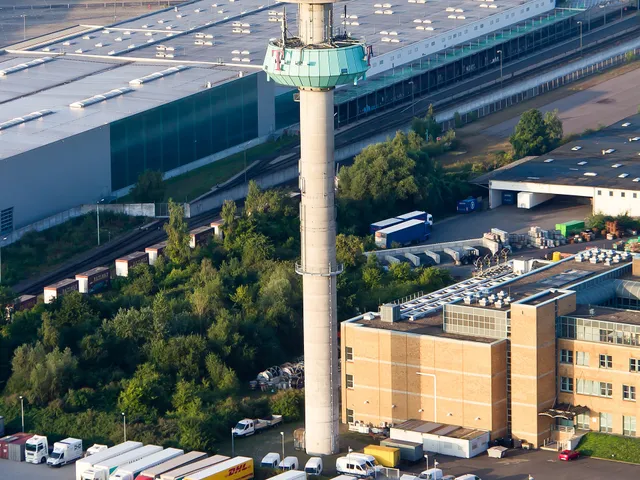
Pollonius
115-metre telecommunications tower in Cologne's Porz district, named as a nod to its taller 'big brother', the Colonius tower.
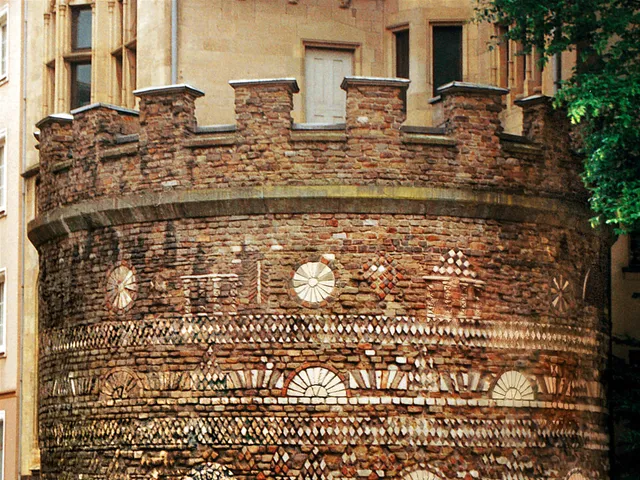
Roman Cologne – Colonia Claudia Ara Agrippinensium
The birthplace of Cologne: the Roman CCAA, capital of Lower Germania — and today part of a UNESCO World Heritage Site.
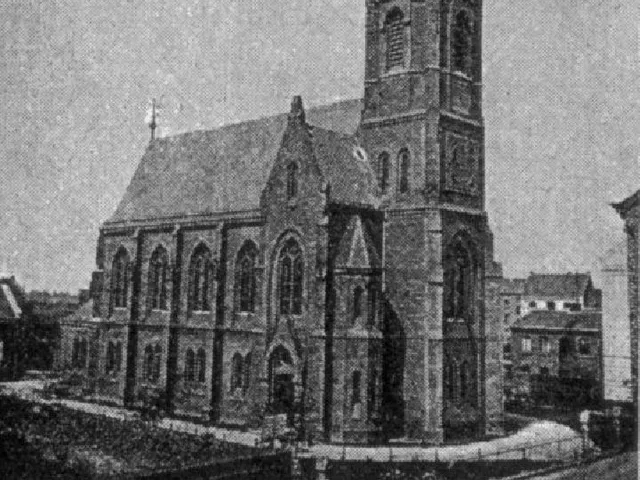
Presbyterian Church (Kalk)
Neo-Gothic evangelical parish church in Cologne-Kalk, demolished in 1951 to make way for the expansion of the Chemische Fabrik Kalk.
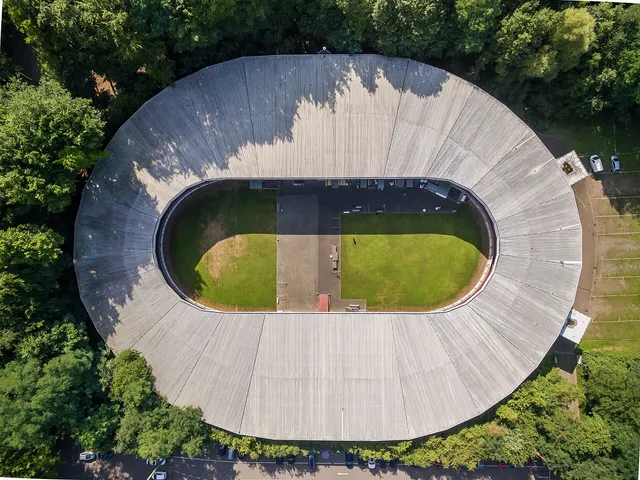
Radstadion Köln
Müngersdorf velodrome opened in 1996 with a track made from rare tropical Afzelia wood; partly demolished since 2022, replaced by the Albert Richter Velodrome from 2027.
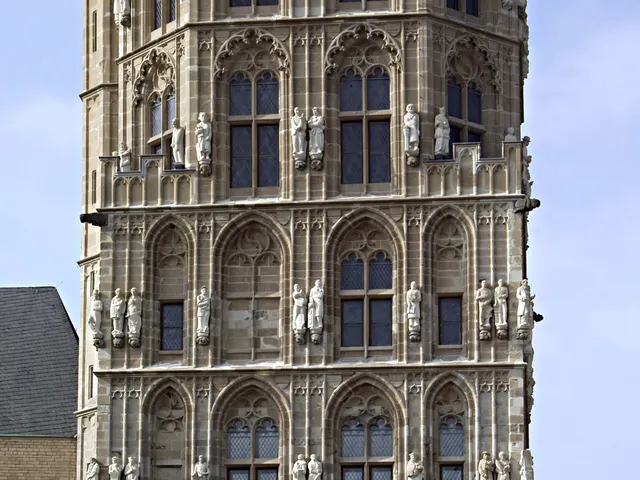
Historic City Hall
Germany's oldest city hall – with a Gothic council tower, a Renaissance loggia, and over 800 years of documented building history in Cologne's Old Town.
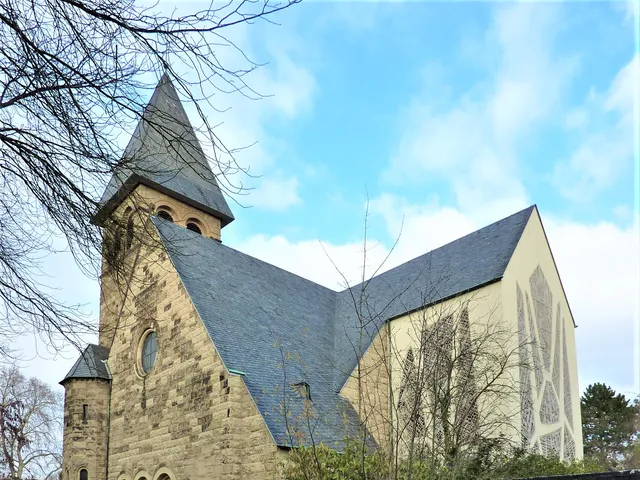
Reformationskirche
Protestant church in Cologne-Marienburg famed for its 15-metre concrete-glass window depicting creation striving toward Christ.
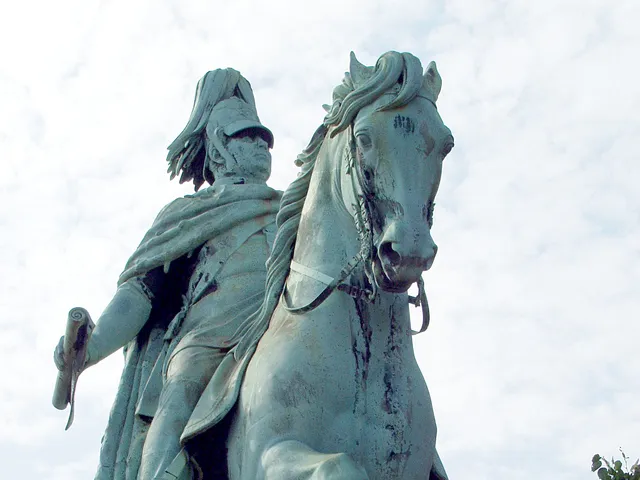
Equestrian Statue of Frederick William IV
Bronze equestrian monument by Gustav Blaeser at the right-bank portal of the Hohenzollern Bridge, unveiled in 1867.
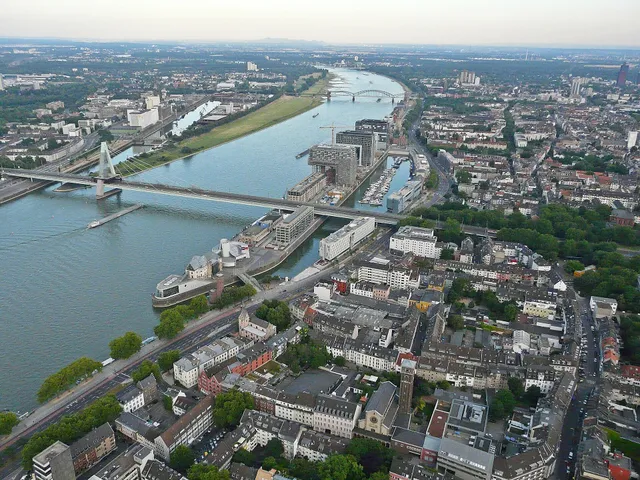
Rheinauhafen
Former Cologne harbour with the iconic Crane Houses – today a residential and commercial quarter on the 'Werthchen' peninsula in Altstadt-Süd.
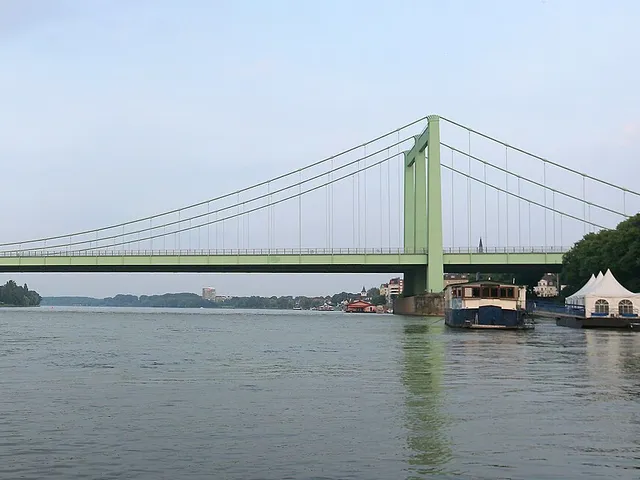
Cologne-Rodenkirchen Rhine Bridge
since 1941Germany's first true suspension bridge: 567 m across the Rhine, opened in 1941 as the 'Adolf Hitler Bridge,' destroyed in WWII and rebuilt in 1954.
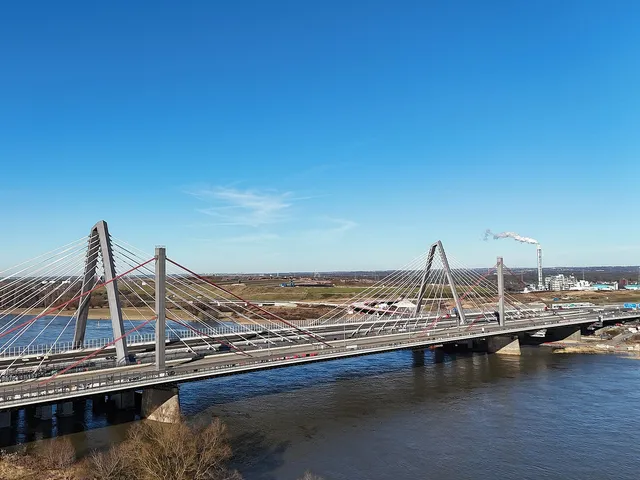
Leverkusen Rhine Bridge
since 1965Cable-stayed bridge carrying the A1 motorway across the Rhine at Leverkusen — replacing the demolished 1965 bridge that could no longer handle modern traffic.
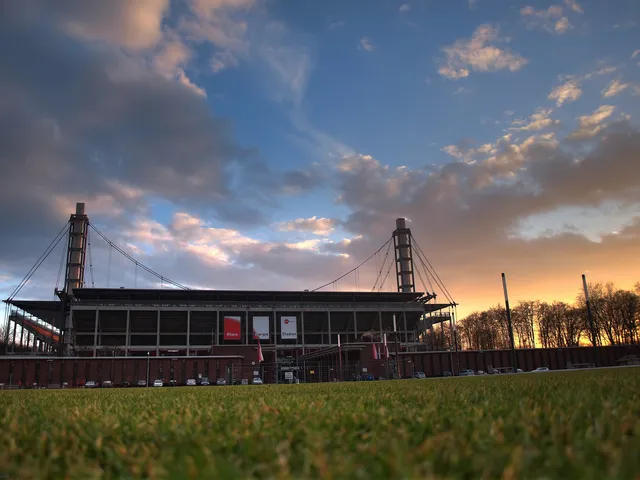
RheinEnergieStadion
since 1921Home ground of 1. FC Köln in Müngersdorf — rebuilt in 2004 as a dedicated football stadium and one of twelve 2006 FIFA World Cup venues.
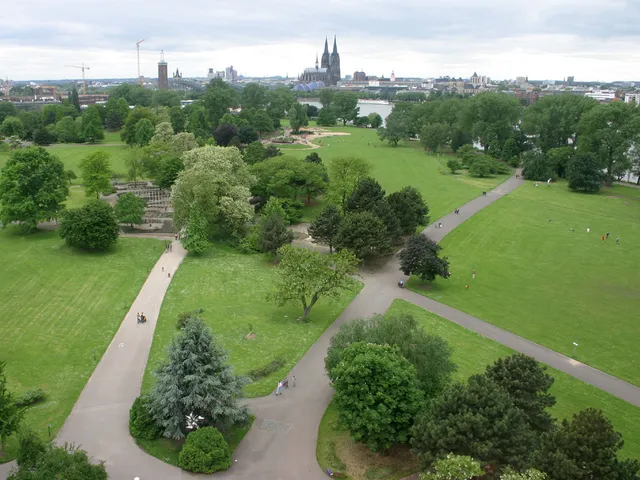
Rheinpark
Riverside landscape park on former Prussian fortress grounds — host of the 1914 Cologne Werkbund Exhibition, listed as a heritage monument since 1989.

Richmodis-Haus
Cologne landmark with two stone horse heads in its octagonal tower — rooted in the haunting legend of Richmodis von Aducht from the Black Death era.
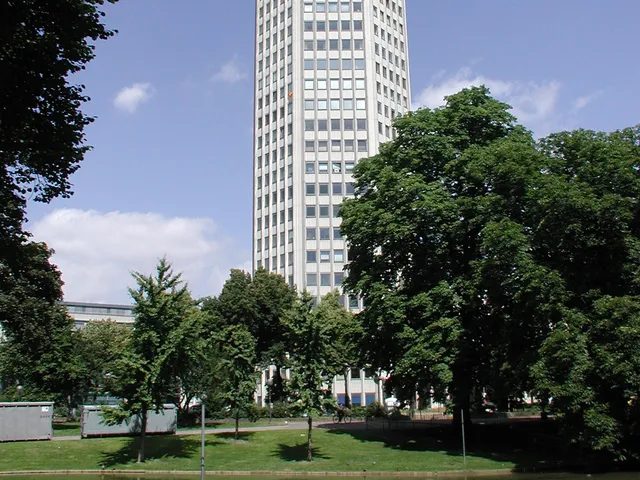
Ringturm
since 1973The Ringturm at Cologne's Ebertplatz is a 109-metre high-rise from 1973 that, since its conversion into apartments, stands as a striking architectural landmark in the Neustadt-Nord district.
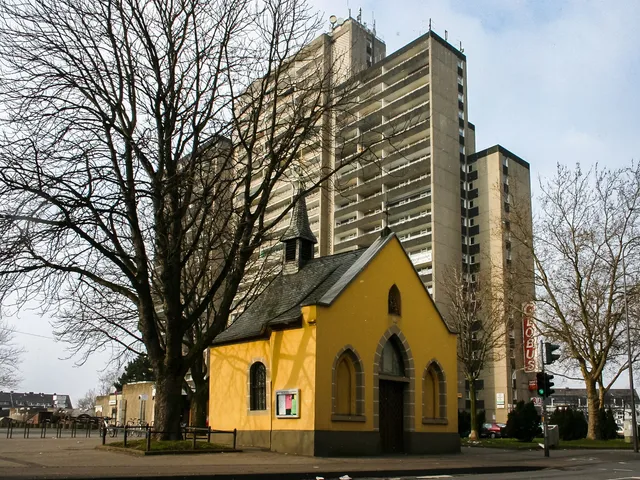
Rochuskapelle
The oldest surviving building in Cologne's Ehrenfeld district – a chapel founded in 1666 following a plague outbreak.
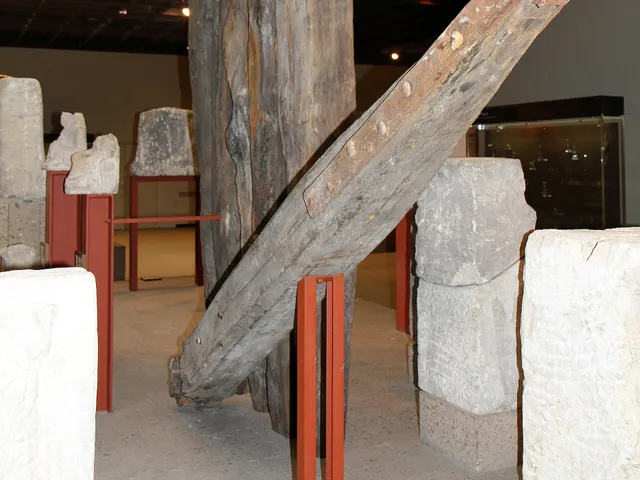
Römerbrücke
since 310The first permanent bridge across the Rhine near Cologne — built under Emperor Constantine I from 310 AD, at the site of today's Deutzer Brücke.
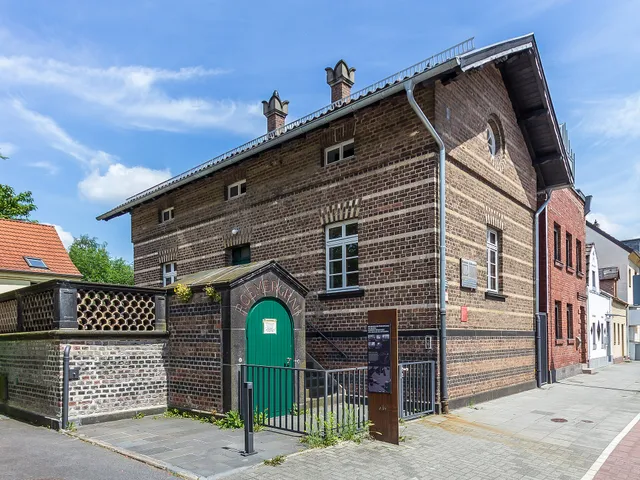
Roman Tomb Cologne-Weiden
Underground Roman burial chamber from the 2nd century — one of the best-preserved funerary structures north of the Alps, discovered in 1843.
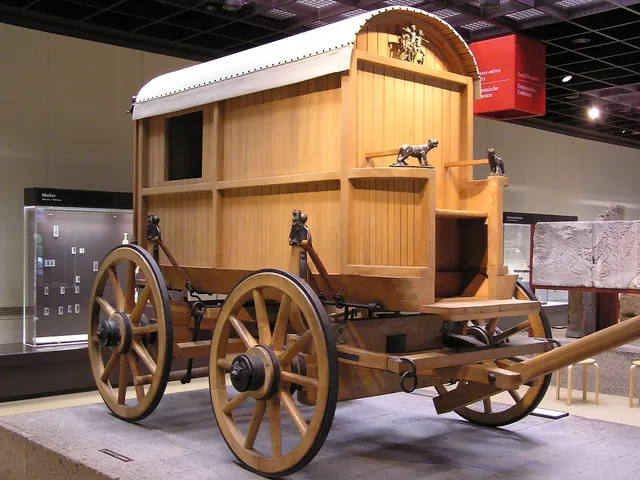
Romano-Germanic Museum (RGM)
since 1946Cologne's archaeological museum — world's largest collection of Roman glass and the Dionysus Mosaic near the cathedral (currently at the Belgian House).
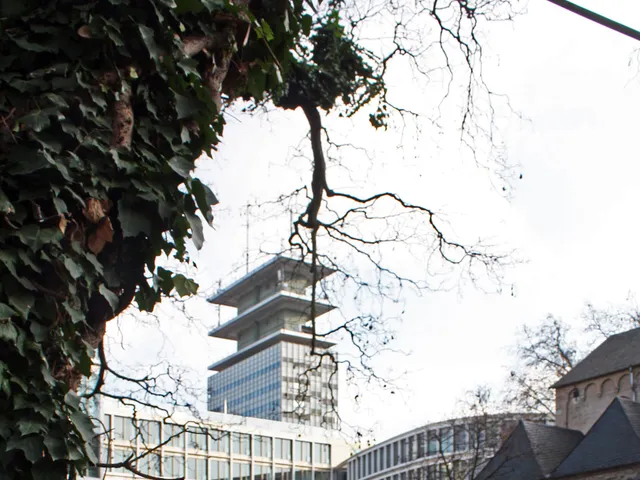
Roman Baths and Medieval Bathhouses in Cologne
Foundations of a 2nd/3rd-century Roman bath complex unearthed in 2007 beneath Cologne's Altstadt-Süd — including an 18-metre-wide rotunda.
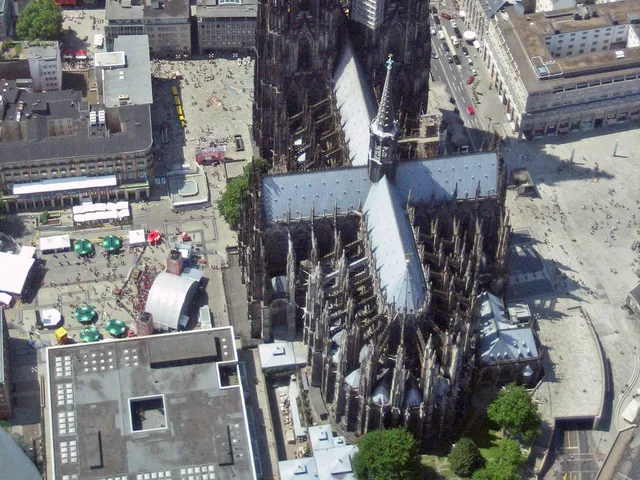
Roncalliplatz
The square around Cologne Cathedral traces a dramatic transformation from a densely built medieval neighbourhood to an open national monument.
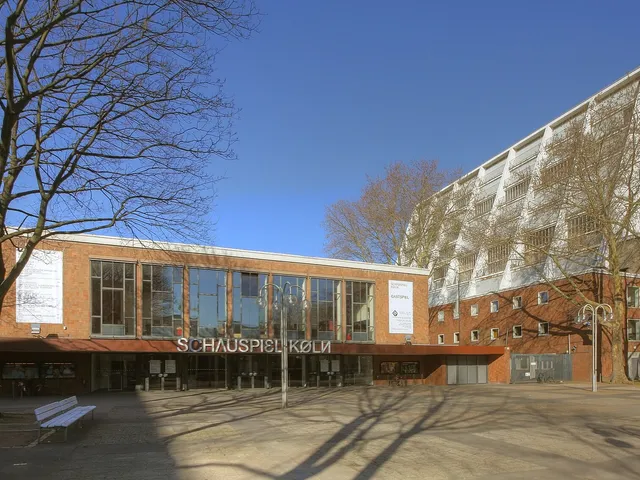
Schauspiel Köln
since 1898Cologne's storied spoken-theatre company, performing at the Mülheim Depot while its landmark home at Offenbachplatz undergoes renovation.
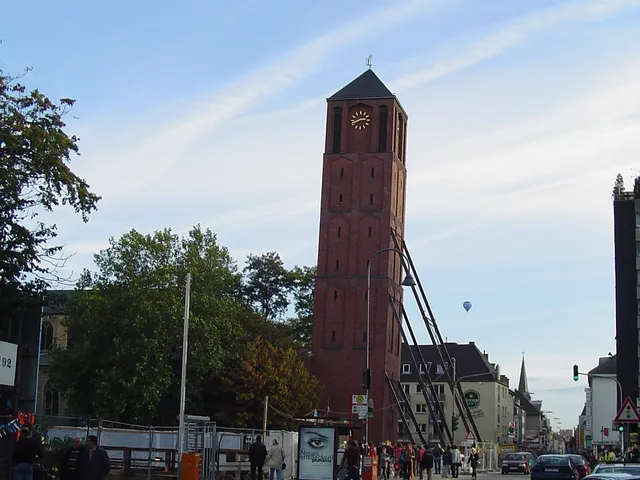
Leaning Tower of Cologne (St. Johann Baptist)
In 2004, its 44 m tower tilted 77 cm westward — earning the church the nickname 'Leaning Tower of Cologne' and making international headlines.
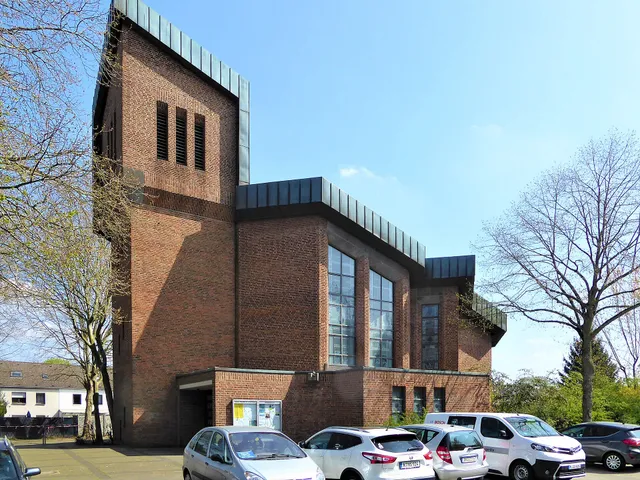
Our Lady of Sorrows (Cologne-Lindweiler)
Branch church in Cologne-Lindweiler whose organ traveled from the Netherlands via Bonn before reaching Cologne.
Chocolate Museum Cologne
since 1993Built on a peninsula in the Rheinauhafen harbour, this museum tells the story of chocolate — complete with a glass-fronted factory and a three-metre chocolate fountain.
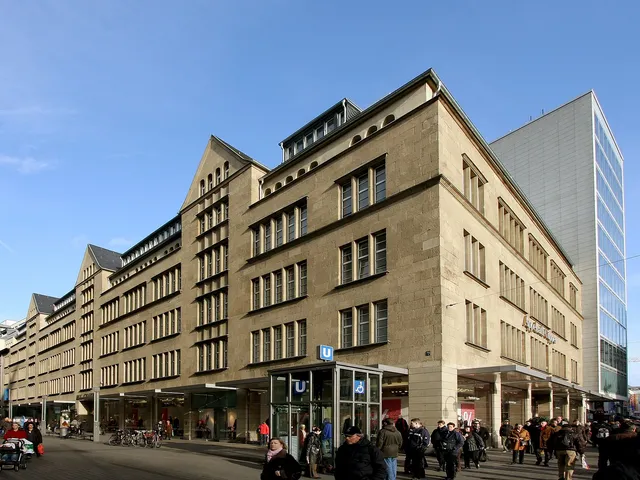
Schwerthof
Office and commercial building from 1921/22 where, in 1947, Cologne's first postwar inner-city cinema opened.
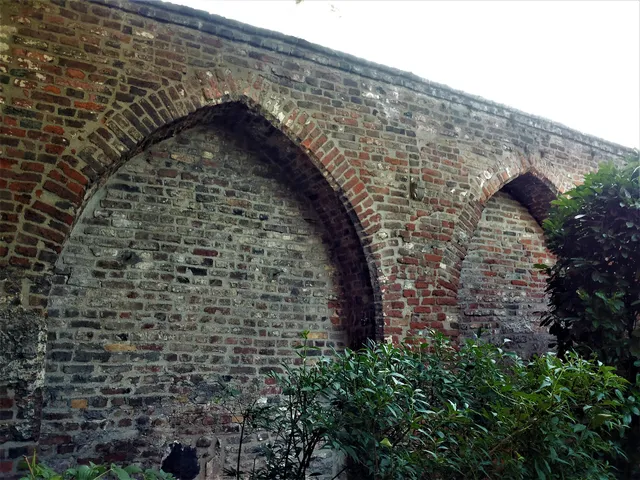
Servitinnenkloster St. Lucia in Cologne
Convent of the Servite Sisters on Filzengraben, dissolved in 1802 and demolished in 1857 — today the site is home to the Protestant Trinity Church.
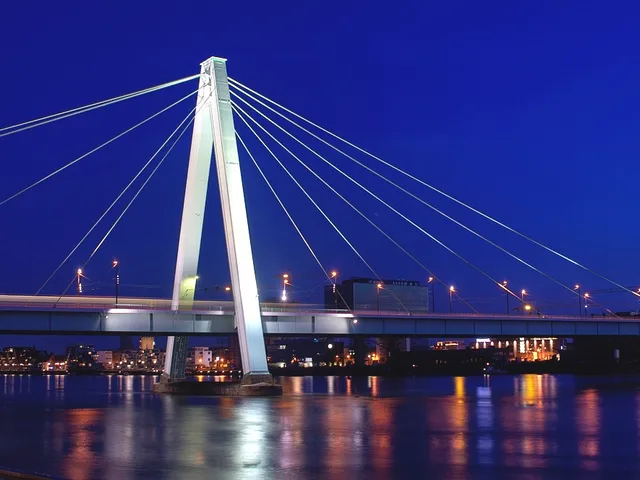
Severinsbrücke
since 1959Cable-stayed bridge with a single A-shaped pylon over the Rhine to Deutz — Cologne's first entirely new bridge built after World War II.
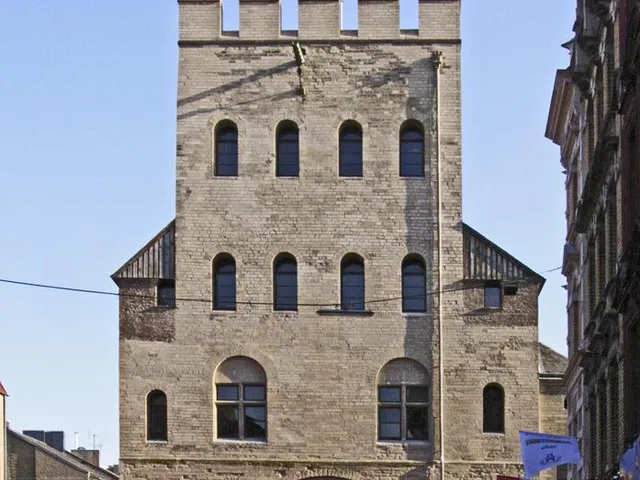
Severinstorburg
since 1230One of only four surviving medieval city gate towers in Cologne — a landmark of the Severinsviertel and today a vibrant community venue at Chlodwigplatz.
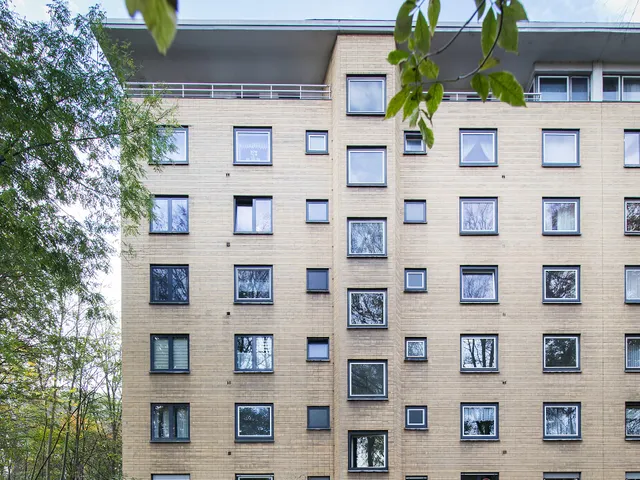
Siedlung Volkspark
Uniformly planned villa estate in Cologne's green belt, built 1949–1951 for occupying forces and protected as a whole since 1995.
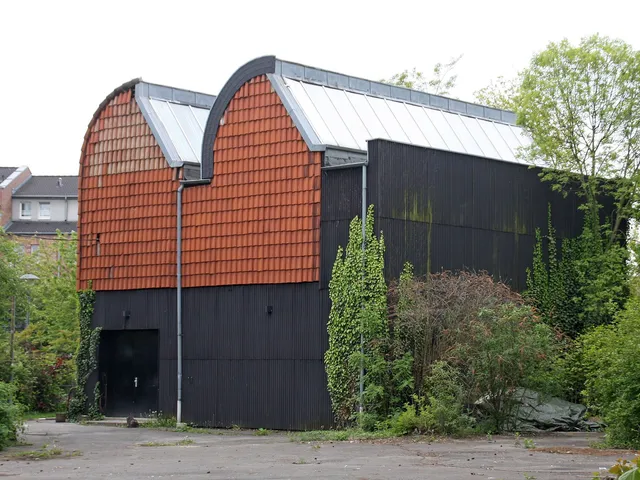
Simultanhalle
Exhibition space in Cologne-Volkhoven that artists saved from demolition in 1983 — originally an experimental 1979 test structure for the Museum Ludwig.
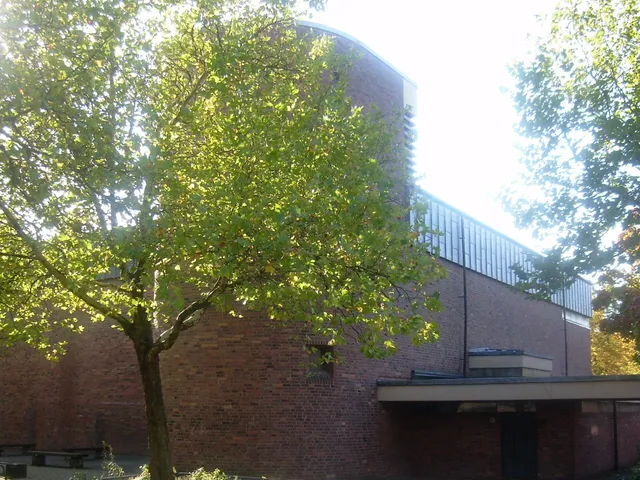
St. Adelheid (Cologne-Neubrück)
since 1968A 1960s Catholic parish church on the market square of Neubrück, dedicated to Saint Adelheid of Vilich.
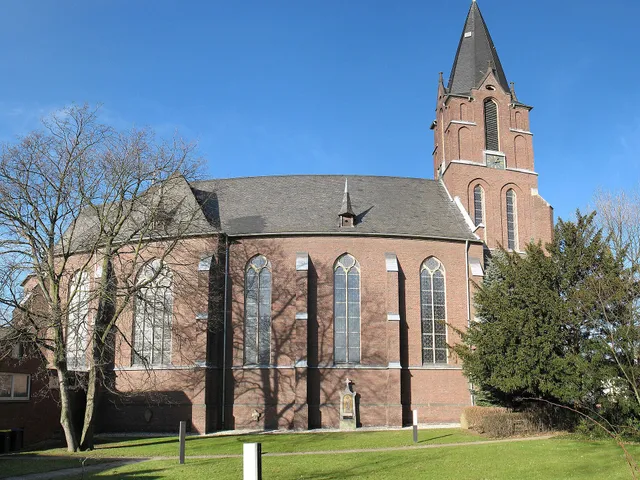
St. Aegidius (Cologne-Wahn)
Neo-Gothic parish church in Cologne-Wahn, unusually aligned north–south instead of the traditional east-facing orientation.
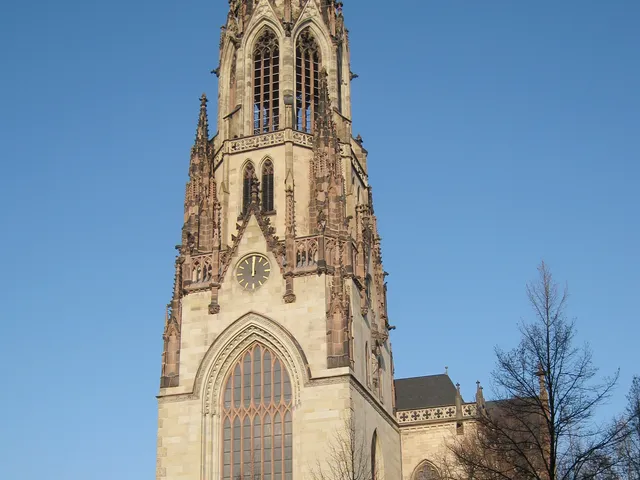
St. Agnes
since 1896Cologne's largest church after the Cathedral: a Neo-Gothic hall church that gave its name to the surrounding Agnesviertel district.
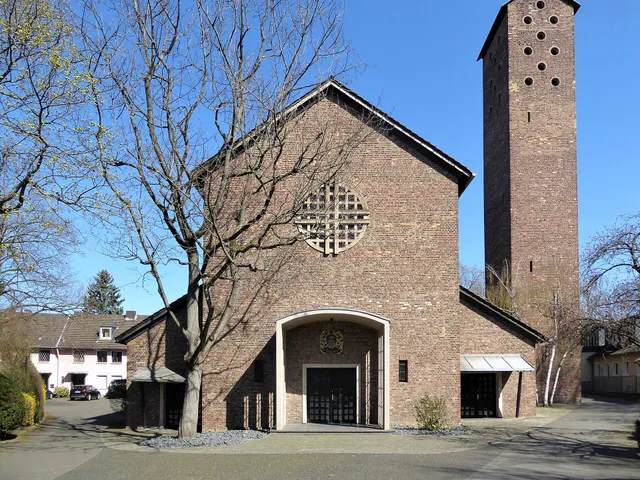
St. Albertus Magnus
Catholic church in Cologne-Lindenthal, known for a 1962 chancel-wall fresco by Cologne church painter Peter Hecker.
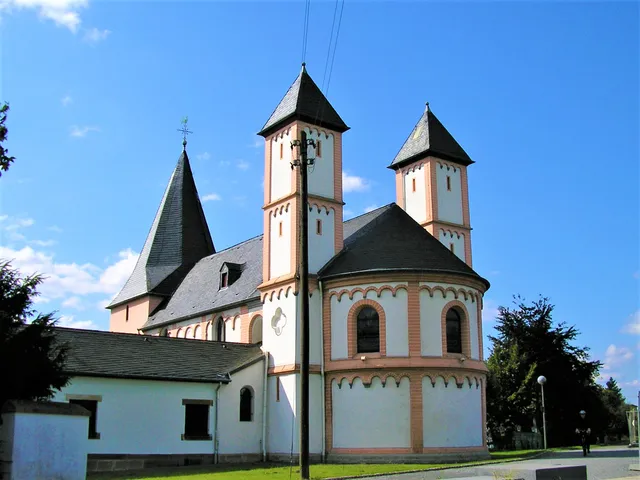
St. Amandus (Köln-Rheinkassel)
since 1200Romanesque church on the Rhine whose twin-towered chancel is a miniature echo of nearby St. Gereon — an extraordinary feature for a rural parish church.
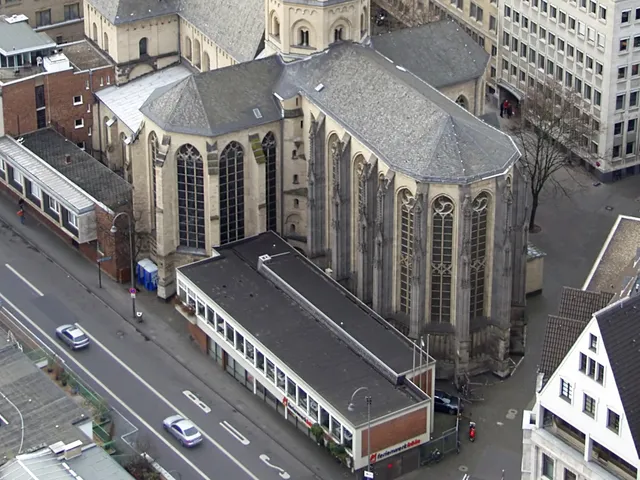
St. Andreas
since 974One of Cologne's twelve great Romanesque churches — home to the tomb of Albertus Magnus in its crypt and stained-glass art by Markus Lüpertz.
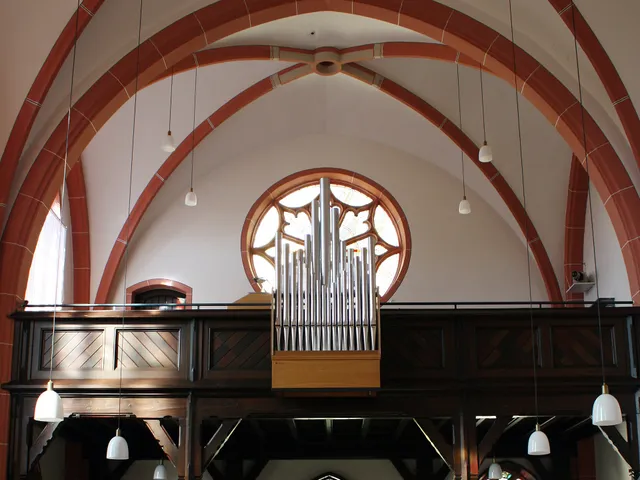
St. Anna-Haus
Founded in 1888 as a hospital and care home for the elderly, it served as a hospital until 1979 — today a Cellitinnen senior residence in Cologne-Lindenthal.
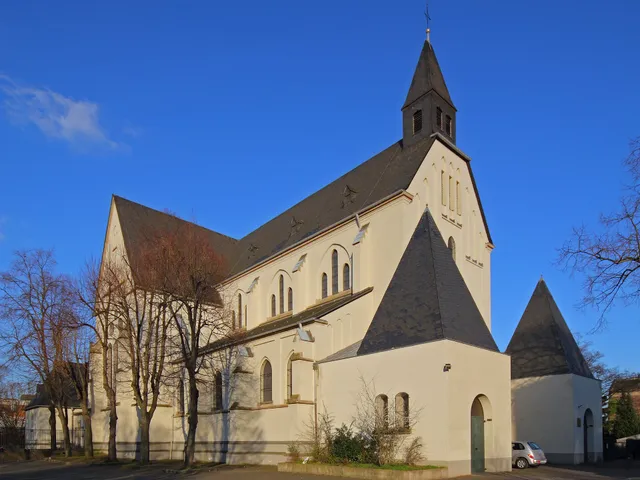
St. Anthony's Church (Cologne-Mülheim)
Neo-Gothic Catholic church in northern Cologne-Mülheim, notable for stained-glass windows spanning several eras and a 1970 organ.
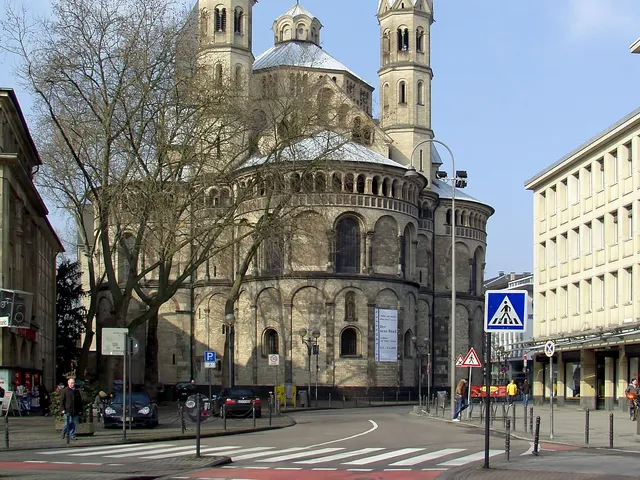
St. Aposteln
since 1020One of Cologne's twelve great Romanesque churches — known for its trefoil-shaped trichoral apse at Neumarkt and celebrated as the city's premier music church.
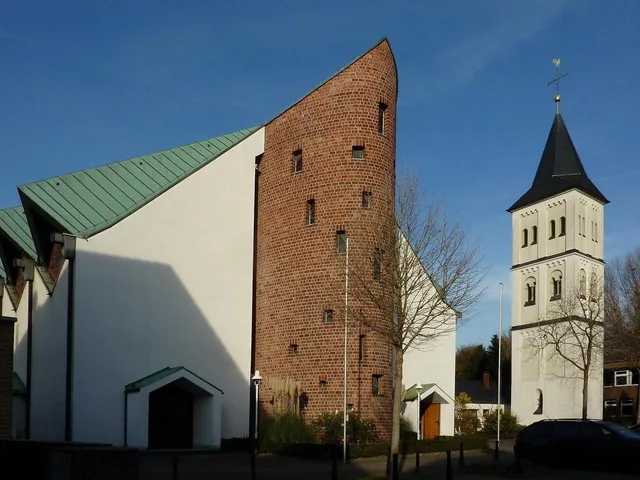
St. Brictius (Cologne-Merkenich)
Catholic parish church whose 12th-century Romanesque tower stands freely beside the modern 1963 building.
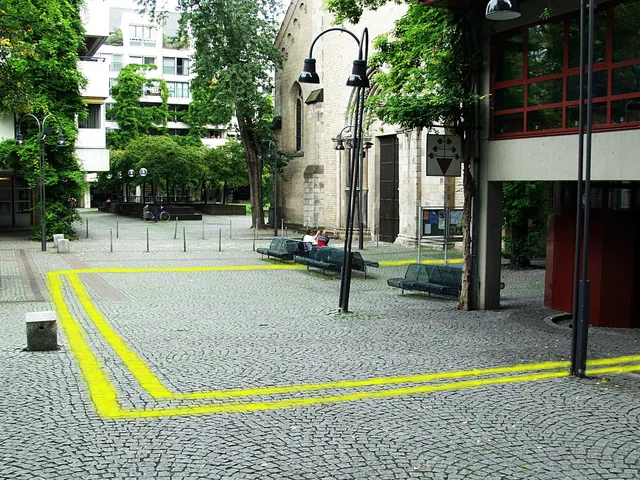
St. Brigiden
A demolished parish church next to Gross St. Martin — its footprint is now traced in darker cobblestones on the Old Town pavement.
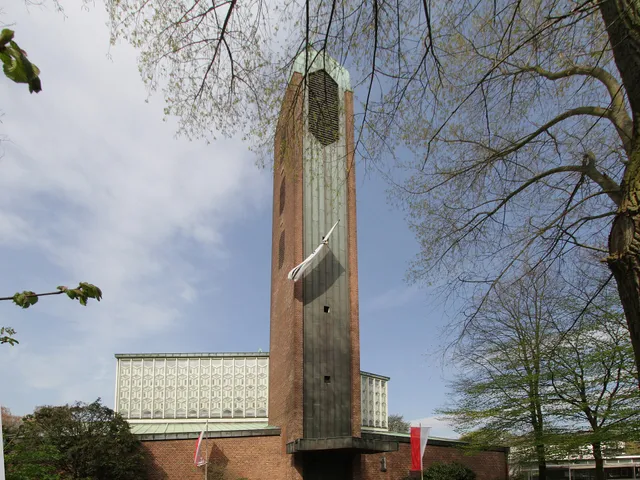
St. Bruder Klaus (Cologne-Mülheim)
since 1956Catholic church by Fritz Schaller with a three-part structure and hexagonal clerestory, awarded the Cologne Architecture Prize in 1967.
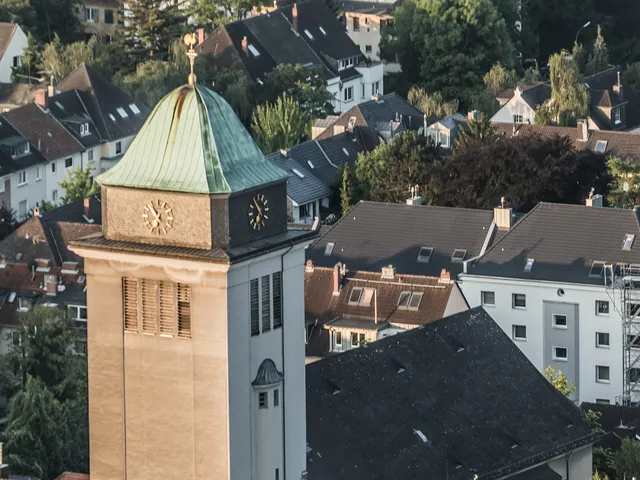
St. Bruno
since 1924A Catholic parish church in Cologne's Klettenberg district, built in the 1920s in a restrained Expressionist style and repeatedly remodelled after heavy wartime damage.
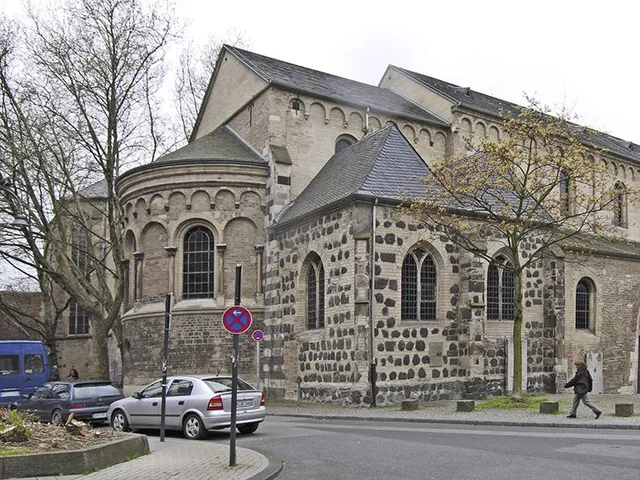
St. Cäcilien – Museum Schnütgen
since 801One of Cologne's twelve great Romanesque churches — home to the Museum Schnütgen for medieval art since 1956.
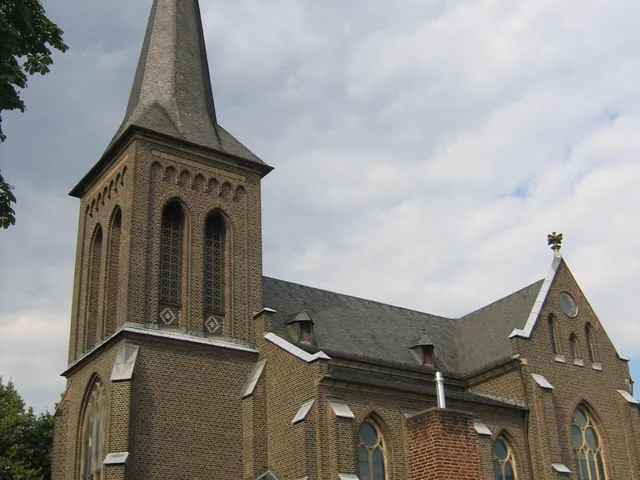
St. Clemens (Cologne-Langel)
Neo-Gothic brick hall church in Cologne-Langel, part of the cycling-route churches network since 2024, open to cyclists and hikers along the Rhine.
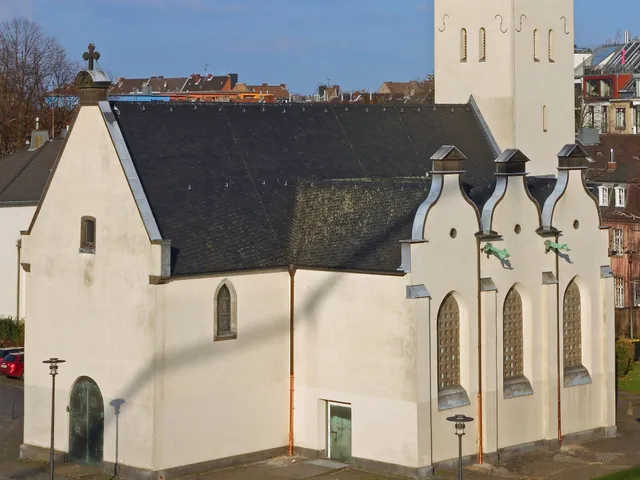
St. Clemens (Cologne-Mülheim)
A former sailors' church on the Rhine in Cologne-Mülheim, rooted in a Romanesque hall church built in the 12th and 13th centuries.
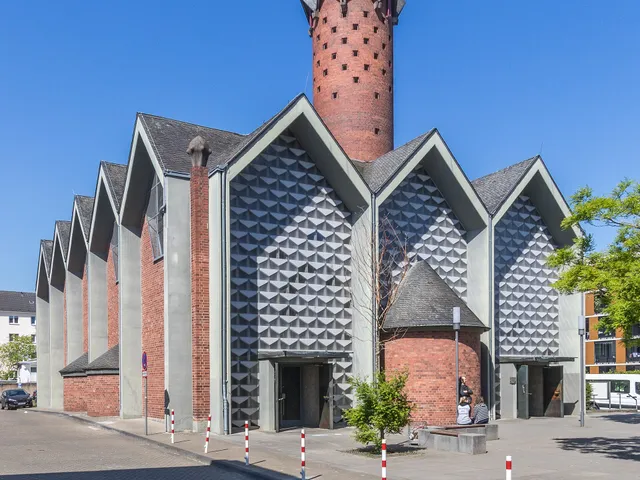
St. Clemens (Cologne-Niehl)
Catholic parish church by Karl Band, defined by a multiply folded roof, a sculptural brick facade, and a 32-metre tower.
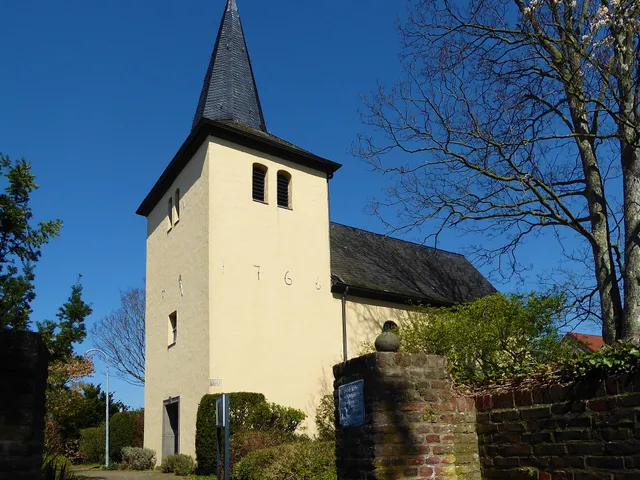
St. Cosmas und Damian (Köln-Weiler)
Parish church in Köln-Weiler whose Baroque predecessor from 1766 has been preserved; the 1910 organ was restored to its original specification in 2007.
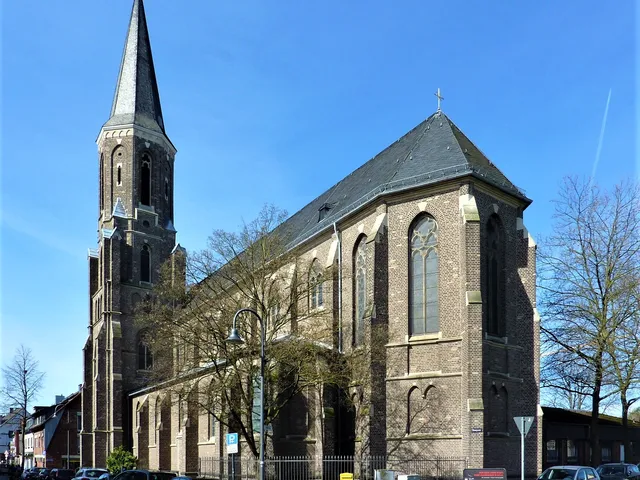
St. Dionysius
Neo-Gothic brick basilica of 1898/99 in Cologne-Longerich, its furnishings blending medieval figures with 20th-century works.
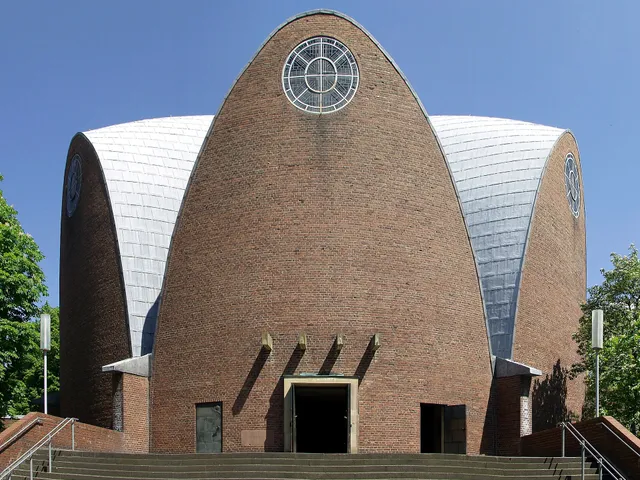
St. Engelbert
since 1930Cologne's first modern church: Dominikus Böhm's central-plan building with a star-shaped dome, built 1930–1932 in Riehl.
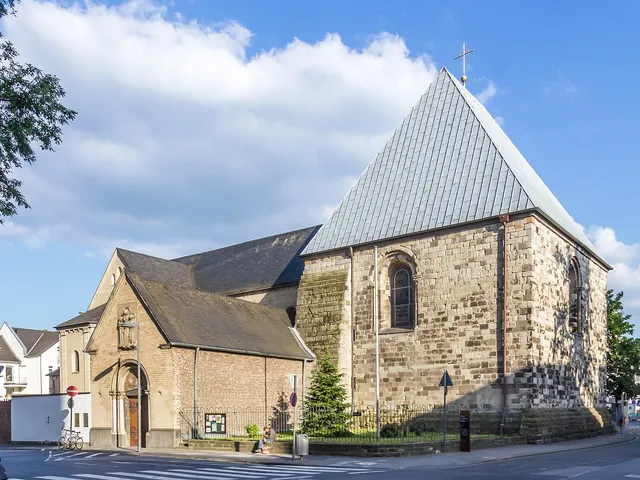
St. Georg
since 105911th-century Romanesque collegiate church rising above a columned crypt with Roman spolia — one of Cologne's twelve great Romanesque basilicas.
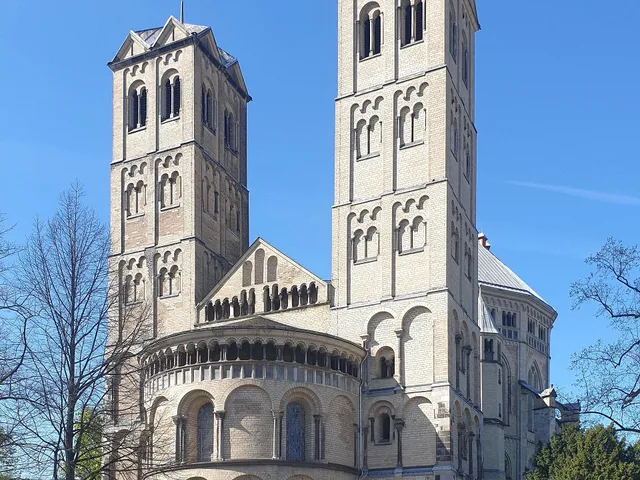
St. Gereon
since 1201Romanesque church in Cologne with a ten-sided domed rotunda from the Hohenstaufen era — the largest surviving free-vaulted central-plan building of the Middle Ages north of the Alps.
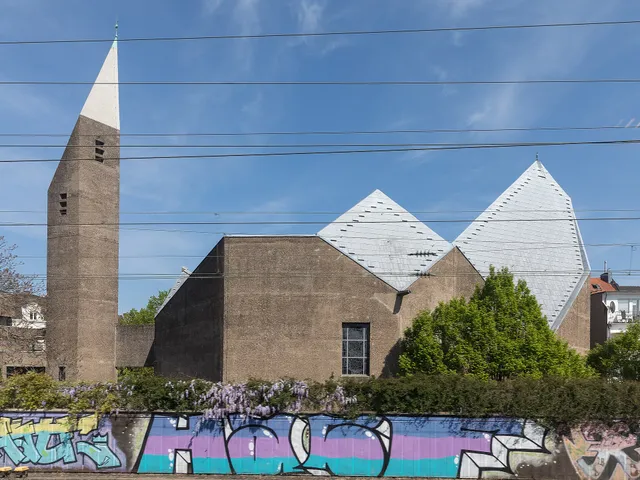
St. Gertrud
Brutalist church by Gottfried Böhm in the Agnesviertel — a cave-like raw concrete structure that won the Cologne Architecture Prize in 1967.
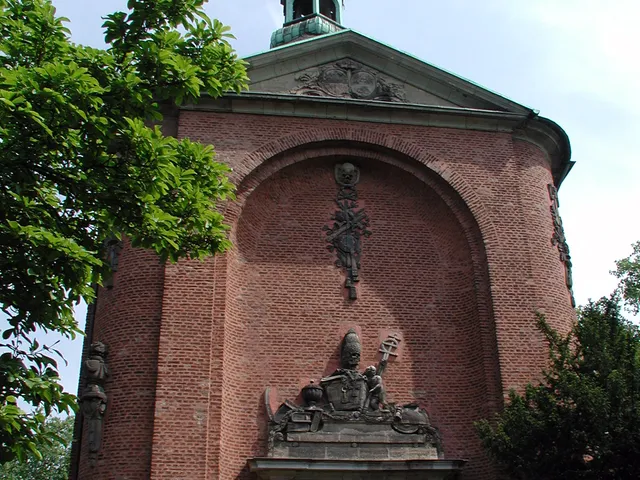
St. Gregorius im Elend
Baroque church rebuilt after WWII destruction, born from the 'Elendskirchhof' — Cologne's historic burial ground for strangers, outcasts, and the dishonoured.
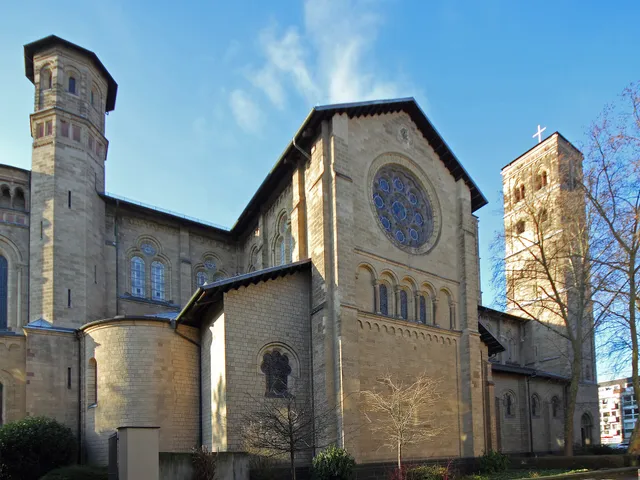
St. Heribert
Parish church in Cologne-Deutz, nicknamed the "Düxer Dom" — home to the Heribert Shrine, completed around 1175.
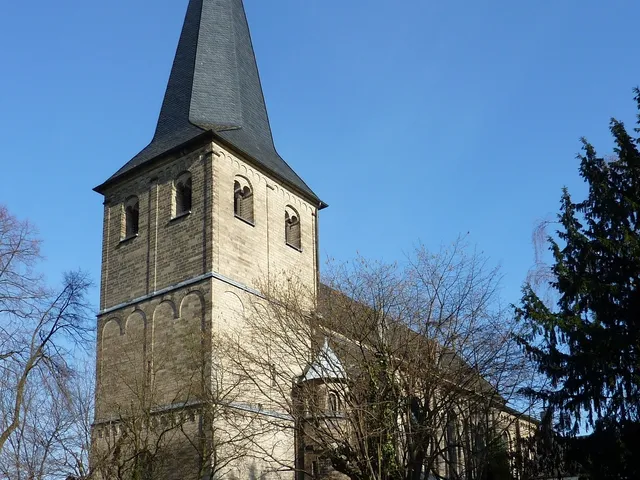
St. Hubertus (Flittard)
since 1896Catholic church in Cologne-Flittard featuring a Romanesque tower from the 12th century and a neo-Romanesque nave built in 1897.
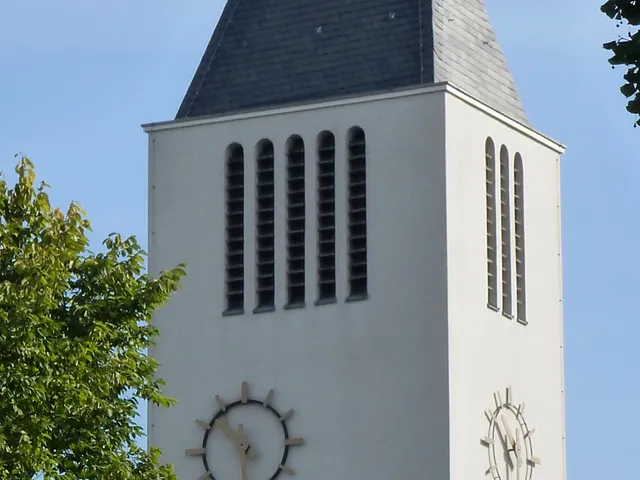
St. Hubertus (Cologne-Brück)
since 1931A Roman Catholic hall church from 1930/31 in the modernist style — home to a 15th-century Madonna statue and original stained-glass windows from 1931.
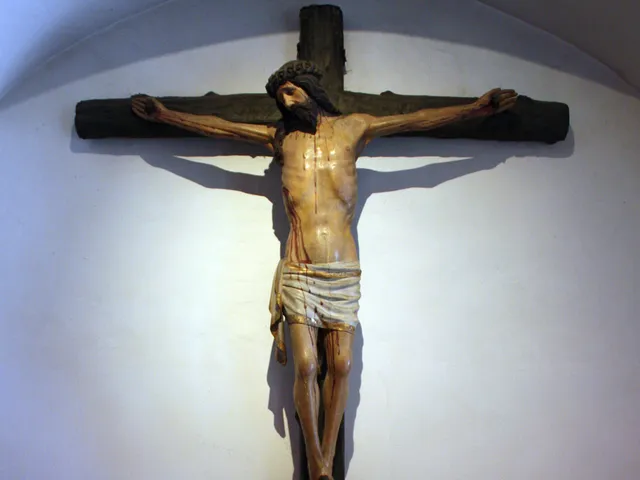
St. Jakob
A lost Cologne parish church at the Waidmarkt, built in the 11th century under Archbishop Anno and standing until 1825.
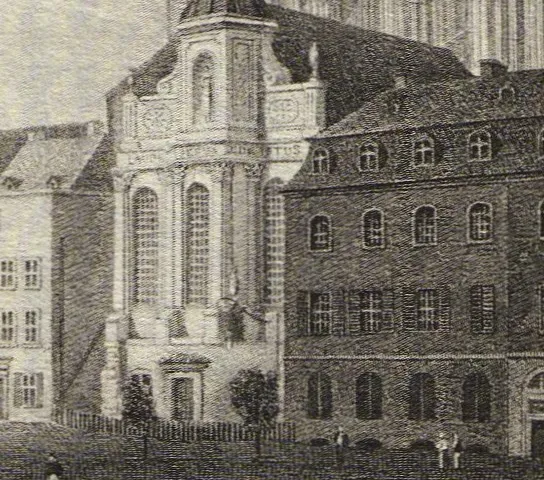
St. Johann Evangelist
Demolished parish church that once stood south of Cologne Cathedral on the Domhof, serving for a time as the Archbishop's private chapel.
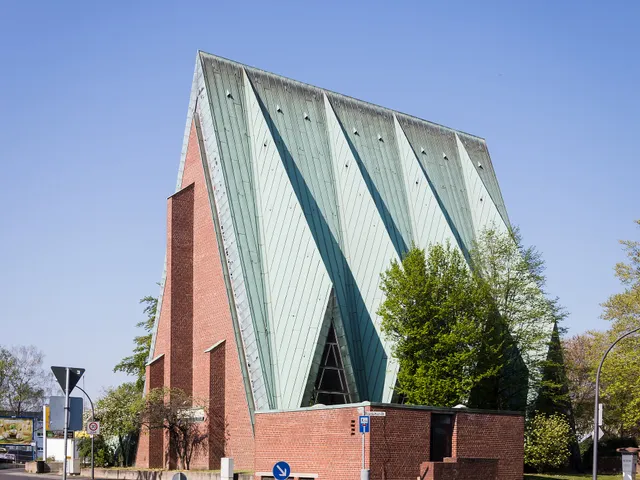
St. John the Evangelist (Cologne-Stammheim)
Catholic church in Cologne-Stammheim built as a literal "tent of God," its copper roof sweeping all the way to the ground — demolished in 2025.
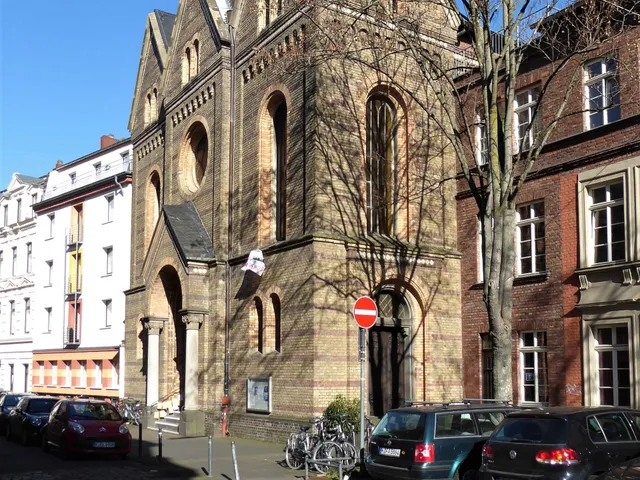
St. John's Church (Deutz)
since 1859Protestant church from 1861 in Cologne-Deutz with an octagonal tower; gutted by fire in 1942 and gradually restored over the following decades.
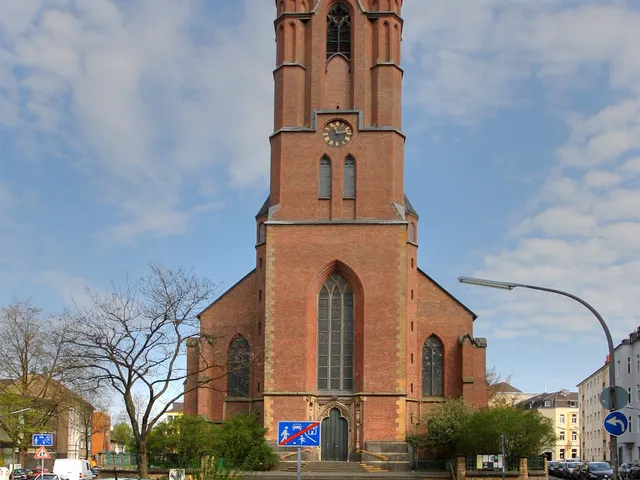
St. Joseph (Cologne-Kalk)
Neo-Gothic brick hall church in Cologne-Kalk featuring stained-glass windows by Dominikus Böhm, including seven Stations-of-the-Cross windows in the transept.
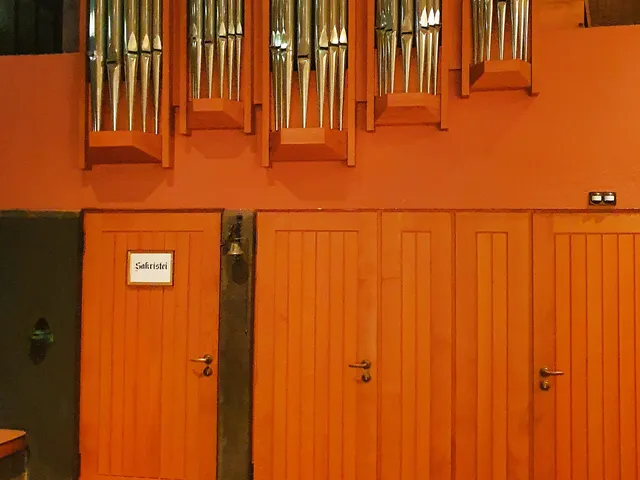
St. Kolumba
since 1150'Madonna in the Ruins' — a medieval chapel enclosed within the ruins of a Gothic parish church, now embraced by the Kolumba art museum.
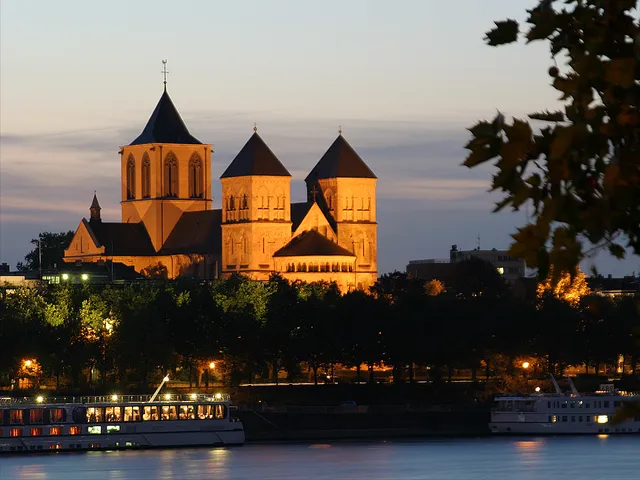
St. Kunibert
since 1215Youngest of Cologne's twelve Romanesque churches — with original 13th-century windows preserved in wartime storage, rising just north of the Cathedral.
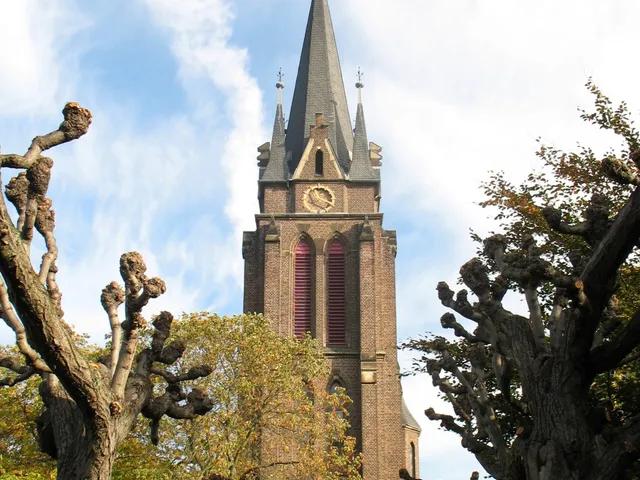
St. Laurentius (Cologne-Ensen)
since 1894Neo-Gothic parish church in Ensen with a 56-metre tower and an unusual 'Christ at Rest' figure lacking nail and side wounds.
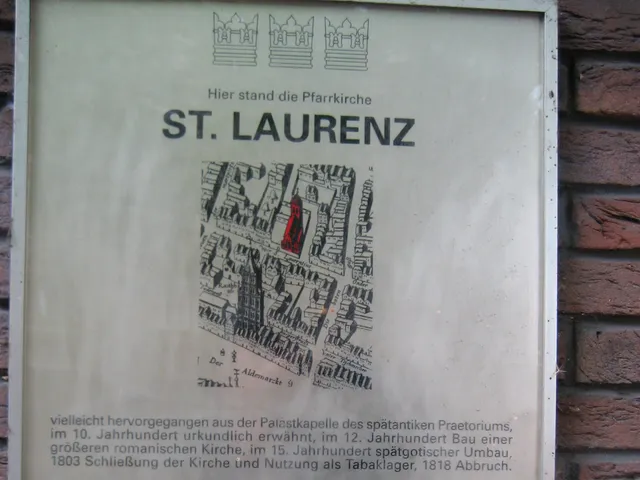
St. Laurenz (Cologne Old Town)
since 1188Parish church demolished as early as 1818 — its legacy lives on in the street names Laurenzplatz and Laurenzgittergässchen in Cologne's city centre.
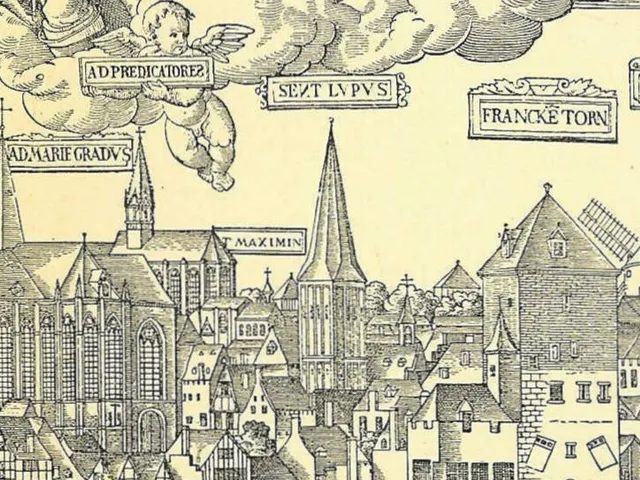
St. Lupus
Long-demolished medieval parish church with hospital near today's central station square — cited in Cologne's oldest written record of beer consumption.
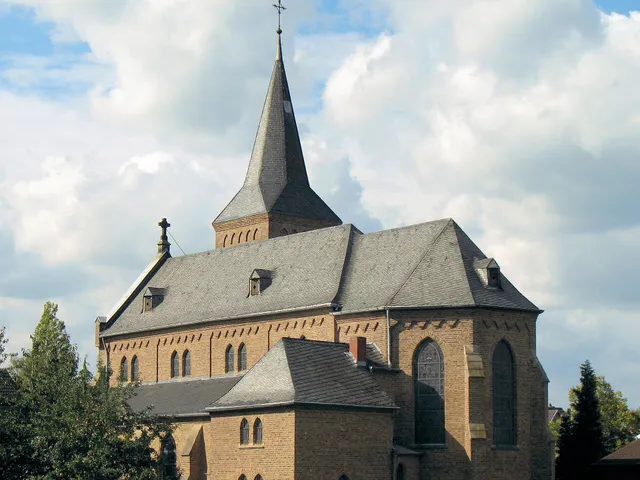
St. Margareta
Neo-Gothic brick basilica of 1909–1911 in Cologne-Libur, whose original interior—altars, pulpit, and windows—survives intact.
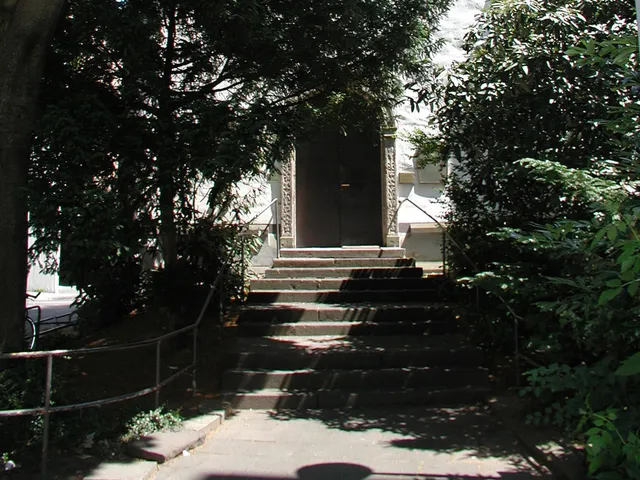
St. Maria Ablass
since 1431Of the demolished parish church of St. Maria Ablass, only the chapel of grace survives — today the Russian Orthodox Church of Saints Constantine and Helena.
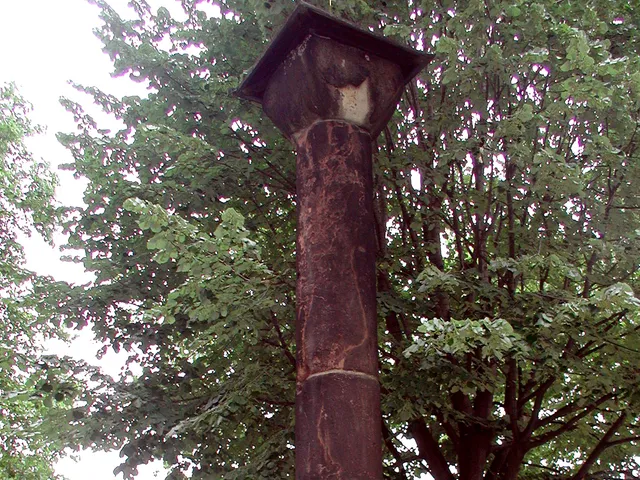
St. Maria ad Gradus
since 1062Demolished Romanesque collegiate church east of Cologne Cathedral — today only the 'Cathedral Column' at the east choir survives as a reminder.
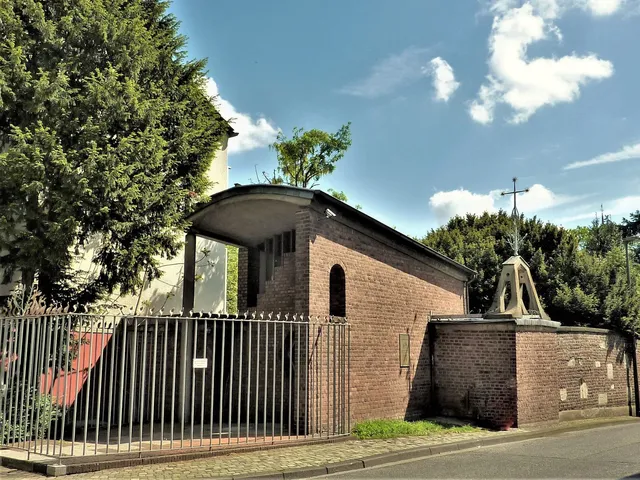
St. Maria ad Ortum
Lost late-Romanesque convent church of Cologne's Cistercian nuns — the "Mariengarten" community grew from an earlier settlement in the Riehl district.
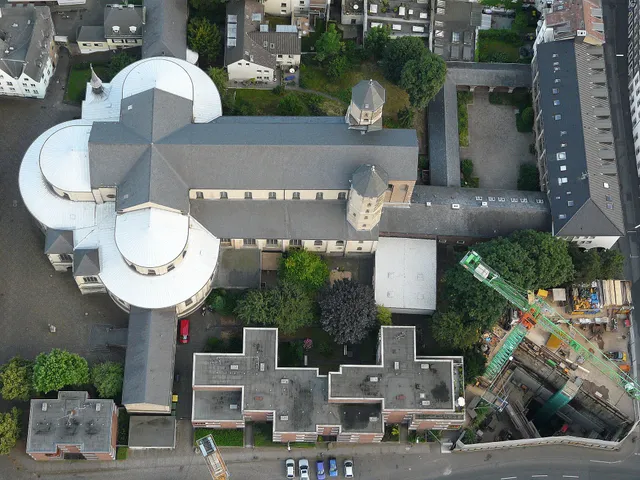
St. Maria im Kapitol
since 1100Cologne's largest and oldest Romanesque church — built on the foundations of a Roman temple, featuring a trefoil choir and a thousand-year-old carved wooden door.
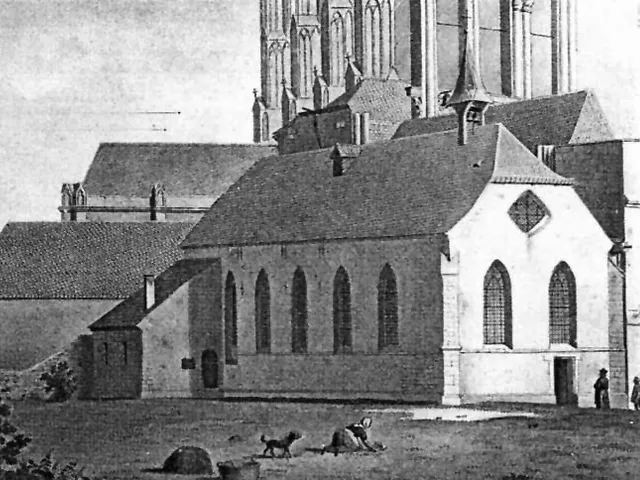
St. Maria im Pesch
Long-demolished parish church of Cologne Cathedral's staff — its late-Gothic Entombment group survives today inside the Cathedral.
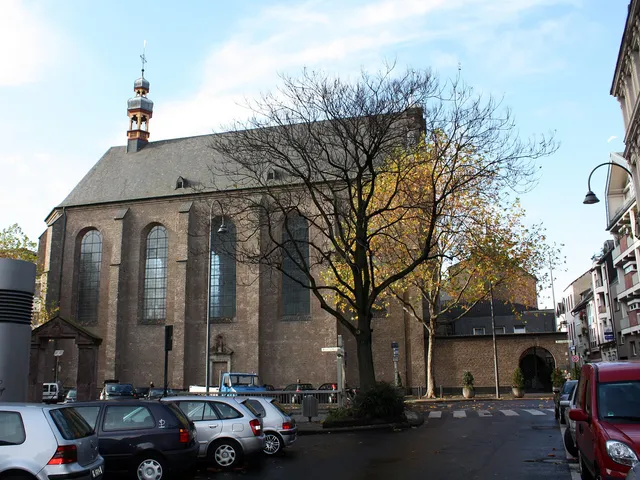
St. Maria in der Kupfergasse
since 1705Baroque pilgrimage church in Cologne's old town that has enclosed a Loreto chapel with its venerated Black Madonna since 1715.
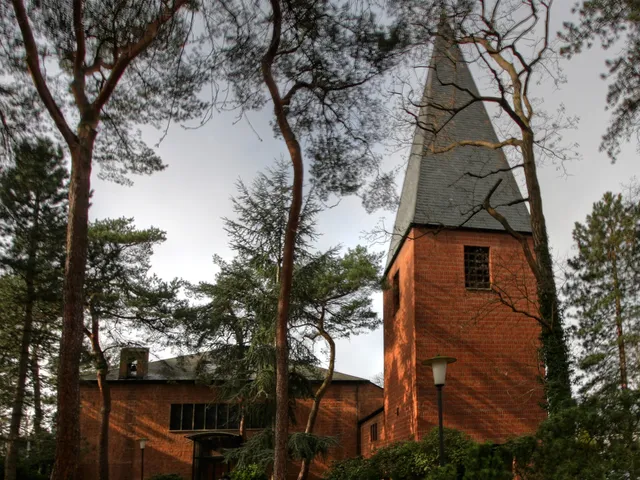
St. Maria Königin
Catholic parish church in Cologne-Marienburg by Dominikus Böhm, its glass south wall opening onto the Südpark.
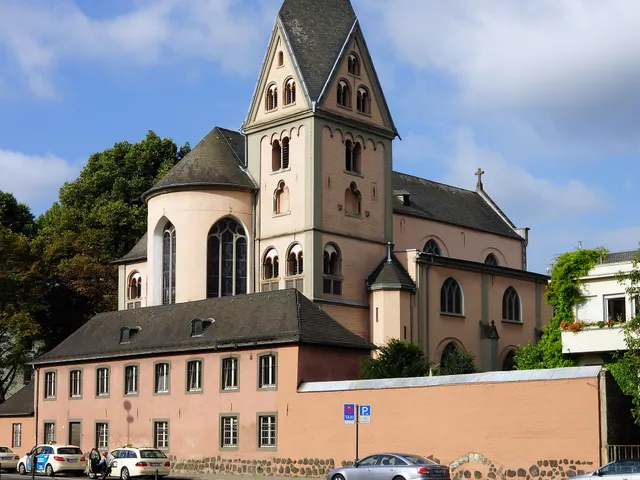
St. Maria in Lyskirchen
The smallest of Cologne's twelve great Romanesque churches — the only one with largely intact 13th-century vault frescoes.
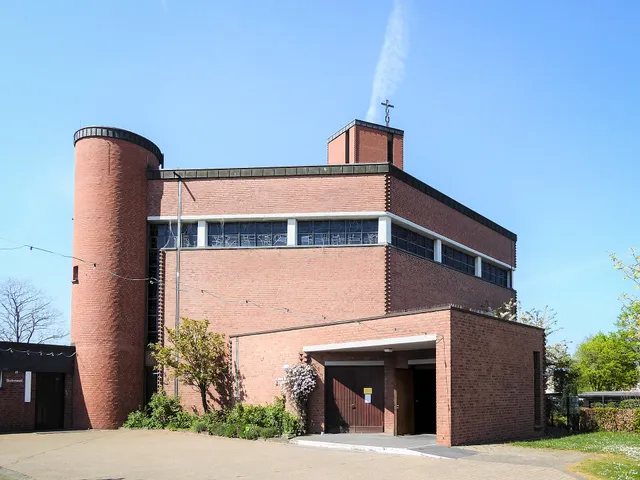
St. Mariä Namen
A 1967/68 brick church in Cologne-Esch by Hans Schilling, where the font, altar, and tabernacle are aligned along a single axis.
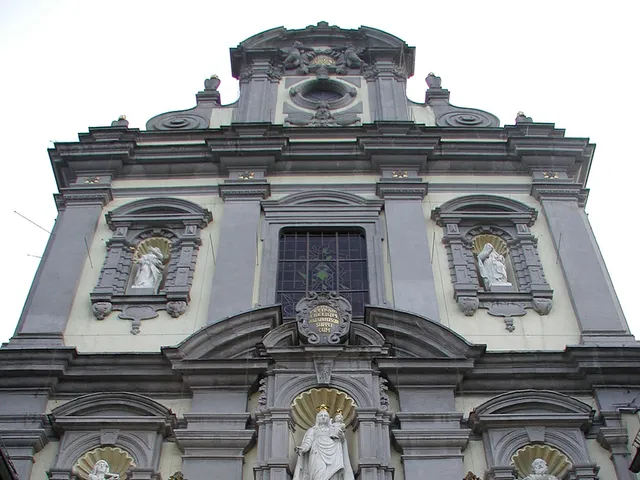
St. Maria vom Frieden
Baroque monastery church of the Discalced Carmelites in Cologne's Old Town — associated with Edith Stein, canonized martyr and co-patron of Europe.
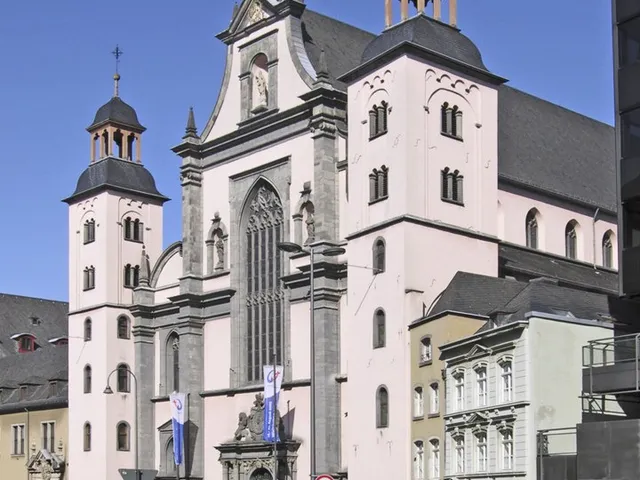
St. Mariä Himmelfahrt
since 1629Baroque former Jesuit church near Cologne Cathedral — for centuries the city's largest after the Cathedral, and one of Cologne's few surviving Baroque landmarks.
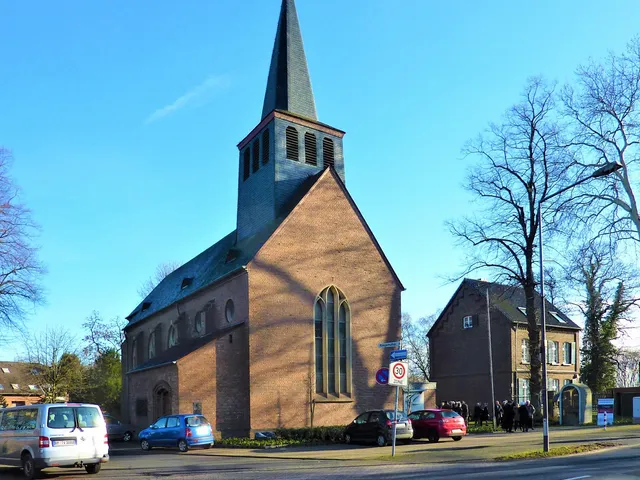
St. Mary's Church (Cologne-Fühlingen)
Neo-Gothic church in Fühlingen featuring pointed-arch windows salvaged from a demolished English church.
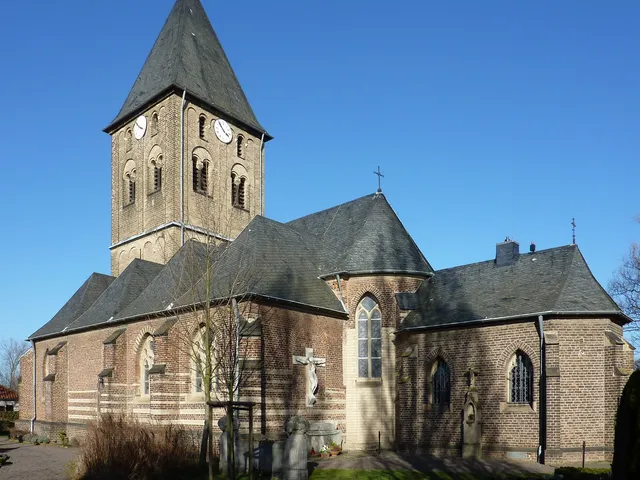
St. Martinus
Former parish church of Esch with an 11th-century Romanesque core and a late Gothic expansion.
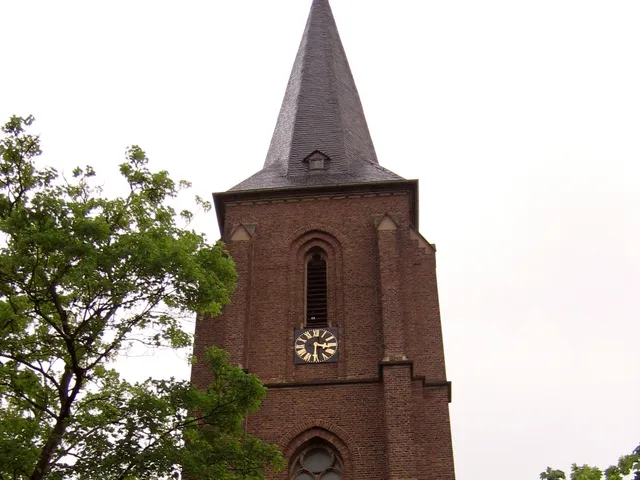
St. Maternus
since 1863Neo-Gothic brick church in Rodenkirchen housing an American pipe organ from 1869 and hosting an annual Maternus pilgrimage every September.
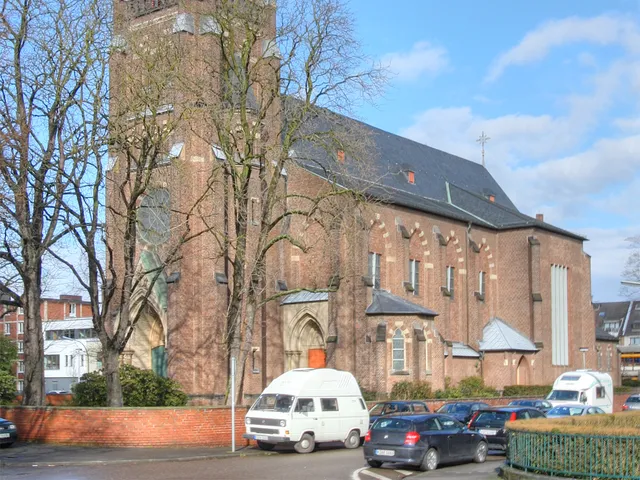
St. Matthias
Neo-Gothic Catholic church in Cologne-Bayenthal, of which essentially only the tower survived the destruction of the Second World War.
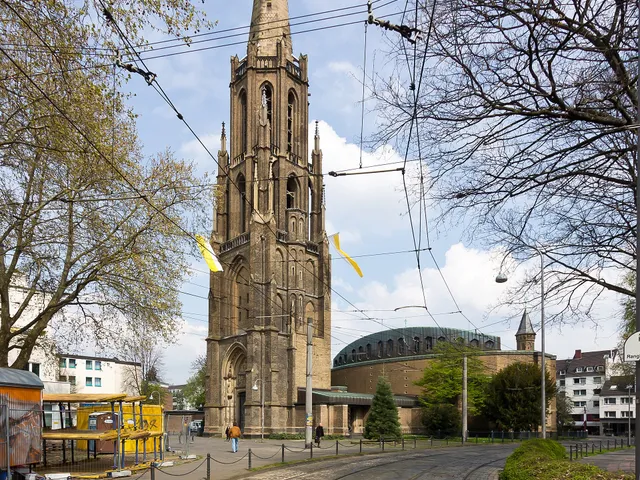
St. Mauritius
Romanesque pier basilica in the Altstadt-Süd district, consecrated in 1141 — the first church in Cologne with a fully vaulted nave and side aisles.
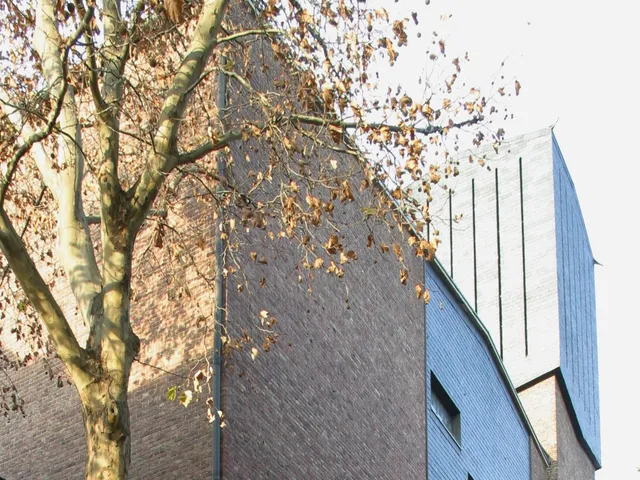
St. Mechtern
Catholic parish church in Cologne-Ehrenfeld, built in 1954 by Rudolf Schwarz, continuing the tradition of Cologne's martyr church Mechtern.
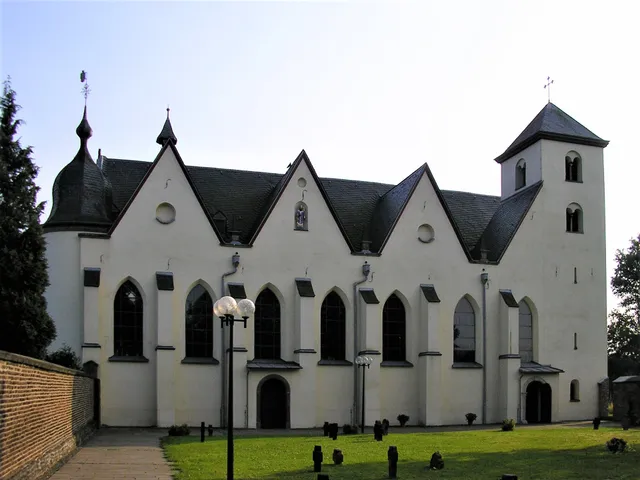
St. Nikolaus (Cologne-Dünnwald)
since 1150Romanesque basilica from 1117/1118, once a Premonstratensian canonesses' convent — with a twin-tower façade until the 16th century.
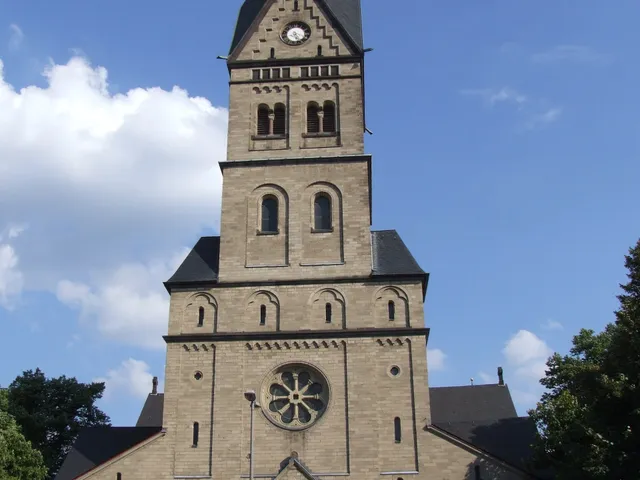
St. Nikolaus (Köln-Sülz)
since 1908Known as the 'Sülzer Dom', this Neo-Romanesque basilica (1903–1909) features a Pantocrator mosaic, Otto-cast bells, and an organ with a unique 'distant work' swell.
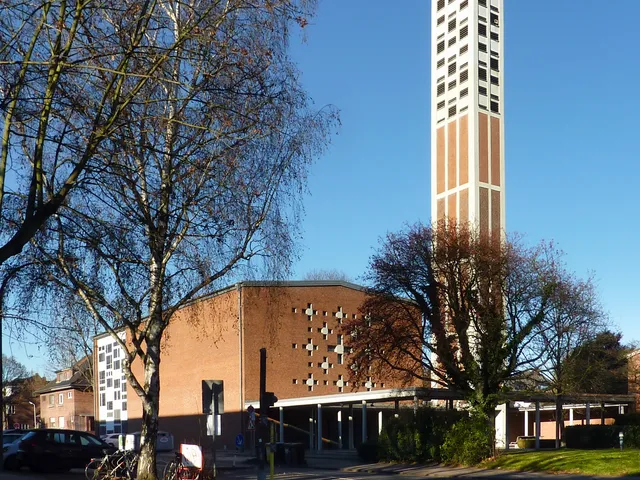
St. Pankratius (Cologne-Junkersdorf)
A modest 1960s Catholic parish church with a freestanding 40-metre tower and abstract windows in shades of blue and red.
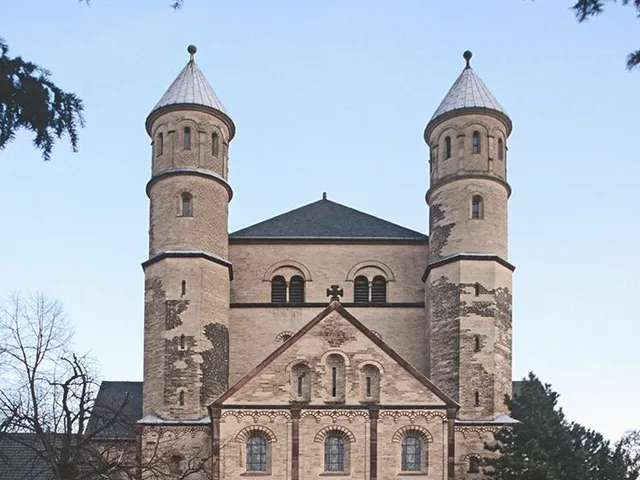
St. Pantaleon
since 1002Early Romanesque abbey church with an Ottonian westwork; burial site of Byzantine Empress Theophanu and Archbishop Bruno of Cologne.
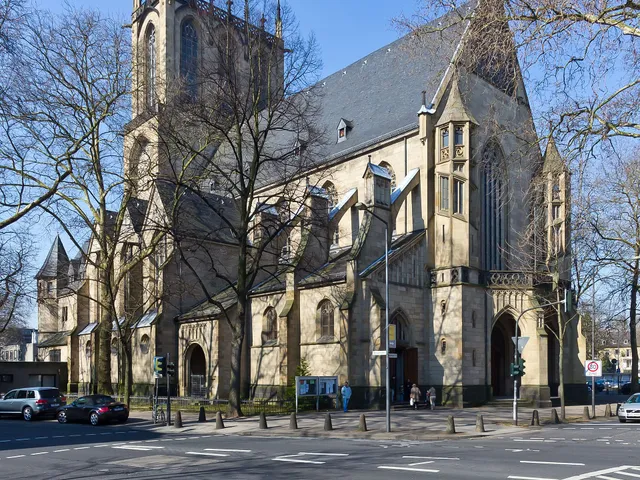
St. Paul
Neo-Gothic parish church consecrated in 1908 in Cologne's Neustadt-Süd, whose construction was championed by chocolate manufacturer Ludwig Stollwerck.
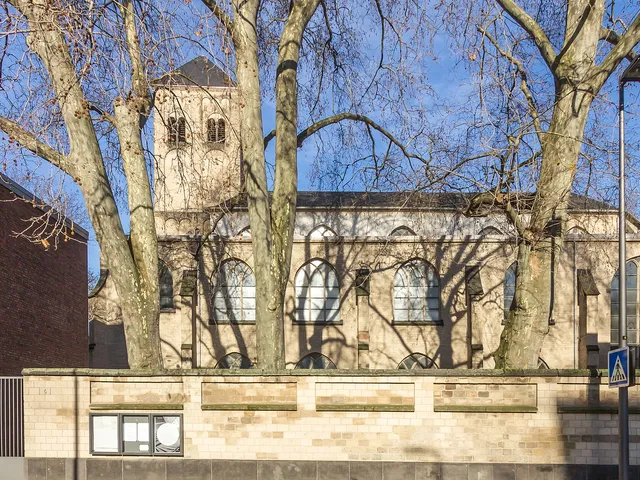
St. Peter – Kunst-Station
since 1515Cologne's latest surviving Gothic church — and since 1987 a venue for contemporary art and new music, run by Jesuits.
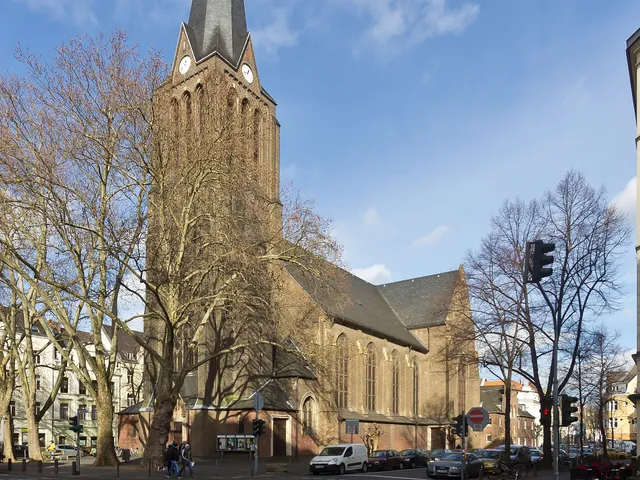
St. Peter
Neo-Gothic Catholic hall church in Cologne-Neuehrenfeld with a 62-metre tower, affectionately known as the "Ihrefeld Cathedral."
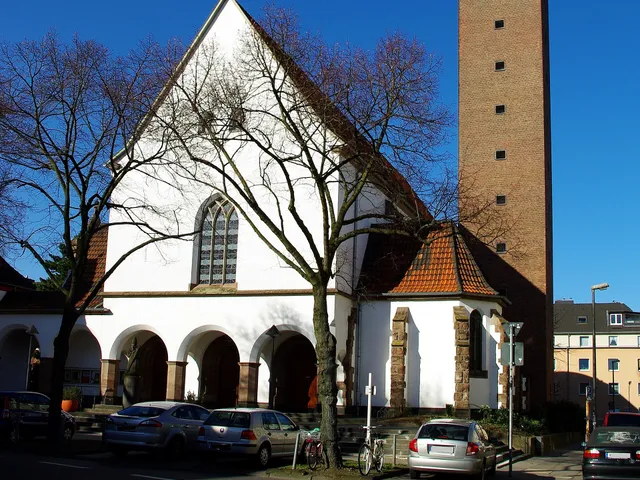
St. Pius
Catholic church in Cologne-Zollstock with one of the city's tallest steeples and a peal of seven bells.
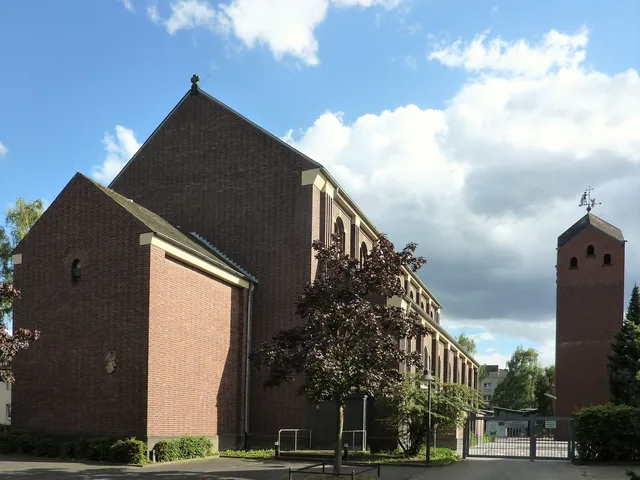
St. Quirinus
Catholic parish church in Cologne-Mauenheim, built in 1927 as a three-nave early Christian basilica with a detached bell tower.
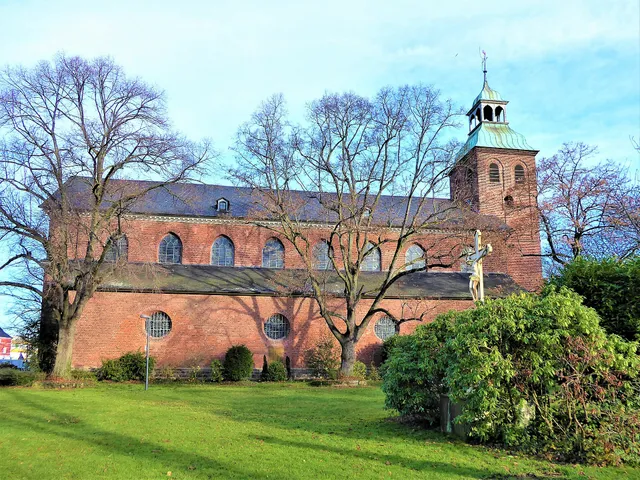
St. Remigius
Neoclassical former parish church in Sürth (1825–1830) blending ancient and medieval forms, preserving baroque furnishings rescued from a demolished Cologne church.
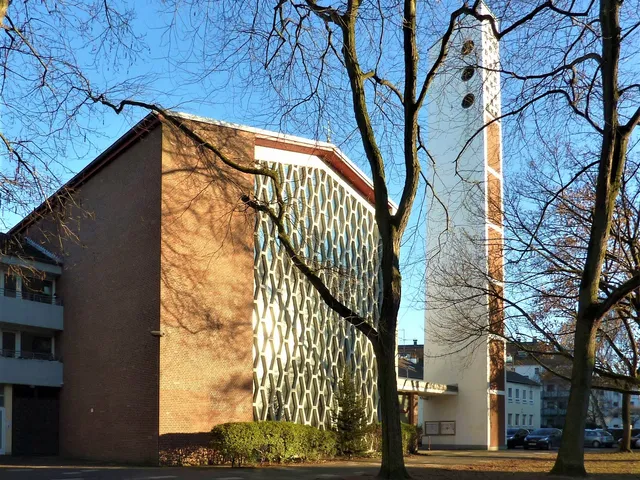
St. Salvator (Cologne-Weidenpesch)
1958 brick hall church with concrete honeycomb windows, a freestanding bell tower, and a natural-stone Christ mosaic.
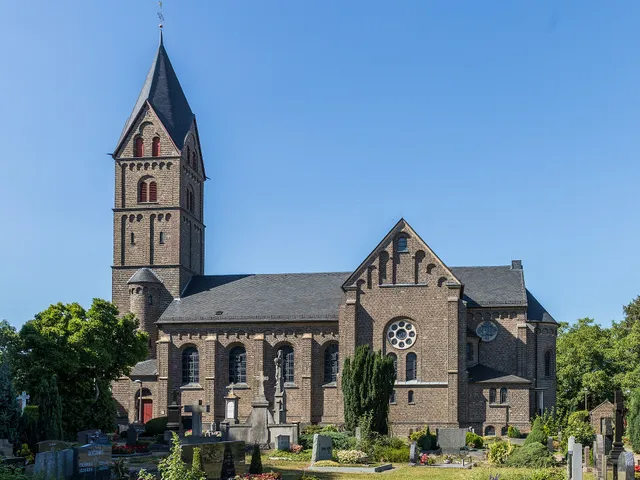
St. Servatius
since 1874The Catholic parish church of Cologne's Immendorf district, on the "Heidenberg" hill, built 1873/74 on the site of several older predecessor buildings.
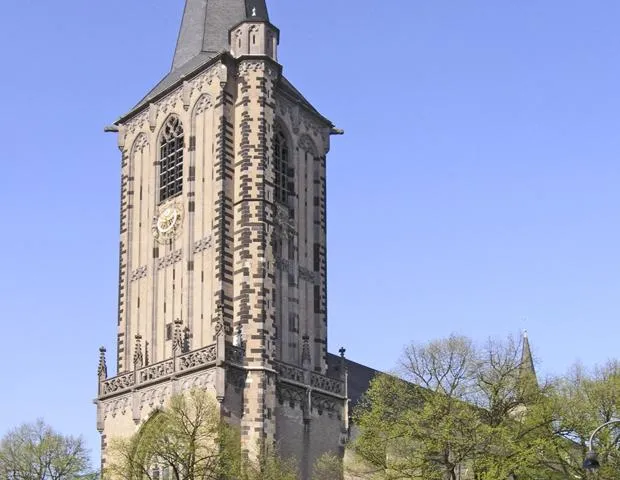
St. Severin
One of Cologne's twelve great Romanesque churches, grown from a late-antique burial chapel — home to the relics of Saint Severin.
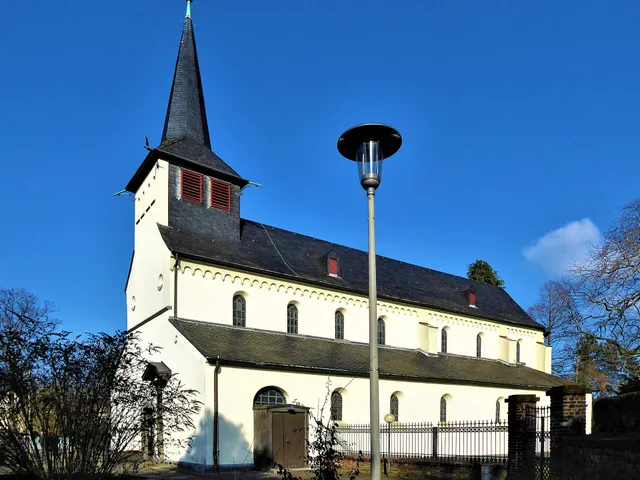
St. Severin (Lövenich)
Romanesque pillar basilica in Cologne's Lövenich district, named after Severin of Cologne and rooted in the 12th century — though heavily remodelled in the 1800s.
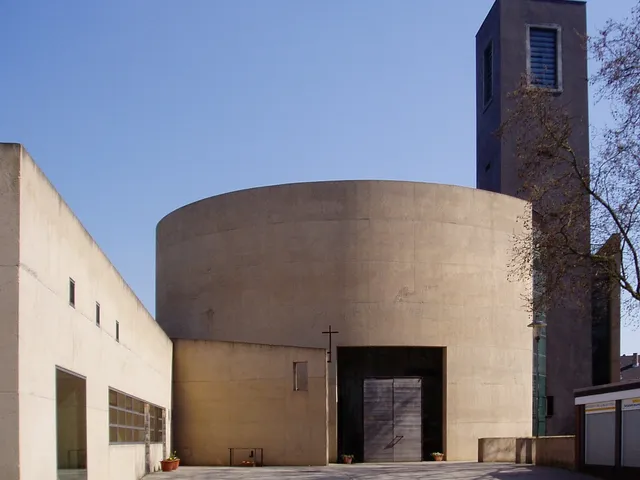
St. Theodor
A modern circular building of ochre-coloured concrete above a community-use ground floor — defined by the vision of parish priest Franz Meurer.
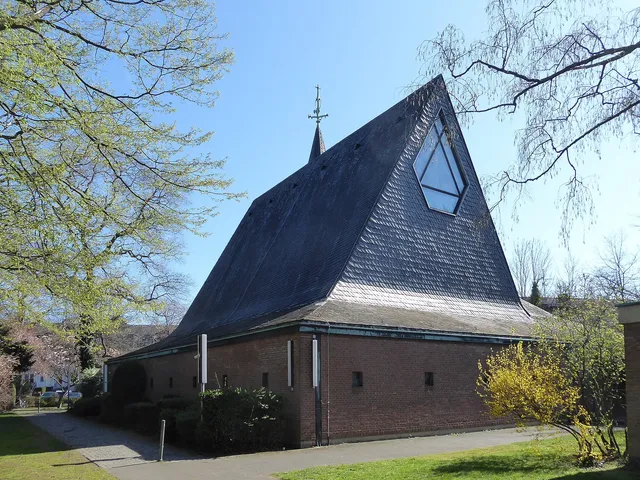
St. Thomas More
Catholic church in Cologne-Lindenthal from 1962/63, whose tower's rising folded spire defines the local skyline.
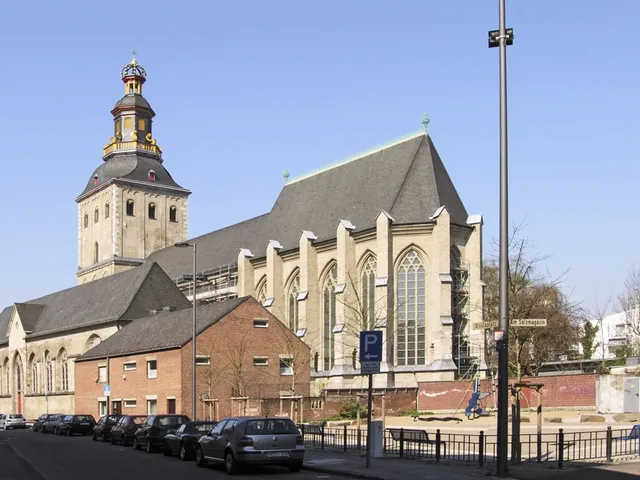
St. Ursula
since 401Romanesque basilica near Cologne Cathedral housing the Golden Chamber — the largest ossuary north of the Alps, with roots in Roman Cologne.
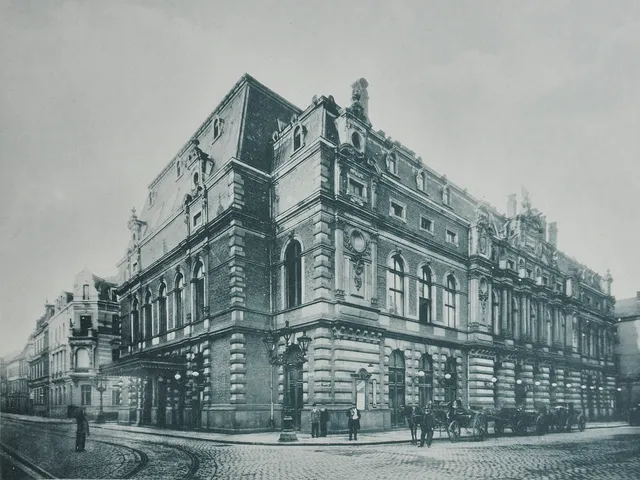
Stadttheater in der Glockengasse
Cologne's grand Neo-Renaissance theatre of 1872 for drama and operetta, lost to bombing in 1943.
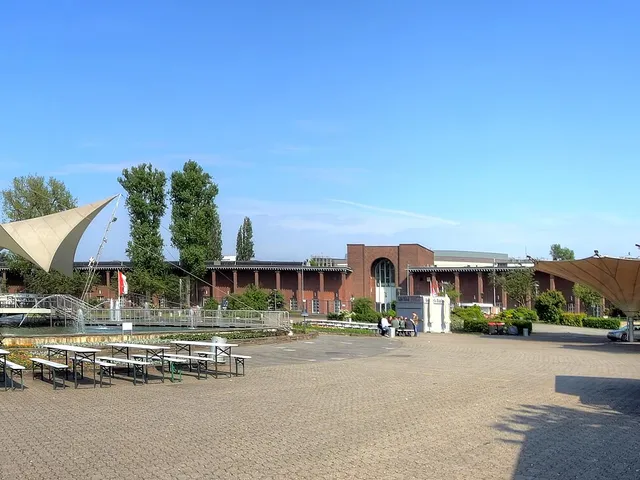
Sternwellenzelt at Cologne's Tanzbrunnen
since 1957The Sternwellenzelt is the membrane roof structure Frei Otto built in 1957 for the Federal Garden Show over the dance floor of Cologne's Tanzbrunnen, and it is now a listed monument.
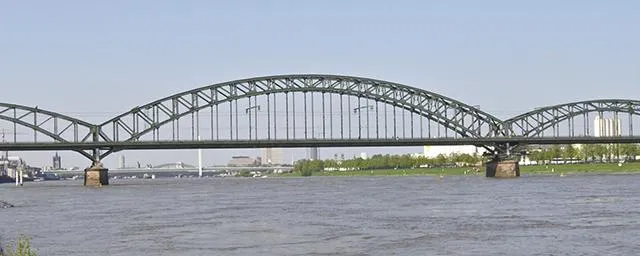
Südbrücke
since 1946Steel three-arch railway bridge from 1910 spanning the Rhine, primarily for freight traffic, with pedestrian and cycle paths; listed heritage structure.
Tanzbrunnen
Cologne's open-air venue — home to up to 12,500 concertgoers beneath Frei Otto's iconic star-wave tent, inspired by a dancing fountain from 1950.
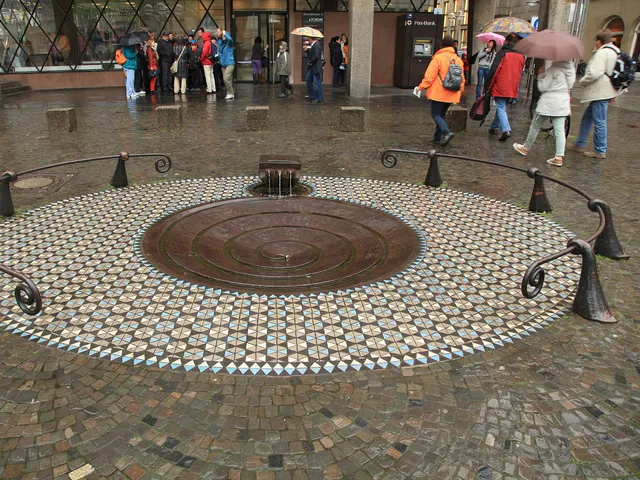
Taubenbrunnen
since 1953Cologne's first post-war fountain and the city's first abstract fountain: designed in 1953 by Ewald Mataré as a drinking trough for the Cathedral pigeons.
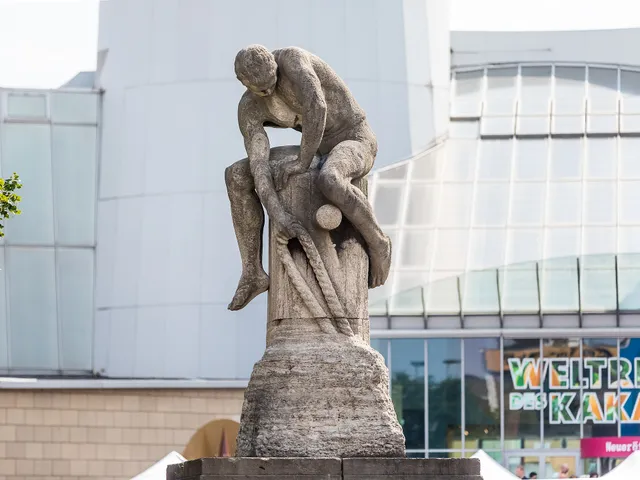
Tauzieher
since 1908Shell limestone sculpture at the Rheinauhafen — Cologne's first freestanding sculpture in public space, standing around 6½ metres tall.
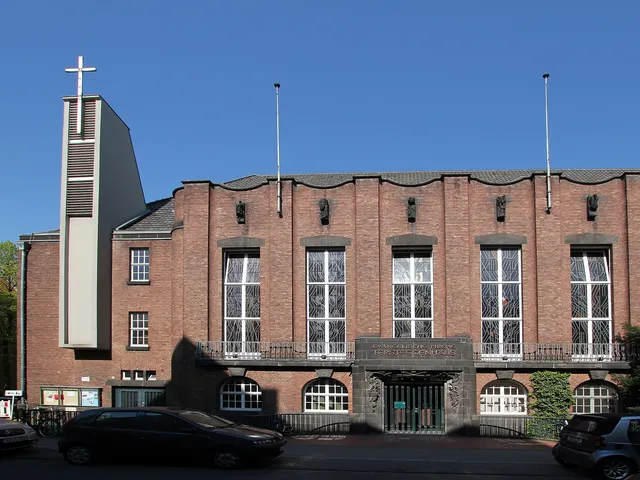
Tersteegenhaus
Protestant church in Cologne-Sülz, consecrated in 1928 as a community hall — its former event hall now serves as a worship space with chairs arranged in a circle around the altar.
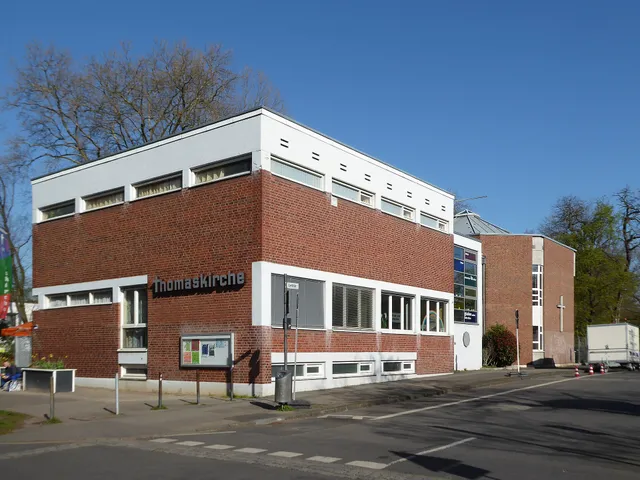
Thomaskirche
Protestant church in the Agnesviertel with an octagonal nave and pyramid ceiling – scheduled for deconsecration and demolition in autumn 2026.
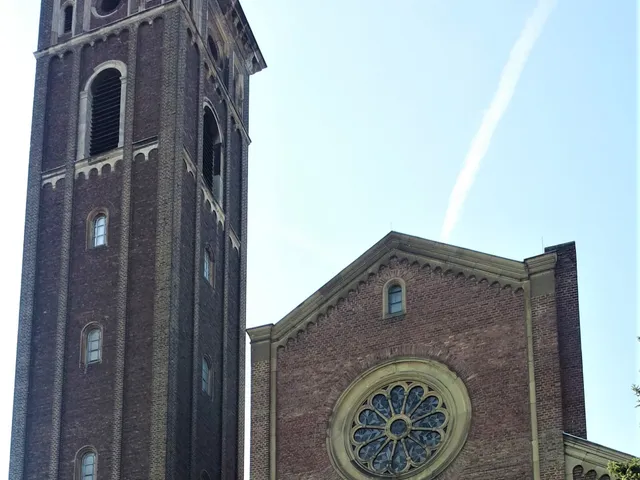
Trinitatiskirche
since 1860The oldest newly built Protestant church on Cologne's left bank of the Rhine — a classicist basilica inspired by northern Italian models.
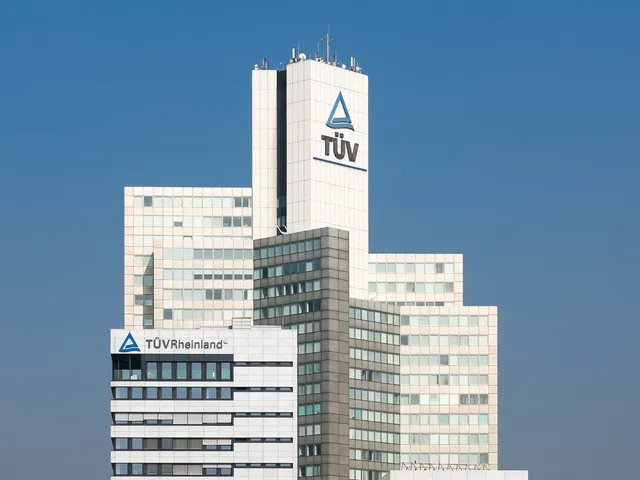
TÜV Rheinland
since 1872Independent testing and certification giant born from steam boiler inspection in 1872 — headquartered in the 114 m Am Grauen Stein tower in Cologne.
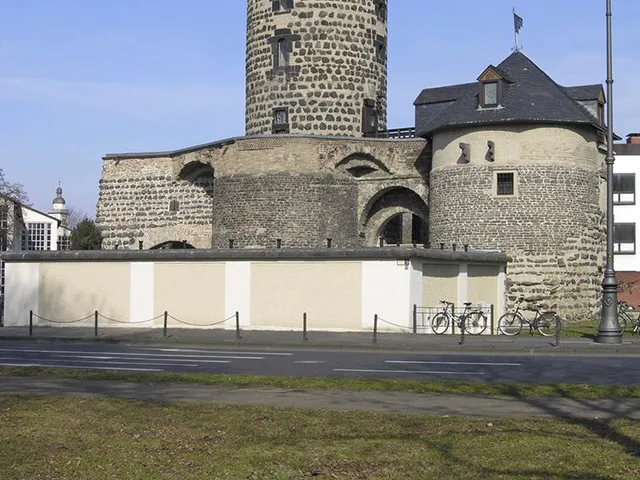
Ulrepforte
since 1230Cologne's smallest medieval land gate, dating from the 13th century — scene of a patrician feud in 1268 and today the home base of the Rote Funken carnival society.
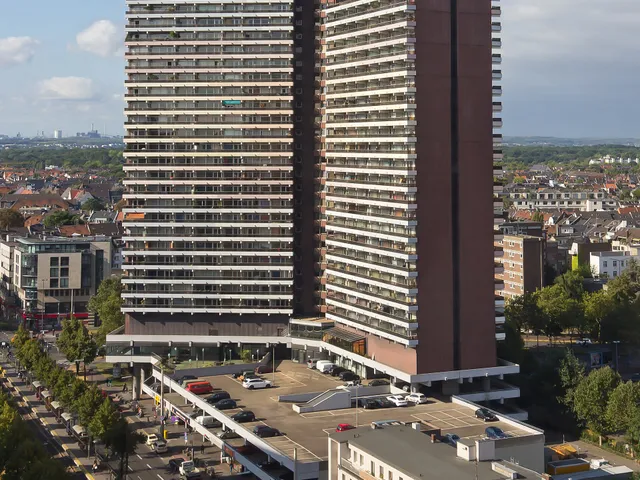
Uni-Center
since 1973One of Europe's largest residential buildings: the Y-shaped tower in Sülz combines 968 apartments with a 134-metre central core.
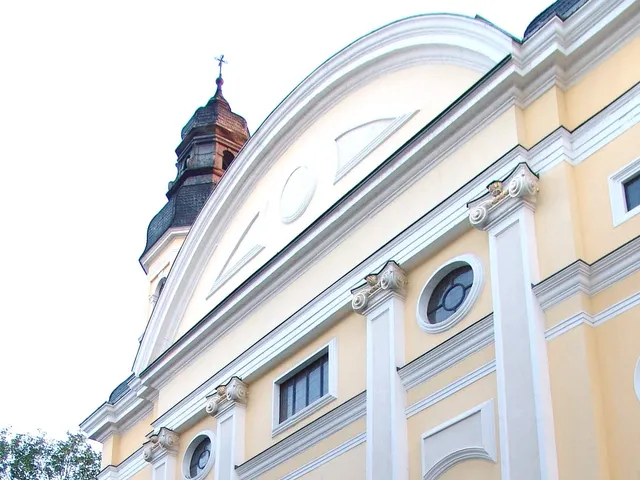
Ursulinenkirche St. Corpus Christi
since 1709Baroque former convent church of the Cologne Ursulines, built in Venetian style by Matteo Alberti — now a school chapel and concert venue.
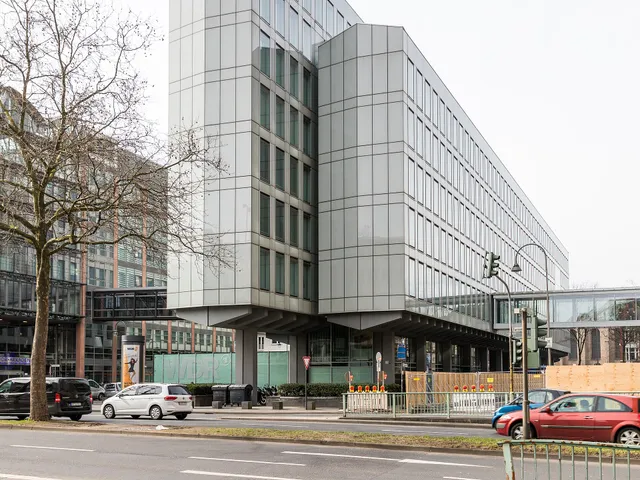
Vierscheibenhaus – WDR Office Building at Appellhofplatz
The Vierscheibenhaus is a striking office building belonging to the West German Broadcasting (WDR) in Cologne's Altstadt-Nord district. Its interior is closed to the public, but the staggered building slabs are well worth viewing from the outside.
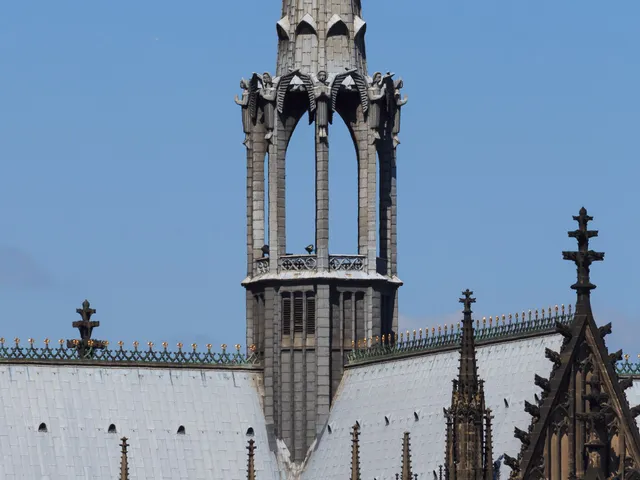
Crossing Tower of Cologne Cathedral
since 1861The crossing tower is the third tower of Cologne Cathedral, built in 1860 as a wrought-iron structure above the crossing. Between 1965 and 1973 it received its present, Art Déco-inspired form featuring eight angel figures.
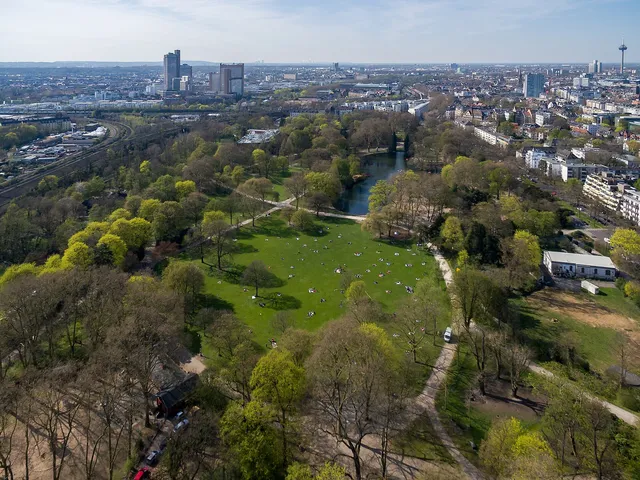
Volksgarten
13.9-hectare park in Cologne's Südstadt, built on a Prussian fort site, with a boating lake and preserved fortifications.
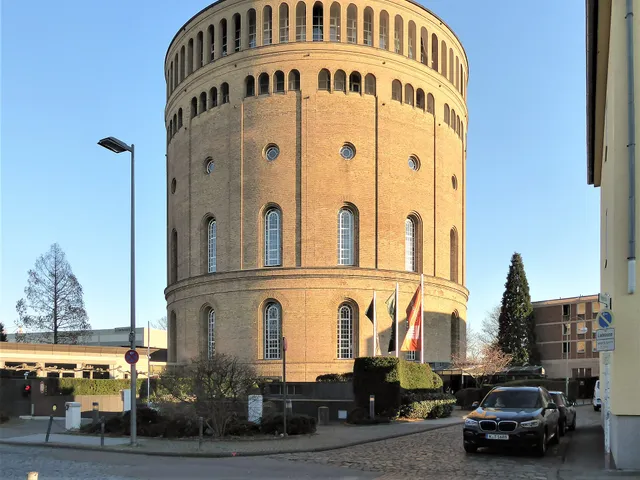
Cologne Water Tower
A historic water tower in Cologne's Altstadt-Süd, a five-star luxury hotel since 1990 — the city's most unusual place to stay.
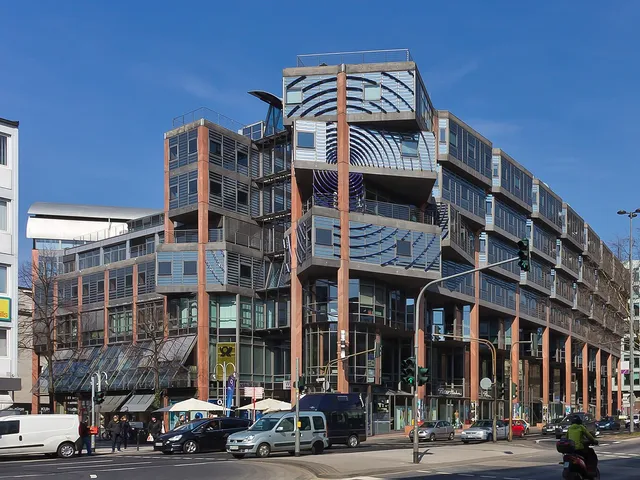
WDR Arkaden
WDR building with an arcade-like façade by Gottfried Böhm — famous for live broadcasts of Cologne's Weiberfastnacht carnival kickoff.
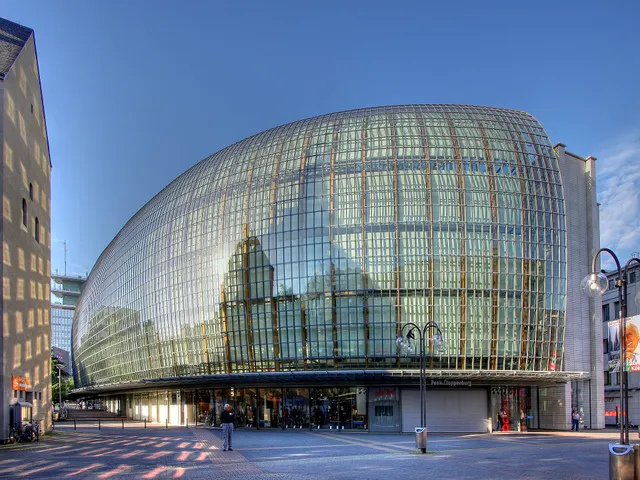
Weltstadthaus
since 2005Renzo Piano's glass department store on Schildergasse, affectionately nicknamed "the Whale" by Cologne's locals for its shape.
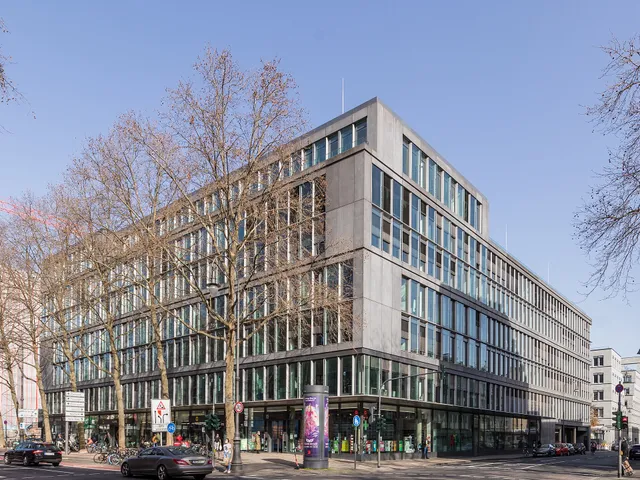
Westgate
Cologne office and retail building heated and cooled by its own groundwater system, crowned by a glass dome.
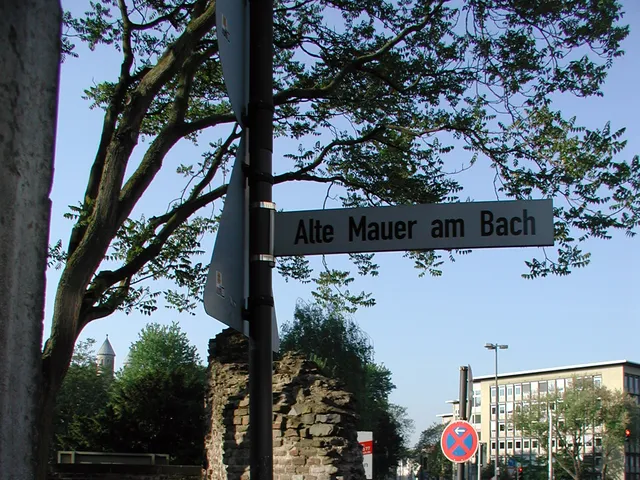
Weyertor
One of medieval Cologne's 14 great land-side city gates, guarding the southwestern approach since the 13th century — demolished in 1889.
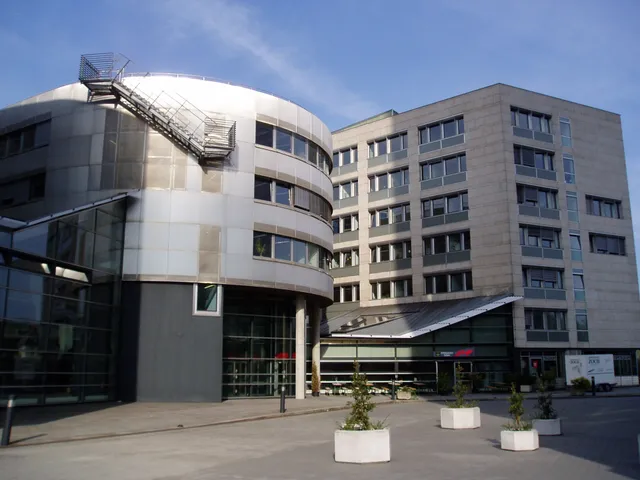
Wiener Platz
Central square and transport hub in Cologne's Mülheim district — a pedestrian zone with the district town hall, weekly market, and the 57-metre Bull high-rise.
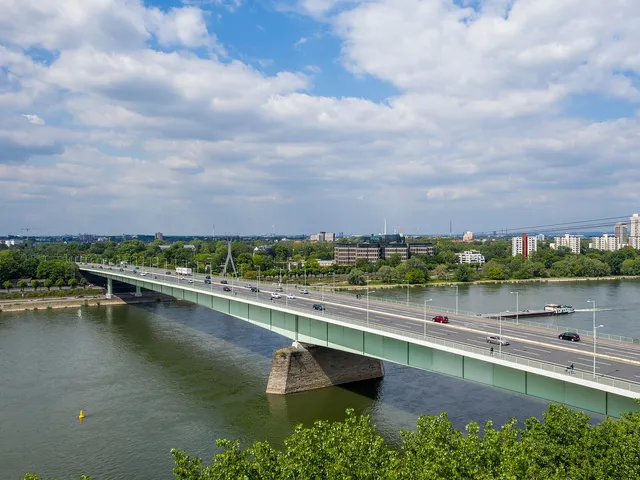
Zoobrücke
since 1966Rhine bridge in Cologne: the world's longest-spanning box girder bridge with just one main bearing — and crossed diagonally by the city's cable car.
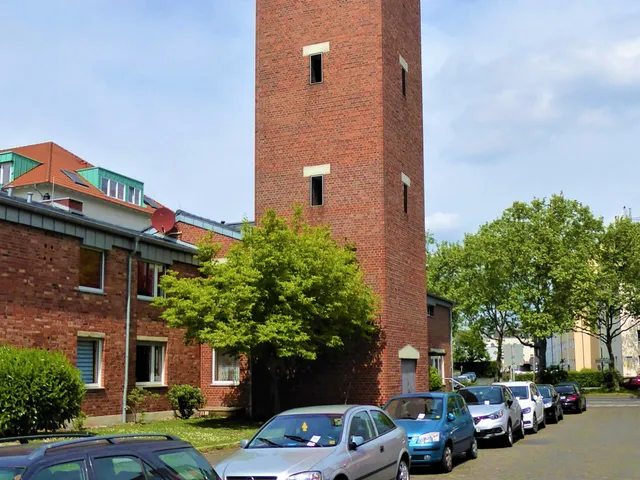
Zum Heiligen Geist
Catholic church in Cologne's Zollstock district, known for its landmark bell tower housing five bells.