Roman Cologne – Colonia Claudia Ara Agrippinensium
The birthplace of Cologne: the Roman CCAA, capital of Lower Germania — and today part of a UNESCO World Heritage Site.
Cologne traces its origins to a Roman Colonia, where the city's history begins. This Colonia served as the capital of Lower Germania and housed the command of the army stationed there.
Source: Wikipedia
At a Glance
- Significance
- Origin of present-day Cologne
- Name
- Colonia Claudia Ara Agrippinensium — a modern reconstruction of the historically attested abbreviation CCAA
- Location
- Altstadt-Nord district, Innenstadt borough
- Heritage status
- Part of a UNESCO World Heritage Site
- Later period
- Capital of the province of Germania Secunda following the Diocletianic administrative reforms
The Altar of the Ubii (Ara Ubiorum), which gave early Cologne its name, was originally intended as the central sanctuary of a planned Greater Germanic province – an imperial ambition definitively abandoned after the Roman defeat in the Battle of the Teutoburg Forest in 9 AD.
The Name CCAA
The Latin name is a modern reconstruction based on the historically documented abbreviation CCAA. Literally it means the 'Claudian Colony and Sacrificial Site of the Agrippinenses': a city of Roman law founded under Emperor Claudius, named after the altar of the imperial cult.
Origins of the City
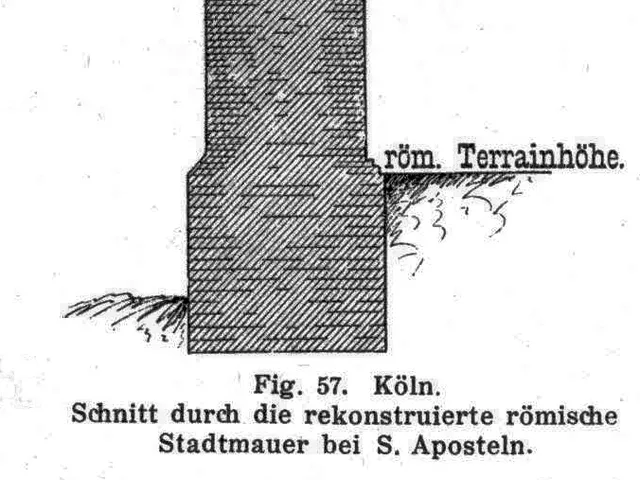
The Ubii, a Germanic tribe originally settled east of the Rhine, were resettled on the left bank of the Cologne Bay by the Roman general Marcus Vipsanius Agrippa around 20/19 BC. The Romans chose a flood-protected ridge beside a now-vanished Rhine island as the main settlement site. After the oppidum was raised to Colonia status, the eastern wall of the Roman city rose along its slope towards the river. The strictly Roman layout from the very outset shows that Roman power was the decisive force behind this civilian community — the oppidum Ubiorum.
From Altar to Provincial Capital
Shortly afterwards, the Ara Ubiorum — the 'Altar of the Ubii' — rose within the city's territory, intended as the central sanctuary of a planned Greater Germanic province. The defeat of Varus in AD 9 and the recall of Germanicus in AD 16 led Rome to abandon its far-reaching ambitions east of the Rhine. The name stuck regardless: many inscriptions still refer to the city as Ara Ubiorum.
Military Base
From AD 9 to around AD 30, the Cologne area served as a garrison. Nearby camped Legio I Germanica and Legio XX Valeria Victrix, whose original joint camp was known as Apud Aram Ubiorum — 'At the Altar of the Ubii.' Between AD 13 and 16 it housed the headquarters of Germanicus, charged with securing the Rhine frontier.
Legacy in the City
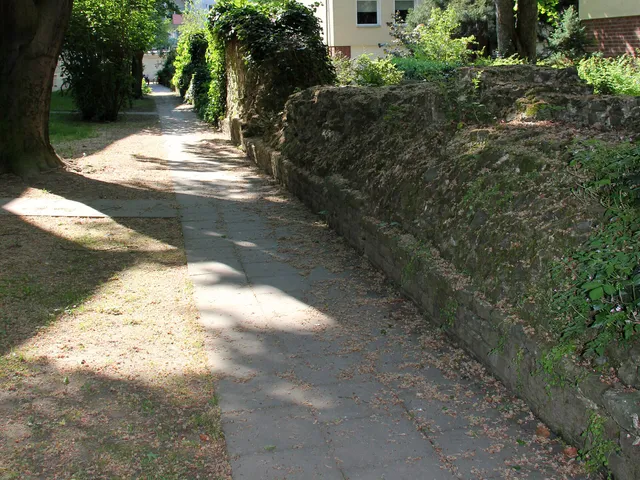
Present-day Cologne grew directly out of the Roman Colonia. Much of the ancient city has survived, including an inscription of the abbreviation CCAA on an arch of the Roman city gate, now preserved in the Romano-Germanic Museum.
Gallery
Map
Blue dots: other places nearby — tap to explore.
You might also like — related or nearby


Comments
- Loading comments…
Sources & links
Auto-generated, last verified: 2026-06-27
How this page is made
This page draws on open sources — Wikipedia, Wikidata, official websites and the city’s open data. Every statement is checked against the sources linked here, and pages are refreshed regularly.
Spotted a mistake anyway? Tell us below — we read every submission.