Deutz Abbey
Cologne's Deutz Abbey, founded in 1002, is the original home of the golden Heribert Shrine and today serves as a Greek Orthodox church.
since 1001
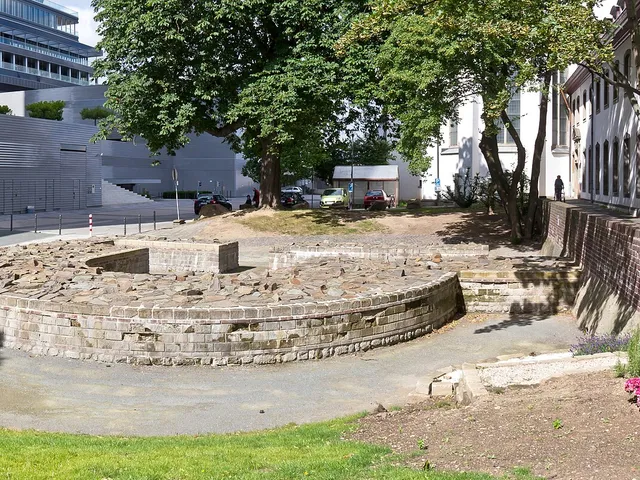
On the site of the former Roman fort of Divitia in Cologne-Deutz stood the Benedictine monastery of Deutz Abbey. Its church, Alt St. Heribert, is counted among the 13 minor Romanesque churches overseen by the Förderverein Romanische Kirchen Köln, thanks to its reconstructed Romanesque elements.
At a Glance
- Type
- Former Benedictine monastery with a surviving abbey church
- Location
- Deutz district, Innenstadt borough
- Founded
- 1002 by Archbishop Heribert of Cologne (Wikidata gives 1001)
- Current church building
- Built 1659–1663 on the original foundations, with Baroque furnishings
- Heritage status
- Listed monument in North Rhine-Westphalia
- Current use
- Place of worship for the Greek Orthodox community; the monastery building houses a Caritas senior care facility
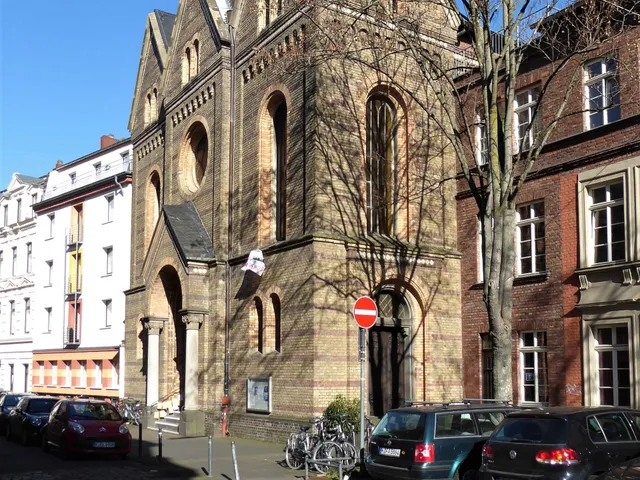
The abbey church, rebuilt between 1659 and 1663, was constructed on the original Ottonian foundations – and the builders retained the curved outline of the medieval domed structure, so the outer walls of the side aisles still follow a subtle arc today, silently preserving the footprint of the long-vanished 1020 rotunda.
Things to do here
- Admire the baroque abbey church from outside and spot the curved bend in the side aisles that traces the outline of the earlier building
- Take in the Greek Orthodox church with its iconostasis in the chancel at a quiet pace
- Look at the wall paintings by Werner Weber inside
- Find the steel cross on the south-west side and decipher its Latin inscription
- Walk in the footsteps of over 1,000 years of history, from Roman fort to Benedictine monastery
- Photograph the facade and capture the historic appearance of this heritage monument
Age comparison
Age compared with other places in Cologne.
Foundation and the Middle Ages
The monastery was founded in 1002 at Heribert's initiative, with Benedictine monks moving in shortly after. As an adviser to Emperor Otto III, he had promised the dying emperor to establish a monastery in honour of the Virgin Mary. Heribert consecrated the Romanesque abbey church in 1020, and after his burial there the following year the church took his name. From 1121 to 1129, the abbey was led by Rupert of Deutz (died 1129), a Benedictine monk from Liège and one of the leading theologians of his day.
The Heribert Shrine
In 1147, the remains of Saint Heribert were elevated and enshrined in a precious reliquary. This gilded Heribert Shrine has been housed since 1896 in the parish church of Neu St. Heribert, built in the late 19th century in the heart of Deutz.
Destruction and Rebuilding
Its riverside location drew the site into repeated conflicts; the complex was destroyed and rebuilt in both the 14th and 16th centuries. The current church building was raised between 1659 and 1663 on the original foundations, replacing an earlier centralised structure modelled on the Palatine Chapel in Aachen with a three-aisled pier basilica flanked by two choir towers. Because the Ottonian foundations were retained, the outer walls of the aisles follow a gentle curve that still traces the outline of its predecessor.
From Monastery to Orthodox Church
Napoleon dissolved the monastery, and in 1804 the abbey church was elevated to parish church of Deutz — its predecessor having been damaged by the Rhine flood of 1784. Since the 1990s, Cologne's Greek Orthodox community has used the building, and an iconostasis now stands in the choir.
The Monastery Building Today
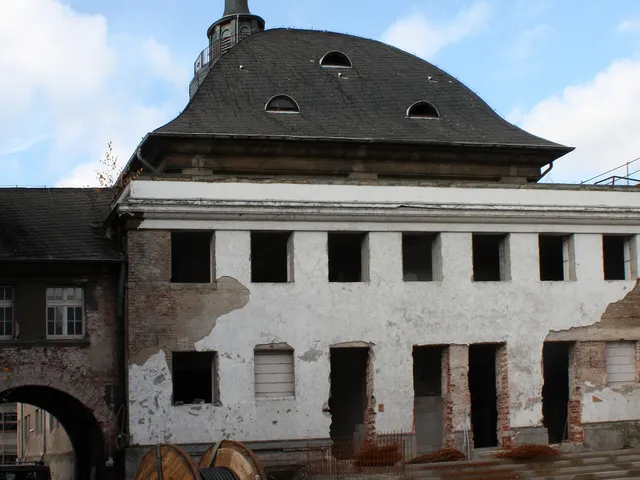
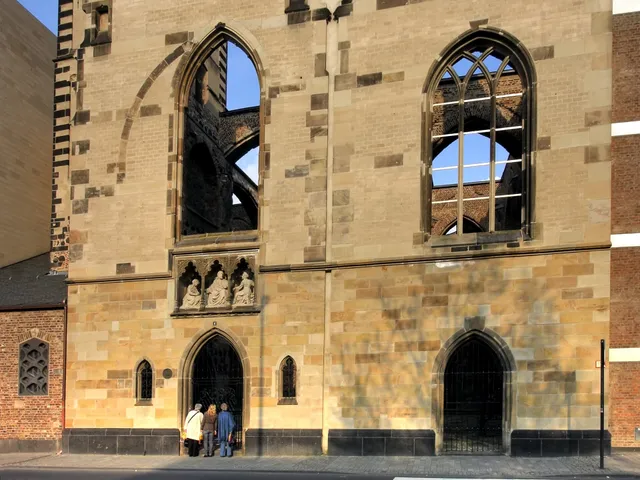
The monastery building suffered severe damage in the Second World War, with only the ground floor and parts of the vaulted cellar surviving intact. Reconstruction took place in the 1970s; the listed façade faithfully reflects the historic appearance, and the interior features wall paintings by Werner Weber. On the south-west side stands a steel cross whose base bears the inscription 'ERECTA 1666 RENOVATA ET BENEDICTA IN SANCTA MISSIONE 1868'.
Timeline
- 1002Abbey founded by Archbishop Heribert of Cologne
- 1020Consecration of the large Romanesque abbey church by Archbishop Heribert
- 1021Burial of Archbishop Heribert's remains in the church
- 1147Elevation of Heribert's relics and placement in a precious shrine
- 1659–1663Reconstruction of the abbey church on Ottonian foundations
- 1804Abbey church elevated to Deutz parish church (secularisation)
- 1896Heribert shrine transferred to the new parish church Neu-St. Heribert
- 1990erAbbey church becomes place of worship for Cologne's Greek Orthodox community
Map
Blue dots: other places nearby — tap to explore.
Address
Urbanstr. 1
50679 Köln
You might also like — related or nearby
Comments
- Loading comments…
Sources & links
Auto-generated, last verified: 2026-06-26
How this page is made
This page draws on open sources — Wikipedia, Wikidata, official websites and the city’s open data. Every statement is checked against the sources linked here, and pages are refreshed regularly.
Spotted a mistake anyway? Tell us below — we read every submission.