Cologne Cathedral
Gothic cathedral and shrine of the Three Kings — at around 157 metres one of the tallest churches in the world and a UNESCO World Heritage Site.
since 1248
Cologne Cathedral is a Roman Catholic church in the Altstadt-Nord district and the seat of the Archdiocese of Cologne. It is dedicated to the Apostle Peter and serves as a pilgrimage site to the relics of the Three Kings.
At a Glance
- Type
- Gothic cathedral (metropolitan church)
- Location
- Domkloster 4, Altstadt-Nord, city centre
- Height
- 157.22 metres
- Ranking
- Fourth-tallest church in the world; second-tallest sacred building in Germany after Ulm Minster
- Construction began
- 1248
- Completed
- 1880
- Protected status
- UNESCO World Heritage Site (since 1996)
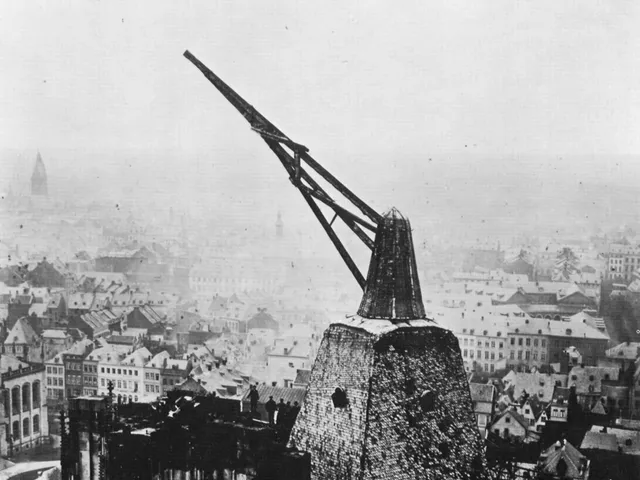
Construction of Cologne Cathedral spanned 632 years: begun in 1248, it was not completed until 1880 — making it one of the longest construction projects in human history.
Things to do here
- Marvel at and photograph the immense Gothic cathedral from the outside
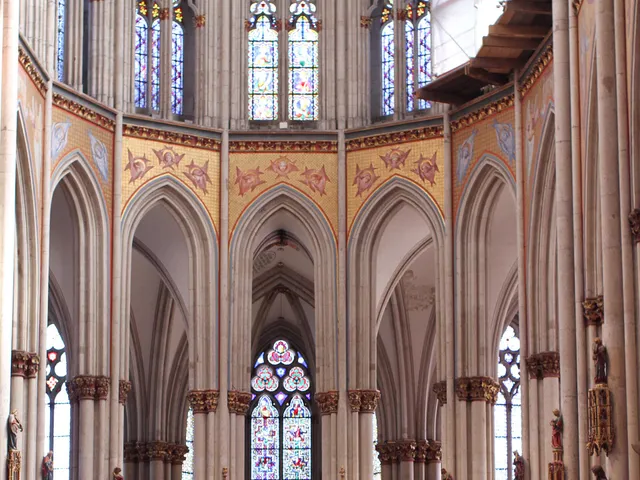
- Take in the interior with its soaring vaults and stained-glass windows
- Discover the Shrine of the Three Kings in the choir
- Visit the early Christian baptismal font beneath the choir in the cathedral excavations
- Pause and enjoy the reverent quiet of one of the world's largest cathedrals
- Admire the ornate façades and towers up close
Size comparison
Height compared with other landmarks in Cologne.
Age comparison
Age compared with other places in Cologne.
History
Commissioned by Archbishop Conrad I and initially designed by Master Gerhard, the cathedral was conceived as the grand seat of the Cologne archbishops and a monumental reliquary for the bones of the Three Kings. It was ultimately completed under the patronage of Frederick William IV to designs by Ernst Friedrich Zwirner.
Architecture
The cathedral ranks among the largest Gothic churches in the world. Its remarkably unified and harmonious form has led some art historians to call it the "perfect cathedral."
Significance
When it was finished in the nineteenth century, the cathedral was celebrated as a national symbol of Germany. After the Second World War, as it stood apparently unscathed amid the rubble of the surrounding city, it was seen as a "miracle" and became a symbol of the will to survive. Today it is one of Germany's most visited landmarks.
Earlier Buildings
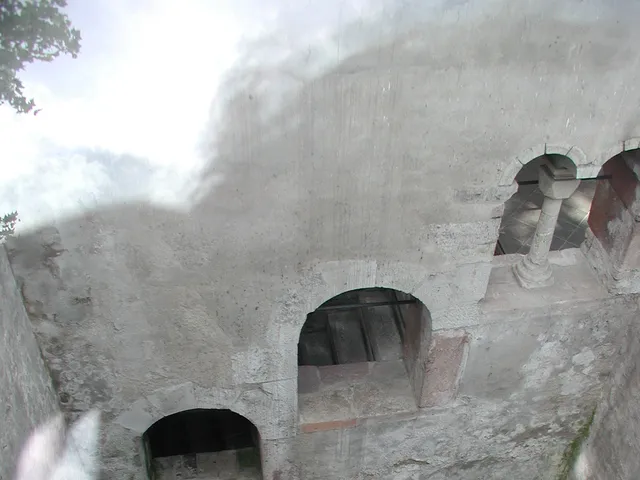
Predecessor structures on Cathedral Hill can be traced back to late antiquity. Maternus, the first documented Bishop of Cologne around 313 AD, stands at the head of this lineage; archaeological excavations beneath the present choir have uncovered the baptismal font of an early Christian baptistry. In the sixth century, Merovingian kings built a new bishop's church on the site that served as a royal burial ground — Merovingian graves were discovered there in 1959, including a richly furnished woman's grave from the first half of the sixth century.
Good to Know
The early Christian baptismal font lies within the cathedral excavation zone beneath the choir. The cathedral and the neighbouring Praetorium are jointly presented as two UNESCO heritage sites.
Timeline
- um 313Maternus, first documented Bishop of Cologne
- um 537Burial of Wisigarde in the Merovingian predecessor church
- 1248Construction of the Gothic cathedral begins (Conrad I, Master Gerhard)
- 1880Cathedral completed (Frederick William IV, Ernst Friedrich Zwirner)
- 1959Merovingian graves discovered during archaeological excavations
- 1996Inscribed as UNESCO World Heritage Site
- 2026Admission fees introduced from 1 July
Treasures & artworks
A few highlights from the collection.
The largest surviving reliquary of the Middle Ages (c. 1190–1225), created by Nicholas of Verdun. It holds the relics venerated as the bones of the Three Kings – the cathedral itself was built as their monumental shrine.
Wikipedia ↗Donated around 970 by Archbishop Gero – the oldest surviving monumental crucifix in the West and the earliest known large-scale sculpture of the crucified Christ north of the Alps.
Wikipedia ↗A Gothic wooden statue of the Virgin created around 1290. Its name recalls the relics of the Three Kings that were brought to Cologne from Milan.
Wikipedia ↗Stefan Lochner’s “Dombild” (c. 1445) depicts the Adoration of the Magi. A masterpiece of the Cologne School of painting, it was admired even by Goethe.
Wikipedia ↗Made of oak around 1310 – with 104 seats, the largest surviving medieval choir stalls in Germany.
Five richly coloured windows donated by King Ludwig I of Bavaria in 1842–1848 – a highlight of 19th-century Munich stained-glass art.
Wikipedia ↗Cast in 1923 and weighing about 24 tonnes, St. Peter’s Bell is the largest free-swinging church bell in the world. Cologne locals affectionately call it “Dicker Pitter”.
Wikipedia ↗A carved winged altarpiece made in Antwerp around 1520, with gilded figural scenes. Long used as the high-altar retable, it now stands in the Lady Chapel.
Wikipedia ↗Built by Klais in 1998, the nave organ hangs like a swallow’s nest from a pillar high above the central aisle – a spectacular structure with no support from the floor.
Gallery
Map
Blue dots: other places nearby — tap to explore.
Address
Domkloster 4
50667 Köln
Hours
Mo: 06:00–20:00
Di: 06:00–20:00
Mi: 06:00–20:00
Do: 06:00–20:00
Fr: 06:00–20:00
Sa: 06:00–20:00
So: 06:00–20:00
You might also like — related or nearby
Comments
- Loading comments…
Sources & links
- Official website
- Official Instagram (@koelnerdomofficial)
- Wikidata (retrieved 2026-06-23)
- Wikipedia (retrieved 2026-06-23, rev 268078196)
- Official website (retrieved 2026-06-23)
Auto-generated, last verified: 2026-06-25
How this page is made
This page draws on open sources — Wikipedia, Wikidata, official websites and the city’s open data. Every statement is checked against the sources linked here, and pages are refreshed regularly.
Spotted a mistake anyway? Tell us below — we read every submission.