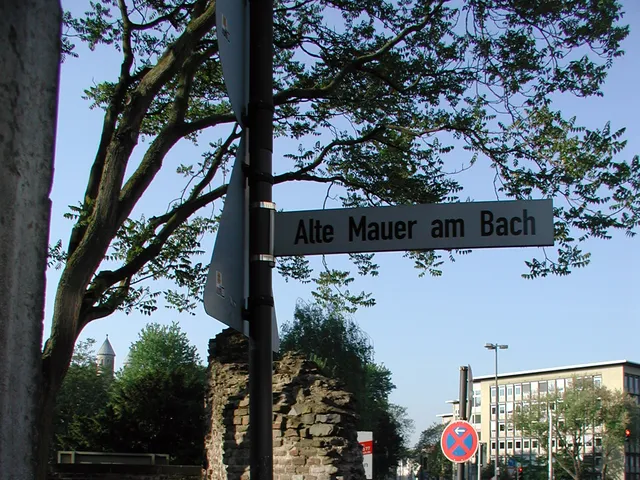
Medieval
148 places in Cologne
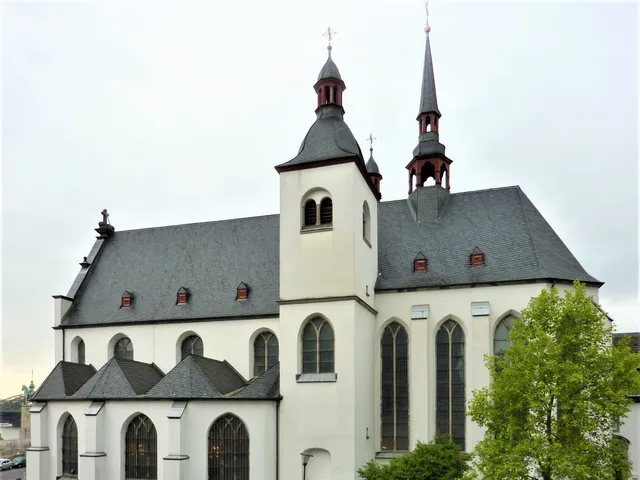
Deutz Abbey
since 1001Cologne's Deutz Abbey, founded in 1002, is the original home of the golden Heribert Shrine and today serves as a Greek Orthodox church.
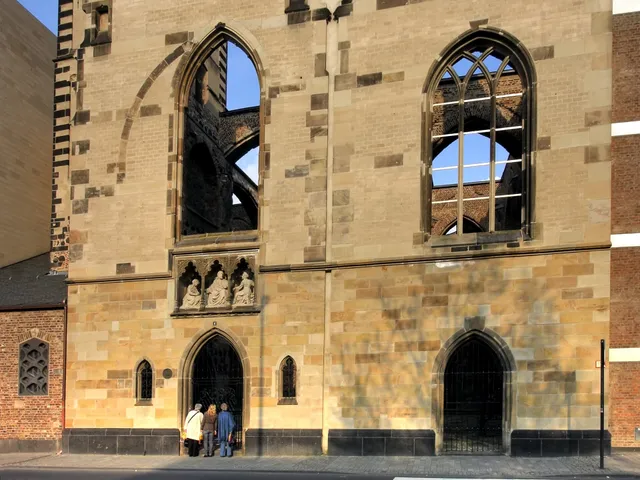
Alt St. Alban – Church Ruin and War Memorial at Quatermarkt
since 1200Preserved Romanesque church ruin at Quatermarkt; left unrestored after WWII bombing and consecrated as a memorial to the war dead in 1959.
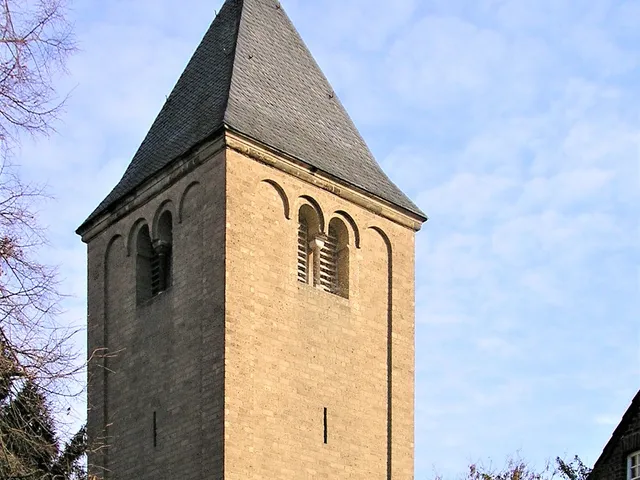
Alt St. Cornelius
since 1833Only the Romanesque tower survives from this former parish church in Cologne's Rath/Heumar district, a remnant of its medieval predecessor.
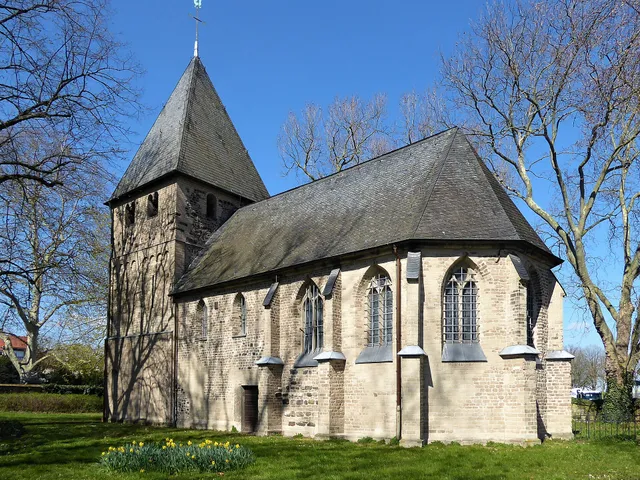
Alt St. Katharina (Cologne-Niehl)
The "Niehler Dömchen": a 12th-century Romanesque basilica on the Rhine riverbank, featuring a Gothic choir and listed heritage status.
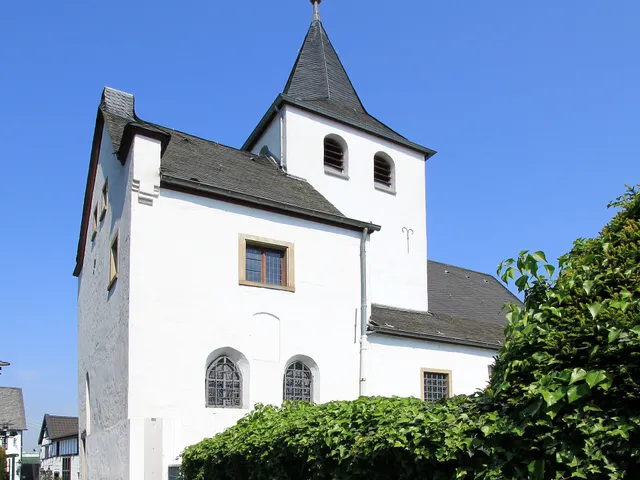
Alt St. Maternus
since 950Romanesque 'little chapel' on the Rhine — one of 13 small former village churches outside Cologne's medieval city walls.
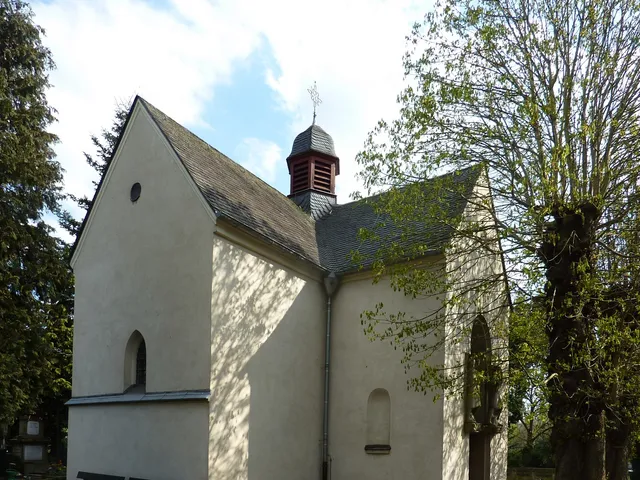
Alt St. Mauritius (Cologne-Buchheim)
Romanesque cemetery chapel and surviving remnant of Buchheim's former parish church — featuring a semicircular apse from around 1200.
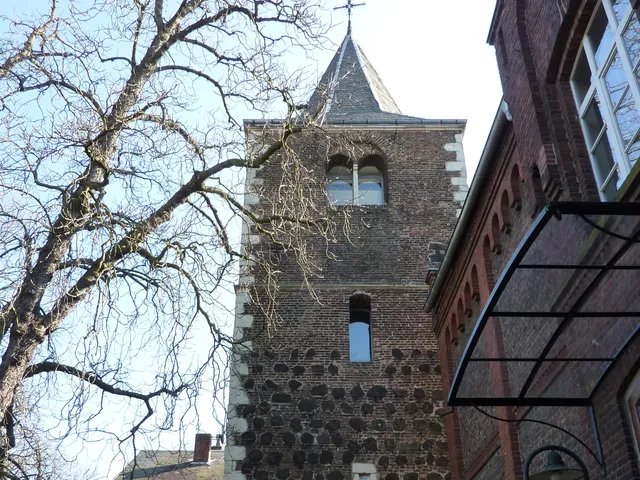
Alt St. Pankratius (Cologne-Worringen)
Former parish church of Cologne-Worringen with a Gothic nave and a controversially dated west tower — now converted into a residential house.
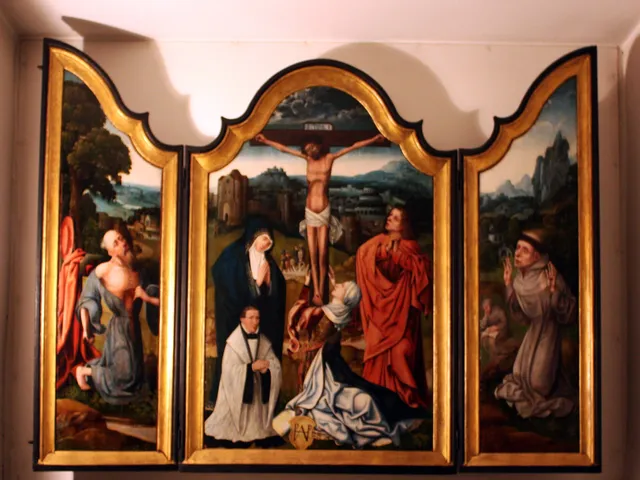
Alt St. Paul
Romanesque parish church in medieval Cologne, dissolved in 1803 and demolished in 1807 — remnants of its furnishings survive today in St. Andreas.
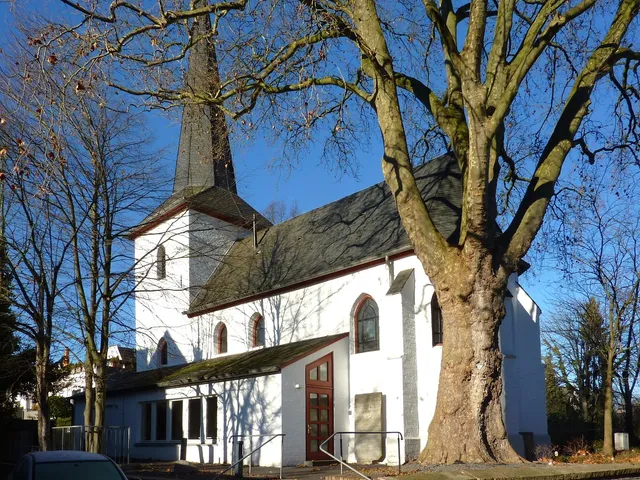
Alte Dorfkirche Köln-Junkersdorf
Medieval village church with a Gothic choir — once the parish church of St. Pankratius, now a small chapel after centuries of fire, war, and reinvention.
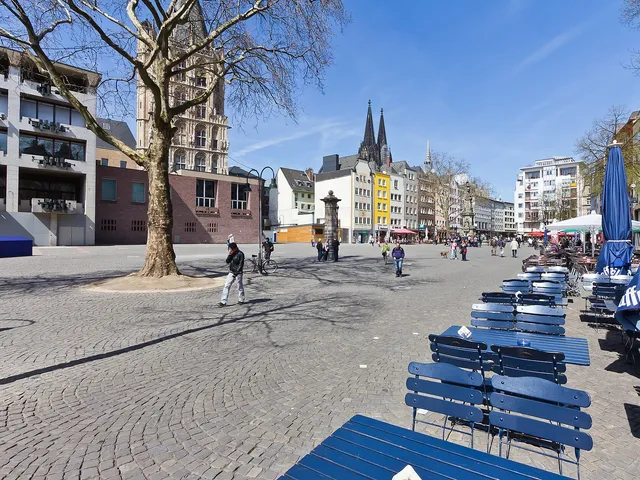
Alter Markt
Historic square in Cologne's Altstadt-Nord with a medieval-looking row of buildings — documented as Cologne's market since 922.
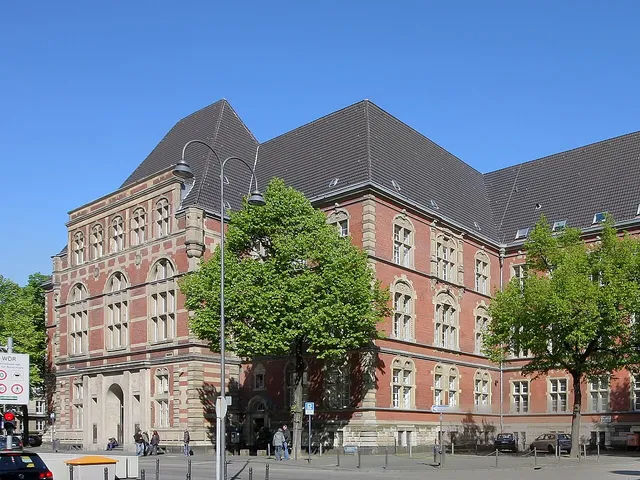
Appellhofplatz
Cologne square named after the Court of Appeal — built on the site of a Roman gate tower and shaped by centuries of landmark court cases.
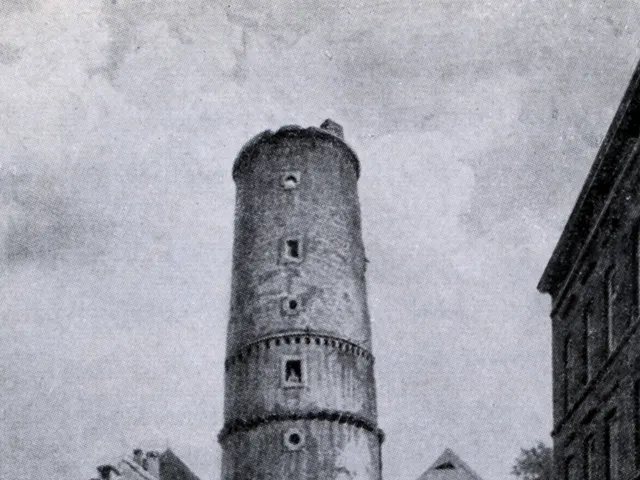
Bachtor
since 1230One of the twelve great gates of Cologne's final medieval expansion, built around 1230 in the southwest, later converted into a windmill and demolished in 1883.
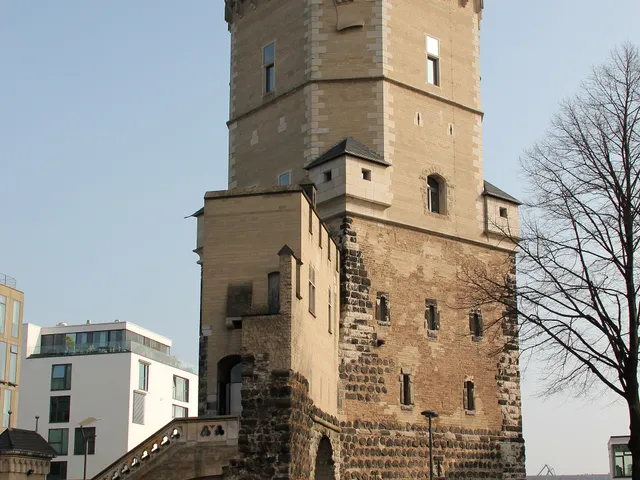
Bayenturm
since 1220One of Cologne's few surviving medieval fortification towers, built c. 1220 on the Rhine — today home to the FrauenMediaTurm foundation.
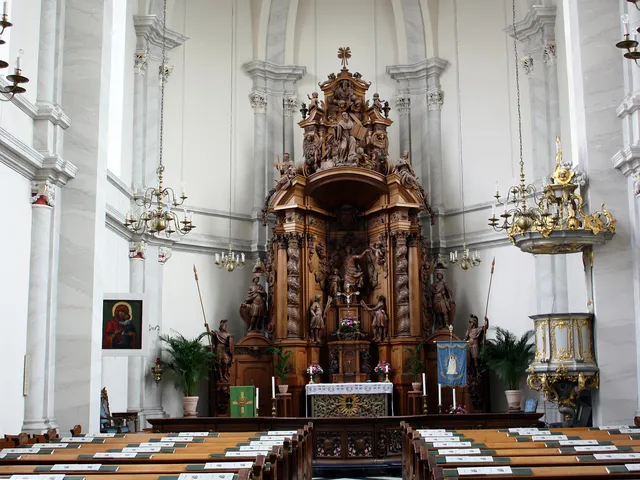
Benedictine Convent of the Holy Maccabees
Medieval convent near the Eigelstein named after Maccabean relics brought to Cologne — its buildings have long since vanished.
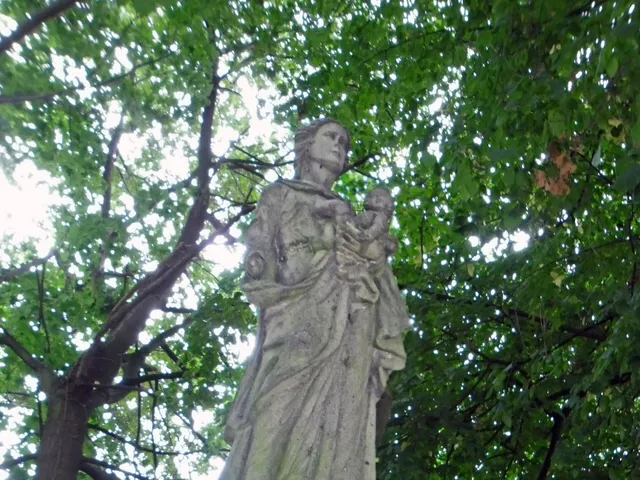
Worringen Castle – Site of the 1288 Battle
since 1275Worringen Castle was a fortress of the Electorate of Cologne on the left bank of the Rhine, before whose walls the famous Battle of Worringen was fought in 1288. Built in 1275 and destroyed in 1288, nothing of it survives today.
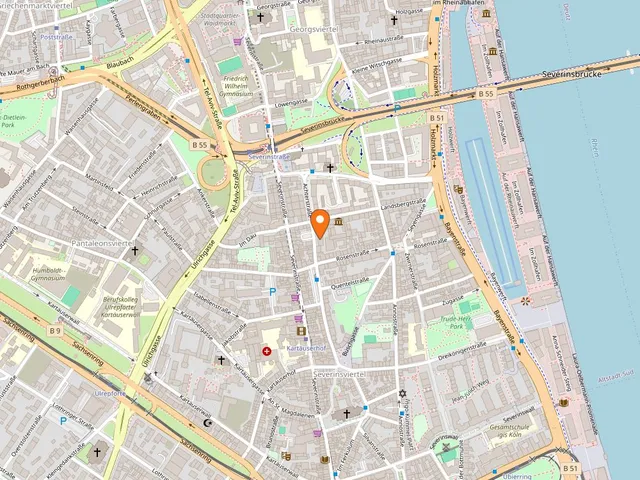
Cellitine Convent of the Holy Trinity
Former Cologne convent of the Cellite Sisters, who nursed the sick — tracing its roots to a beguinage founded in 1365.
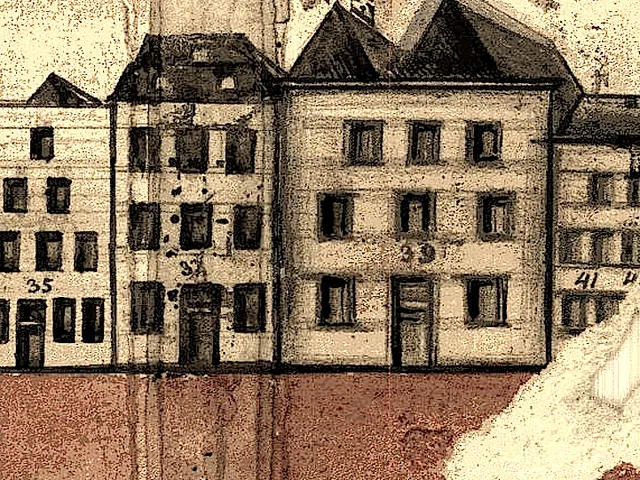
Klein-Nazareth Cellite Convent
Former Cologne convent whose Cellite sisters, unlike the rest of their order, did not permanently work in nursing care.
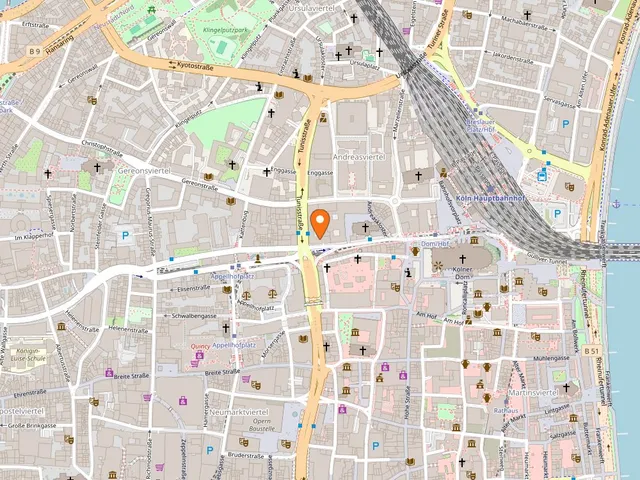
Cellitinnenkloster Zederwald
A beguine convent in Cologne's Altstadt-Nord that cared for the sick for five centuries, from 1302 to 1802.
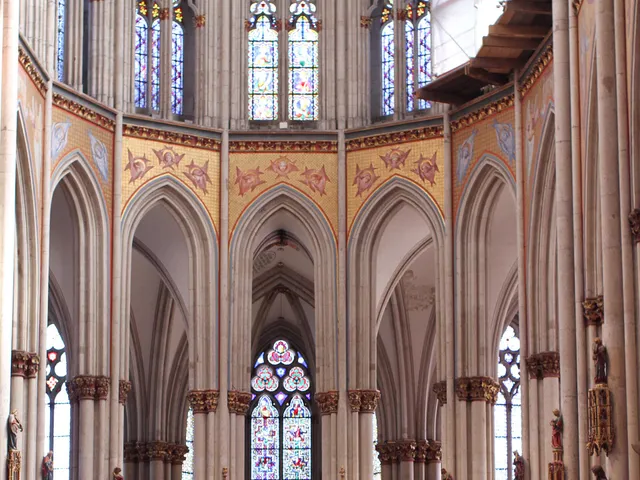
The Choir Pillar Figures of Cologne Cathedral
since 1320Fourteen larger-than-life, brightly painted statues of Christ, Mary and the twelve apostles on the pillars of Cologne Cathedral's high choir – a principal work of early 14th-century European sculpture.
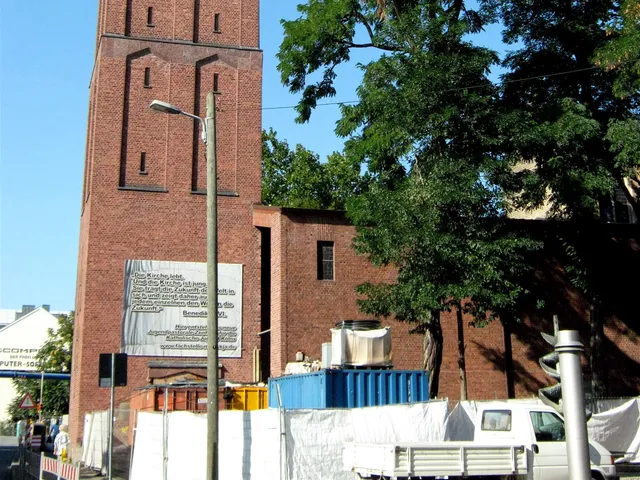
Crux (Youth Pastoral Centre)
Home of the 'church with the leaning tower' — Catholic youth pastoral centre in Cologne's Südstadt, combining a church, café, and community spaces under one roof.
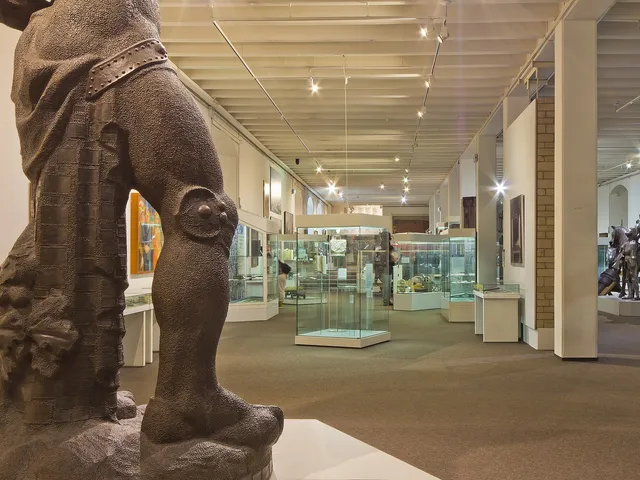
The Kölsche Boor en Iser (The Cologne Farmer in Iron)
Cologne's WWI war memorial – after, or alongside, Berlin's Iron Hindenburg the most widely covered such monument in the national press.
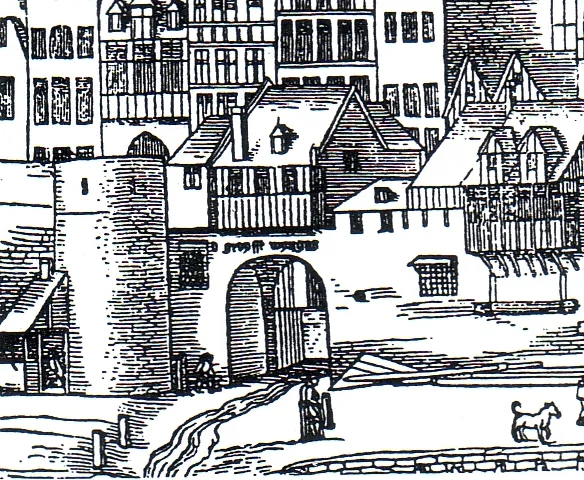
Deutschordenskirche St. Katharina
Long-demolished church of a Teutonic Order commandery in Altstadt-Süd; only the street An Sankt Katharinen preserves its name today.
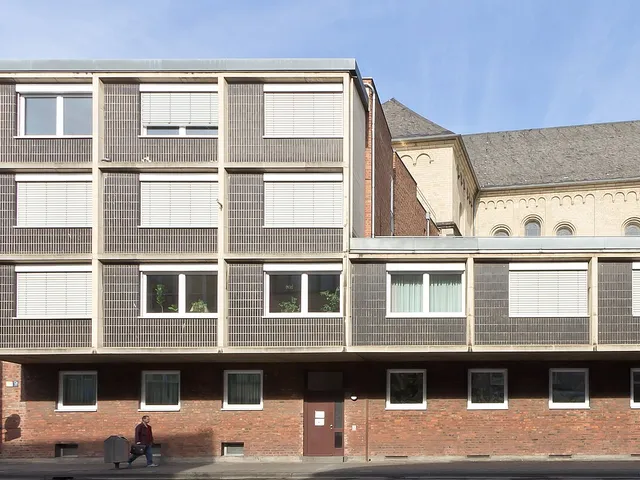
Dominican Monastery Cologne
Where Albertus Magnus taught and was buried: one of Germany's earliest Dominican monasteries, now lost to history.
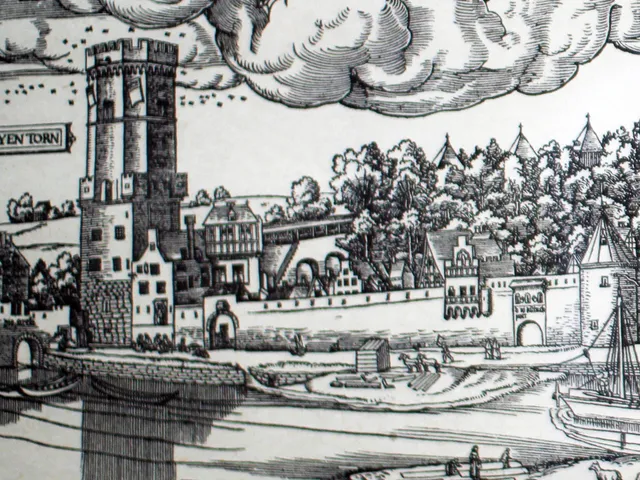
Dreikönigenpforte
since 1200A small gateway in Cologne's riverside city wall from the 13th century, named after the Three Magi painted above its arch, demolished in 1854.
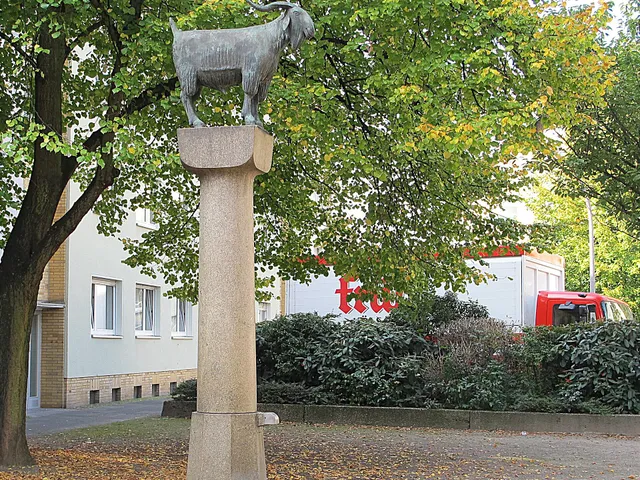
Düxer Bock
The unofficial heraldic animal of Deutz: this fountain monument commemorates an old Cologne legend about a tailor and a tax collector.
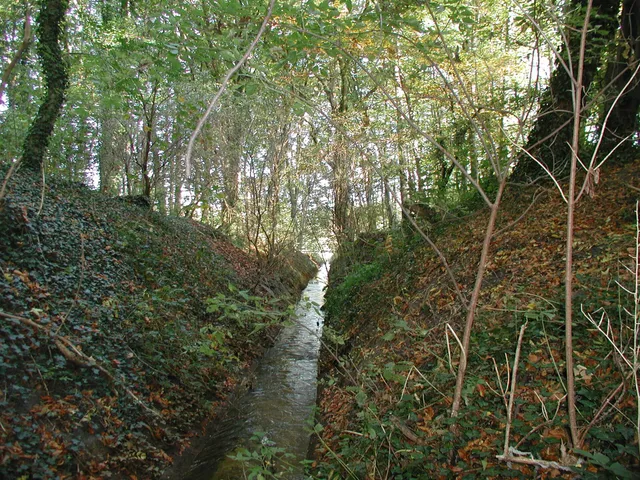
Duffesbach
The only stream in the Cologne Bay to reach the Rhine — artificially channelled since Roman times to serve Cologne's medieval trades.
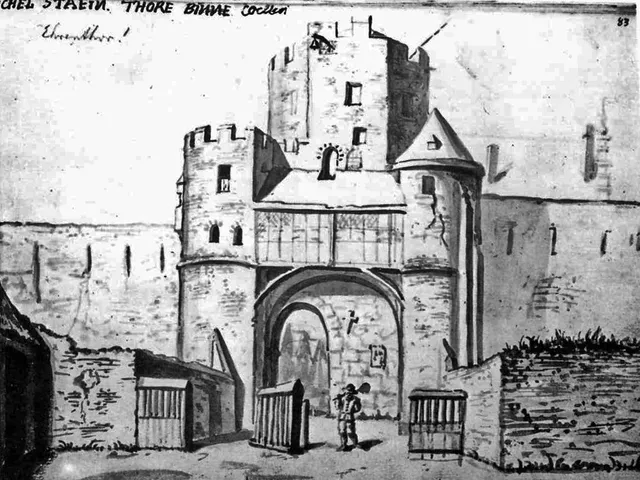
Ehrentor
since 1250One of the gate-towers built around 1250 in Cologne's medieval ring wall, successor to the Roman "Ehrenpforte," demolished in 1882.
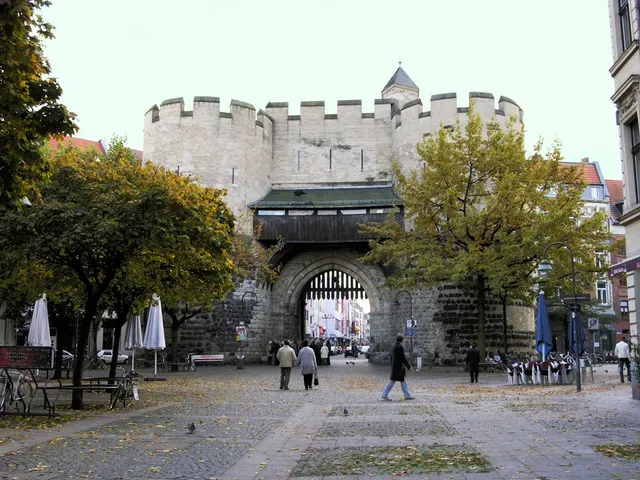
Eigelsteintorburg
since 1228One of four surviving gates of Cologne's medieval city wall — both Maria de' Medici and Napoleon once entered the city through this very gate.
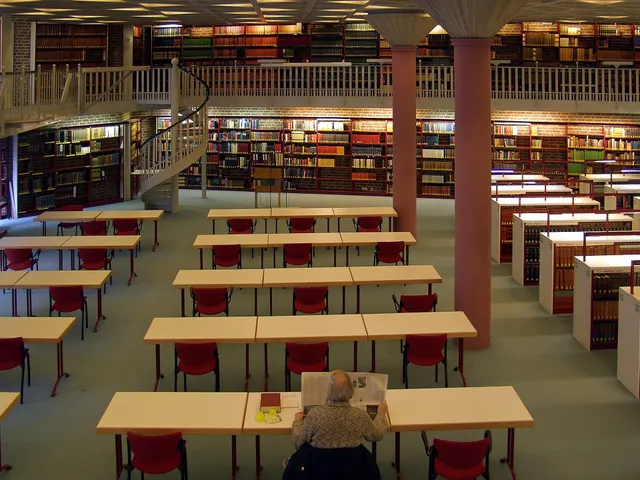
Erzbischöfliche Diözesan- und Dombibliothek Köln
Among surviving cathedral libraries, considered the most significant — the Archdiocese of Cologne's central library, with roots in the 6th/7th century.
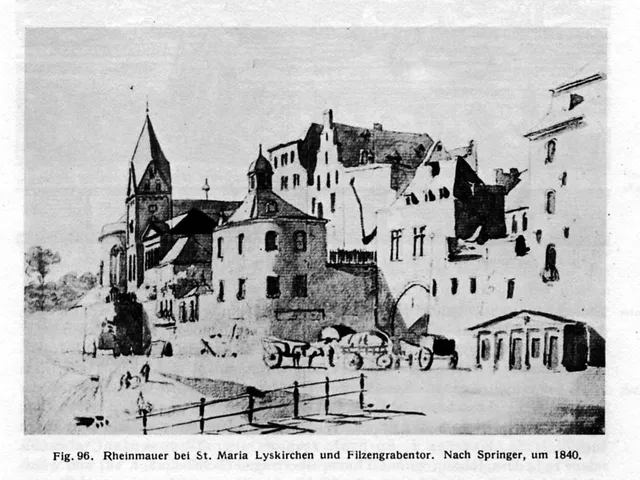
Filzengrabentor
A gate in Cologne's Rhine wall built around 1200 at the Filzengraben, demolished in 1854 and no longer preserved today.
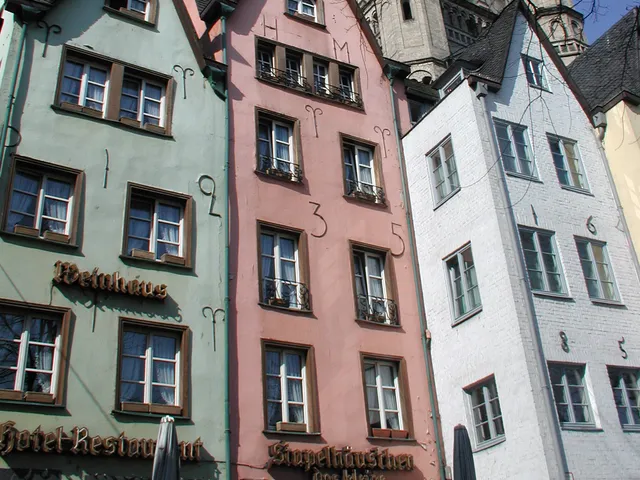
Fischmarkt
Historic square on the Rhine riverfront in Cologne's Altstadt — for centuries the heart of the city's fish trade, first recorded as "forum piscium" in the 12th century.
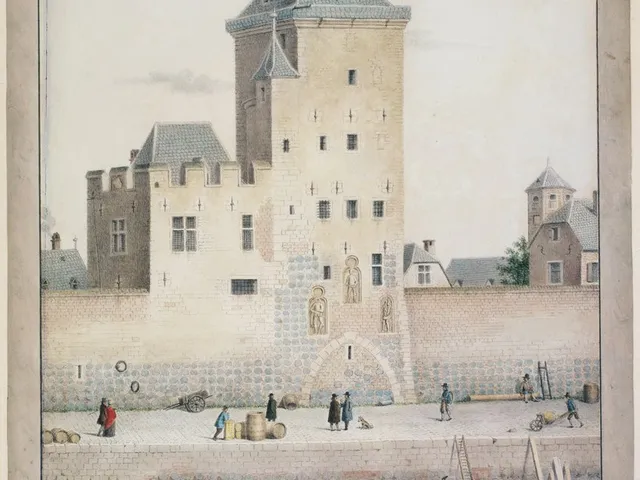
Frankenturm – the vanished defensive and prison tower on the Trankgasse
The Frankenturm was a medieval tower of Cologne's city wall near today's Frankenwerft, demolished in 1856. Only the street name „Am Frankenturm" and three salvaged stone panels in the Cologne City Museum still recall it.
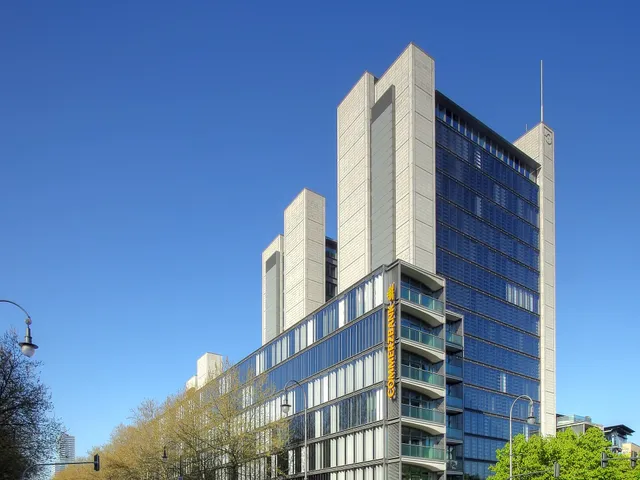
Friesenplatz
Square on Cologne's ring boulevards at the start of Venloer Straße — gateway to the Belgian Quarter and once the haunt of Cologne's underworld.
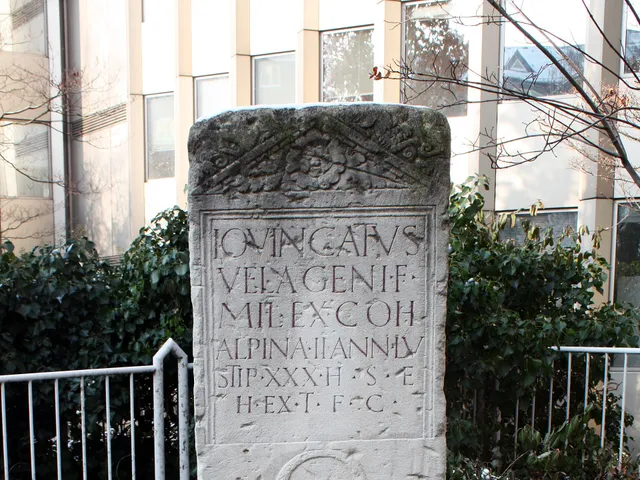
Friesentor
since 1244Cologne's only hexagonal city gate, built around 1244 at what is now Friesenplatz — a uniquely shaped landmark of the medieval fortifications.
 © Architecten- und Ingenieur-Verein für Niederrhein und Westfalen Köln · Public domain
Gereonstor
since 1215Medieval twin-tower gate of Cologne's city wall — bricked up for over 400 years, once the city's strictest prison, demolished in 1881.
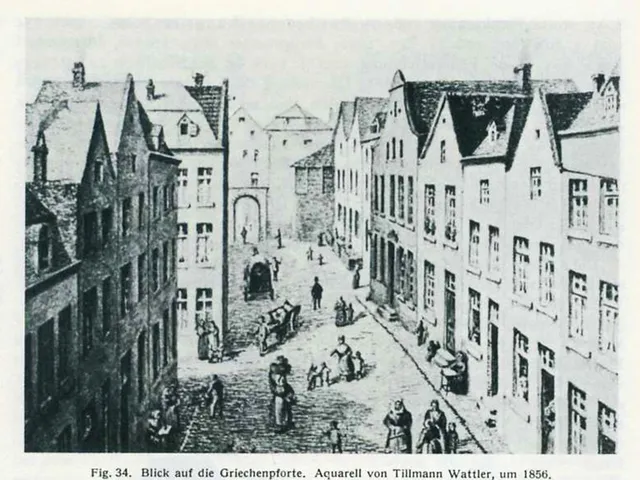
Griechenpforte
since 900A gateway in Cologne's southwestern city wall, probably created as early as the 10th century, pulled down around 1856; a fragment of wall still marks the spot today.
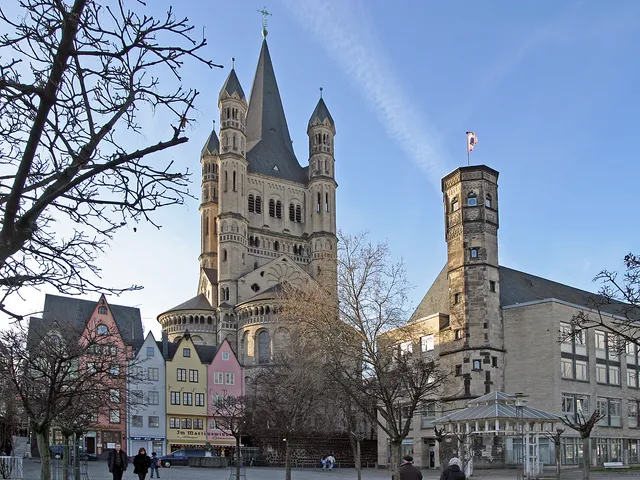
Groß St. Martin
since 1150Romanesque basilica in Cologne's Old Town with a cloverleaf-shaped east choir and striking crossing tower — built over Roman foundations.
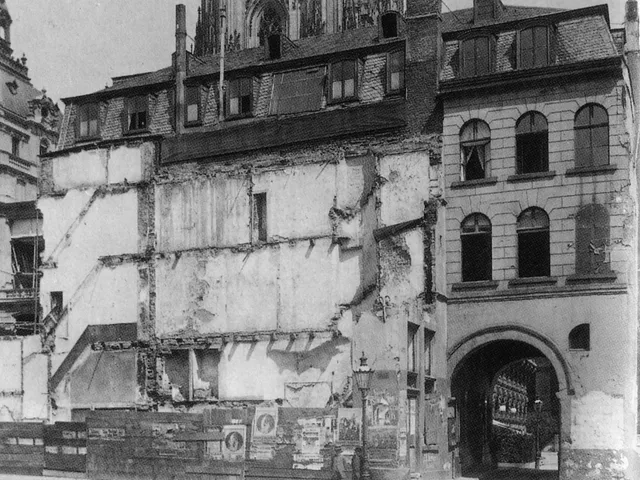
Hacht (Prison)
Archbishop's court and prison on today's Cathedral Square — criminals were locked up here and women tried as witches.
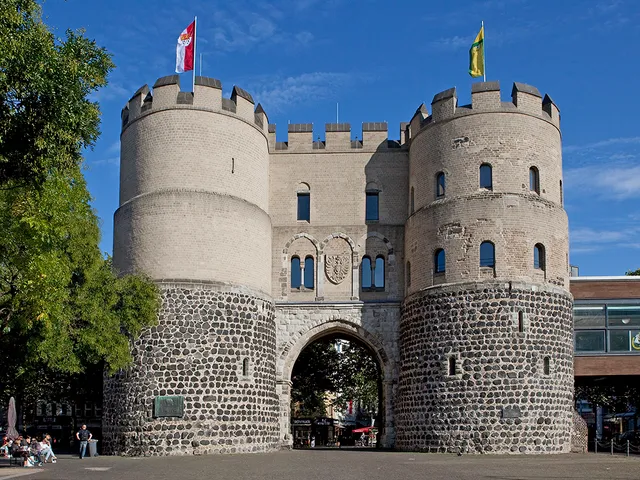
Hahnentorburg
since 1220Medieval twin-tower gate at Rudolfplatz — Cologne's western gateway, through which crowned kings entered the city after their coronation in Aachen.
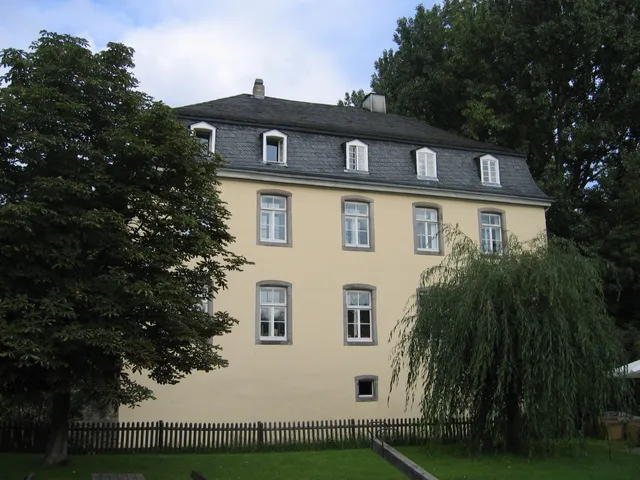
Haus Haan (Moated Castle)
since 1730A medieval moated castle in Höhenhaus – first documented in 1203, with the present manor house dating from 1730 and converted into private apartments behind its old moat in 1986.

Haus Saaleck
Medieval Cologne townhouse with late-Gothic corner turrets – today home to the city's Artothek, a lending library for art.
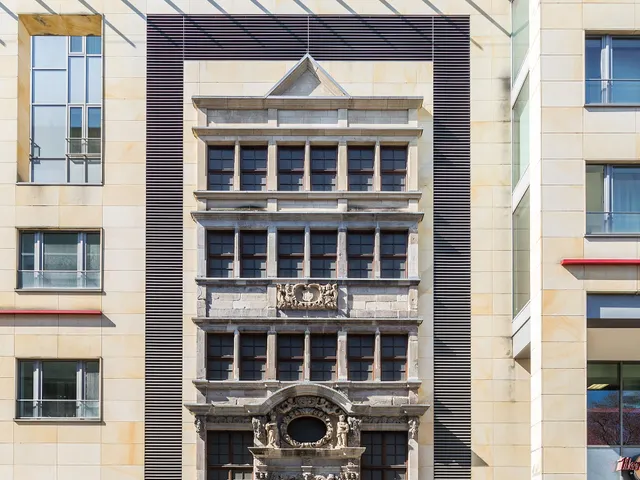
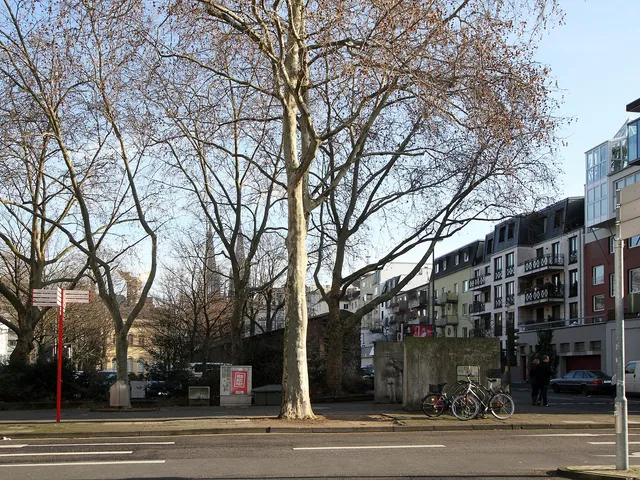
Heiligkreuzkapelle
Small 14th-century Cologne chapel whose south wall rested on the Roman city wall — demolished in 1818.
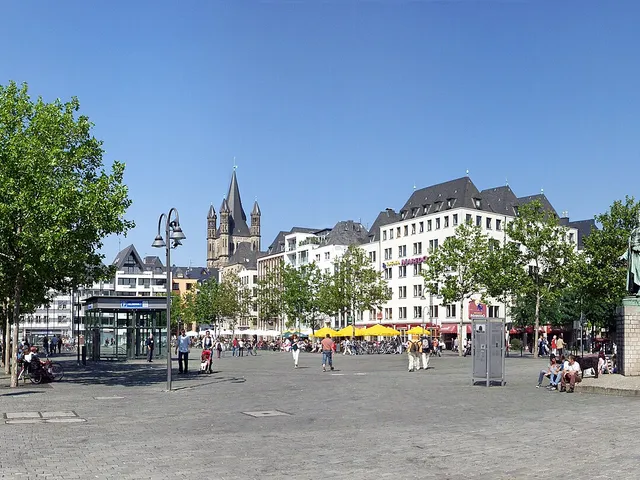
Heumarkt
Cologne's second-largest square and one of its oldest — built on a former Rhine island, hence its historic name 'Inselmarkt' (Island Market).
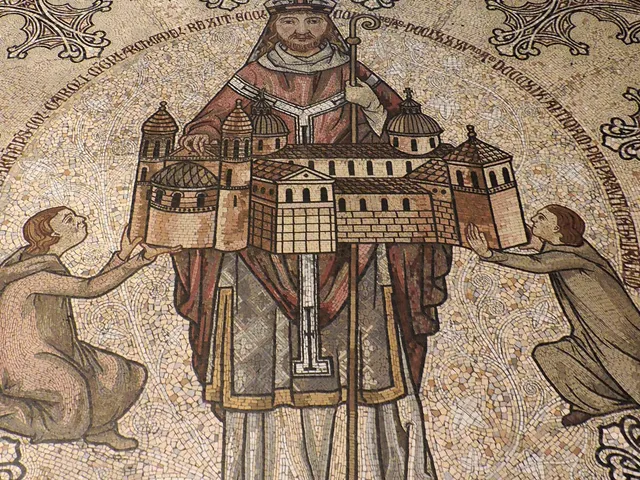
Hildebold Cathedral
Carolingian predecessor of Cologne Cathedral, which housed the relics of the Three Kings until its demolition in 1248.
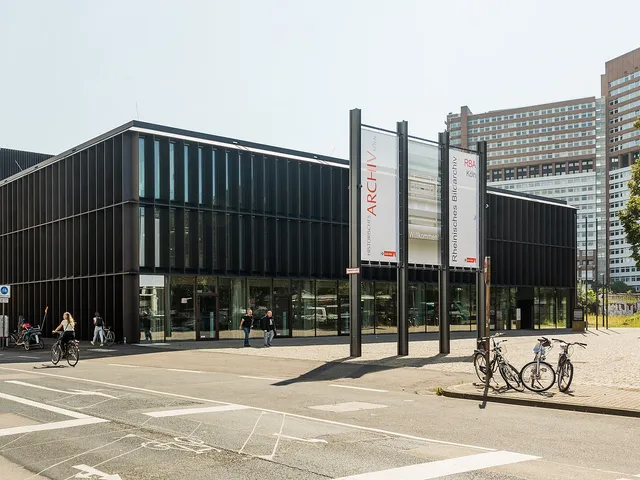
Historical Archive with Rhenish Image Archive
since 1857Germany's largest municipal archive — collapsed during subway construction in 2009, reopened in a new building at Eifelwall in 2021.
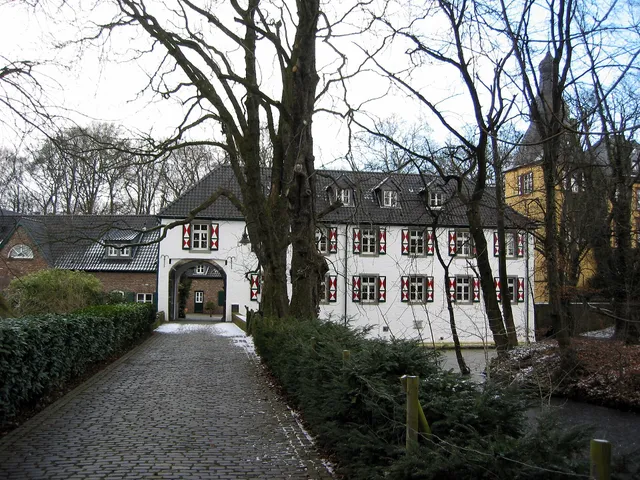
Isenburg
Moated castle on a water-encircled island in Cologne-Holweide, with a 16th-century tower and an 18th-century manor house.
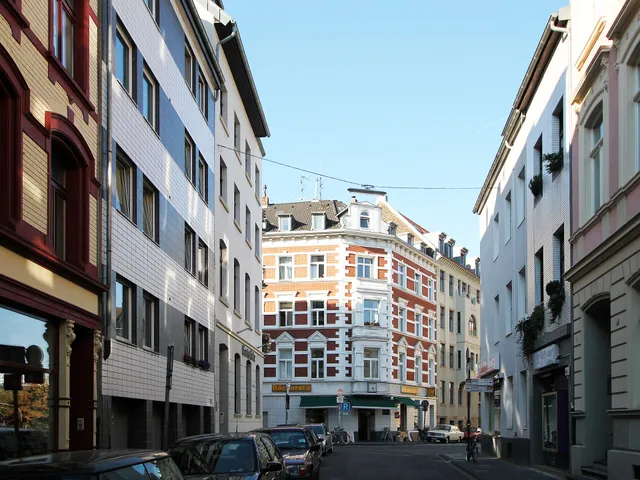
The Kahlenhausen or Jews' Gate (Judenpforte)
A short-lived medieval gate in the north-eastern stretch of Cologne's city wall between the Eigelstein gate and the Kunibert tower, recorded in 1349 as the "porta judeorum" and no longer preserved today.
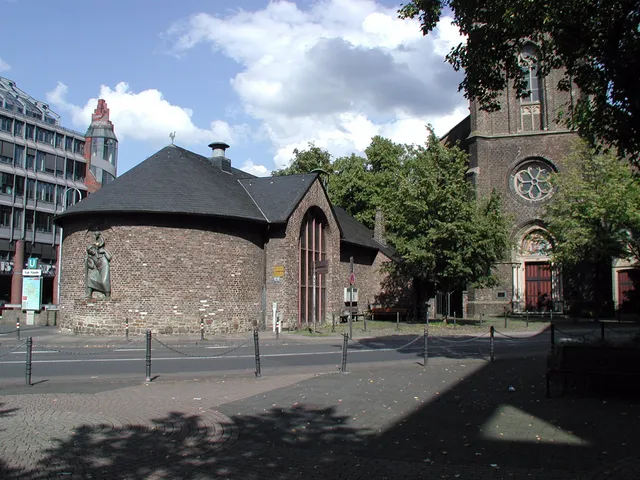
Kalker Kapelle
A pilgrimage chapel in Cologne's Kalk district, home to a 15th-century Pietà said to have miraculous powers — a destination for annual processions for centuries.
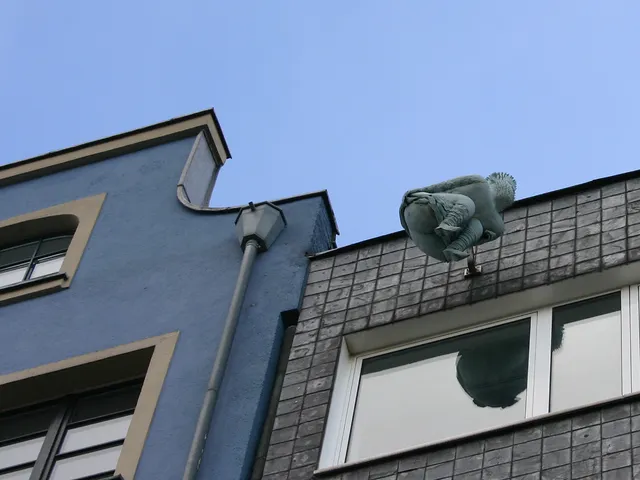
Kallendresser
Copper figure at Alter Markt that bares its backside to onlookers — a Cologne satirical motif with roots in the Middle Ages.
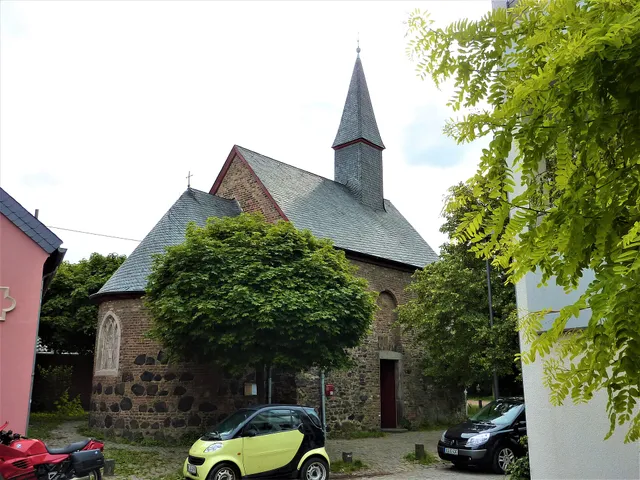
St. George's Chapel
Late Gothic chapel in Cologne-Weiß, first mentioned in 1433, featuring vivid murals from the 1980s.
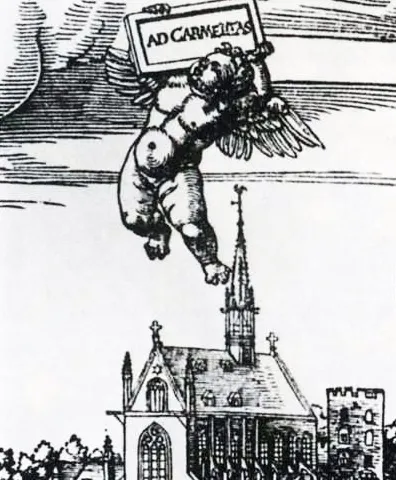
Karmelite Monastery Cologne
Former Carmelite monastery south of Cologne's Waidmarkt, founded in 1256 and secularized in 1802 – the female Carmelite branch still exists in Cologne today.
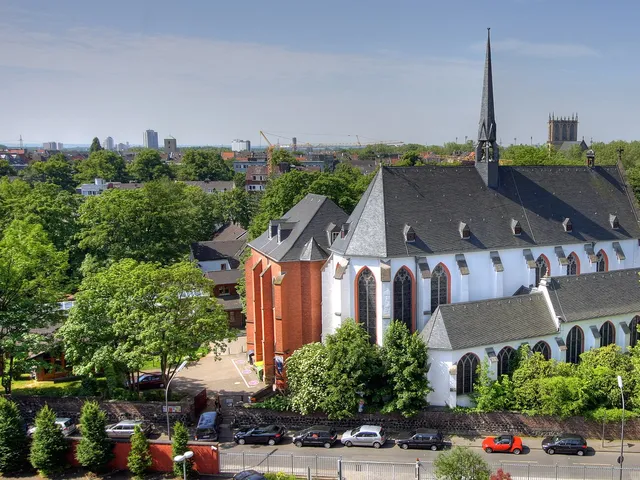
Kartäuserkirche
since 1350Gothic church of the 1334 Cologne Charterhouse — now an Evangelical parish church with stained-glass windows by Charles Crodel.
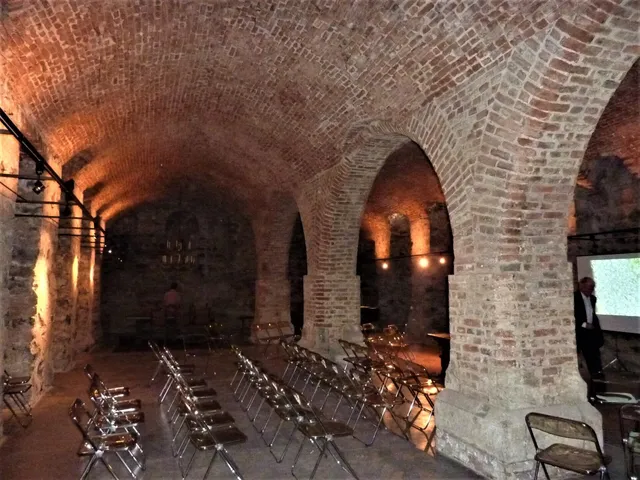
The Poor Clares' Convent of St. Clare in Cologne
A convent of Poor Clares by today's Roman Tower, documented from 1306 until its dissolution in the 1802 secularization.
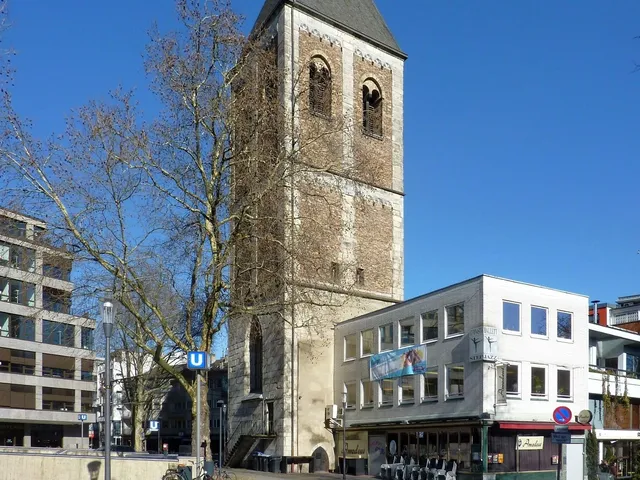
Klein St. Martin
since 1460A lone tower surviving from a demolished Cologne parish church — once crowned with a tall Gothic spire visible across the Rhine skyline, today capped by a flat pyramid.
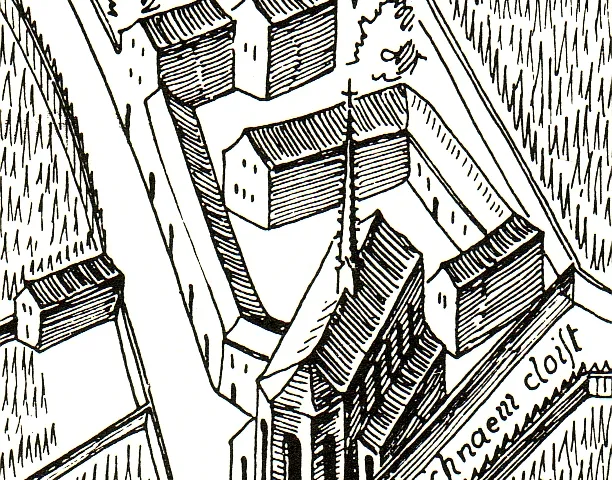
Kloster Herrenleichnam
An Augustinian canon monastery on Klingelpütz in Cologne's Altstadt-Nord, founded around a chapel commemorating a Eucharistic miracle.
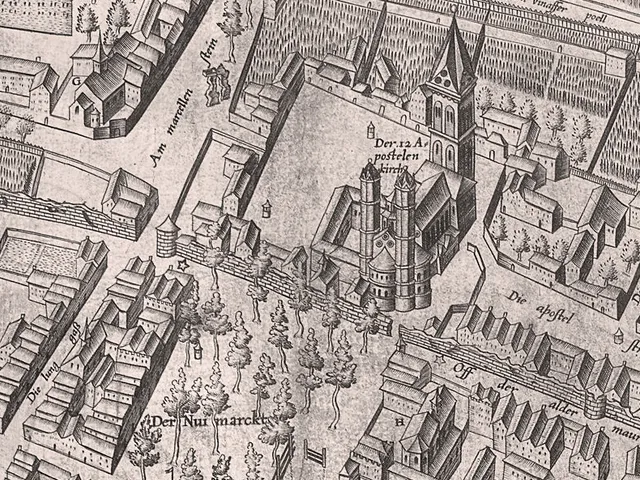
St. Gertrude's Convent (Old Cologne)
Former Dominican nuns' convent at the northwest corner of Neumarkt, founded before 1257 and dissolved in 1802.
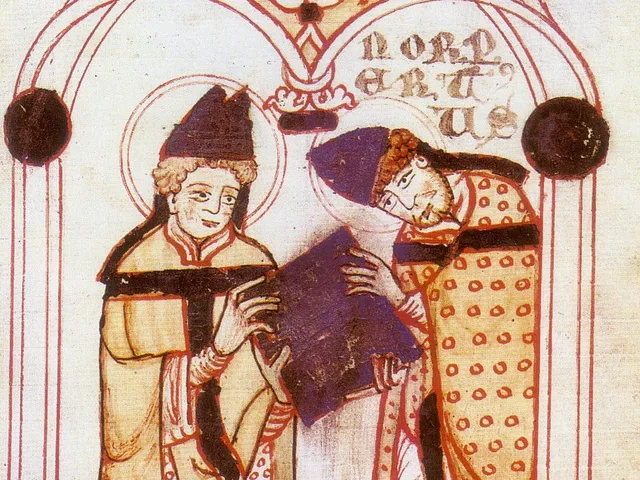
Kloster Weiher
Augustinerinnenkloster nahe Köln, benannt nach einem Weiher im Vorland, gegründet um 1198 und 1474 im Neusser Krieg geschleift.
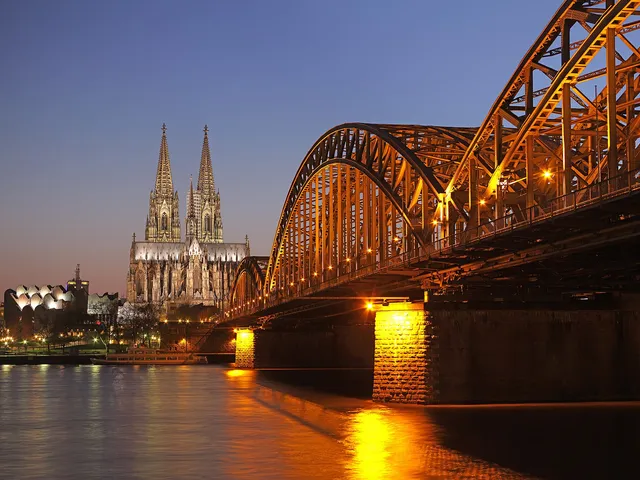
Cologne Cathedral
since 1248Gothic cathedral and shrine of the Three Kings — at around 157 metres one of the tallest churches in the world and a UNESCO World Heritage Site.
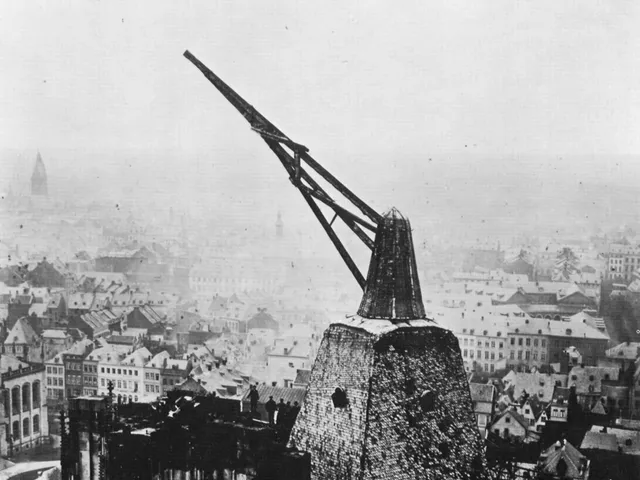
Cologne Cathedral Crane
since 1357A wooden slewing crane that stood atop the unfinished south tower of Cologne Cathedral for more than 500 years and shaped the city's skyline – until it was dismantled in 1868 to make way for construction.
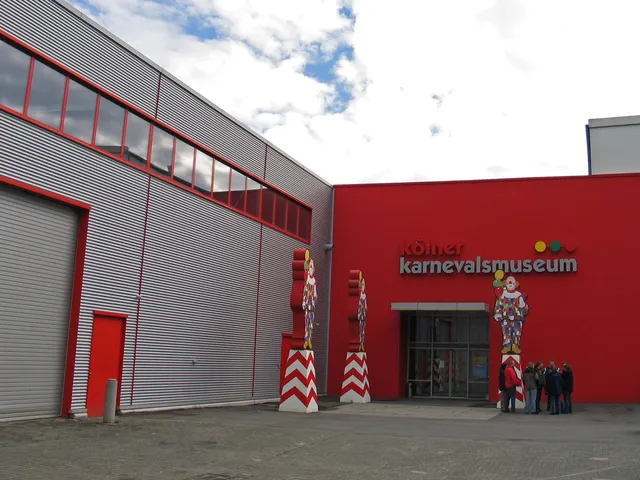
Kölner Karnevalsmuseum
Germany's largest carnival museum in Cologne-Ehrenfeld – tracing carnival history from antiquity to the present (currently closed).
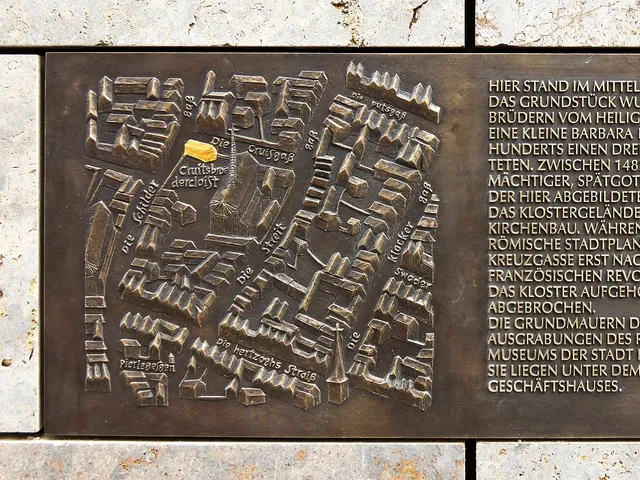
Cologne Crosiers (Schildergasse), Cologne
A Crosier Order house on Schildergasse founded in 1309, famed for its surviving library of 97 medieval manuscripts, the "Libelli Rhenani."
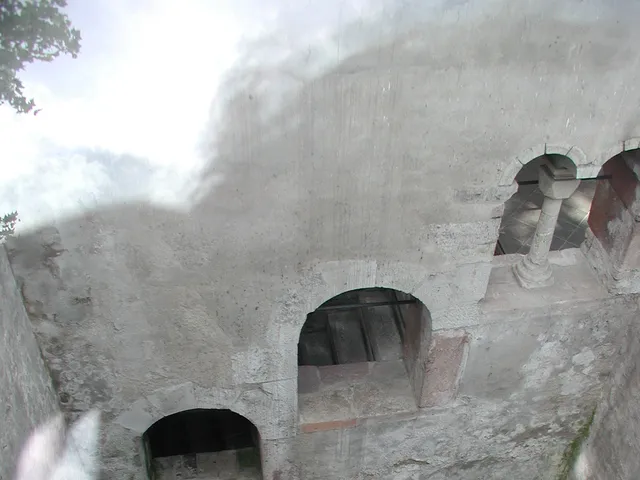
Cologne Mikveh
Medieval Jewish ritual bath beneath the Rathausplatz: the staircase descends inside the nearly 16-metre-deep shaft all the way to the water level.
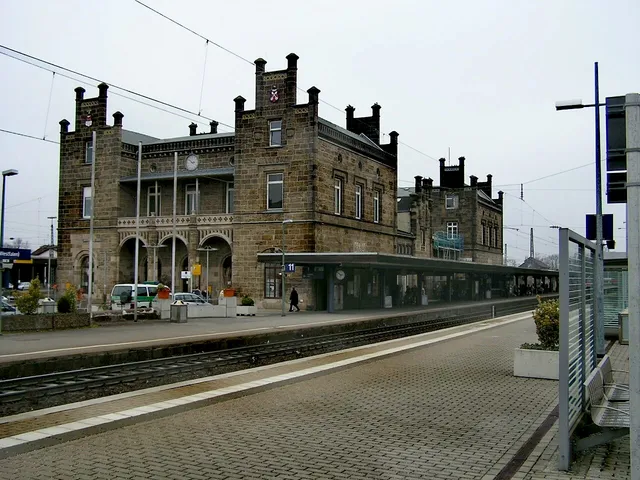
Cologne Coat of Arms
Three golden crowns for the Three Holy Kings and eleven black flames for St. Ursula — a coat of arms shaped by more than 700 years of change.
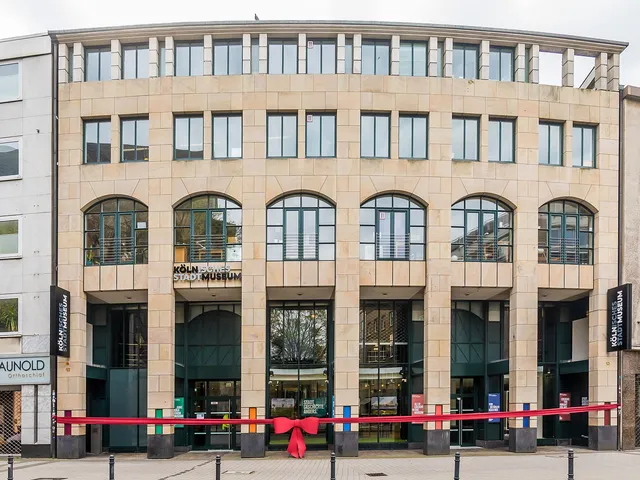
Cologne City Museum
since 1888Cologne's urban history museum, open for over 130 years — since 2024 it organises its collection around emotions rather than chronology; currently in temporary premises.
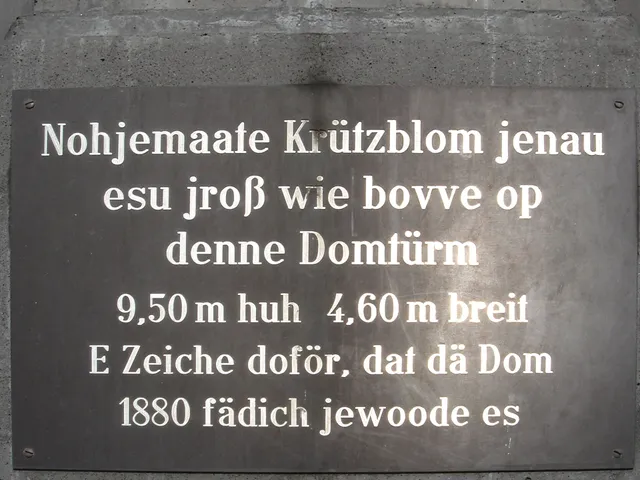
Kölsch (Language)
The Ripuarian dialect of Cologne – warm, witty and still very much alive in music, carnival and everyday life.
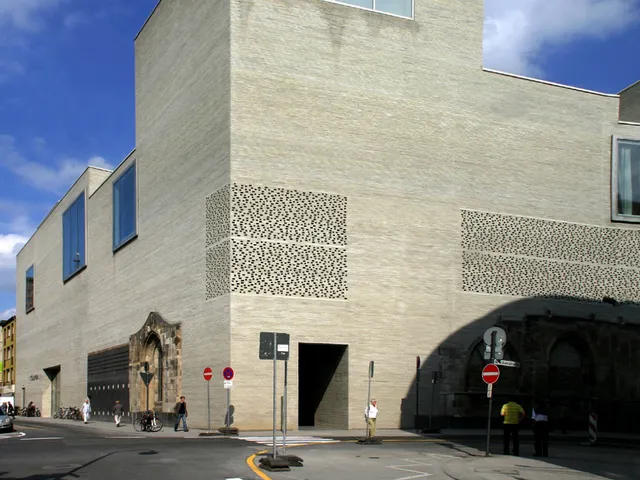
Kolumba
since 1853Peter Zumthor's landmark brick building for the Archdiocese of Cologne's art museum, built over the ruins of the war-destroyed church of St. Columba.
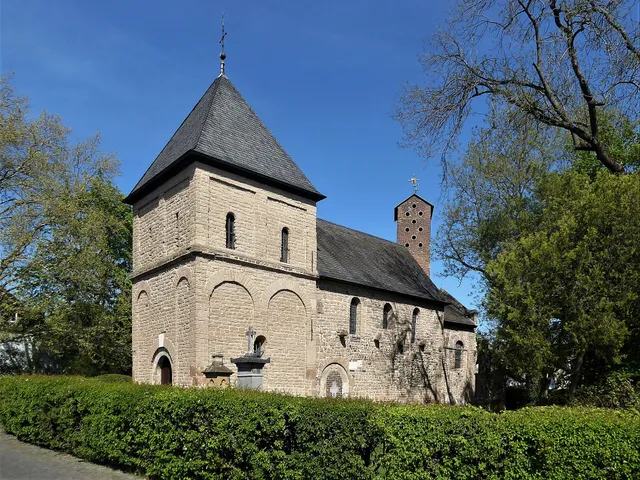
Krieler Dömchen
since 850Cologne's second-oldest church after St. Gereon — a small Romanesque village chapel in Lindenthal with roots stretching back to around 900 AD.
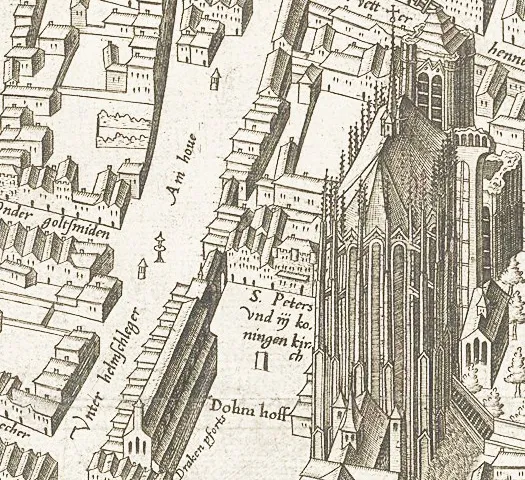
Linneper Hof (Reifferscheider Hof), Cologne
Former noble courtyard on Cologne Cathedral's precinct, originally the archbishops' residence — demolished in the 1740s, now part of the Roman-Germanic Museum grounds.
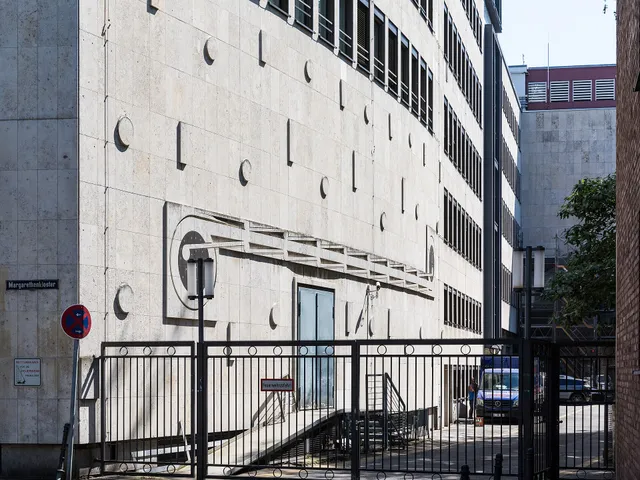
Margarethenkloster
Despite its name, this was no monastery but a hospital of Cologne Cathedral's chapter, founded in the 7th century by Bishop Kunibert – now recalled only by a street name.
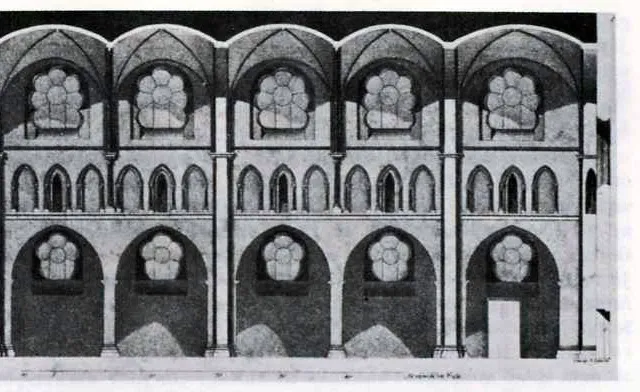
Maria im Spiegel (Sion Convent), Cologne
Former Cologne Cistercian convent, popularly known as Sion Convent, founded in 1246 on the site of an earlier Franciscan settlement.
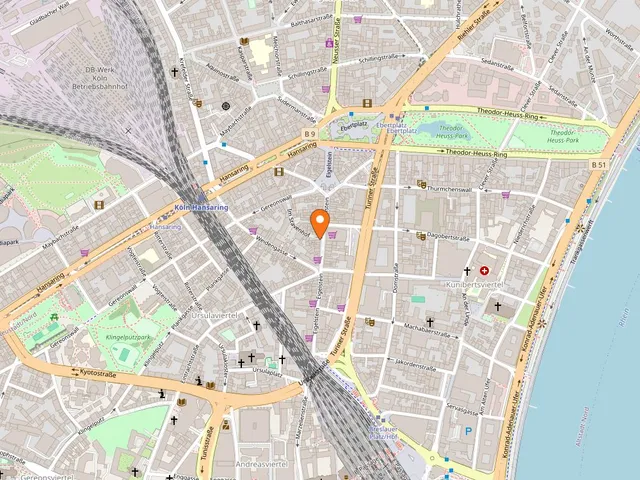
St. Maria Magdalena zur Busse (Bethlehem Convent), Cologne
A former beguine community on the Eigelstein that became an Augustinian convent in 1475, surviving until secularization in 1802.
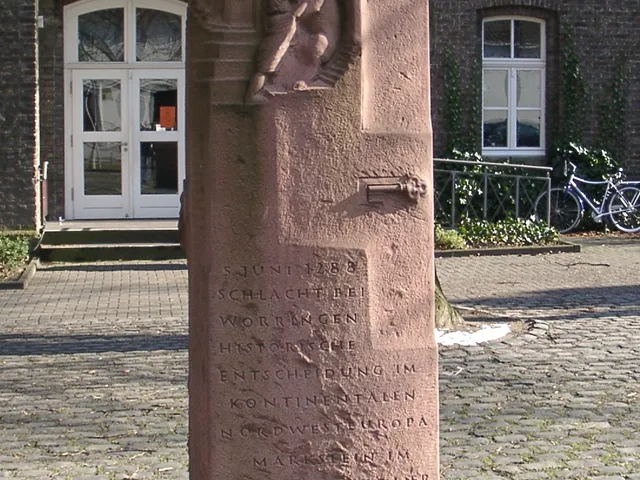
A Landmark in Cologne's Citizens' Fight for Independence
Memorial in Worringen commemorating the 1288 Battle of Worringen — a landmark moment in Cologne's citizens' struggle for independence.
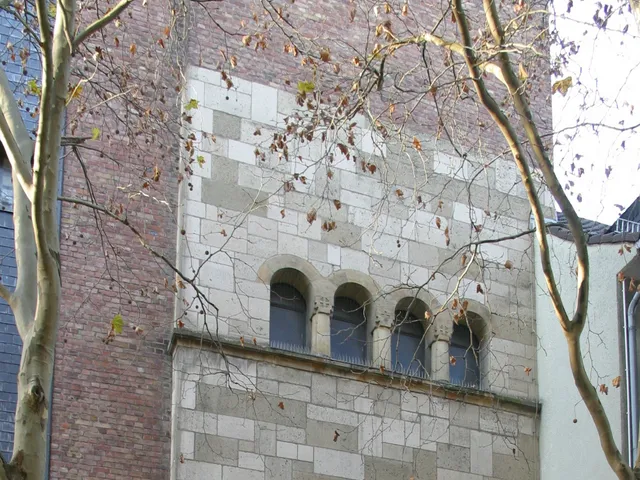
Mechtern
Medieval Cologne settlement named after the church "ad martyres" – site of the Reformation-era "Mechtern Sermons".
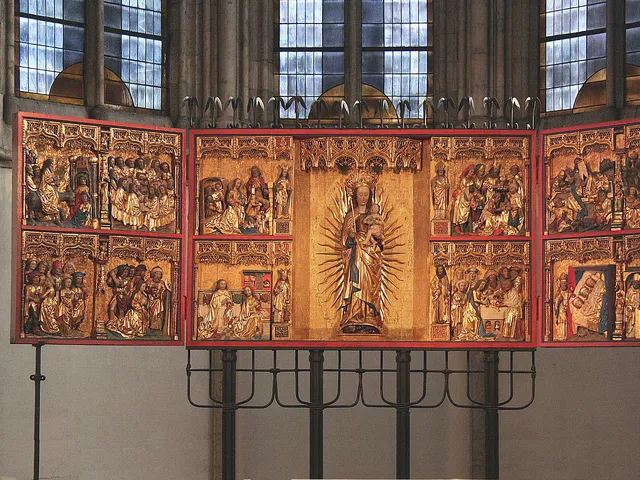
Minoritenkirche
Burial church of Adolph Kolping and Johannes Duns Scotus — a 13th-century Gothic mendicant church and place of pilgrimage.
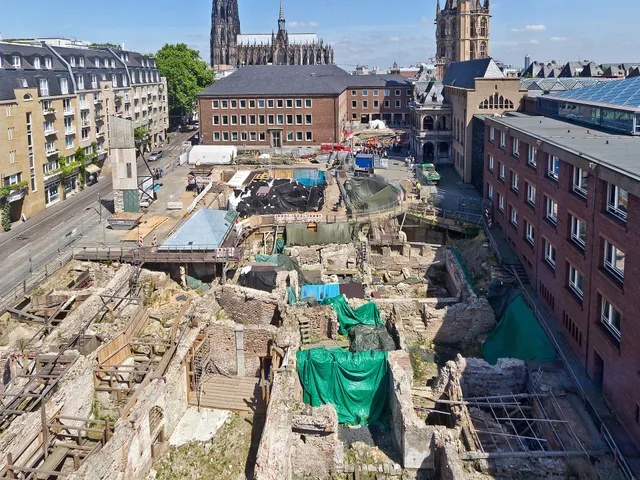
Medieval Synagogue of Cologne
Beneath the Archaeological Zone near City Hall: remains of a Jewish synagogue that stood from the 11th century until the expulsion of 1424.
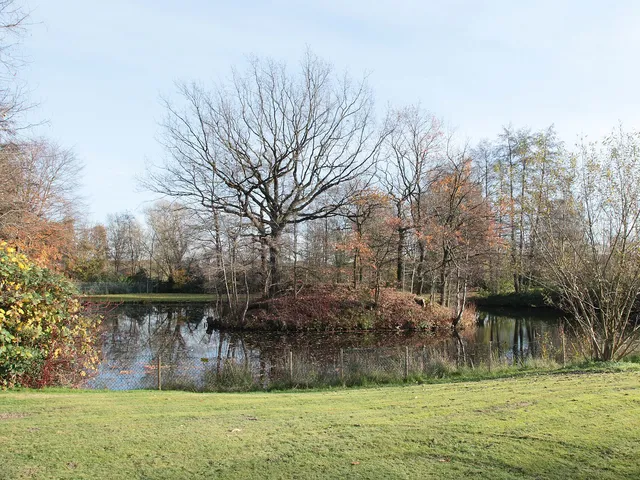
Kurtekotten Motte
The remains of a medieval motte in Cologne-Flittard: a raised castle mound and a wide water-filled moat sit tucked between sports grounds and a dredging lake, protected as a natural monument.
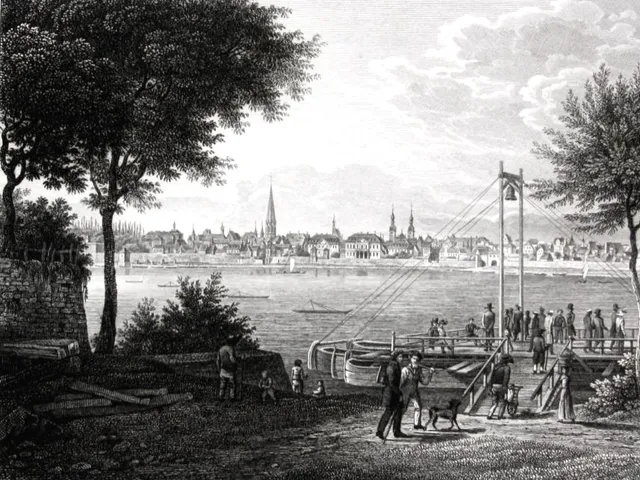
Mülheimer Schiffbrücke
since 1888Floating timber bridge on some 40 anchored pontoons (1888–1927), with an opening section for river traffic, that replaced the Rhine ferry crossing at Mülheim.
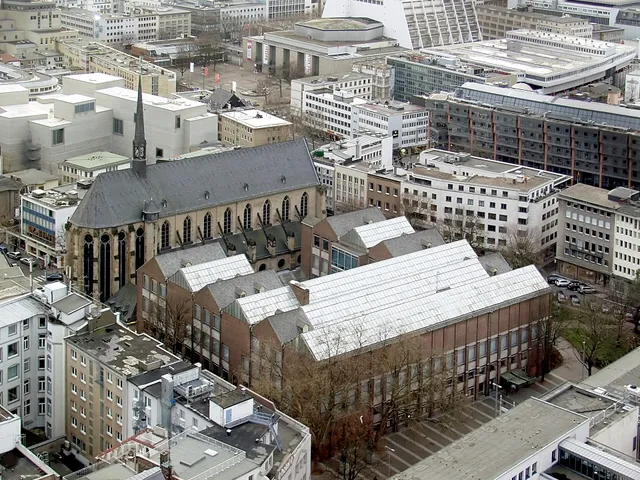
Museum of Applied Arts (MAKK)
since 1888Cologne museum of applied arts and design in the Schwarz-Bernard building — once dismissed as sterile, later celebrated as a 'third way' in postwar architecture.
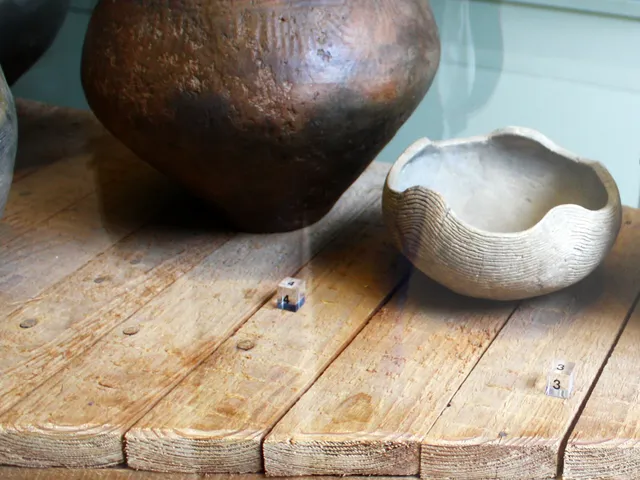
Museum für Vor- und Frühgeschichte
since 1907City museum founded in 1907 in the Bayenturm, covering regional prehistory – destroyed in 1943, its remnants became the founding stock of the Romano-Germanic Museum.
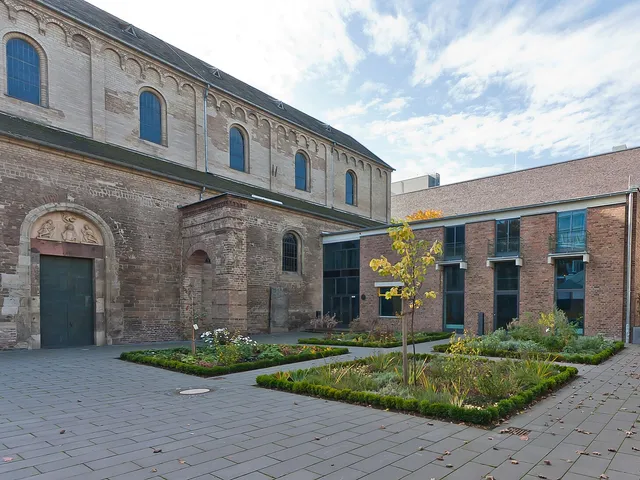
Museum Schnütgen
since 1910One of Europe's richest medieval collections, housed in the Romanesque basilica of St. Cecilia in Cologne's historic city centre.
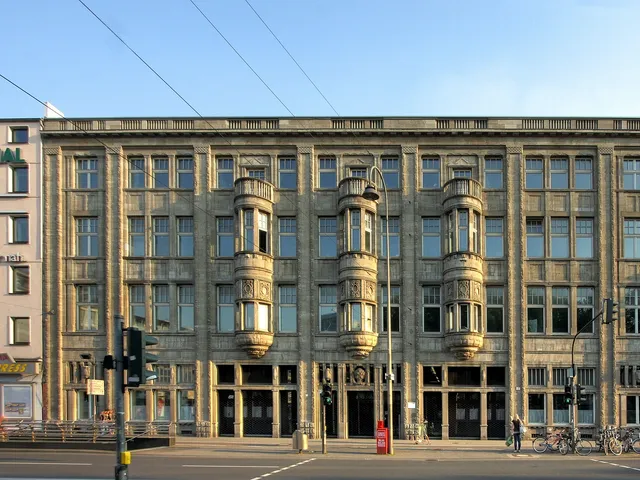
Neumarkt
Cologne's largest square at over 27,000 m² — once a livestock market, execution ground, and legendary witches' sabbath site, with Roman remains beneath.
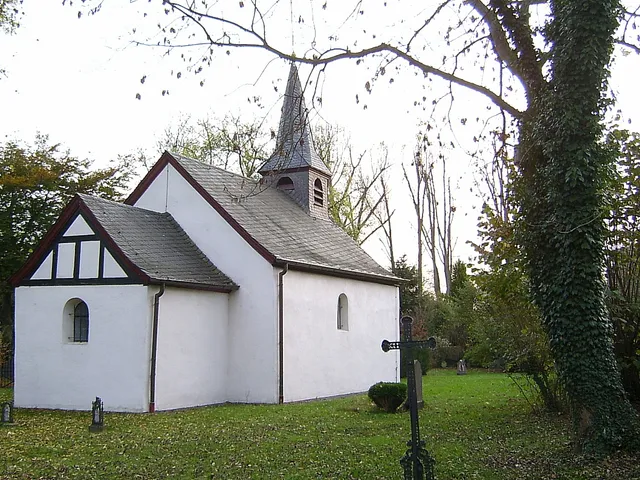
Nikolaus-Kapelle
Built around 1100 near the Rhine in Westhoven — Cologne's smallest surviving Romanesque village chapel, enclosed by an ancient churchyard.
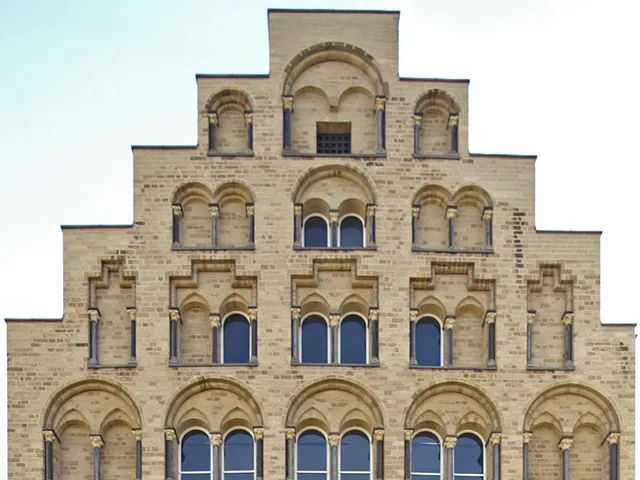
Overstolzenhaus
Built around 1230, the Overstolzenhaus on Rheingasse is a Romanesque patrician house that today houses the Academy of Media Arts Cologne.
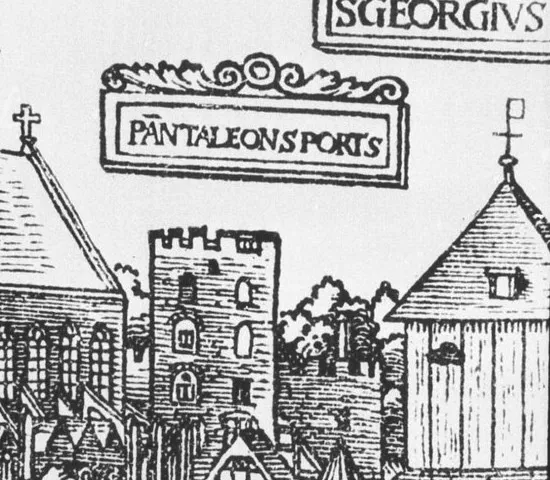
Pantaleonstor – a Vanished Double Gate of Cologne's City Wall
The Pantaleonstor was a medieval double-tower gate in Cologne's city wall that from 1844 even served as the passage for the city's first railway to Bonn, before being demolished in 1894.
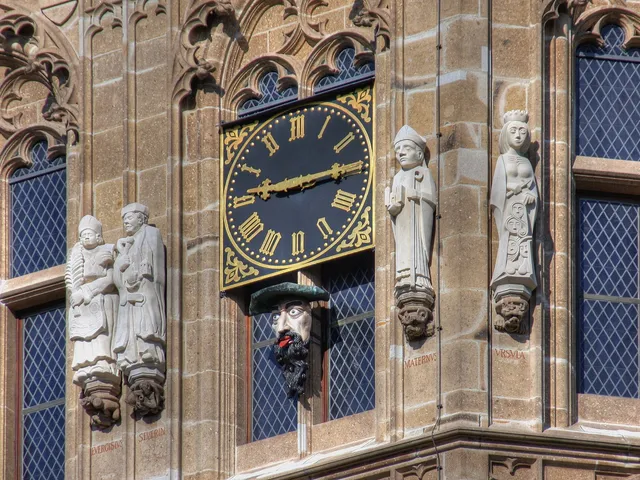
Platzjabbeck
Late-medieval wooden figure on Cologne's town hall tower that, since 1913, opens its mouth and sticks out its red tongue on every full hour.
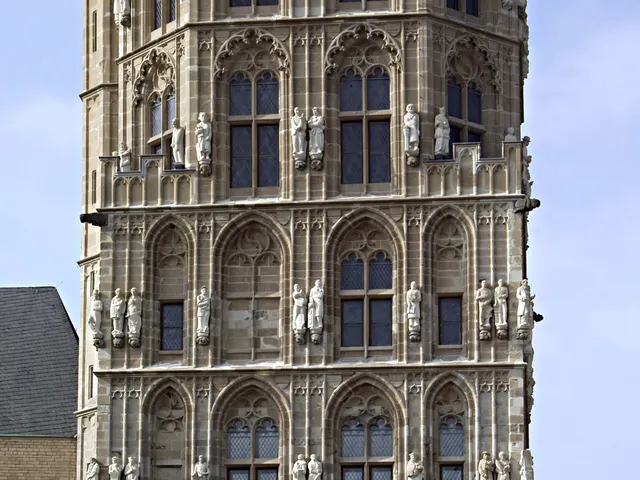
Historic City Hall
Germany's oldest city hall – with a Gothic council tower, a Renaissance loggia, and over 800 years of documented building history in Cologne's Old Town.
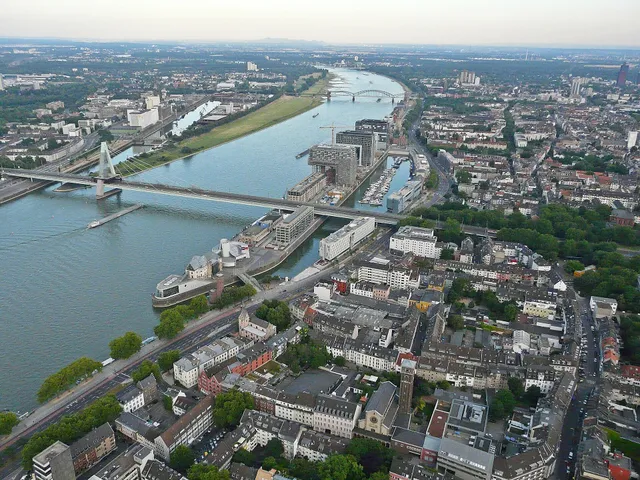
Rheinauhafen
Former Cologne harbour with the iconic Crane Houses – today a residential and commercial quarter on the 'Werthchen' peninsula in Altstadt-Süd.

Richmodis-Haus
Cologne landmark with two stone horse heads in its octagonal tower — rooted in the haunting legend of Richmodis von Aducht from the Black Death era.
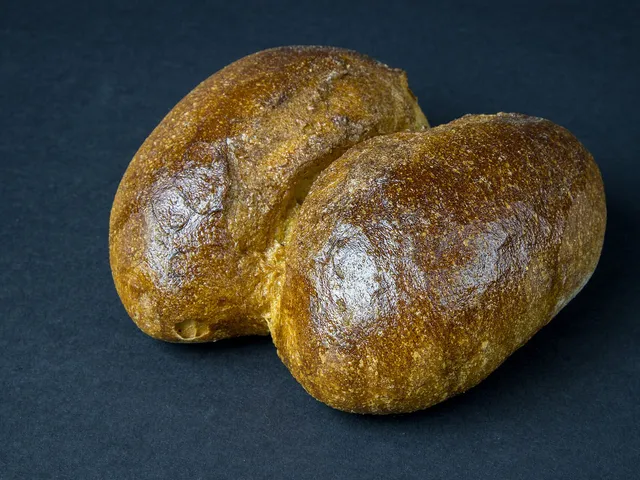
Röggelchen
Rhenish double bread roll made from two pieces of rye dough, documented in Cologne since the 15th century and typically served as Halver Hahn in the brewhouse.
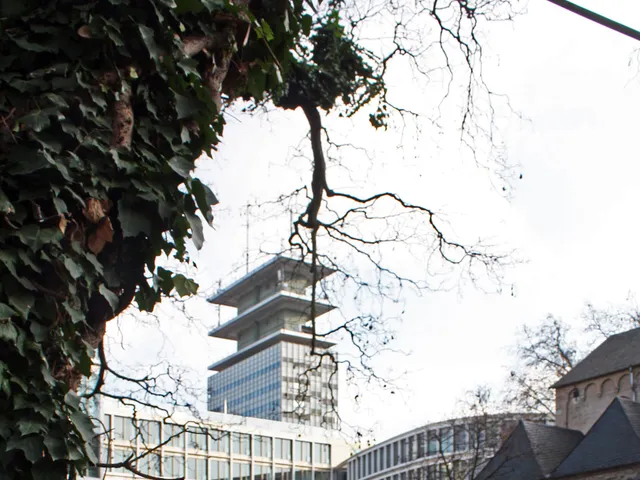
Roman Baths and Medieval Bathhouses in Cologne
Foundations of a 2nd/3rd-century Roman bath complex unearthed in 2007 beneath Cologne's Altstadt-Süd — including an 18-metre-wide rotunda.
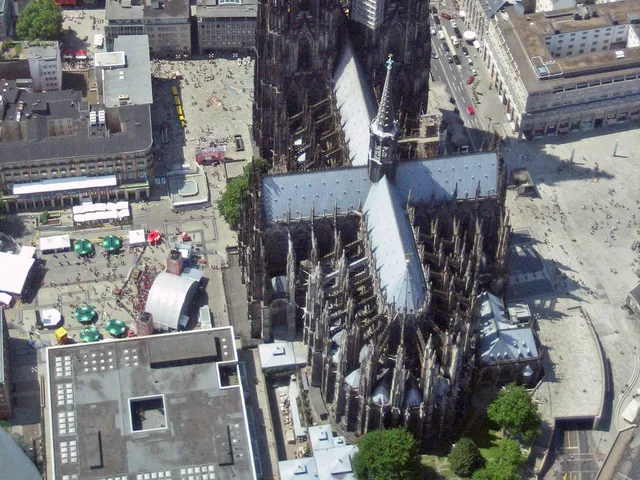
Roncalliplatz
The square around Cologne Cathedral traces a dramatic transformation from a densely built medieval neighbourhood to an open national monument.
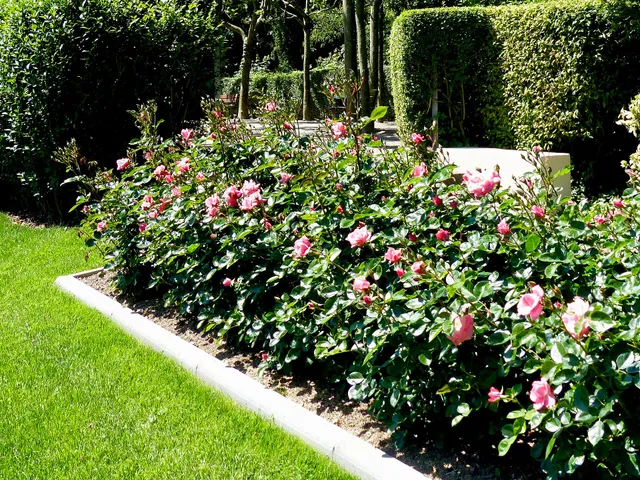
Rosengarten
since 1919Symmetrical rose garden on the former Fort X, with over 70 rose varieties and a pergola-style pavilion at the heart of Hilde-Domin-Park.
 © Architecten- und Ingenieur-Verein für Niederrhein und Westfalen Köln · Public domain
Schaafentor
since 1225A gate in Cologne's western ring wall from the second quarter of the 13th century, named after the local sheep farming, torn down in 1882.
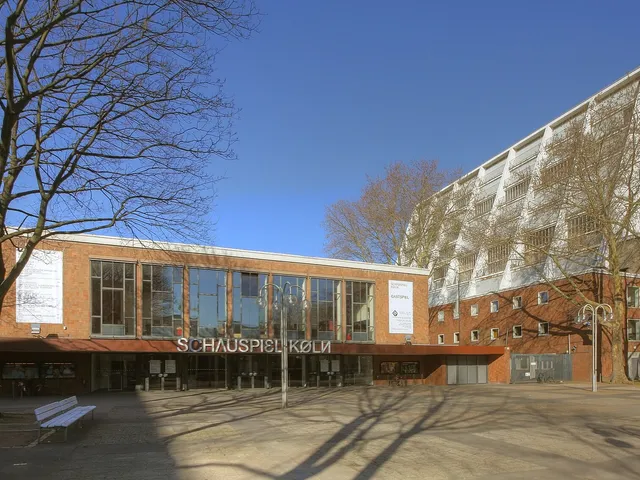
Schauspiel Köln
since 1898Cologne's storied spoken-theatre company, performing at the Mülheim Depot while its landmark home at Offenbachplatz undergoes renovation.
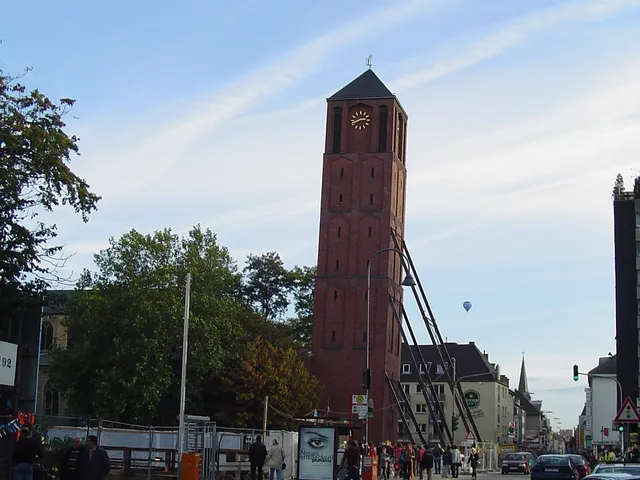
Leaning Tower of Cologne (St. Johann Baptist)
In 2004, its 44 m tower tilted 77 cm westward — earning the church the nickname 'Leaning Tower of Cologne' and making international headlines.
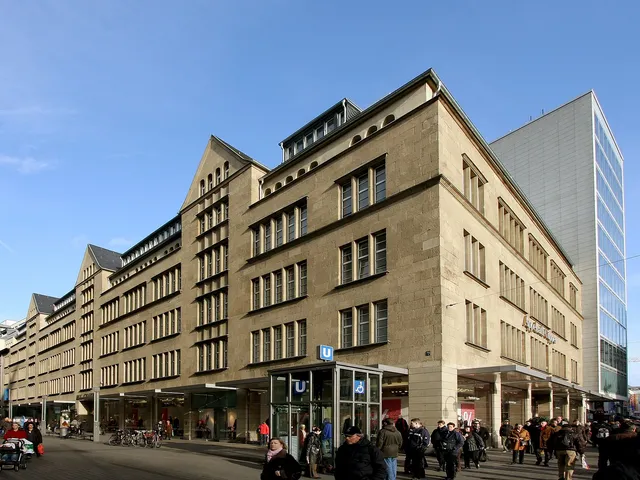
Schwerthof
Office and commercial building from 1921/22 where, in 1947, Cologne's first postwar inner-city cinema opened.
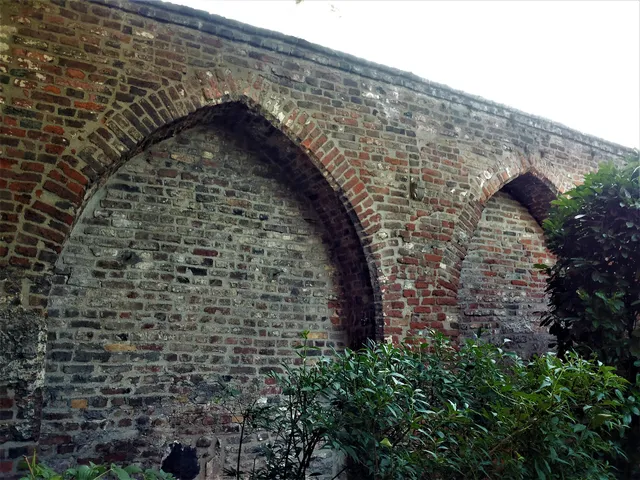
Servitinnenkloster St. Lucia in Cologne
Convent of the Servite Sisters on Filzengraben, dissolved in 1802 and demolished in 1857 — today the site is home to the Protestant Trinity Church.
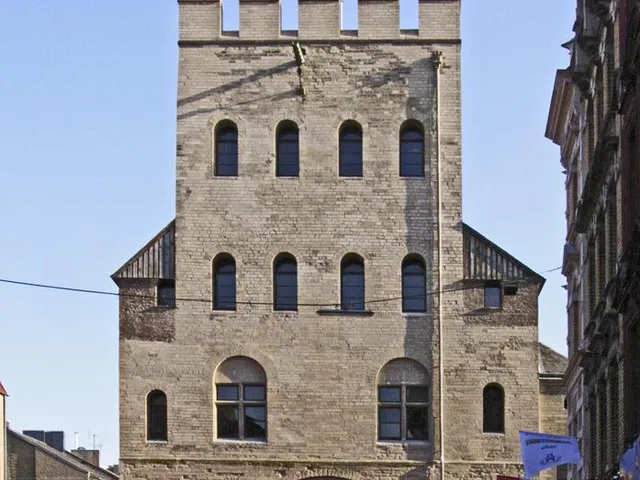
Severinstorburg
since 1230One of only four surviving medieval city gate towers in Cologne — a landmark of the Severinsviertel and today a vibrant community venue at Chlodwigplatz.
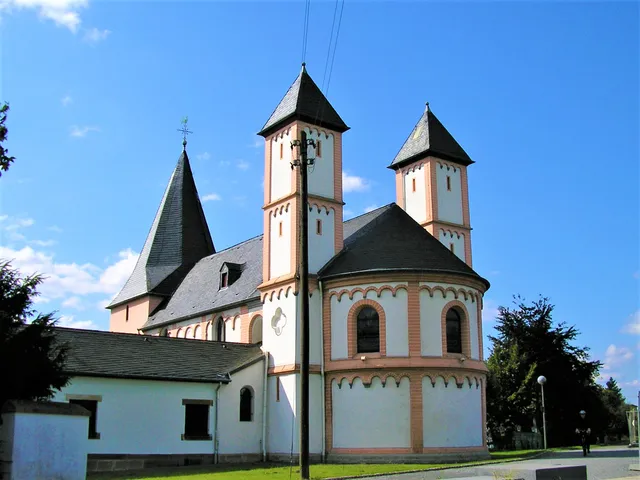
St. Amandus (Köln-Rheinkassel)
since 1200Romanesque church on the Rhine whose twin-towered chancel is a miniature echo of nearby St. Gereon — an extraordinary feature for a rural parish church.
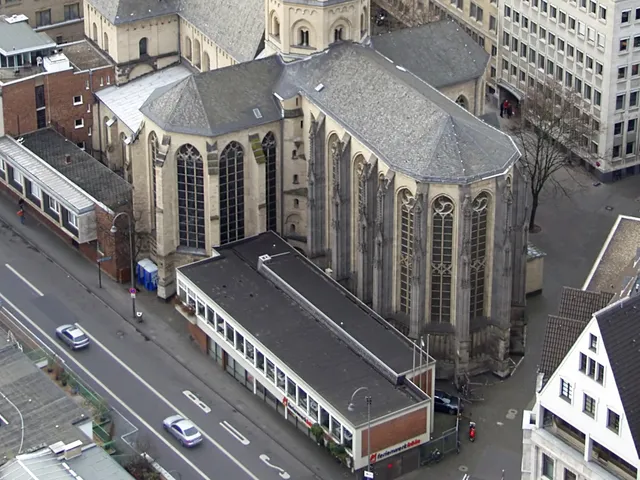
St. Andreas
since 974One of Cologne's twelve great Romanesque churches — home to the tomb of Albertus Magnus in its crypt and stained-glass art by Markus Lüpertz.
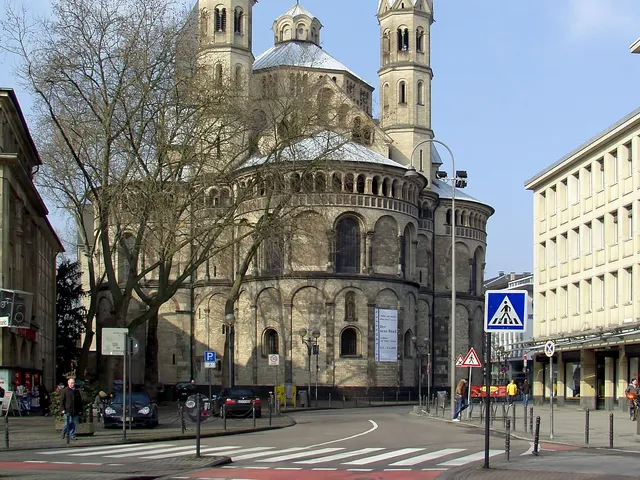
St. Aposteln
since 1020One of Cologne's twelve great Romanesque churches — known for its trefoil-shaped trichoral apse at Neumarkt and celebrated as the city's premier music church.
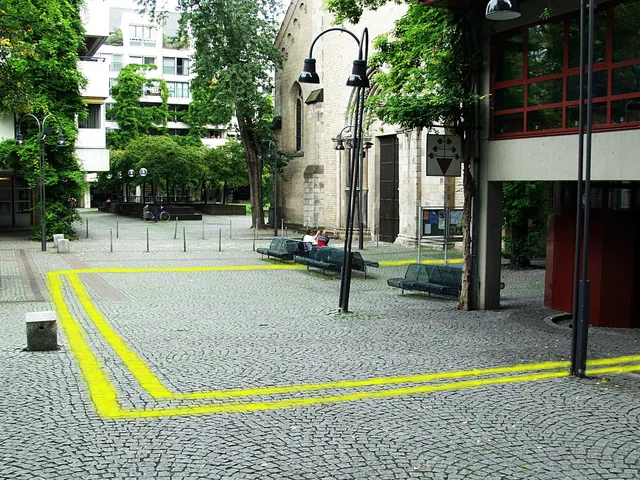
St. Brigiden
A demolished parish church next to Gross St. Martin — its footprint is now traced in darker cobblestones on the Old Town pavement.
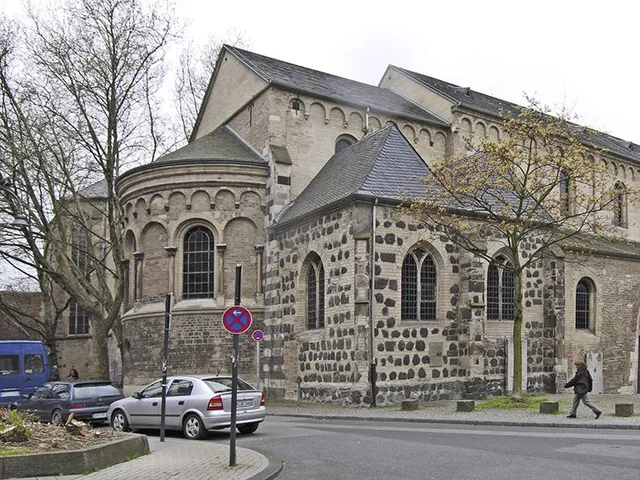
St. Cäcilien – Museum Schnütgen
since 801One of Cologne's twelve great Romanesque churches — home to the Museum Schnütgen for medieval art since 1956.
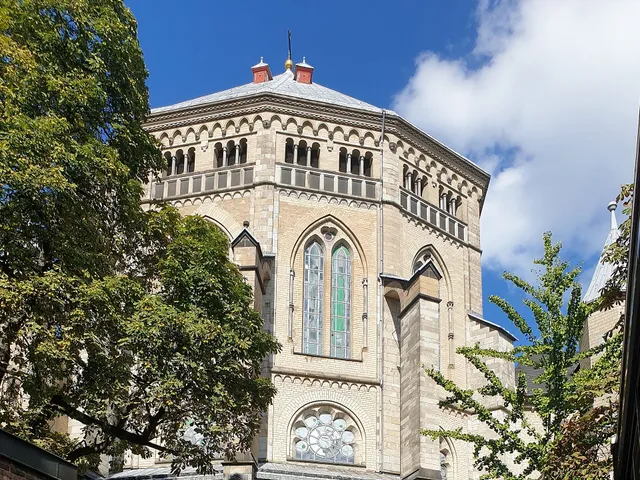
St. Christoph
Demolished parish church of St. Gereon's collegiate foundation — its name lives on in Christophstraße and the St. Christophhaus community centre.
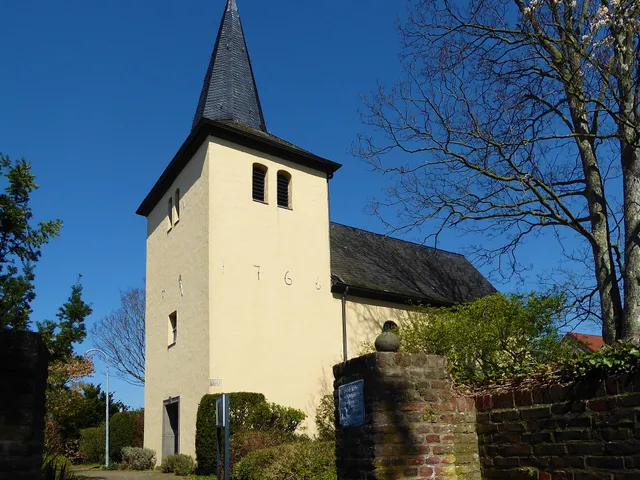
St. Cosmas und Damian (Köln-Weiler)
Parish church in Köln-Weiler whose Baroque predecessor from 1766 has been preserved; the 1910 organ was restored to its original specification in 2007.
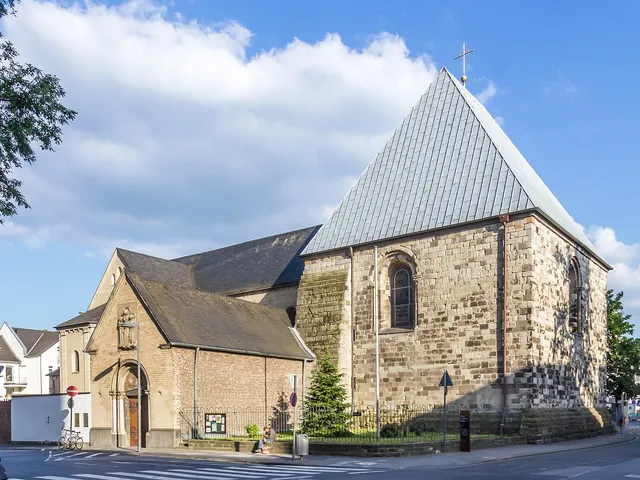
St. Georg
since 105911th-century Romanesque collegiate church rising above a columned crypt with Roman spolia — one of Cologne's twelve great Romanesque basilicas.
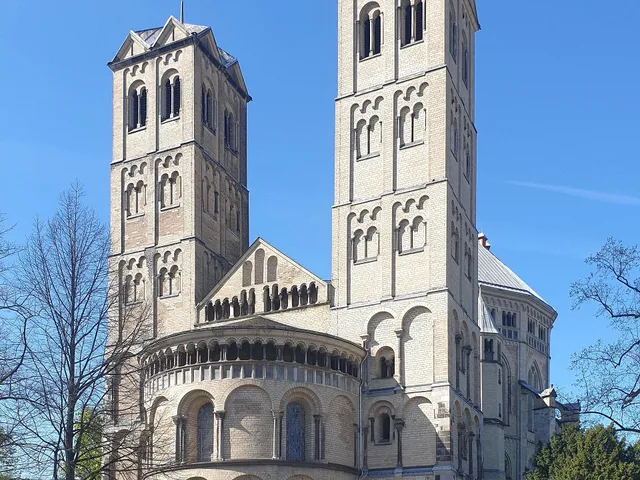
St. Gereon
since 1201Romanesque church in Cologne with a ten-sided domed rotunda from the Hohenstaufen era — the largest surviving free-vaulted central-plan building of the Middle Ages north of the Alps.
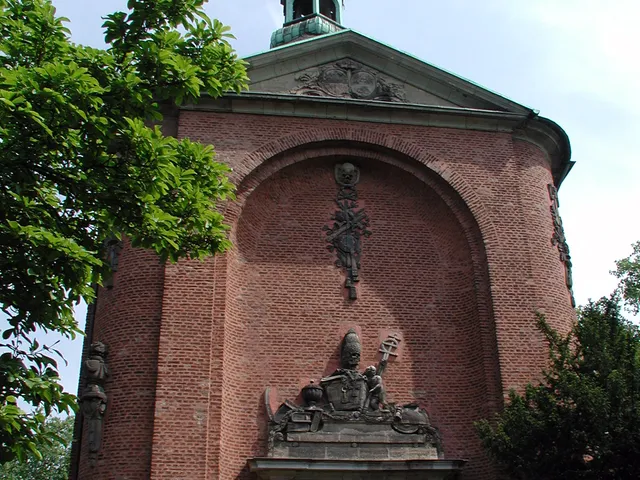
St. Gregorius im Elend
Baroque church rebuilt after WWII destruction, born from the 'Elendskirchhof' — Cologne's historic burial ground for strangers, outcasts, and the dishonoured.
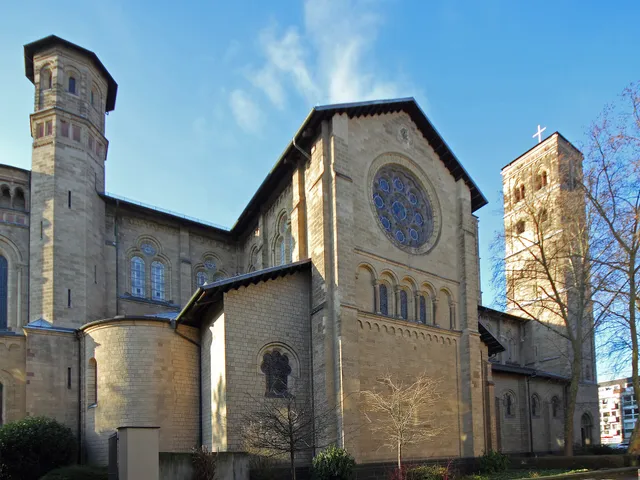
St. Heribert
Parish church in Cologne-Deutz, nicknamed the "Düxer Dom" — home to the Heribert Shrine, completed around 1175.
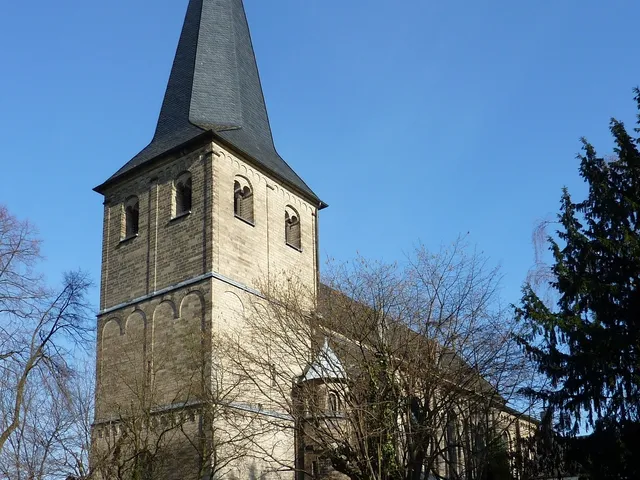
St. Hubertus (Flittard)
since 1896Catholic church in Cologne-Flittard featuring a Romanesque tower from the 12th century and a neo-Romanesque nave built in 1897.
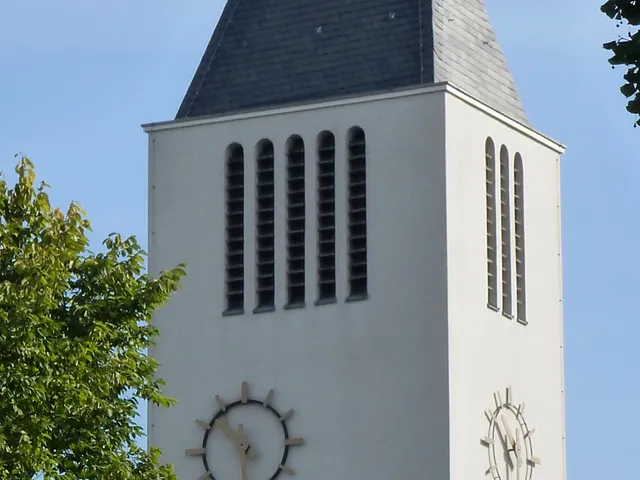
St. Hubertus (Cologne-Brück)
since 1931A Roman Catholic hall church from 1930/31 in the modernist style — home to a 15th-century Madonna statue and original stained-glass windows from 1931.
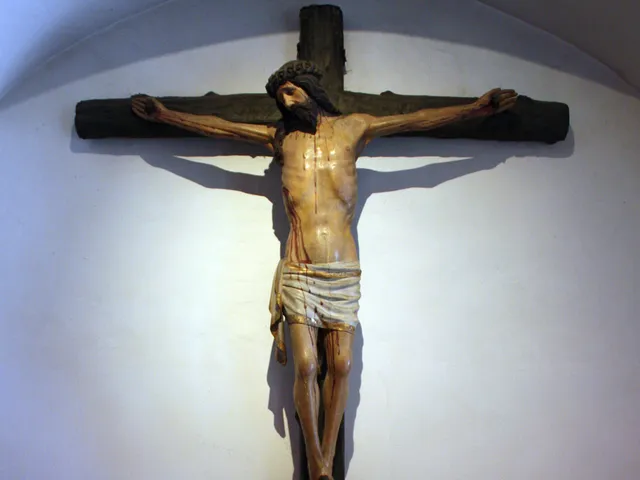
St. Jakob
A lost Cologne parish church at the Waidmarkt, built in the 11th century under Archbishop Anno and standing until 1825.
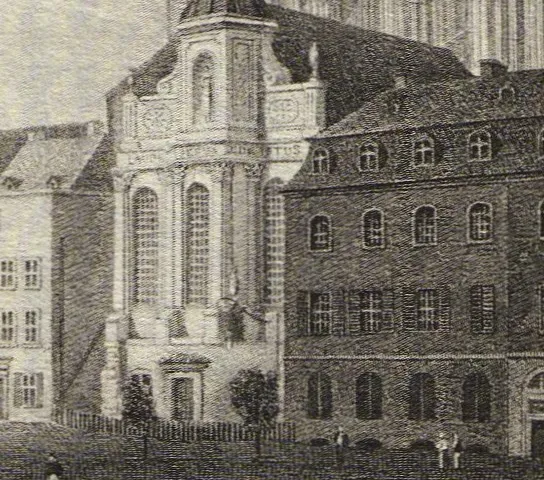
St. Johann Evangelist
Demolished parish church that once stood south of Cologne Cathedral on the Domhof, serving for a time as the Archbishop's private chapel.
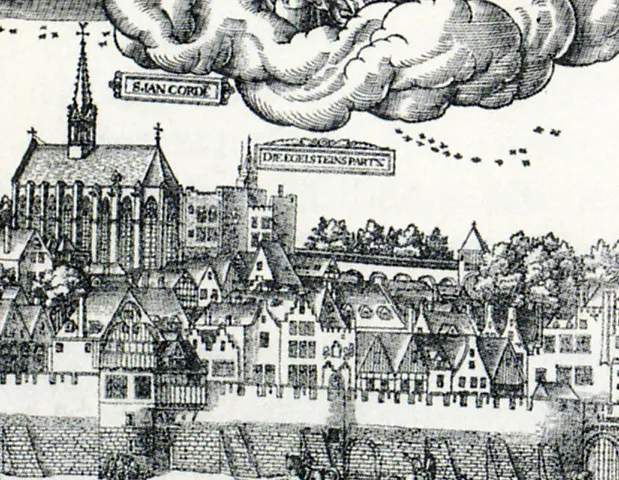
St. John and St. Cordula
Former Knights Hospitaller commandery in Cologne that housed the relics of Saint Cordula — demolished in 1807, its memory preserved in the street name "Jakorden".
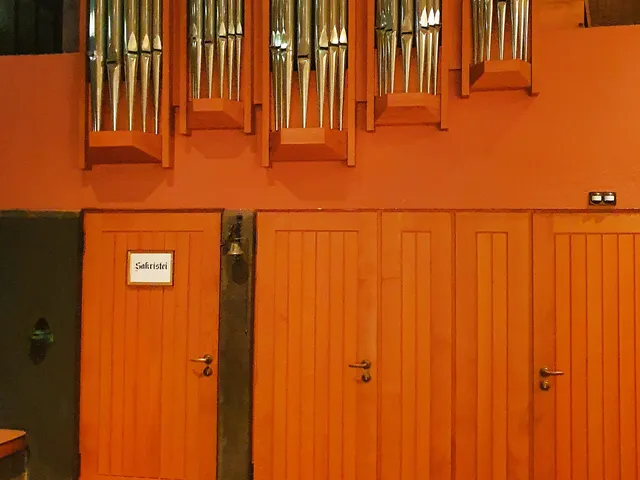
St. Kolumba
since 1150'Madonna in the Ruins' — a medieval chapel enclosed within the ruins of a Gothic parish church, now embraced by the Kolumba art museum.
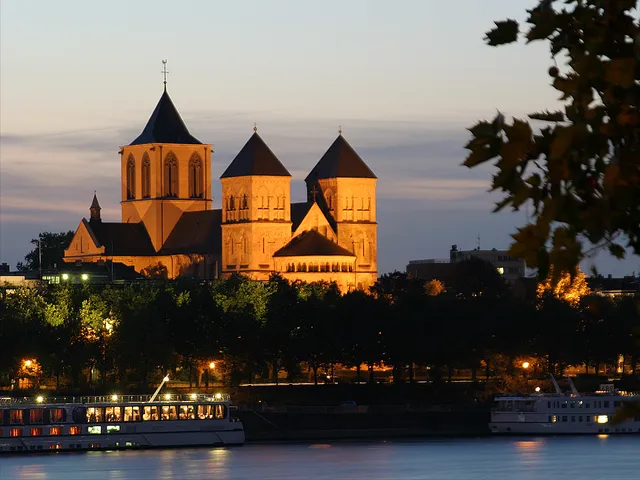
St. Kunibert
since 1215Youngest of Cologne's twelve Romanesque churches — with original 13th-century windows preserved in wartime storage, rising just north of the Cathedral.
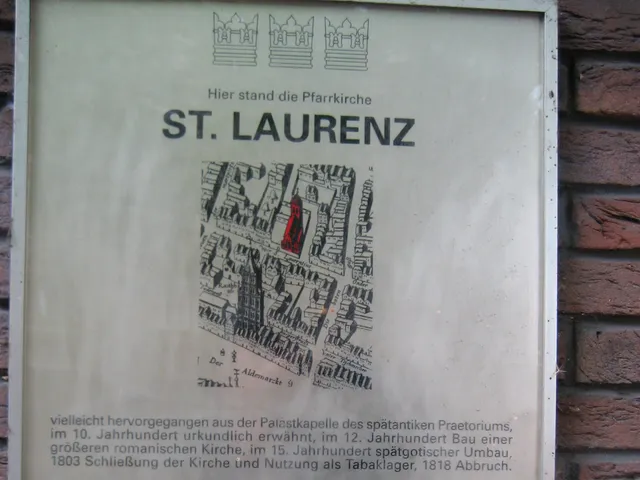
St. Laurenz (Cologne Old Town)
since 1188Parish church demolished as early as 1818 — its legacy lives on in the street names Laurenzplatz and Laurenzgittergässchen in Cologne's city centre.
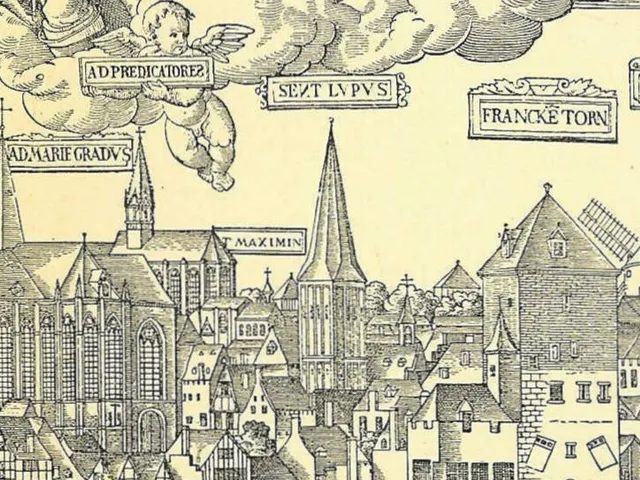
St. Lupus
Long-demolished medieval parish church with hospital near today's central station square — cited in Cologne's oldest written record of beer consumption.
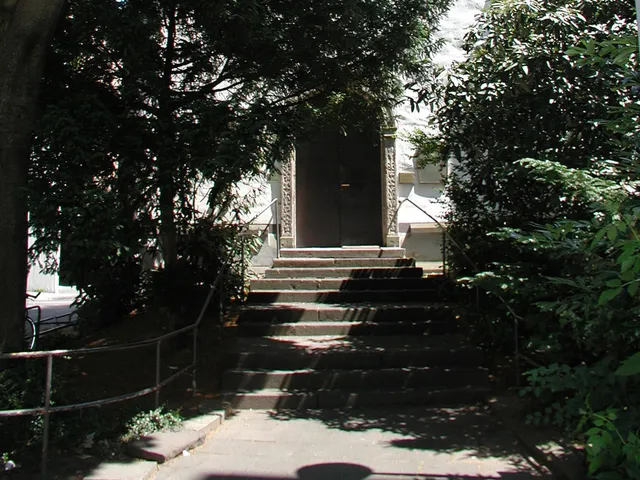
St. Maria Ablass
since 1431Of the demolished parish church of St. Maria Ablass, only the chapel of grace survives — today the Russian Orthodox Church of Saints Constantine and Helena.
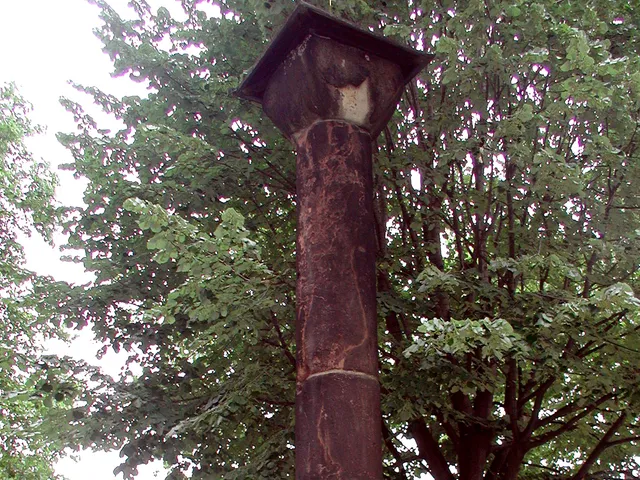
St. Maria ad Gradus
since 1062Demolished Romanesque collegiate church east of Cologne Cathedral — today only the 'Cathedral Column' at the east choir survives as a reminder.
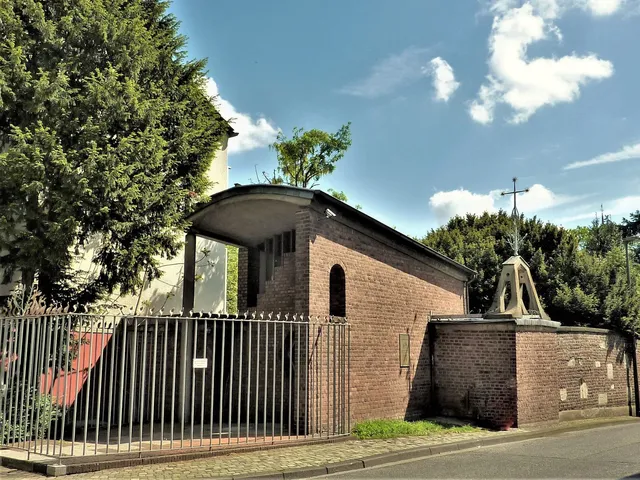
St. Maria ad Ortum
Lost late-Romanesque convent church of Cologne's Cistercian nuns — the "Mariengarten" community grew from an earlier settlement in the Riehl district.
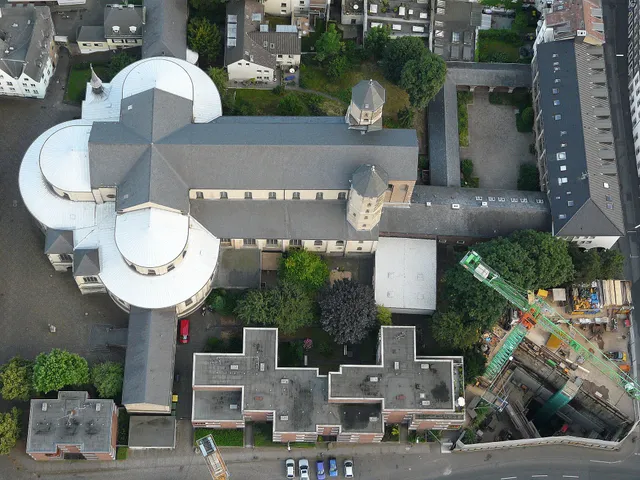
St. Maria im Kapitol
since 1100Cologne's largest and oldest Romanesque church — built on the foundations of a Roman temple, featuring a trefoil choir and a thousand-year-old carved wooden door.
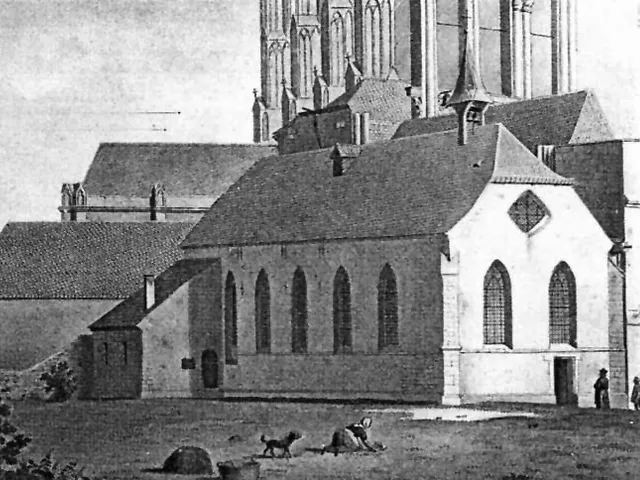
St. Maria im Pesch
Long-demolished parish church of Cologne Cathedral's staff — its late-Gothic Entombment group survives today inside the Cathedral.
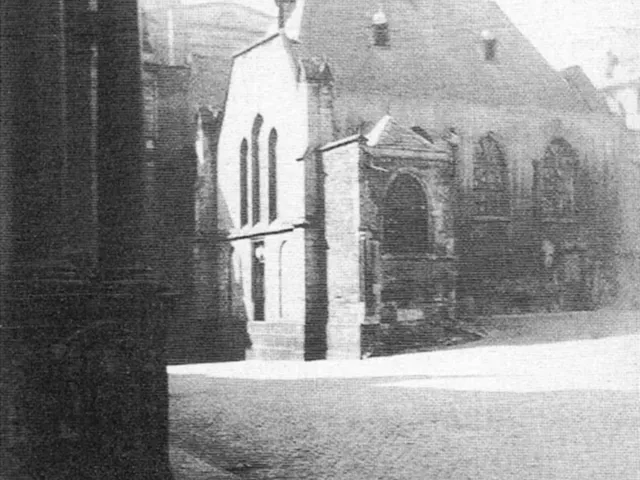
St. Maria in Jerusalem
The Cologne city council's former chapel on today's Rathausplatz, created from the medieval synagogue after the expulsion of the city's Jewish population in 1424 — destroyed in the Second World War.
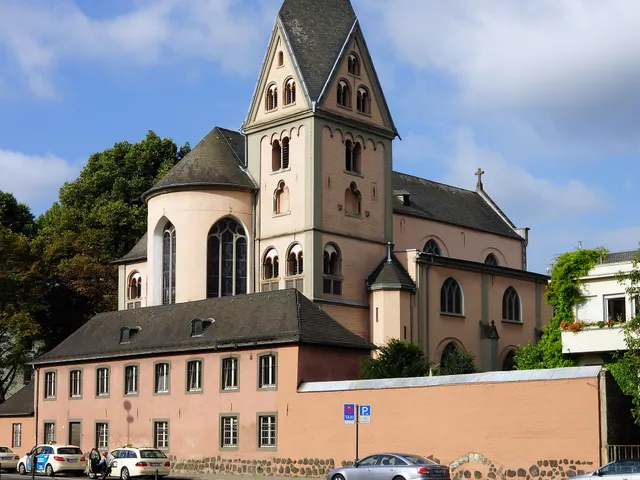
St. Maria in Lyskirchen
The smallest of Cologne's twelve great Romanesque churches — the only one with largely intact 13th-century vault frescoes.
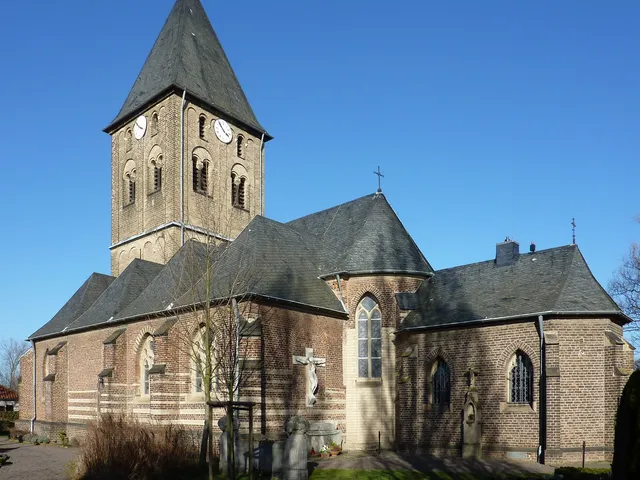
St. Martinus
Former parish church of Esch with an 11th-century Romanesque core and a late Gothic expansion.
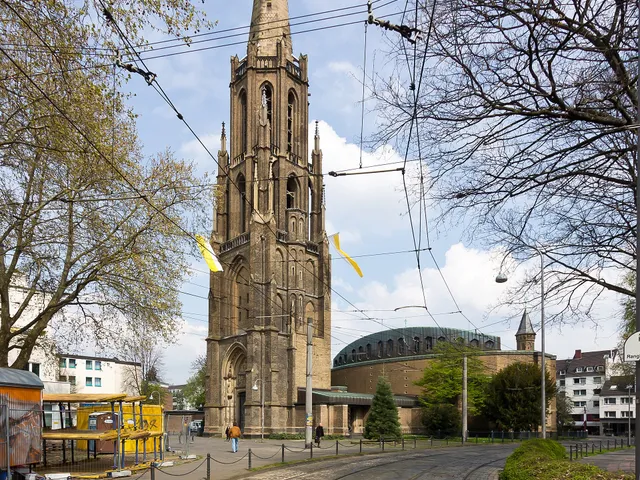
St. Mauritius
Romanesque pier basilica in the Altstadt-Süd district, consecrated in 1141 — the first church in Cologne with a fully vaulted nave and side aisles.
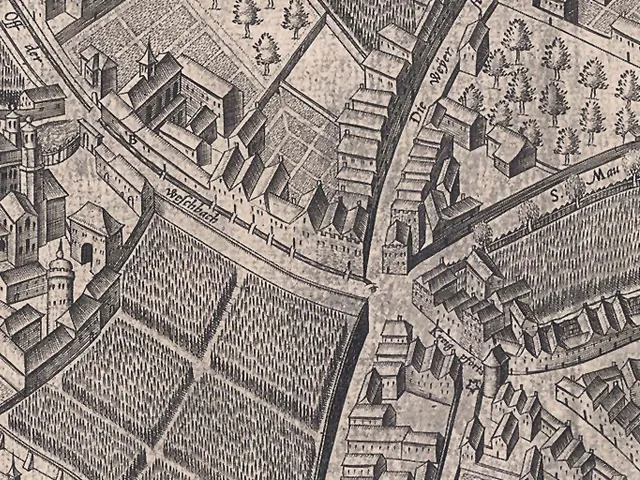
St. Michael am Weidenbach
Cologne's second house of the Brothers of the Common Life, famed for its book production; its church fell to barracks expansion in 1827.
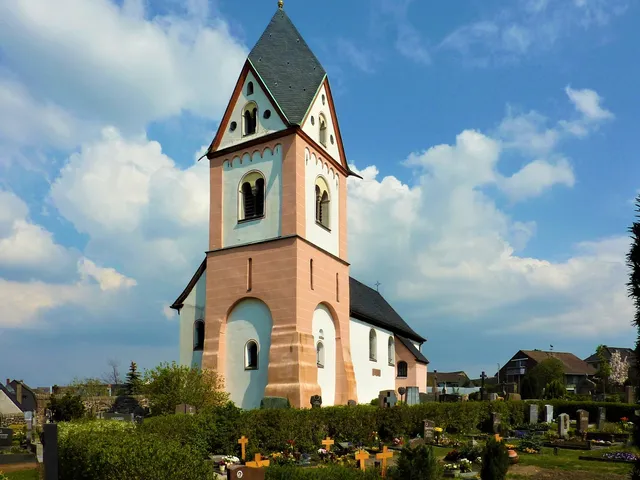
St. Michael (Cologne-Zündorf)
Romanesque church in Cologne's right-bank district of Zündorf, the village's parish church until 1897 and known for its 7th-century Merovingian tendril relief.
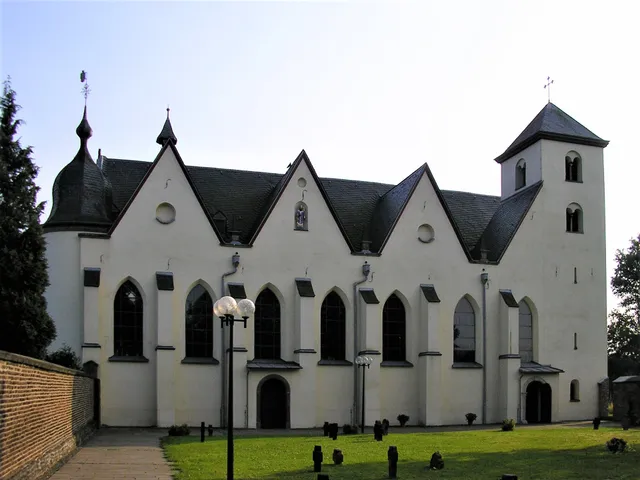
St. Nikolaus (Cologne-Dünnwald)
since 1150Romanesque basilica from 1117/1118, once a Premonstratensian canonesses' convent — with a twin-tower façade until the 16th century.
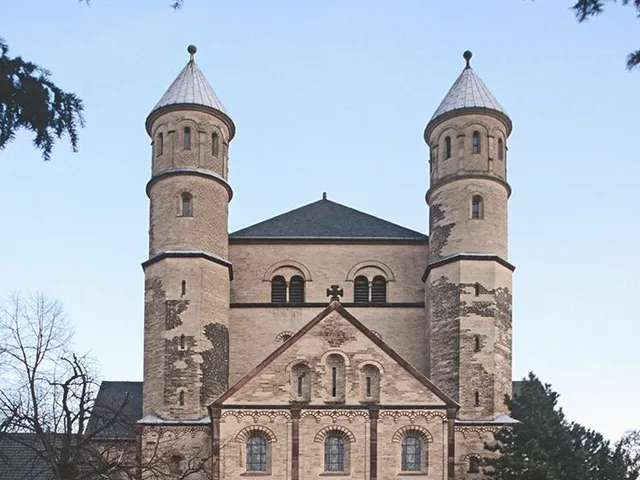
St. Pantaleon
since 1002Early Romanesque abbey church with an Ottonian westwork; burial site of Byzantine Empress Theophanu and Archbishop Bruno of Cologne.
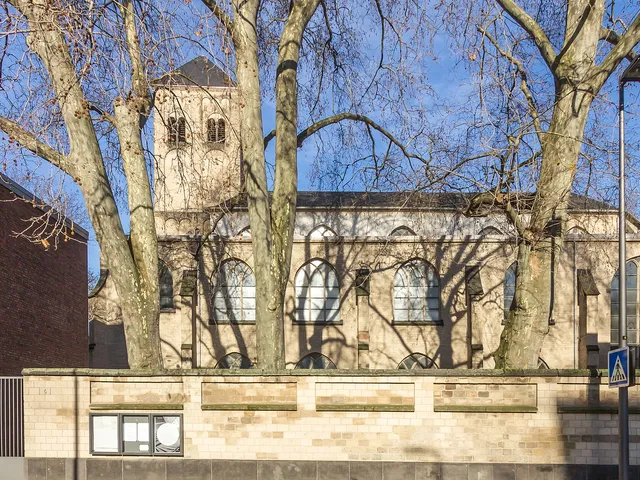
St. Peter – Kunst-Station
since 1515Cologne's latest surviving Gothic church — and since 1987 a venue for contemporary art and new music, run by Jesuits.
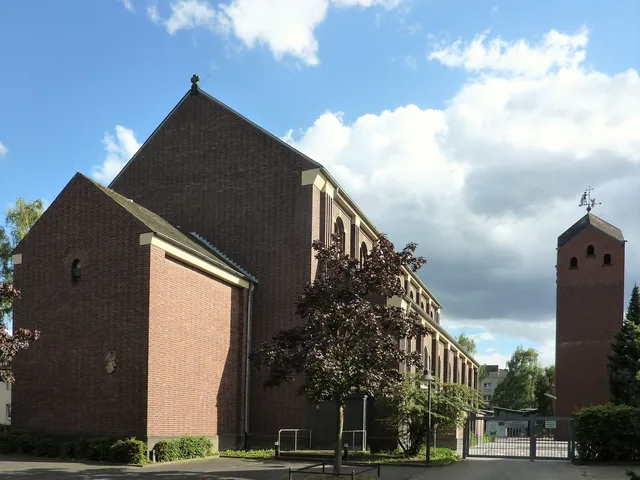
St. Quirinus
Catholic parish church in Cologne-Mauenheim, built in 1927 as a three-nave early Christian basilica with a detached bell tower.
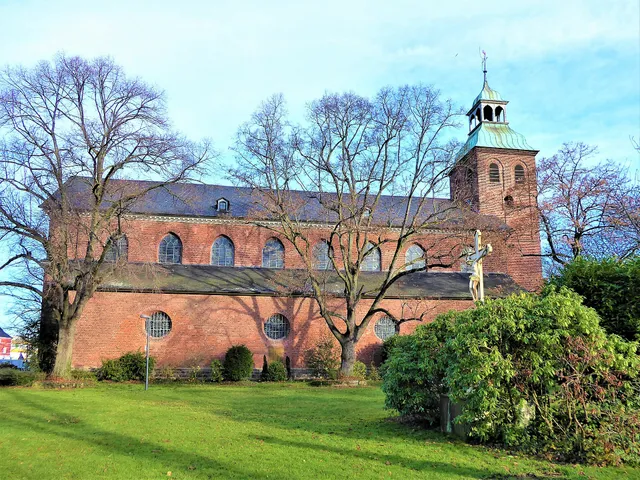
St. Remigius
Neoclassical former parish church in Sürth (1825–1830) blending ancient and medieval forms, preserving baroque furnishings rescued from a demolished Cologne church.
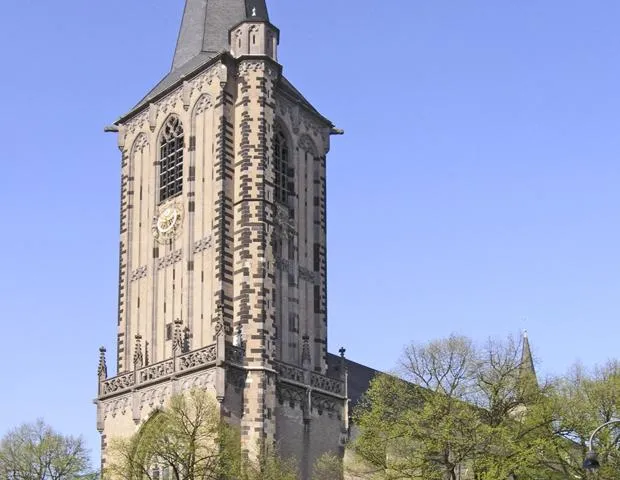
St. Severin
One of Cologne's twelve great Romanesque churches, grown from a late-antique burial chapel — home to the relics of Saint Severin.
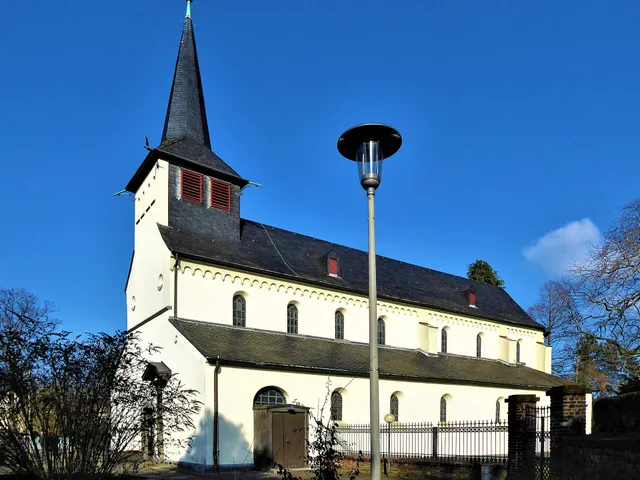
St. Severin (Lövenich)
Romanesque pillar basilica in Cologne's Lövenich district, named after Severin of Cologne and rooted in the 12th century — though heavily remodelled in the 1800s.
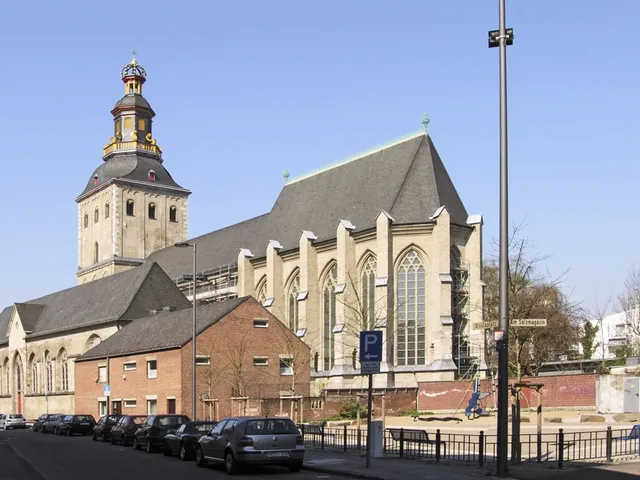
St. Ursula
since 401Romanesque basilica near Cologne Cathedral housing the Golden Chamber — the largest ossuary north of the Alps, with roots in Roman Cologne.
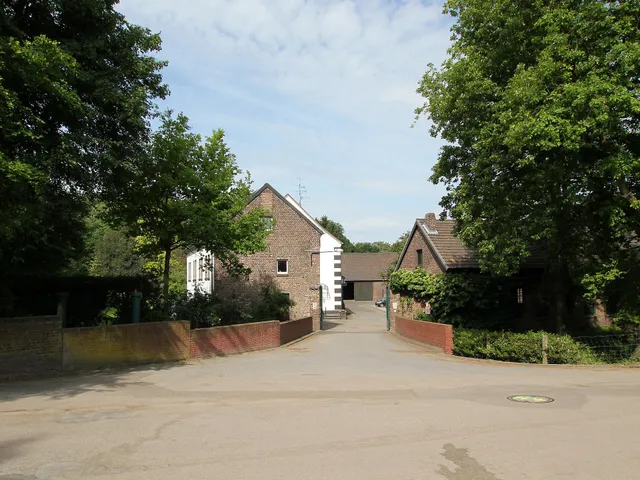
Stüttgenhof
One of Cologne's oldest farmsteads – partly ringed by a moat and still worked today by its owning family.
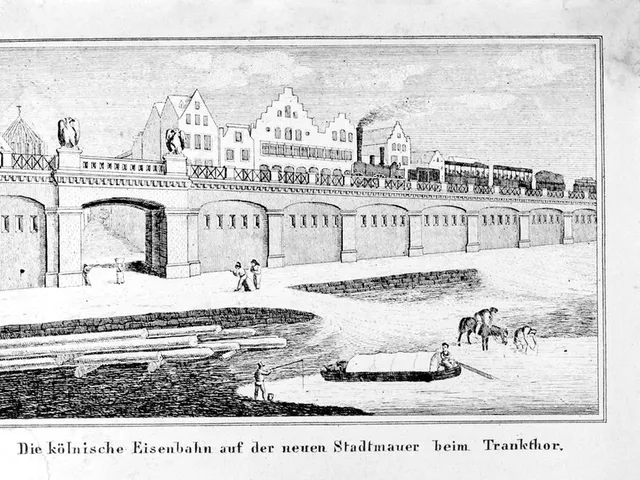
Trankgassentor Gate
A medieval gate in Cologne's riverside fortifications that vanished for good in 1898 after several rebuildings.
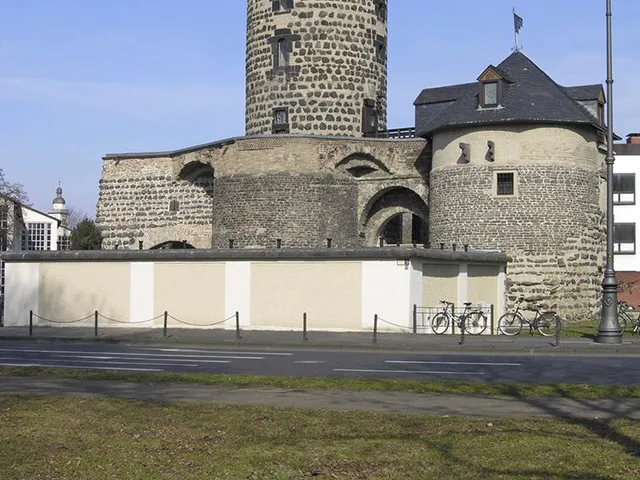
Ulrepforte
since 1230Cologne's smallest medieval land gate, dating from the 13th century — scene of a patrician feud in 1268 and today the home base of the Rote Funken carnival society.
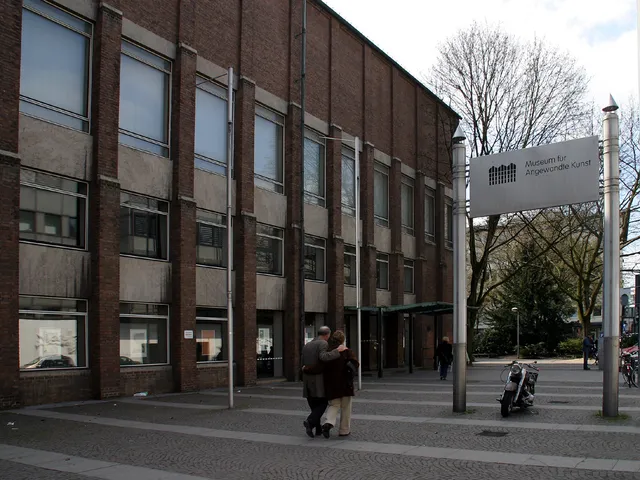
Wallraf-Richartz-Museum & Fondation Corboud
Cologne's oldest museum — home to the world's most extensive collection of medieval painting and Germany's largest Impressionist collection.
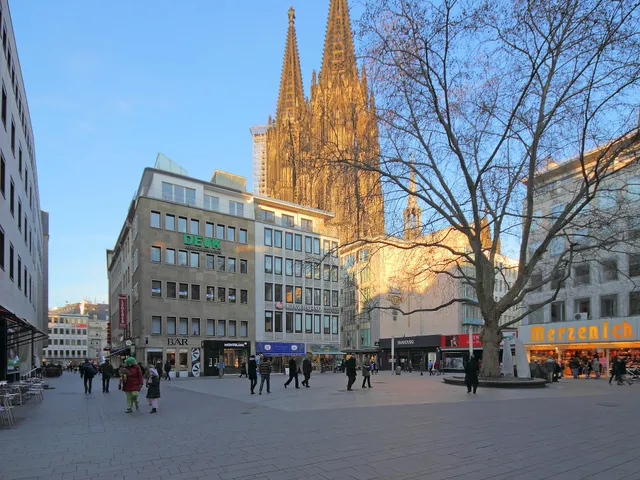
Wallrafplatz
Historic square in Cologne's Altstadt-Nord between the Hohe Straße and the Cathedral, created around 1830 on the site of the demolished Dompropstei.
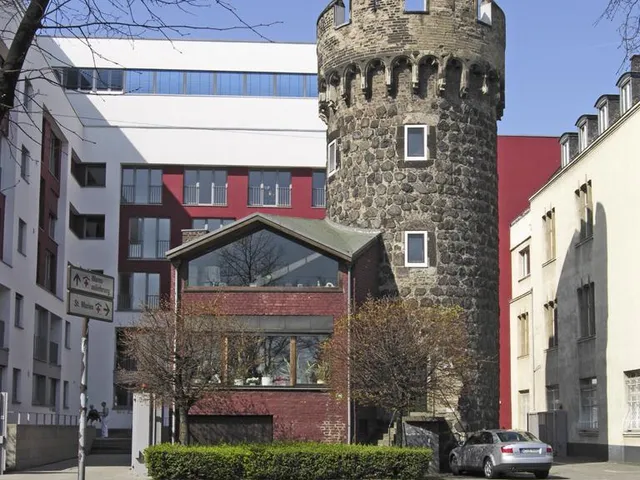
Weckschnapp
Medieval tower of Cologne's Kunibert fortifications on the Rhine — a surviving piece of the city wall and setting of a chilling legend.
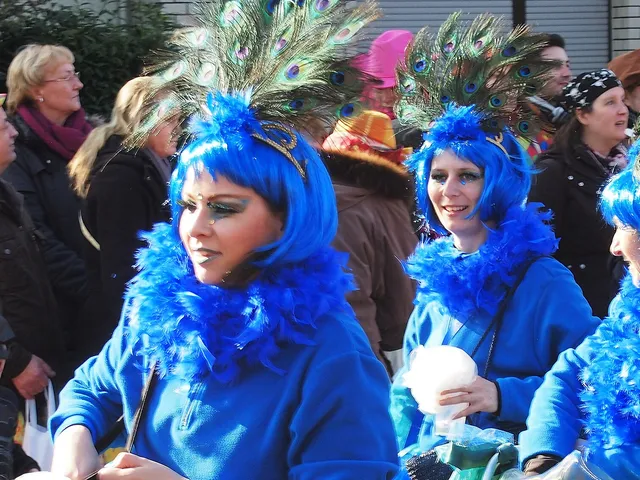
Weiberfastnacht
On the Thursday before Ash Wednesday, women seize power for a day — the Rhineland's exuberant unofficial kickoff to street carnival season.
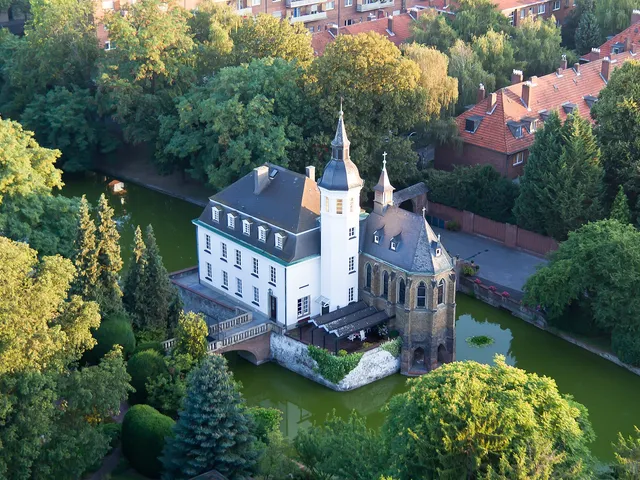
Weißhaus
The Weißhaus is a medieval moated castle in Cologne's Sülz district on Luxemburger Straße; its park-enclosed, moat-ringed grounds are today in private ownership and not open to the public.
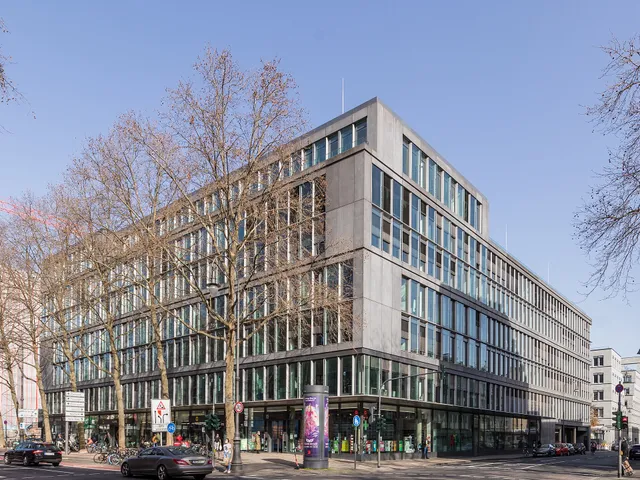
Westgate
Cologne office and retail building heated and cooled by its own groundwater system, crowned by a glass dome.