Eigelsteintorburg
One of four surviving gates of Cologne's medieval city wall — both Maria de' Medici and Napoleon once entered the city through this very gate.
since 1228
At the edge of Cologne's Eigelstein quarter, the Eigelsteintorburg is one of four medieval city gate towers that have survived to this day. It stands in the Altstadt-Nord district at the northern fringe of the city centre.
At a Glance
- Type
- Medieval city gatehouse, listed heritage monument in North Rhine-Westphalia
- Location
- Eigelstein 135, Altstadt-Nord district
- Built
- During the 3rd city expansion, between 1228 and 1248
- Function
- Guarded the northern approach to the city along Neusser Straße
- Surviving
- One of four remaining gates from the original twelve, alongside Hahnentorburg, Severinstorburg, and Ulrepforte
- Today
- Privately rentable event space for concerts, seminars, and exhibitions
On the evening of 13 September 1804, Napoleon I and his wife Joséphine entered the city triumphantly through the Eigelsteintorburg to the sound of bells and cannon fire – nearly 160 years earlier, Maria de' Medici, the exiled Queen Mother of France, had passed through the very same gate on her way into Cologne exile.
Things to do here
- Marvel at the medieval city gate from the outside
- Photograph the historic gate fortress
- Walk through the gate in the footsteps of Napoleon and Marie de' Medici
- Spot the medieval arrow slits and double-arched windows added during restoration
- Stroll through the lively Eigelstein quarter afterwards
Age comparison
Age compared with other places in Cologne.
Name and Origins
The gate takes its name from the street that passes beneath it: the Eigelstein. This street dates back to Roman times, when cemeteries lined its course beyond the city limits. The gravestones often bore stone pine cones as symbols of immortality — but Cologne's residents saw acorns in them, and the name "Eychelsteyne" stuck. During French rule, the gate was known as Porte de L'Aigle, meaning Eagle Gate.
History
The existing structure dates from the 3rd city expansion and was the second gate to bear this name. Its predecessor had been built around 100 metres further south during the 2nd city expansion of 1106. The gatehouse was one of twelve great gates with which Cologne — echoing the image of the Heavenly Jerusalem — was depicted on medieval and Renaissance city views.
Notable Visitors
On the evening of 12 October 1641, Maria de' Medici passed through the Eigelsteintorburg on her way into Cologne exile. During the French period, Emperor Napoleon I and his wife Joséphine rode through the gate on 13 September 1804 to the sound of ringing bells and cannon fire.
Restoration
After the city wall in this section was demolished in 1882, municipal architect Josef Stübben restored the gatehouse between 1889 and 1892. He replaced the outer-facing barred windows with medieval arrow slits and uncovered the eastern vault on the city side. Twin-arched windows — already visible in a 1531 city view of Cologne — were reinstated on the upper floors. A staircase annex with a grand entrance, added in front of the western half-tower, was sealed off in the 1960s. Where the city wall once joined the gate is still clearly legible today.
Timeline
- 1106First Eigelstein gate built 100 m south of the current structure during the 2nd city expansion
- 1228–1248Current gate built during the 3rd city expansion (1180–1259)
- 1531Gate depicted in Anton Woensam von Worms's Cologne city view
- 1570Gate recorded in Arnold Mercator's Cologne city view as one of twelve major gates
- 12. Oktober 1641Maria de' Medici enters the city through the gate during her exile
- 13. September 1804Napoleon I and Joséphine make a triumphant entry through the gate
- 1882City wall demolished in this area
- 1889–1892City architect Josef Stübben restores the gate
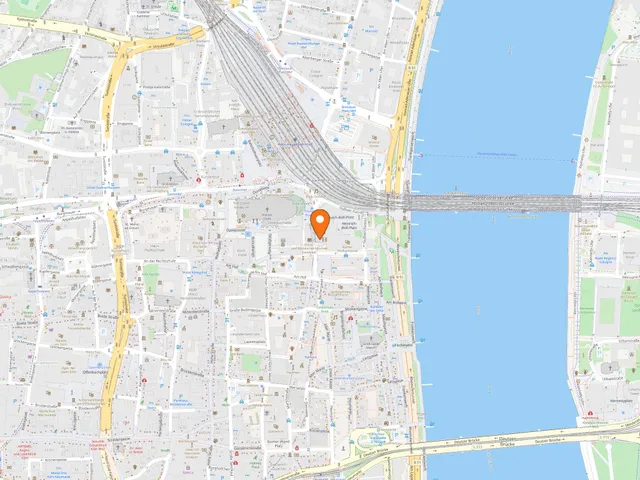
Map
Blue dots: other places nearby — tap to explore.
Address
Eigelstein 135
50668 Köln
Hours
Mo: 10:00–14:00
Di: 18:00–19:00
Fr: 12:00–13:00
Contact
You might also like — related or nearby
Comments
- Loading comments…
Sources & links
- Official website
- Official website (retrieved 2026-06-25)
- Wikidata (retrieved 2026-06-24)
- Wikipedia (retrieved 2026-06-24, rev 263826005)
Auto-generated, last verified: 2026-06-25
How this page is made
This page draws on open sources — Wikipedia, Wikidata, official websites and the city’s open data. Every statement is checked against the sources linked here, and pages are refreshed regularly.
Spotted a mistake anyway? Tell us below — we read every submission.