St. Maria im Kapitol
Cologne's largest and oldest Romanesque church — built on the foundations of a Roman temple, featuring a trefoil choir and a thousand-year-old carved wooden door.
since 1100
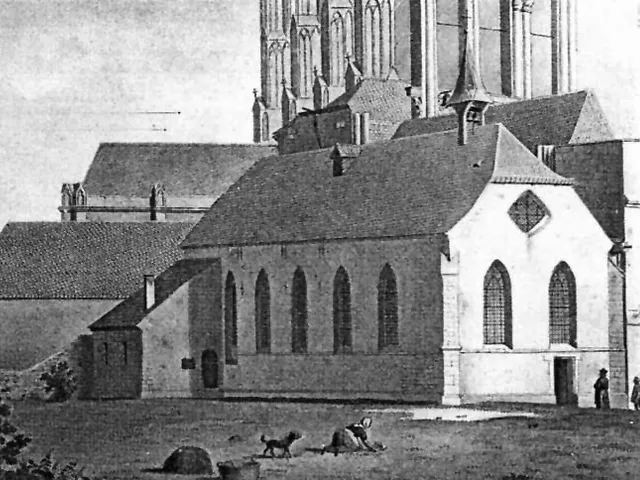
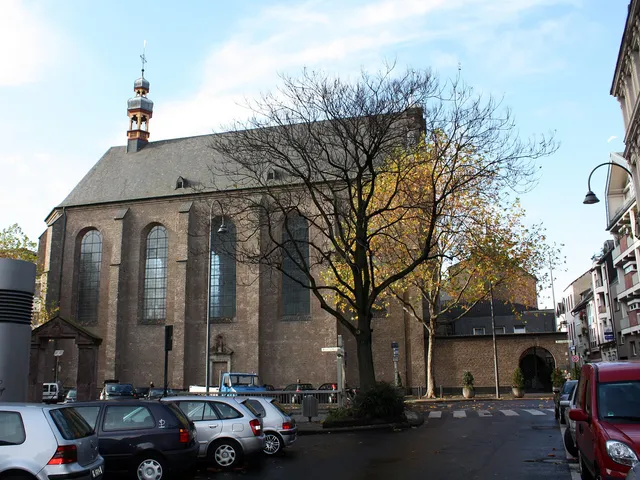
St. Maria im Kapitol is an early Romanesque Catholic church in Cologne's Altstadt-Süd district and the largest of the city's twelve Romanesque basilicas. Its name refers to the Roman temple complex that once stood on this very site.
At a Glance
- Type
- Early Romanesque Catholic basilica
- Location
- Altstadt-Süd, city centre district, Kasinostraße
- Built
- Around 1100
- Size
- Largest of Cologne's twelve Romanesque basilicas
- Highlight
- Oldest trefoil choir (Dreikonchen) in the northern Rhine-Meuse region
- Status
- Listed monument in North Rhine-Westphalia
The church houses the bones of a Greenland whale that died in the Rhine – and those who know the legend of St. Hermann-Josef still visit today carrying a fresh apple, as tradition demands.
Age comparison
Age compared with other places in Cologne.
Architecture
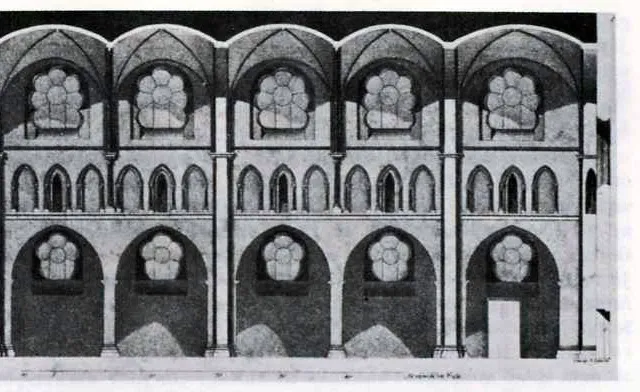
The nave stands largely on the foundations of a Roman temple erected in the 1st century AD for the Capitoline Triad — Jupiter, Juno and Minerva — which determined the church's basic layout. As a trefoil-choir basilica, a building form typical of Romanesque architecture in the northern Rhine-Meuse region, it is considered the oldest of its kind. According to the parish, the original floor plan was modelled on the Church of the Nativity in Bethlehem.
History
According to 12th-century sources, Plectrudis, the wife of Pepin of Herstal, had the church built on the ruins of the Roman Capitol. After Pepin's death she held his illegitimate son Charles Martel captive in Cologne from 714 to 716, in an attempt to keep him from succeeding as Mayor of the Palace. In the 10th century, Archbishop Bruno founded a monastery at St. Maria.
Role in Medieval Cologne
After the cathedral, St. Maria im Kapitol was the city's principal church. The archbishop always celebrated the first Christmas Mass here, and memorial services for archbishops, emperors and mayors were frequently held within its walls. On Epiphany, the city council processed from St. Maria to the cathedral. The city's emergency and fire bell, the Bramglocke, was also rung here.
Worth Knowing
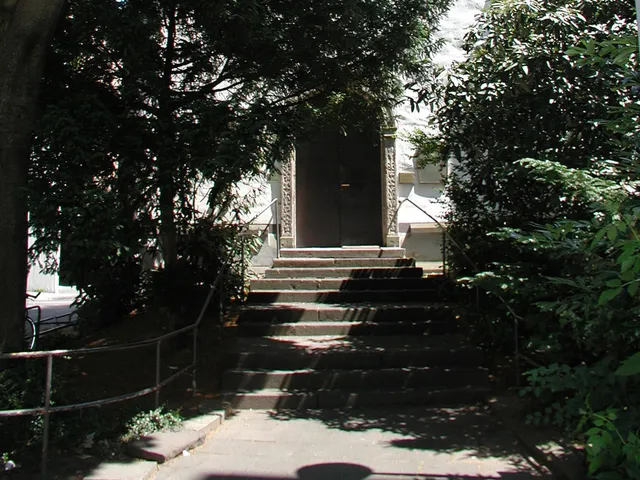
The church's furnishings include a richly carved wooden door around a thousand years old, the tomb slab of Saint Plectrudis, and a forked cross made around 1300. It also preserves the bones of a Greenland whale that perished in the Rhine. Those familiar with the legend of Saint Hermann Josef traditionally bring a fresh apple when they visit.
Timeline
- 1. Jh. n. Chr.Roman Capitoline temple (Jupiter, Juno, Minerva) built on the hill
- Mitte 5. Jh.Franks conquer Cologne; Capitoline grounds pass to Frankish rulers
- 687Pippin the Middle unites the mayordomos of all Frankish kingdoms
- 714–716Plektrudis imprisons Karl Martell in Cologne
- nach 717 (Legende: 725)Plektrudis dies in Cologne; 12th-century sources credit her with founding the church on temple ruins
- 10. Jh.Archbishop Brun founds a monastery for St. Maria im Kapitol
- um 1300Forked cross (Gabelkreuz) created (per official website)
- 1100Construction date per Wikidata (early Romanesque basilica in its current form)
Gallery
Map
Blue dots: other places nearby — tap to explore.
Address
Kasinostraße 8
50676 Köln
Hours
Mo: 09:00–18:00
Di: 09:00–18:00
Mi: 09:00–18:00
Do: 09:00–18:00
Fr: 09:00–18:00
Sa: 09:00–18:00
So: 09:00–18:00
You might also like — related or nearby
Comments
- Loading comments…
Sources & links
- Official website
- Wikidata (retrieved 2026-06-24)
- Wikipedia (retrieved 2026-06-24, rev 267539924)
- Official website (retrieved 2026-06-24)
Auto-generated, last verified: 2026-06-27
How this page is made
This page draws on open sources — Wikipedia, Wikidata, official websites and the city’s open data. Every statement is checked against the sources linked here, and pages are refreshed regularly.
Spotted a mistake anyway? Tell us below — we read every submission.