St. Maria in der Kupfergasse
Baroque pilgrimage church in Cologne's old town that has enclosed a Loreto chapel with its venerated Black Madonna since 1715.
since 1705
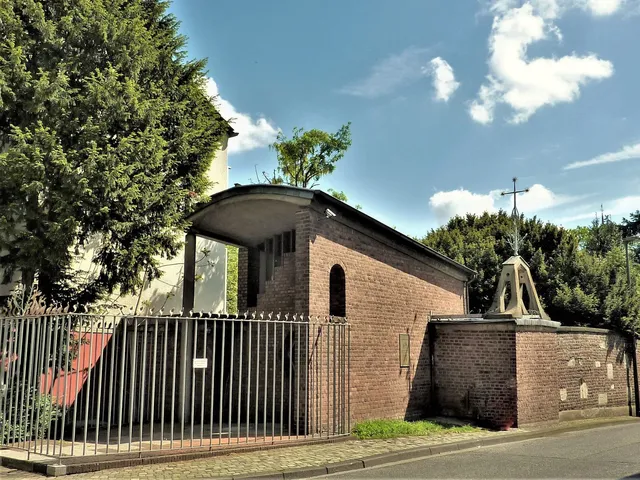
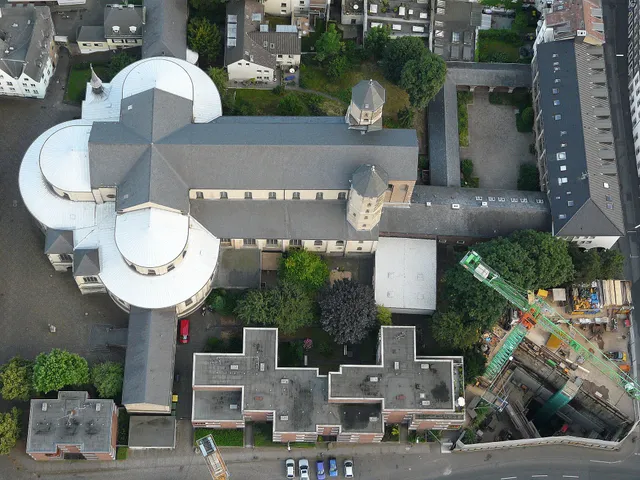
St. Maria in der Kupfergasse is a Roman Catholic church in Cologne's city centre, built in 1715. It ranks among the city's few remaining Baroque church buildings and encloses an older shrine chapel containing a statue of the Virgin revered as a Black Madonna.
At a Glance
- Type
- Roman Catholic church, Baroque
- Location
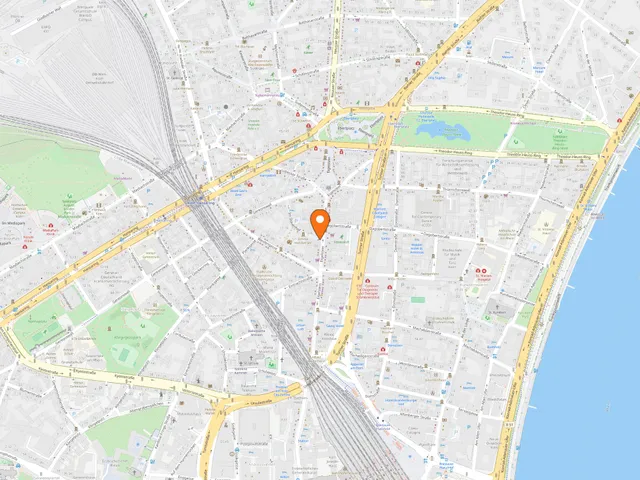
- Altstadt-Nord, Neven-DuMont-Straße / corner of Schwalbengasse
- Built
- 1715 (construction from 1705)
- Special feature
- Encloses the Lauretian / Loreto Chapel (1673–1675)
- Shrine image
- Black Madonna, "Mother of Mercy"
- Listed
- Monument in North Rhine-Westphalia
The baroque outer church was built from 1705 literally around the already-existing Loreto chapel – the small chapel still stands today as a self-contained structure inside the nave, making it a church within a church. The dark coloring of the Black Madonna was not caused by age, but by the countless votive candles offered by pilgrims over the years.
Age comparison
Age compared with other places in Cologne.
Carmelite Origins
In the early 17th century, many Catholics fled religious conflict in the Low Countries and sought refuge in Catholic Cologne. In the 1630s, nuns of the Discalced Carmelites arrived from 's-Hertogenbosch and settled at the "Neuenahrer Hof" at the corner of Lang-, Schwalben-, and Kupfergasse. The sisters gradually developed this courtyard into a monastic complex.
Chapel and Shrine Image
Alongside a small oratory, the Carmelites had a chapel built modelled on the Casa Santa in Loreto, Italy, at the instigation of city councillor and future mayor Johann Jakob Wissius. The chapel received a Madonna carved in linden wood, probably the work of a Dutch master around 1630, and was consecrated on 8 September 1675. Pilgrims adorned the statue with jewellery and brought countless votive candles, causing the figure to take on a dark hue over the years.
Building the Church
The growing number of pilgrims and numerous Mass endowments brought prosperity to the convent, prompting plans for a larger church. Construction began in 1705, though the building permit was only secured through the intervention of Empress Wilhelmine Amalie. The design called for enclosing the existing chapel within the new church, and under site master Flostorf the works took around ten years until the consecration in 1715.
The Chapel Today
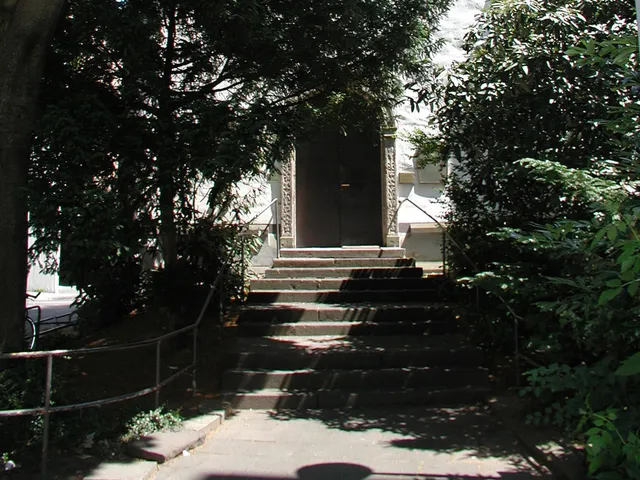
The shrine chapel stands as a self-contained structure between the two entrances of the surrounding church, forming a scaled replica of the "Holy House" of Loreto. The carved woodwork is attributed to Johann Franz van Helmont and his pupil Johann von Rick. Wrought-iron grilles alongside and within the chapel still bear the Cologne coat of arms of the founding von Groote family. After wartime destruction, the wall surfaces were left without their former panelling, and the roof of the chapel — which projects into the nave — now serves as the organ loft.
Timeline
- um 1614Discalced Carmelites arrive in Cologne
- 1620–1628Construction of a monastery and church on the 'zum Dau' courtyard
- 1630erCarmelite nuns from Hertogenbosch settle at the Neuenahrer Hof
- 1673–1675Construction of the Laurentian Chapel (Loreto Chapel) in the monastery
- 8. September 1675Consecration of the grace chapel on the feast of the Nativity of Mary
- 1705First construction works on the new church begin
- 1709Stained glass donated for the new church
- 1715Construction and consecration of St. Maria in der Kupfergasse church
Map
Blue dots: other places nearby — tap to explore.
Address
Schwalbengasse 1
50667 Köln
Hours
Mo: 07:30–19:30
Di: 07:30–19:30
Mi: 07:30–19:30
Do: 07:30–19:30
Fr: 07:30–19:30
Sa: 07:30–19:30
So: 07:30–19:30
Contact
You might also like — related or nearby
Comments
- Loading comments…
Sources & links
- Official website
- Official website (retrieved 2026-07-17)
- Wikidata (retrieved 2026-06-26)
- Wikipedia (retrieved 2026-06-26)
- offenedaten-koeln.de (retrieved 2026-06-30)
Auto-generated, last verified: 2026-06-27
How this page is made
This page draws on open sources — Wikipedia, Wikidata, official websites and the city’s open data. Every statement is checked against the sources linked here, and pages are refreshed regularly.
Spotted a mistake anyway? Tell us below — we read every submission.