St. Maria in Jerusalem
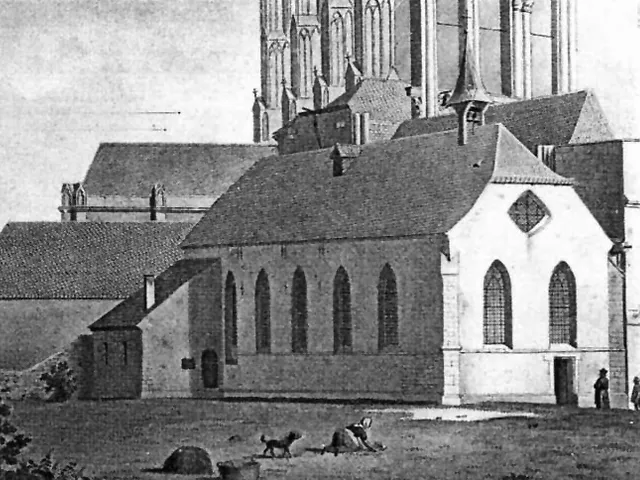
The Cologne city council's former chapel on today's Rathausplatz, created from the medieval synagogue after the expulsion of the city's Jewish population in 1424 — destroyed in the Second World War.
St. Maria in Jerusalem was the chapel of the Cologne city council on today's Rathausplatz. It originated from the city's medieval synagogue, which was reconsecrated as a church in 1424 following the expulsion of Cologne's Jewish population; it was destroyed during the Second World War.
Source: Wikipedia
At a Glance
- Type
- Former council chapel (no longer standing)
- Location
- On today's Rathausplatz, Altstadt-Nord
- Original building
- Synagogue, built 1012–1040
- Repurposed
- 1424–1426, after the expulsion of the Jewish community
- Consecrated as a chapel
- 1426, on the feast of the Nativity of Mary
- Use
- Council services and memorial masses until 1798
- Best-known artwork
- Stefan Lochner's "Altarpiece of the City Patrons" (1445), now in Cologne Cathedral
- End
- Destroyed in the Second World War
Stefan Lochner's world-famous "Altarpiece of the City Patrons," today one of the main works in Cologne Cathedral, was originally painted in 1445 for the small council chapel of St. Maria in Jerusalem — it only moved to the cathedral in 1810, after the chapel was dissolved.
Things to do here
- Find the former site of the council chapel on Rathausplatz
- See Stefan Lochner's Altarpiece of the City Patrons, created here, in Cologne Cathedral
- Learn about the history of the medieval Jewish quarter around the town hall
From Synagogue to Council Chapel
Cologne's synagogue, in the city's former Jewish quarter, was built between 1012 and 1040 and renovated after pogroms in the 14th century. After the council decided on and carried out the expulsion of the city's Jewish population in 1423/24, it had the building converted into a chapel for its own councillors. The chronicler Johann Koelhoff recorded in 1487 that "the (former) Cologne synagogue... was consecrated in honour of Our Lady" — hence the name "in Jerusalem." Until then, the councillors had used the smaller St. Michael's Chapel above the market gate for their devotions.
The Council's Chapel
Until its secularisation in 1798/99, St. Maria in Jerusalem served as the councillors' place of worship for daily devotions and for memorial services for deceased mayors and council members. The chapel stood directly by the town hall and was structurally linked to the neighbouring archive building and the later "Spanish Building." Over the centuries it was extended and furnished through donations and even fines, receiving, for example, a new gallery on marble pillars in 1614.
The Altarpiece of the City Patrons
In 1445 the Cologne painter Stefan Lochner created a triptych of the city's patron saints for the council chapel — today known as the "Altarpiece of the City Patrons," one of the best-known works of Cologne painting. It adorned the chapel's stone altar table until, following secularisation, it was transferred to Cologne Cathedral in 1810 at the request of the cathedral parish, where it remains on display today.
Later Use and Destruction
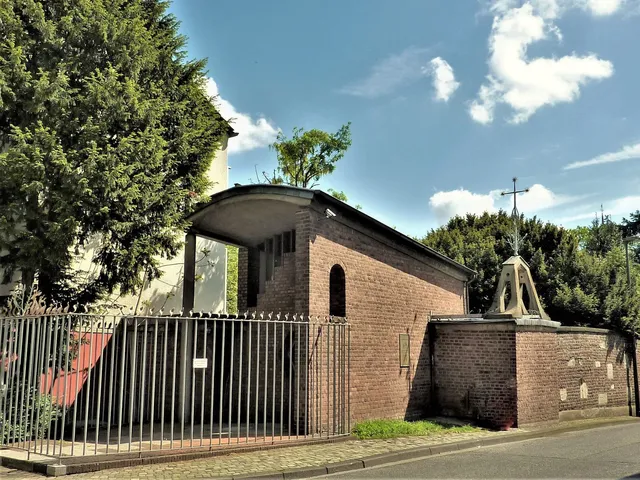
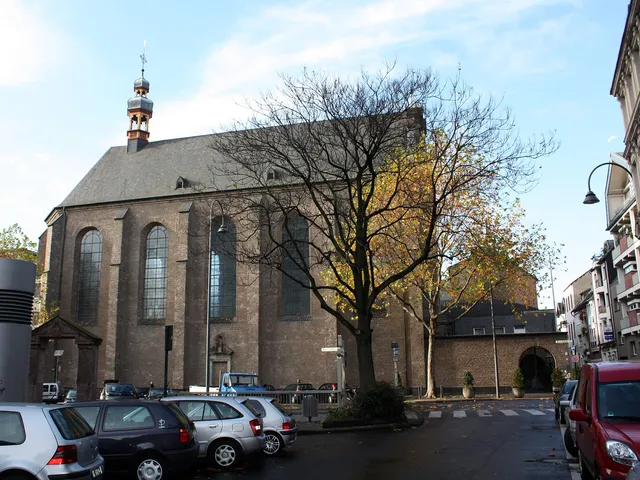
After its secularisation in 1798/99 the building initially served as a municipal storage depot, housing among other things the Wallraf stone collection, later as the clubhouse of a men's choral society, as the seat of Cologne's Old Catholic community (1877–1907), and from 1931 — at Konrad Adenauer's initiative — as a church for Cologne's Anglican community until Britain entered the war. The chapel was destroyed during the Second World War apart from a few salvaged remains; its bell was later placed in the bell tower of the chapel at Melaten cemetery, a building of similar design.
Timeline
- 1012–1040The synagogue is built in Cologne's Jewish quarter
- 1423/24The council expels Cologne's Jewish population
- 1424–1426The building is converted into the council chapel
- 1426Consecrated as "St. Maria in Jerusalem"
- 1445Stefan Lochner paints the "Altarpiece of the City Patrons" for the chapel
- 1798/99The chapel is secularised during the French occupation
- 1810The Lochner altarpiece is transferred to Cologne Cathedral
- 1931Used by Cologne's Anglican community
Map
Blue dots: other places nearby — tap to explore.
You might also like — related or nearby
Comments
- Loading comments…
Sources & links
Auto-generated, last verified: 2026-07-03
How this page is made
This page draws on open sources — Wikipedia, Wikidata, official websites and the city’s open data. Every statement is checked against the sources linked here, and pages are refreshed regularly.
Spotted a mistake anyway? Tell us below — we read every submission.