Romanesque church
44 places in Cologne
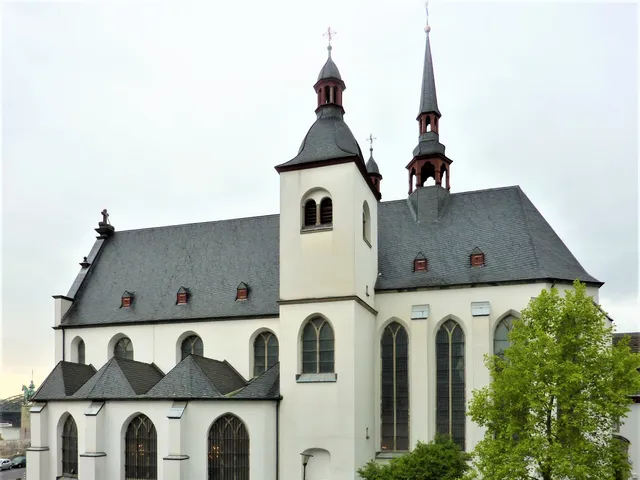
Deutz Abbey
since 1001Cologne's Deutz Abbey, founded in 1002, is the original home of the golden Heribert Shrine and today serves as a Greek Orthodox church.
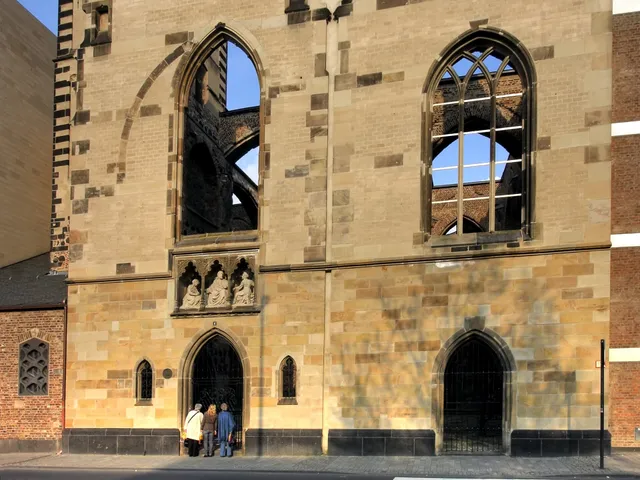
Alt St. Alban – Church Ruin and War Memorial at Quatermarkt
since 1200Preserved Romanesque church ruin at Quatermarkt; left unrestored after WWII bombing and consecrated as a memorial to the war dead in 1959.
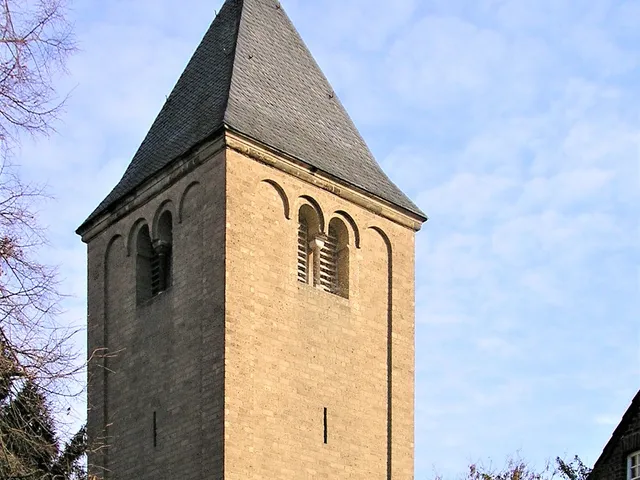
Alt St. Cornelius
since 1833Only the Romanesque tower survives from this former parish church in Cologne's Rath/Heumar district, a remnant of its medieval predecessor.
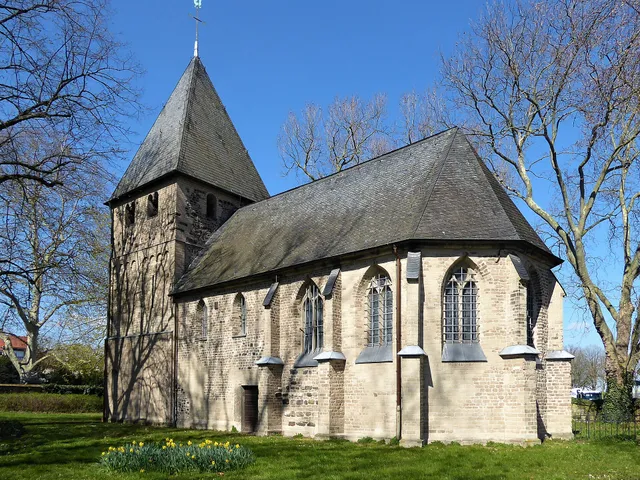
Alt St. Katharina (Cologne-Niehl)
The "Niehler Dömchen": a 12th-century Romanesque basilica on the Rhine riverbank, featuring a Gothic choir and listed heritage status.
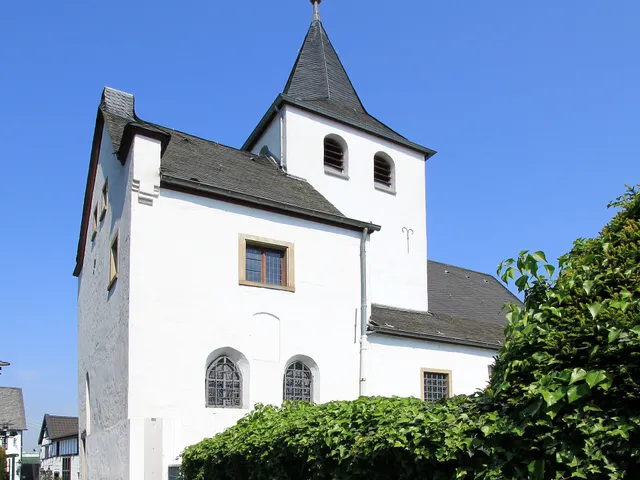
Alt St. Maternus
since 950Romanesque 'little chapel' on the Rhine — one of 13 small former village churches outside Cologne's medieval city walls.
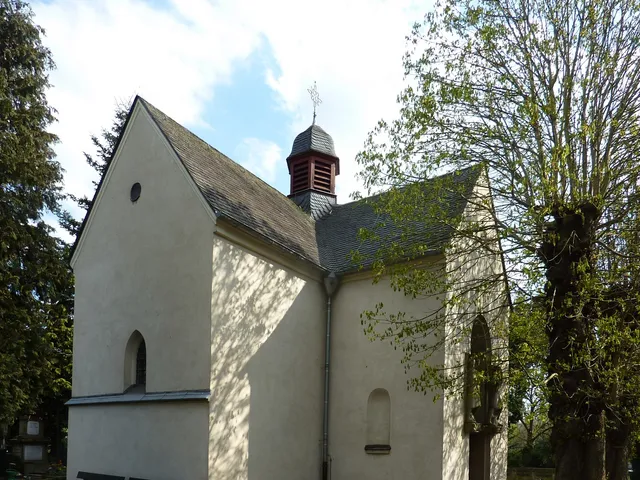
Alt St. Mauritius (Cologne-Buchheim)
Romanesque cemetery chapel and surviving remnant of Buchheim's former parish church — featuring a semicircular apse from around 1200.
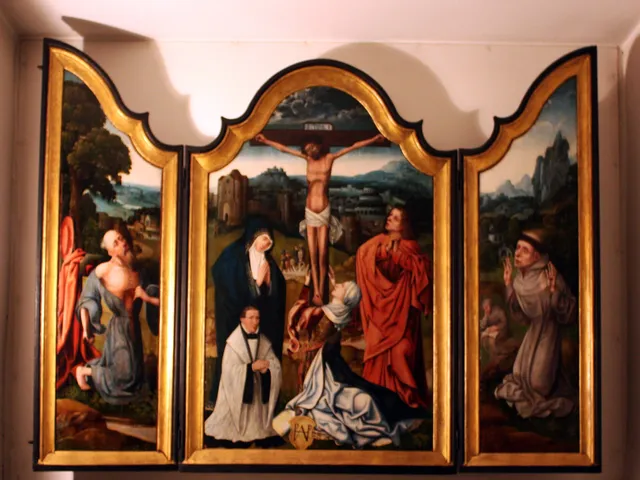
Alt St. Paul
Romanesque parish church in medieval Cologne, dissolved in 1803 and demolished in 1807 — remnants of its furnishings survive today in St. Andreas.
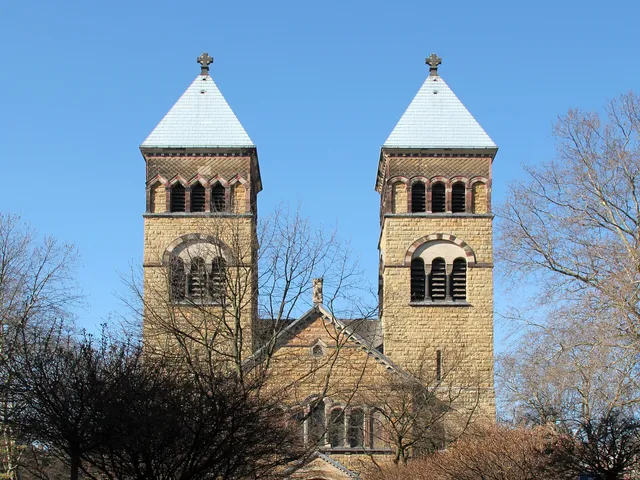
Brüsseler Platz
The heart of Cologne's Belgian Quarter, defined by the Neo-Romanesque church of St. Michael — a vibrant social hub and the scene of a long-running noise dispute.
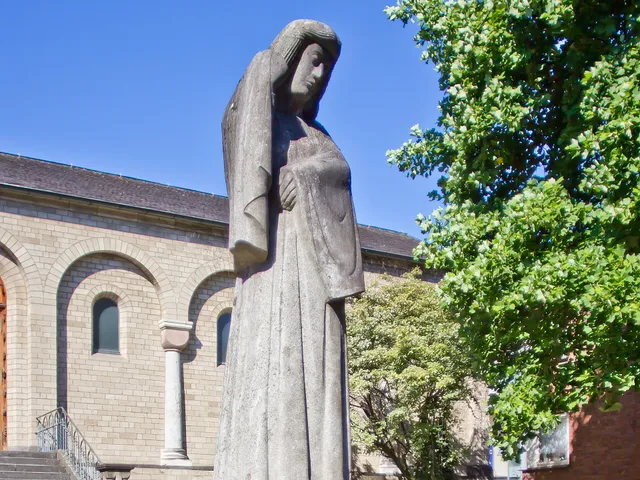
Die Trauernde
since 1949A 1949 sculpture by Gerhard Marcks standing in the churchyard of St. Maria im Kapitol, commemorating the victims of World War II.
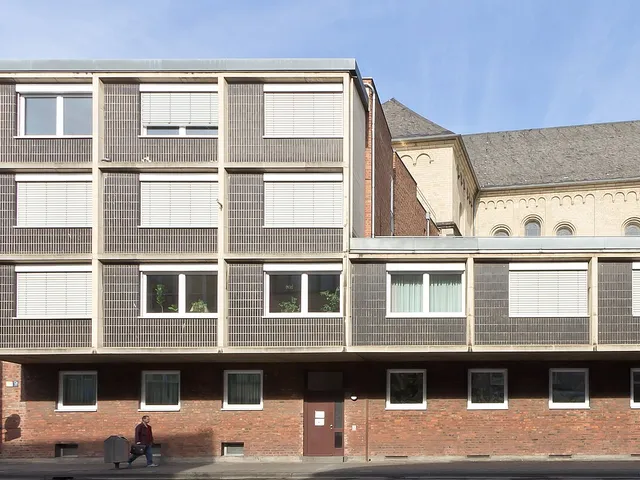
Dominican Monastery Cologne
Where Albertus Magnus taught and was buried: one of Germany's earliest Dominican monasteries, now lost to history.
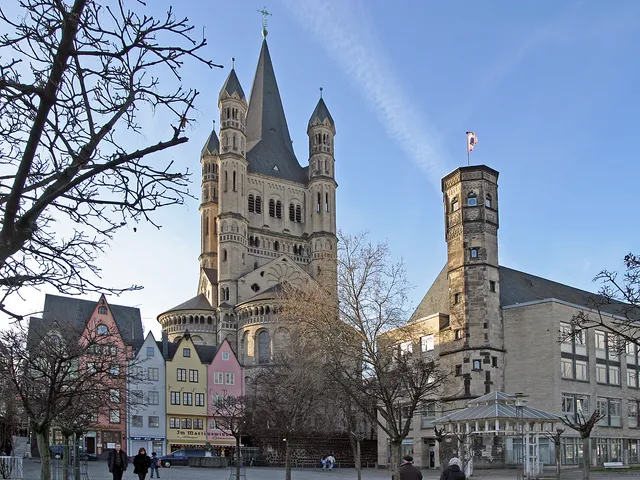
Groß St. Martin
since 1150Romanesque basilica in Cologne's Old Town with a cloverleaf-shaped east choir and striking crossing tower — built over Roman foundations.
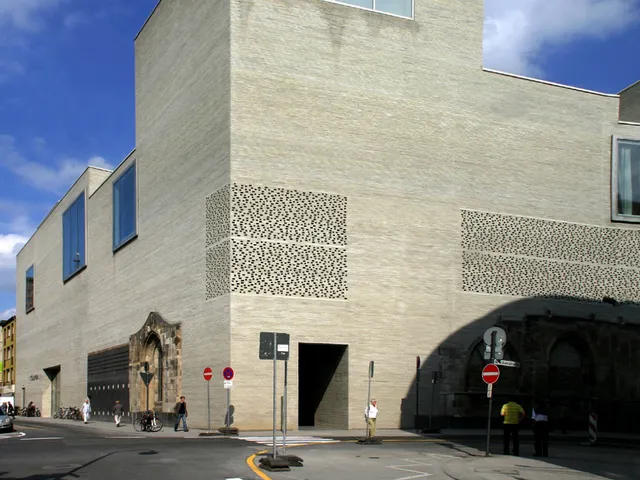
Kolumba
since 1853Peter Zumthor's landmark brick building for the Archdiocese of Cologne's art museum, built over the ruins of the war-destroyed church of St. Columba.
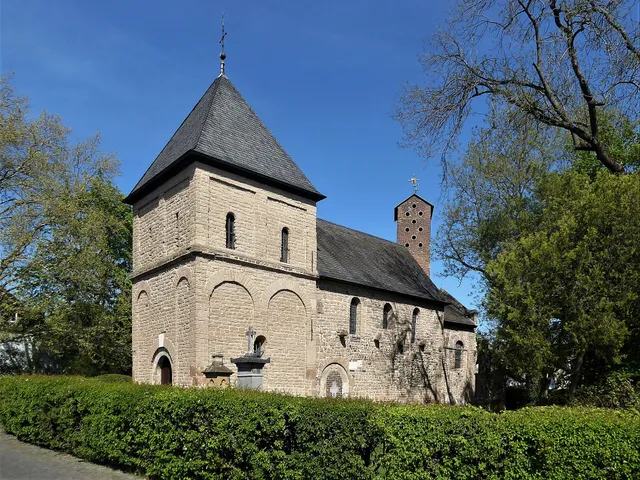
Krieler Dömchen
since 850Cologne's second-oldest church after St. Gereon — a small Romanesque village chapel in Lindenthal with roots stretching back to around 900 AD.
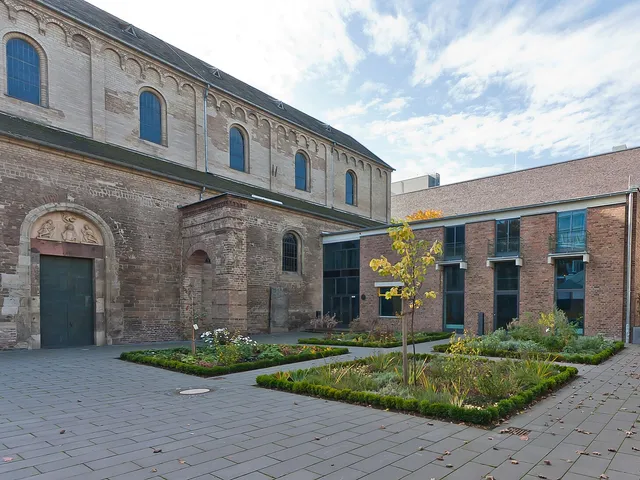
Museum Schnütgen
since 1910One of Europe's richest medieval collections, housed in the Romanesque basilica of St. Cecilia in Cologne's historic city centre.
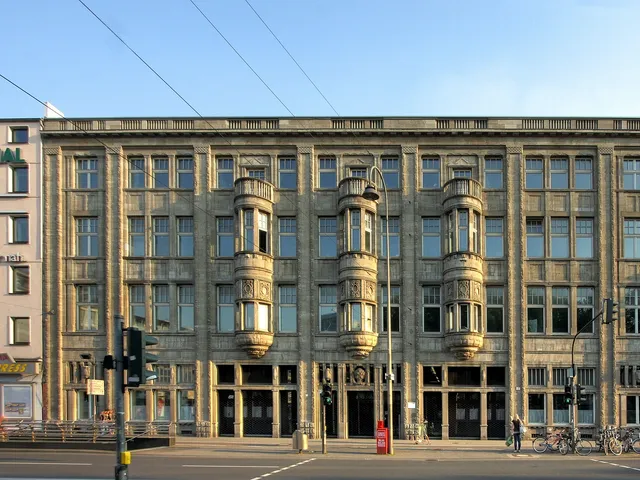
Neumarkt
Cologne's largest square at over 27,000 m² — once a livestock market, execution ground, and legendary witches' sabbath site, with Roman remains beneath.
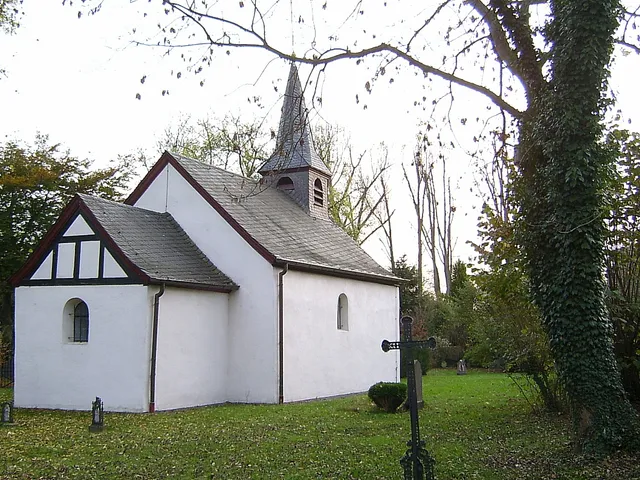
Nikolaus-Kapelle
Built around 1100 near the Rhine in Westhoven — Cologne's smallest surviving Romanesque village chapel, enclosed by an ancient churchyard.
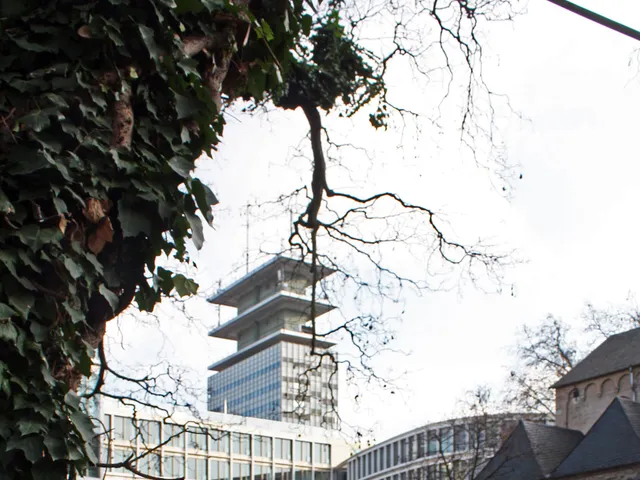
Roman Baths and Medieval Bathhouses in Cologne
Foundations of a 2nd/3rd-century Roman bath complex unearthed in 2007 beneath Cologne's Altstadt-Süd — including an 18-metre-wide rotunda.
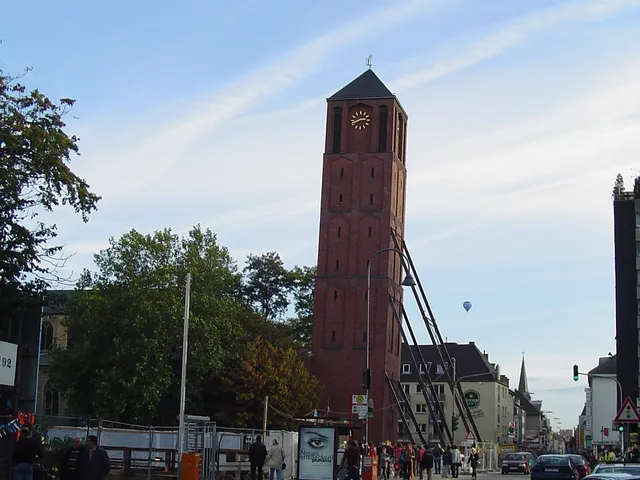
Leaning Tower of Cologne (St. Johann Baptist)
In 2004, its 44 m tower tilted 77 cm westward — earning the church the nickname 'Leaning Tower of Cologne' and making international headlines.
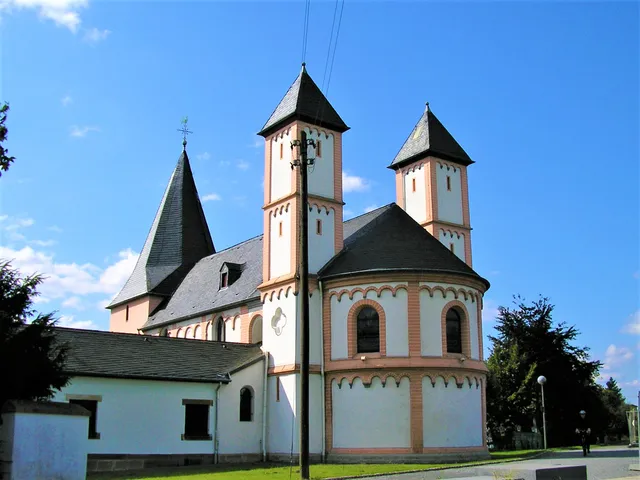
St. Amandus (Köln-Rheinkassel)
since 1200Romanesque church on the Rhine whose twin-towered chancel is a miniature echo of nearby St. Gereon — an extraordinary feature for a rural parish church.
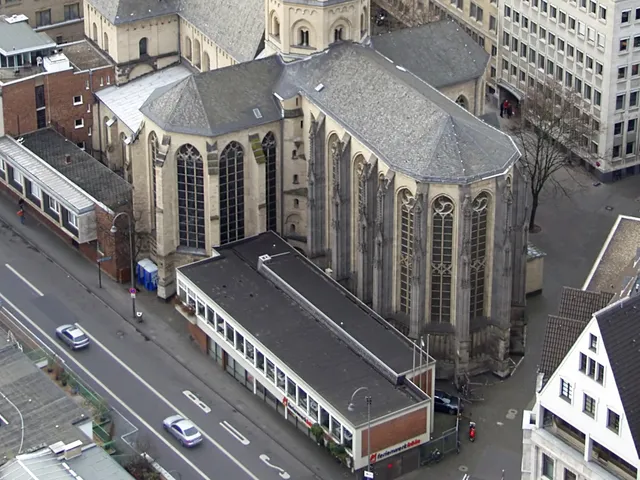
St. Andreas
since 974One of Cologne's twelve great Romanesque churches — home to the tomb of Albertus Magnus in its crypt and stained-glass art by Markus Lüpertz.
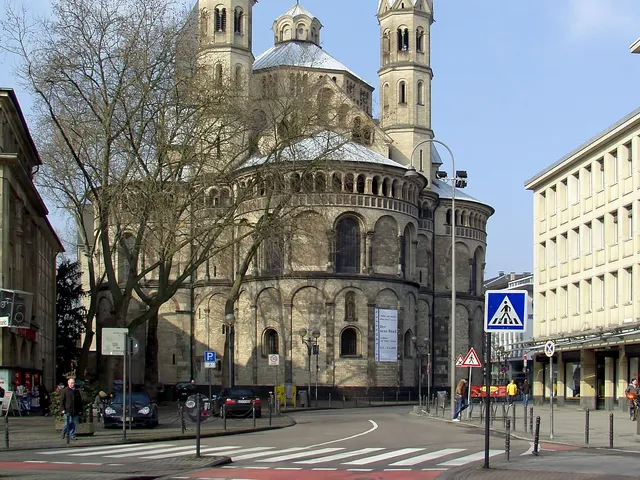
St. Aposteln
since 1020One of Cologne's twelve great Romanesque churches — known for its trefoil-shaped trichoral apse at Neumarkt and celebrated as the city's premier music church.
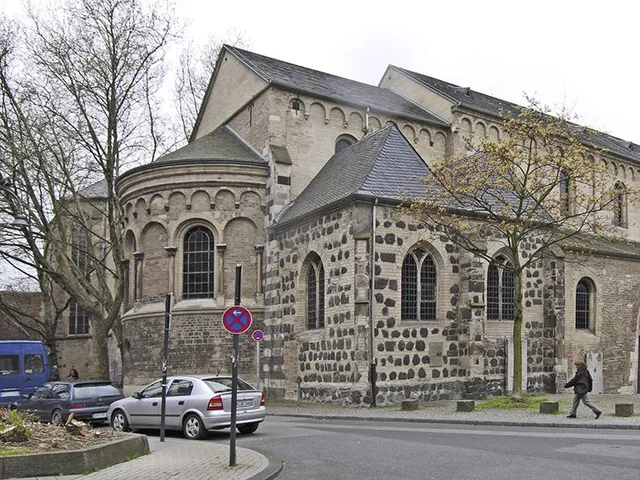
St. Cäcilien – Museum Schnütgen
since 801One of Cologne's twelve great Romanesque churches — home to the Museum Schnütgen for medieval art since 1956.
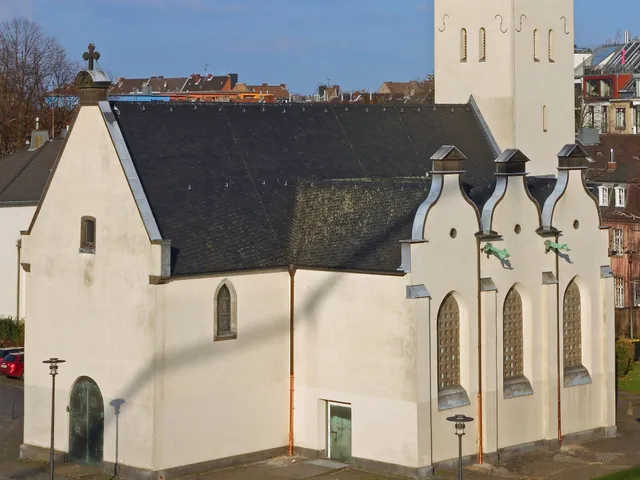
St. Clemens (Cologne-Mülheim)
A former sailors' church on the Rhine in Cologne-Mülheim, rooted in a Romanesque hall church built in the 12th and 13th centuries.
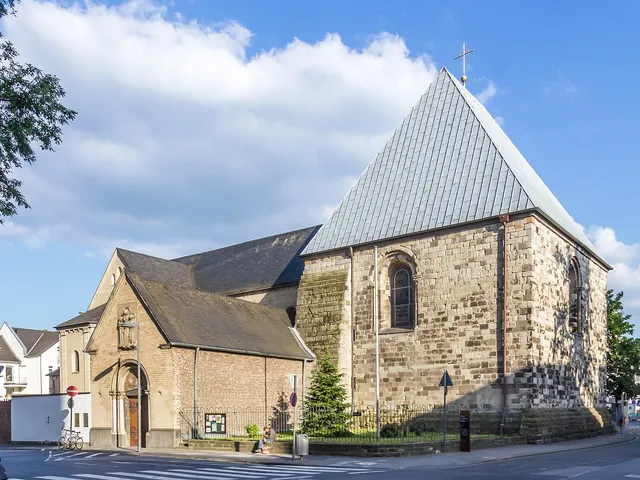
St. Georg
since 105911th-century Romanesque collegiate church rising above a columned crypt with Roman spolia — one of Cologne's twelve great Romanesque basilicas.
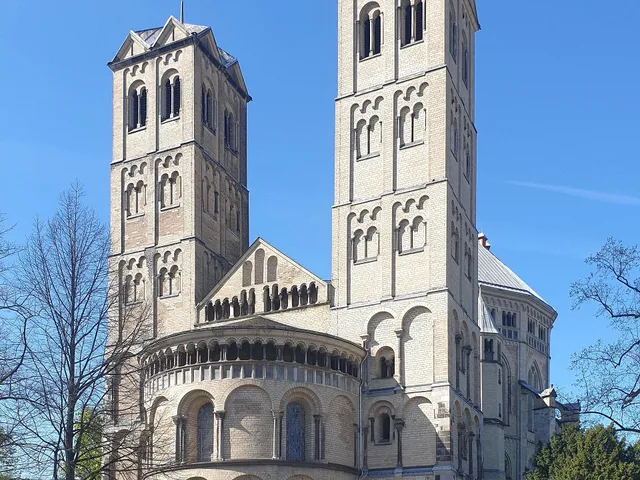
St. Gereon
since 1201Romanesque church in Cologne with a ten-sided domed rotunda from the Hohenstaufen era — the largest surviving free-vaulted central-plan building of the Middle Ages north of the Alps.
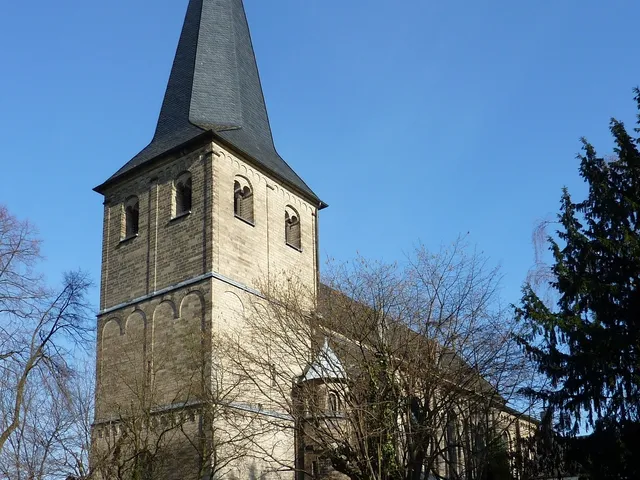
St. Hubertus (Flittard)
since 1896Catholic church in Cologne-Flittard featuring a Romanesque tower from the 12th century and a neo-Romanesque nave built in 1897.
St. Kolumba
since 1150'Madonna in the Ruins' — a medieval chapel enclosed within the ruins of a Gothic parish church, now embraced by the Kolumba art museum.
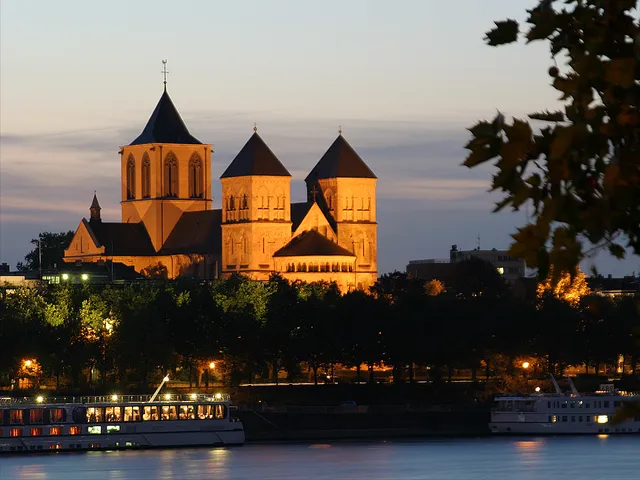
St. Kunibert
since 1215Youngest of Cologne's twelve Romanesque churches — with original 13th-century windows preserved in wartime storage, rising just north of the Cathedral.
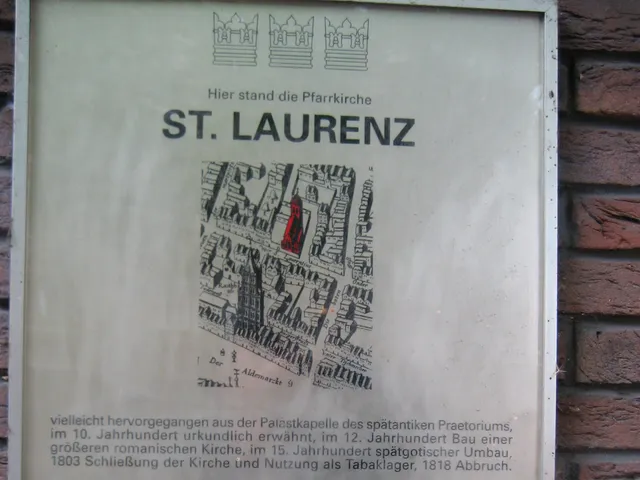
St. Laurenz (Cologne Old Town)
since 1188Parish church demolished as early as 1818 — its legacy lives on in the street names Laurenzplatz and Laurenzgittergässchen in Cologne's city centre.
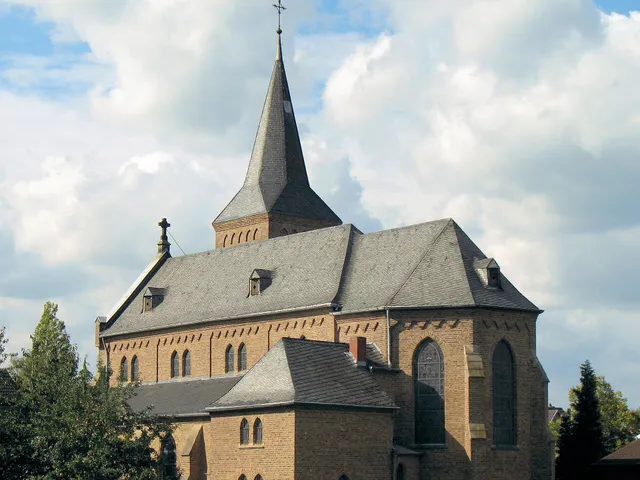
St. Margareta
Neo-Gothic brick basilica of 1909–1911 in Cologne-Libur, whose original interior—altars, pulpit, and windows—survives intact.
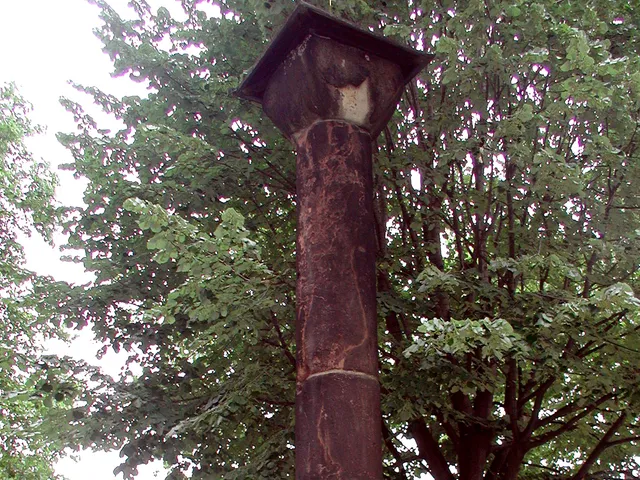
St. Maria ad Gradus
since 1062Demolished Romanesque collegiate church east of Cologne Cathedral — today only the 'Cathedral Column' at the east choir survives as a reminder.
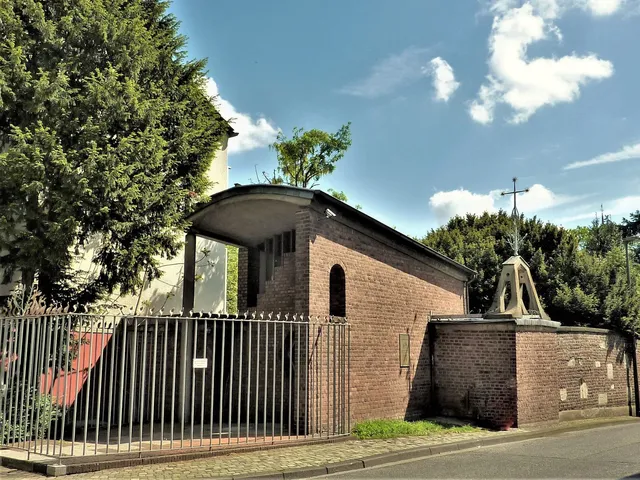
St. Maria ad Ortum
Lost late-Romanesque convent church of Cologne's Cistercian nuns — the "Mariengarten" community grew from an earlier settlement in the Riehl district.
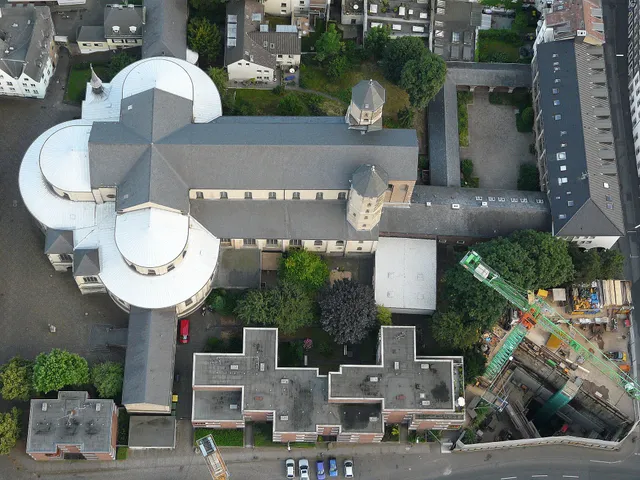
St. Maria im Kapitol
since 1100Cologne's largest and oldest Romanesque church — built on the foundations of a Roman temple, featuring a trefoil choir and a thousand-year-old carved wooden door.
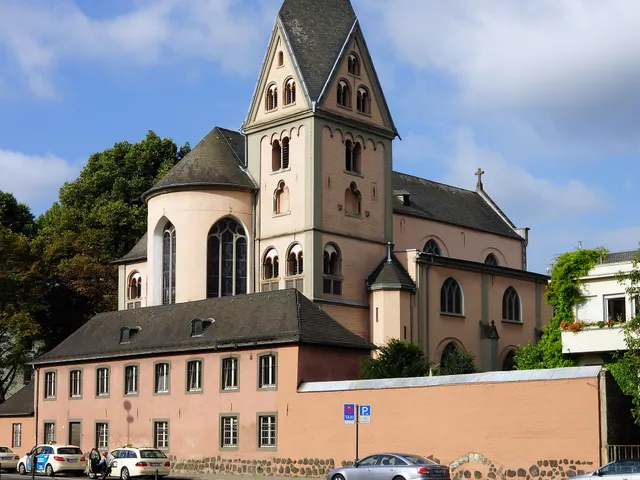
St. Maria in Lyskirchen
The smallest of Cologne's twelve great Romanesque churches — the only one with largely intact 13th-century vault frescoes.
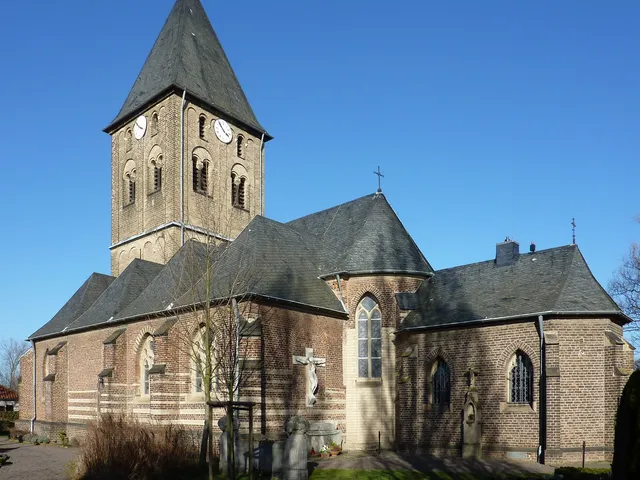
St. Martinus
Former parish church of Esch with an 11th-century Romanesque core and a late Gothic expansion.
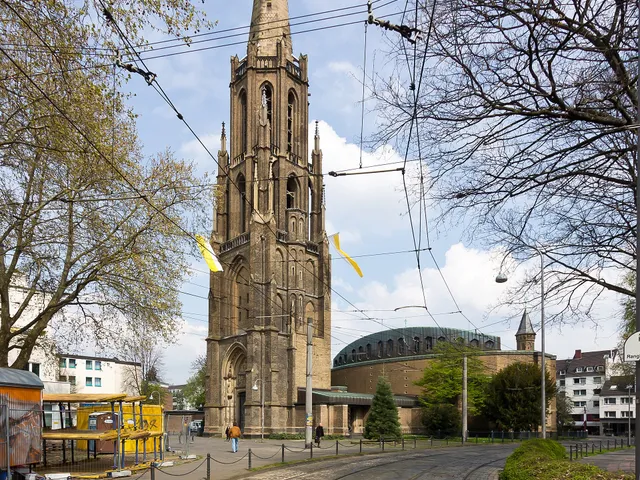
St. Mauritius
Romanesque pier basilica in the Altstadt-Süd district, consecrated in 1141 — the first church in Cologne with a fully vaulted nave and side aisles.
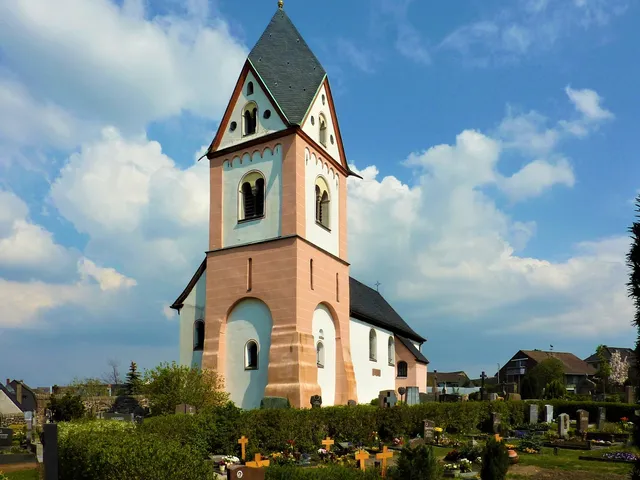
St. Michael (Cologne-Zündorf)
Romanesque church in Cologne's right-bank district of Zündorf, the village's parish church until 1897 and known for its 7th-century Merovingian tendril relief.
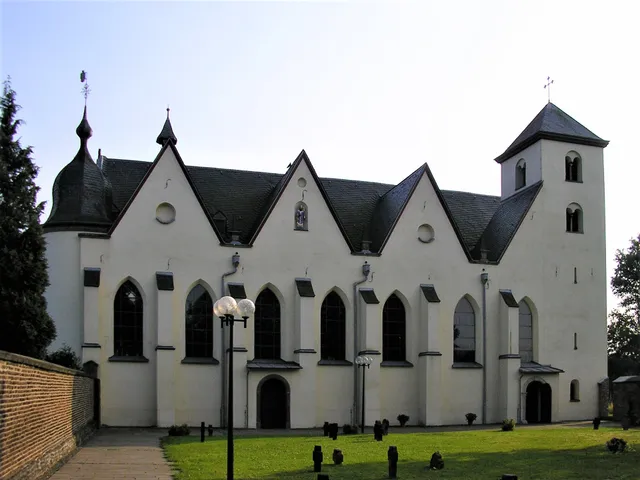
St. Nikolaus (Cologne-Dünnwald)
since 1150Romanesque basilica from 1117/1118, once a Premonstratensian canonesses' convent — with a twin-tower façade until the 16th century.
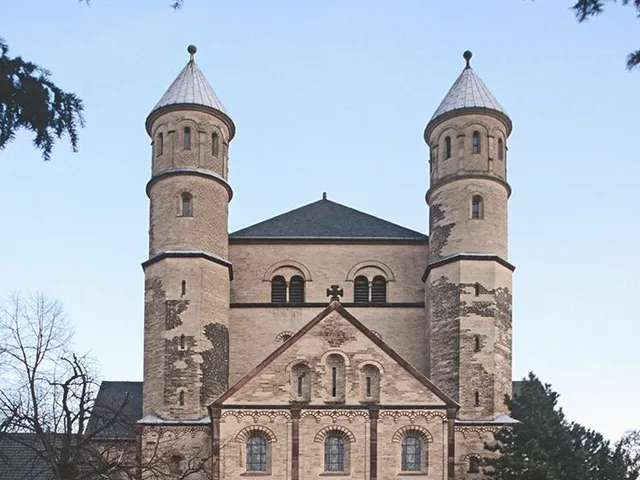
St. Pantaleon
since 1002Early Romanesque abbey church with an Ottonian westwork; burial site of Byzantine Empress Theophanu and Archbishop Bruno of Cologne.
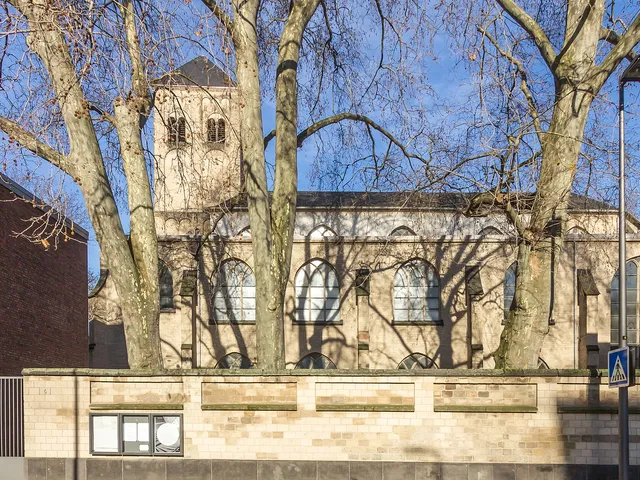
St. Peter – Kunst-Station
since 1515Cologne's latest surviving Gothic church — and since 1987 a venue for contemporary art and new music, run by Jesuits.
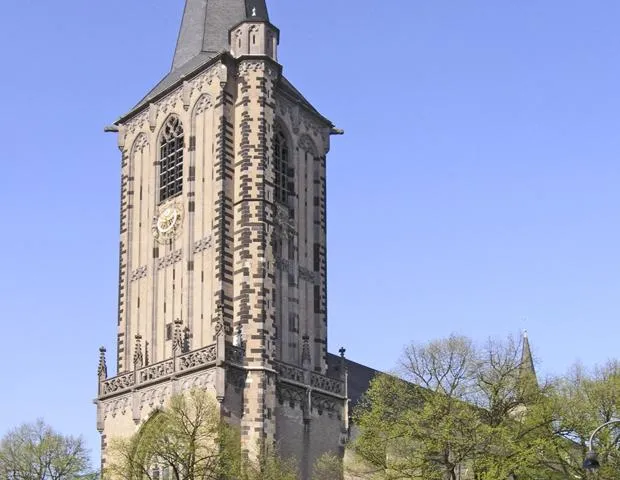
St. Severin
One of Cologne's twelve great Romanesque churches, grown from a late-antique burial chapel — home to the relics of Saint Severin.
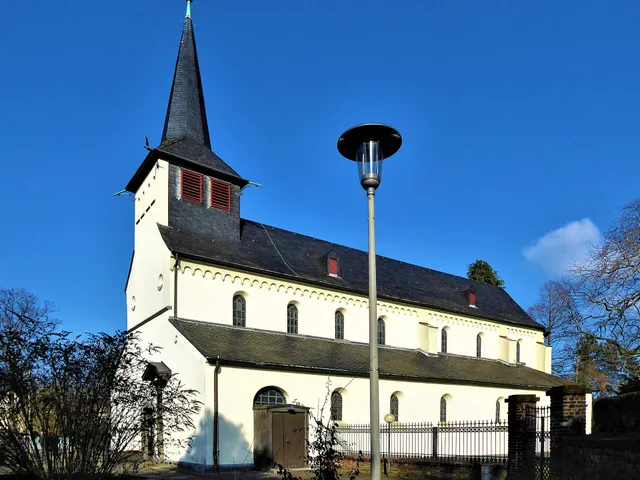
St. Severin (Lövenich)
Romanesque pillar basilica in Cologne's Lövenich district, named after Severin of Cologne and rooted in the 12th century — though heavily remodelled in the 1800s.
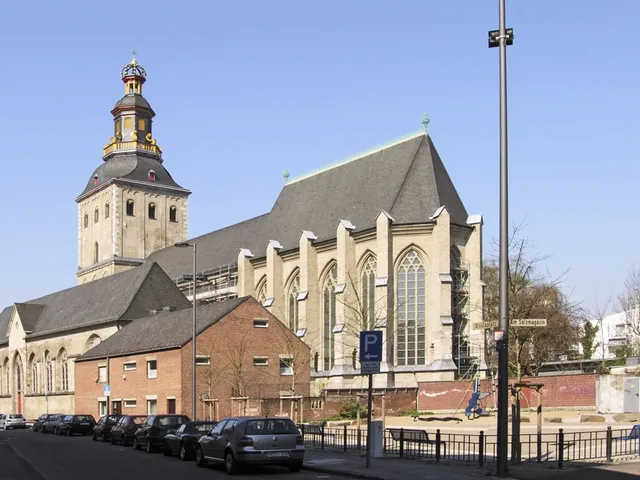
St. Ursula
since 401Romanesque basilica near Cologne Cathedral housing the Golden Chamber — the largest ossuary north of the Alps, with roots in Roman Cologne.