Neumarkt
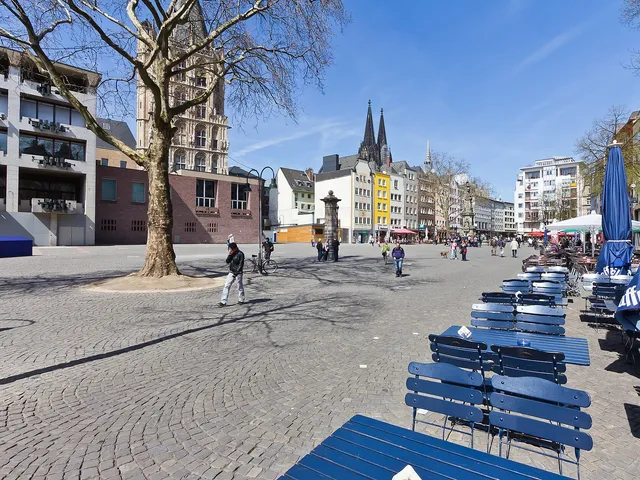
Cologne's largest square at over 27,000 m² — once a livestock market, execution ground, and legendary witches' sabbath site, with Roman remains beneath.
The Neumarkt (Cologne dialect: Nümaat) has a history stretching back to the 11th century, weaving together a livestock market, public executions, and the legend of a witches' sabbath.
At a Glance
- Type
- Inner-city square
- Location
- Altstadt-Süd neighbourhood, Innenstadt borough
- Area
- 27,216 m² (approx. 8,600 m² usable area)
- Rank
- Largest of Cologne's roughly 30 squares
- First mentioned
- 1076, by Archbishop Hildolf
- Notable feature
- Roman remains beneath the surface
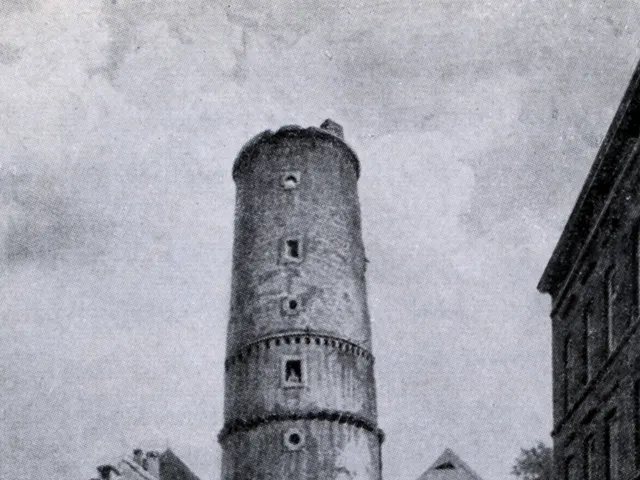
From 1392, the city's very first windmill stood right in the middle of Neumarkt – nearly 18 metres tall with six floors – initially used for milling flour before being repurposed as a prison tower from 1596 onward.
Things to do here
- Stroll across Cologne's largest square
- Trace the gripping history of the cattle market and execution site
- Get a thrill from the legend of the witches' dancing ground
- Admire the neighbouring church of St. Aposteln
- Watch the bustle and take photos
- Walk in the footsteps of the Roman finds beneath the square
History
Archbishop Hildolf designated the square to relieve pressure on the Alter Markt, donating five courtyard properties near the new market to the cathedral monastery. It served primarily as a livestock trading ground, with a horse market established from 1365 and a horse pen at the south-eastern end. According to Caesarius of Heisterbach, the city's first independent brewery operated here in 1195, supplying the collegiate church of St. Aposteln. In 1197, a knights' tournament was held at the request of Count Floris of Hainaut.
The Windmill and Executions
In 1392, the city's first windmill rose on the Neumarkt — nearly 18 metres tall, six storeys high, and 10 to 12 metres in diameter. Originally a flour mill, it was converted into a prison tower in 1596. The square also served as an execution site: the exiled alderman Gerhard von Benasis was beheaded here in 1382, and the patrician Heinrich von Stave was put to death in 1396.
The Legendary Witches' Sabbath
By local tradition, the Neumarkt was the gathering place for the witches' sabbath — presided over by the devil himself, with feasting, drinking, dancing, and the plotting of new mischief.
Roman Discoveries
During construction work for the Kreissparkasse Köln in 1979/80, the remains of a Roman peristyle house came to light, complete with colonnaded walkways and 1st-century wall paintings; the original fragments are now held in the Romano-Germanic Museum. In summer 2023, excavations for a fountain in the western part of the square uncovered the foundations of a Roman house with bathing facilities, including the remains of a heating room and heating channel.
Around the Square
The predecessor to the Church of St. Aposteln was founded on the western side around 965, with the west tower begun around 1170. Some residents took their name from the square, among them the wealthy merchant Diepold vom Neumarkt, whose name lives on in the nearby Thieboldsgasse.
Timeline
- um 965Predecessor building of St. Aposteln church built on the western side of the future square
- 1076Archbishop Hildolf formally establishes the square as 'in novo mercato' in a document
- um 1170Construction of the west tower of St. Aposteln church begins
- 1195First independent brewery for the St. Aposteln foundation established at Neumarkt
- 1197First knightly tournament held at Neumarkt at the request of Count Florenz of Hainaut
- 1365Horse market established at Neumarkt
- 1392First municipal windmill (approx. 18 m tall) erected at Neumarkt
- 1596Windmill converted from flour milling to use as a prison tower
Map
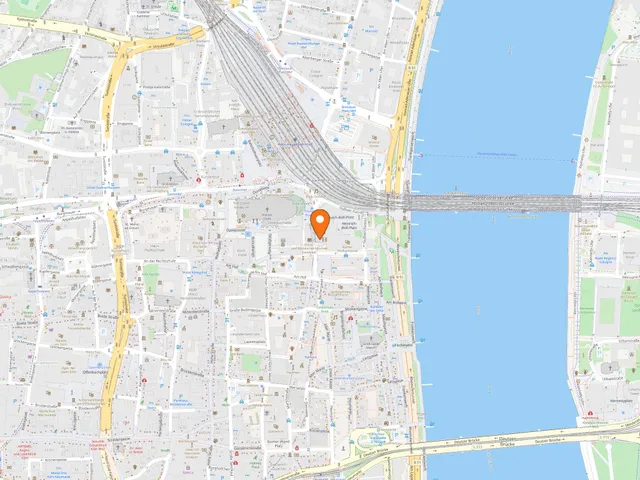
Blue dots: other places nearby — tap to explore.
Address
Neumarkt
50667 Köln
You might also like — related or nearby
Comments
- Loading comments…
Sources & links
Auto-generated, last verified: 2026-06-26
How this page is made
This page draws on open sources — Wikipedia, Wikidata, official websites and the city’s open data. Every statement is checked against the sources linked here, and pages are refreshed regularly.
Spotted a mistake anyway? Tell us below — we read every submission.