Benedictine Convent of the Holy Maccabees
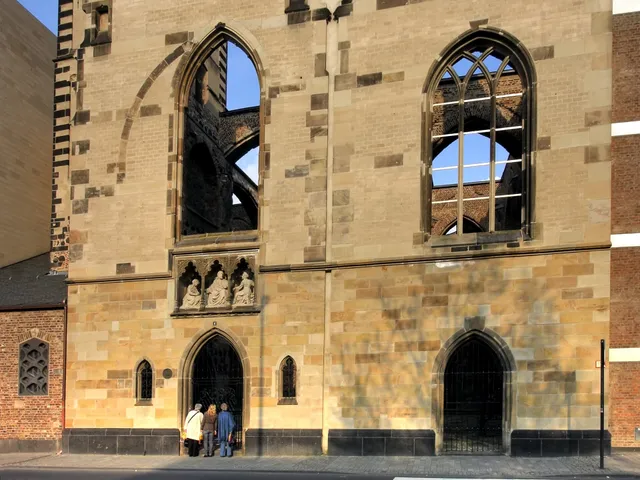
Medieval convent near the Eigelstein named after Maccabean relics brought to Cologne — its buildings have long since vanished.
Beneath the convent's grounds lie traces of Roman Cologne, where excavations uncovered foundations and older masonry from a former burial ground.
Source: Wikipedia
At a Glance
- Type
- former Benedictine convent for women
- Location
- Cologne's Niederich suburb, near the Eigelstein, on today's Machabäerstraße
- District
- Altstadt-Nord, Innenstadt borough
- Founded
- 1178
- Dissolved
- following the secularization decreed in 1802
- Name origin
- relics of the Maccabees
- Today
- buildings demolished a few years after dissolution
Excavations in 1995/96 revealed that the convent church stood atop the foundations of a much older late Roman apse building with a brick dome and a deep crypt, meaning the monastery was built directly over Roman remains.
History
A community of women living under the Rule of St. Benedict founded their convent in 1178 in Cologne's northern suburb, beside an old chapel. It was among the first Cologne convents led by women religious. Land records (Schreinseintragungen) already show the community holding property by around 1180. The convent was dissolved during the secularization of 1802, and its buildings disappeared shortly thereafter.
The Name of the Maccabees
According to legend, relics of the seven Maccabean brothers and their mother Salome traveled via Constantinople and Milan to Cologne, brought by Rainald von Dassel. The Benedictine nuns of the Blutgasse and the canonesses of St. Ursula are said to have vied for custody of the relics. The archbishop ruled in favor of the Benedictines, and the convent thereafter bore the name Maccabees' Convent, while the Blutgasse became known as platea Machabeorum.
Roman Traces
The site lay at the edge of the Roman-Frankish burial ground known as the "ager ursulanus," along the military road leading to Neuss. Historian Joseph Klinkenberg recorded finds dating from the 1st to 3rd centuries AD. Excavations in 1995 and 1996 exposed the foundations of the former Maccabees' church, along with the masonry of a late Roman apse structure featuring a brick dome and a crypt reaching deep into the ground.
The Magdalene Chapel
On the Greesberg, a chapel dedicated to St. Mary Magdalene is believed to have stood as early as Archbishop Anno's time, around 1070, likely serving as a cemetery chapel. It is first documented on 18 July 1134, through a donation by the Count of Saffenberg.
Timeline
- um 1070Magdalene chapel reportedly built on the Greesberg
- 1134First documented mention of the chapel in a donation by the Count of Saffenberg
- 1164Archbishop Rainald reportedly brought Maccabean relics to Cologne, according to legend
- 1178Founding of the Benedictine convent of the Holy Maccabees
- um 1180Community already owned property according to Schreinsbuch records
- 1802Dissolution of the convent due to secularization
- 1995–1996Excavations reveal foundations of the Maccabees church and late Roman remains
Gallery
Map
Blue dots: other places nearby — tap to explore.
You might also like — related or nearby
Comments
- Loading comments…
Sources & links
Auto-generated, last verified: 2026-09-07
How this page is made
This page draws on open sources — Wikipedia, Wikidata, official websites and the city’s open data. Every statement is checked against the sources linked here, and pages are refreshed regularly.
Spotted a mistake anyway? Tell us below — we read every submission.