Kallendresser
Copper figure at Alter Markt that bares its backside to onlookers — a Cologne satirical motif with roots in the Middle Ages.
Since the Middle Ages, the Kallendresser has been part of Cologne's folk tradition; with its exposed backside, the figure expresses a defiant, mocking attitude toward authority. The best-known sculpture sits on a house at Alter Markt in the Altstadt-Nord district.
At a Glance
- Type
- Figure of Cologne folk tradition, sculpture on a residential building
- Location
- Alter Markt, Altstadt-Nord (Innenstadt district)
- Material
- Green-patinated copper sheet
- Artist of the replica
- Ewald Mataré
- Word meaning
- Cologne dialect for someone who relieves themselves into a rain gutter
- Related figures
- Three similar corbel figures on the Town Hall tower
The most famous Kallendresser figure on Alter Markt came about through an unusual trade: architect Jupp Engels gave a neighbor the rights to a medieval archway – unearthed during excavations – and received in return the rights to the original stone Kallendresser figure, which artist Ewald Mataré then recreated in green-patinated copper sheet.
Things to do here
- Spot the cheeky copper figure on the Alter Markt
- Marvel at this satirical Cologne landmark up close
- Snap a fun souvenir photo
- Look over to the city hall tower and find the three related corbel figures
- Soak up Cologne's folklore while strolling through the old town
Significance of the Figure
Folklore researchers disagree on exactly what the figure represents. Broadly, it is understood as a way of delivering a pointed opinion to real or self-appointed authorities. Two distinct types exist: the Kallendresser shown crouching in profile, and the "Kölner Spiegel" (Cologne Mirror), which turns its back fully to the viewer and holds its head between its legs.
On the Town Hall Tower
The corbels of Cologne's Town Hall tower show men turning their bare backsides toward the viewer. While at least five such figures occupied the tower during the Middle Ages, only three survive today — situated below sculptures of Konrad von Hochstaden, Gottfried Hagen, and Katharina Henot.
The Figure at Alter Markt
In 1956, architect Jupp Engels (1909–1991) acquired a bomb-damaged plot at Alter Markt and built a house that harmonised with its older neighbours, earning him the Cologne Architecture Prize. He named it "Em Hanen" after the medieval predecessor building. A Gothic archway uncovered during excavations was traded for the rights to the original stone Kallendresser figure, from which today's copper replica was cast. The building received listed-building status in 1986.
Living Tradition
Engels also founded the Kallendresser Order, which he headed as Grand Master and "Oberkallendresser," admitting only those with exceptional service to Cologne's folk traditions. The Cologne band De Kallendresser likewise takes its name from the figure. In 2011, Cologne artist Elisabeth Wegener-Botz created a further version, with casts installed on a private house in Junkersdorf and at the entrance to the Heller private brewery on Roonstraße — which also named a herbal liqueur after the Kallendresser.
Timeline
- 1956Jupp Engels purchases plot at Alter Markt and builds the house "Em Hanen"
- 1986The house "Em Hanen" is listed as a protected monument
- 1991Jupp Engels dies; had previously founded the Kallendresser Order
- 2011Artist Elisabeth Wegener-Botz creates another Kallendresser figure
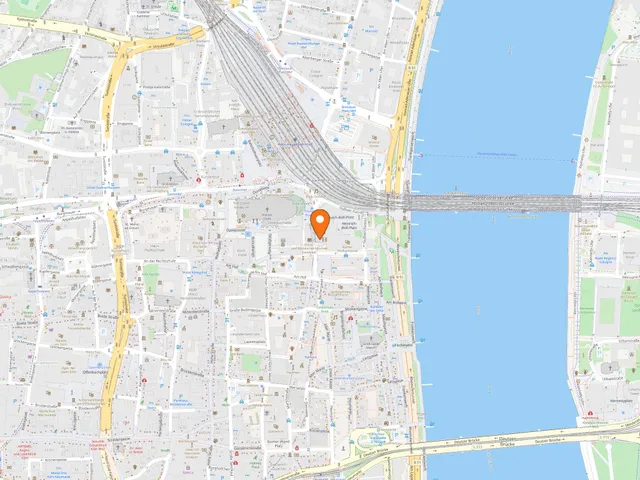
Map
Blue dots: other places nearby — tap to explore.
Address
Alter Markt 24
50667 Köln
You might also like — related or nearby
Comments
- Loading comments…
Sources & links
Auto-generated, last verified: 2026-06-26
How this page is made
This page draws on open sources — Wikipedia, Wikidata, official websites and the city’s open data. Every statement is checked against the sources linked here, and pages are refreshed regularly.
Spotted a mistake anyway? Tell us below — we read every submission.