Friesenplatz
Square on Cologne's ring boulevards at the start of Venloer Straße — gateway to the Belgian Quarter and once the haunt of Cologne's underworld.
Friesenplatz is part of Cologne's ring boulevards, which follow the course of the former city wall and were modelled on the Parisian grands boulevards.
At a Glance
- Type
- Square on Cologne's ring boulevards
- District
- Neustadt/Nord (city district Innenstadt)
- Origin
- after demolition of the city wall in 1882
- Named
- 25 May 1882
- Garden area
- 1,630 m², laid out at the time of the ring boulevards
- Notable feature
- opposite stands the Gerling Ring-Karree by Norman Foster
- Transport
- Friesenplatz U-Bahn station, lines 3, 4, 5, 12 and 15
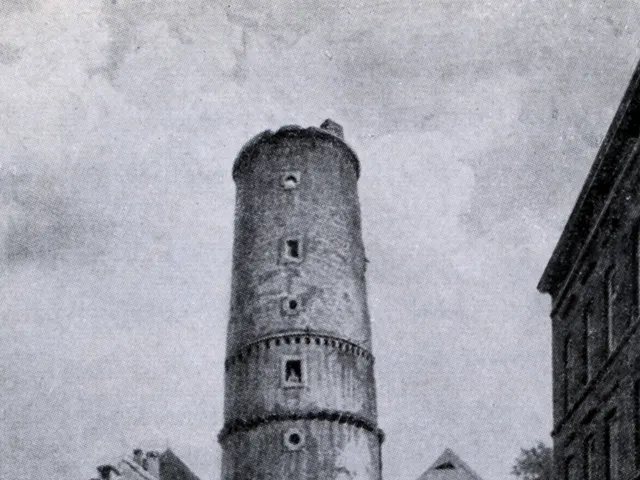
The Friesentor gate was demolished in 1882, even though it had been reinforced as recently as 1816 – just 66 years earlier – which ultimately could not prevent its later demolition.
Things to do here
- Stroll along Cologne's famous Ring boulevards
- Wander into the adjoining Belgian Quarter
- Stop by the shops and restaurants around the square
- Admire the architecture of Norman Foster's Gerling Ring-Karree opposite
- Set off along Venloer Straße toward the Belgian Quarter
- Watch the bustle of this lively transport hub
Origin of the Name
The names Friesenplatz, Friesenstraße and Friesenwall are traced back to Frisian cloth and fish merchants who took part in long-distance trade with Cologne during the early and high Middle Ages. Friesenstraße is documented as early as 1165 under the Latin name "platea Frisorum", and Germanised in 1291 as "Vrisingasse". The name may derive from a medieval Frisian colony of Dutch-German settlers that lived in this area.
From City Gate to Square
This site was once home to the Friesentor gate, first documented in 1244, reinforced in 1816, and demolished along with the city wall in 1882. At number 27 stood the building of the Kölnischer Kunstverein (Cologne Art Association), completed in 1922 by Ludwig Paffendorf and featuring a gabled portico.
The Friesenviertel
To the east of the square grew the Friesenviertel (Frisian Quarter), which became Cologne's red-light district after the Second World War. It was the stamping ground of local underworld figures known as Dummse Tünn and Schäfers Nas. Along Friesenstraße stood the variety theatre "Groß-Köln" until it was destroyed in the bombing raids of May 1942. Wilhelm Riphahn built the Sartory-Säle here, completed in 1948.
Around the Square
Friesenplatz marks the start of Venloer Straße heading north-west, where the Belgian Quarter begins. The Hohenzollernring, running between Rudolfplatz and Friesenplatz, is regarded as the most popular promenade stretch of the ring boulevard. Opposite the square, the Gerling Ring-Karree — designed by Norman Foster — was built from 1999 and inaugurated in 2001. Friesenplatz U-Bahn station was part of the very first section of Cologne's underground railway, opened on 11 October 1968. Nearby stands the Rex Am Ring, one of Germany's oldest still-operating cinemas, which opened in 1928.
Timeline
- 1244Friesentor gate first mentioned in records ("porta Frisea")
- 1882Medieval city wall and Friesentor demolished; square receives its current name on 25 May
- 1922Building of the Kölnischer Kunstverein (Ludwig Paffendorf) completed
- 1928Cinema Rex Am Ring opens on 20 May
- 1942Variety theatre "Groß-Köln" destroyed in May by wartime bombing
- 1948Sartory-Säle (Wilhelm Riphahn) completed on 11 November
- 1953Gerling complex (Arno Breker) inaugurated on 25 January
- 1968Friesenplatz U-Bahn station opens on 11 October as part of the first subway section
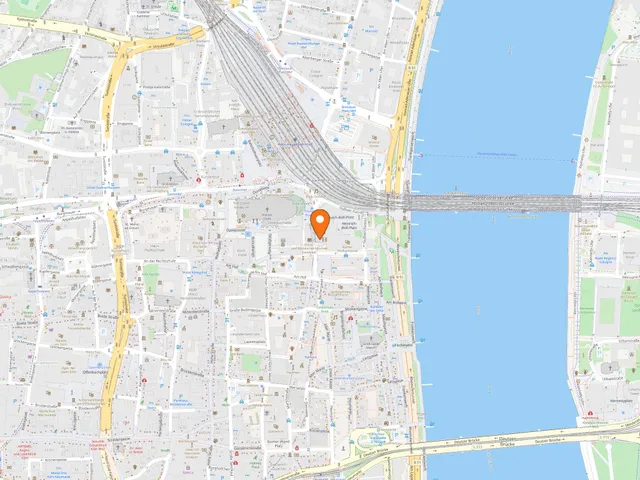
Map
Blue dots: other places nearby — tap to explore.
Address
Friesenpl.
50672 Köln
You might also like — related or nearby
Comments
- Loading comments…
Sources & links
Auto-generated, last verified: 2026-06-26
How this page is made
This page draws on open sources — Wikipedia, Wikidata, official websites and the city’s open data. Every statement is checked against the sources linked here, and pages are refreshed regularly.
Spotted a mistake anyway? Tell us below — we read every submission.