St. Michael am Weidenbach
Cologne's second house of the Brothers of the Common Life, famed for its book production; its church fell to barracks expansion in 1827.
The community grew out of a priory endowed by the abbot of St. Pantaleon and became a hub of the Devotio moderna movement in Cologne, spawning several related institutions in the city.
Source: Wikipedia
At a Glance
- Type
- House of the Brothers of the Common Life
- Location
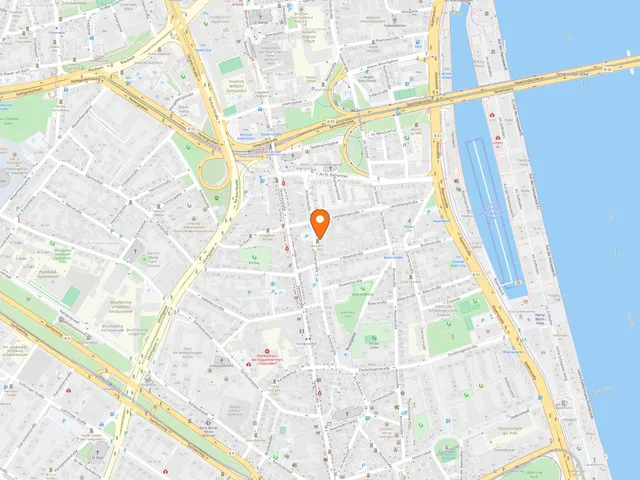
- Altstadt-Süd, Innenstadt district; courtyard opposite St. Pantaleon
- Founded
- Settled 1416, officially established 1417
- Existed until
- 1793
- Church
- Enlarged 1490, consecrated 1491, demolished (save a remnant) in 1827
- Distinctive feature
- Self-sufficiency through writing, selling, and restoring books
In 1475, Emperor Frederick III visited the community on his way back from the Siege of Neuss, received a splendidly decorated book as a gift, and in return appointed all the brothers as vicars and chaplains of the Holy Roman Empire.
Origins and Founding
In 1402 Abbot Hermann of St. Pantaleon transferred the Weidenbach courtyard to six priests, whose circle gave rise to various Devotio moderna institutions in Cologne. The Brothers of the Common Life moved in in 1416, and the following year Archbishop Dietrich II of Moers approved the takeover after a university review. Heinrich von Ahaus served as the first rector.
Books, Wine, and Conflicts
Producing, selling, and repairing books shaped the brothers' way of life and sustained them financially into the 1580s. They also engaged in viticulture, the wine trade, and beer sales, supplementing their income with annuities and leased houses. This commercial activity repeatedly brought them into competition with Cologne's citizens and craftsmen.
Chapel and Church
Pope Eugene IV granted permission for a house chapel in 1432, and in 1434 Goswin Arnheim, Bishop of Lydda, consecrated the chapel and prayer hall—with three altars—to St. Alexius. In 1490 the building was expanded into a single-nave church on a square plan with a steep gabled roof and ridge turret, consecrated in 1491 to the Trinity, the Mother of God, and St. Michael. The convent buildings adjoined it directly to the east and west.
Imperial Visit and End
Returning from the Siege of Neuss in 1475, Emperor Frederick III stopped at the convent, received an ornately decorated book from the brothers, and placed the community under his protection. Around 1500 the community grew further, reflected in rising membership and book output. After 1793 the French occupation used the buildings as a house of correction and prison, and from 1802 as barracks; their expansion destroyed the church in 1827.
Timeline
- 1402Abbot Hermann of St. Pantaleon enfeoffs six priests with the Weidenbach farmstead
- 1416Brothers of the Common Life settle at the Weidenbach farmstead
- 1417Official founding of the fraternal community by Archbishop Dietrich II of Moers
- 1432Pope Eugene IV approves establishment of a house chapel
- 1434Consecration of the chapel with prayer hall by Bishop Goswin Arnheim
- 1475Emperor Frederick III visits the convent at Weidenbach
- 1490Expansion into a single-nave church building with ridge turret
- 1793End of the Cologne Brothers of the Common Life community
Map
Blue dots: other places nearby — tap to explore.
You might also like — related or nearby
Comments
- Loading comments…
Sources & links
Auto-generated, last verified: 2026-08-31
How this page is made
This page draws on open sources — Wikipedia, Wikidata, official websites and the city’s open data. Every statement is checked against the sources linked here, and pages are refreshed regularly.
Spotted a mistake anyway? Tell us below — we read every submission.