Cellitine Convent of the Holy Trinity
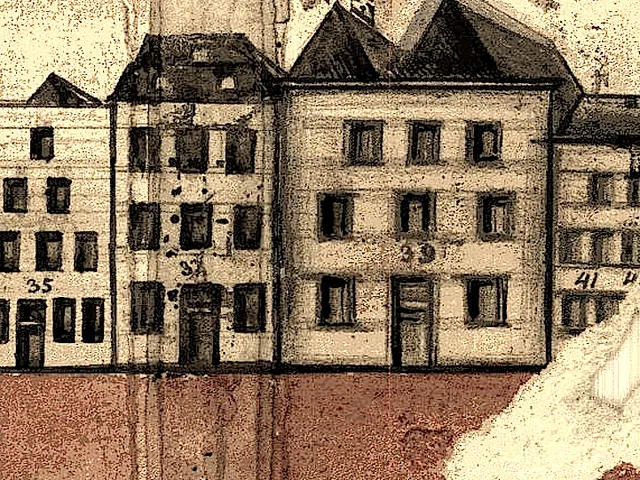
Former Cologne convent of the Cellite Sisters, who nursed the sick — tracing its roots to a beguinage founded in 1365.
A special ecclesiastical privilege allowed the community to hold services behind closed doors even during a papal interdict.
Source: Wikipedia
At a Glance
- Type
- Former convent of the Cellite Sisters
- Location
- Cologne, Altstadt-Süd, Innenstadt district
- Chapel
- roughly 6 metres wide, 15 metres long, with a ridge turret
- Convent buildings
- roughly 13 metres wide, 18 metres deep, with an adjoining rental house
- Merger
- united with the Tulen convent (founded 1307) in 1478
- Dissolution
- 1826
Even during church interdicts, when services were normally forbidden, the sisters had a special loophole from 1502 onward: their chapel was allowed to hold Mass behind locked doors.
From Beguinage to Convent
The community began as a foundation from the estate of Johann von Denandt, providing for eight beguines who lived in a house on Achternstraße under the supervision of the custodian and treasurer of the collegiate church of St. Severin. Donations helped it grow quickly: by 1452 it had ten members and room for up to sixteen. Shortly after 1452, a Carthusian and a Brother of the Common Life took on the roles of superior and visitor, marking the start of its formal transformation into a convent. In 1470 the community adopted the Rule of St. Augustine, confirmed by Archbishop Ruprecht of the Palatinate on 12 January 1471. The sisters were granted the right to freely choose a confessor, who could also grant absolutions normally reserved to the bishop; the prior of the Crutched Friars' monastery was appointed as visitor.
Merger with the Tulen Convent
The Tulen convent had been founded in 1307 by a beguine named Tula for eight women. By 1452 only four beguines remained there, under the pastor of St. Severin as superior. The city council decided to merge it with the Denandt convent, but the plan was not carried out immediately. It was only on orders from the archbishop's authorities that the actual union took place in 1478.
Chapel and Church
In 1502 the community received permission to build its own chapel with an altar and a bell, where Mass could be celebrated behind closed doors even during an interdict. Since funds for a fixed altar were initially lacking, a portable altar was permitted instead. Once finances improved, the archbishop consecrated a permanent altar in 1504 in honour of the Holy Trinity, St. Michael, and other saints. A larger church followed in 1555, consecrated in 1557 by auxiliary bishop Johannes with three altars dedicated to the Holy Trinity, the Virgin Mary, and St. Anne. In 1760 a wooden ceiling in danger of collapse was restored; in 1784 ice floes during a flood caused significant damage to the convent buildings.
Nursing and Daily Life
The sisters cared for the sick in their own homes and also took them in at the convent for a fee, tending to them until death. From 1672 the chapel held a regular office, with Mass celebrated by an officiant on three days a week.
Decline and Dissolution
The French Revolution brought the community's decline: it still had eight sisters in 1800, but only six by 1802. A dissolution decree issued in 1802, with a pension estimated at 3,300 francs, was withdrawn before it could be enforced. After the last sister joined in June 1822, the convent again numbered eight members of varying ages by 1826, with an income of 734 talers; that same year, the convent was finally dissolved.
Timeline
- 1365Founding of a convent for eight Beguines from the estate of Johann von Denandt
- 1307Founding of the neighboring Tulen convent by the Beguine Tula
- 1452Convent has 10 members, beginning transformation into a monastery
- 1470/1471Adoption of the Augustinian rule, confirmed by Archbishop Ruprecht of the Palatinate (12 January 1471)
- 1478Union with the Tulen convent
- 1502/1504Permission to build a chapel (16 April 1502), altar consecration (9 June 1504)
- 1555/1557Approval (17 May 1555) and consecration (4 April 1557) of a larger church building
- 1784–1826Flood damage 1784, dissolution attempt 1802, final dissolution 1826
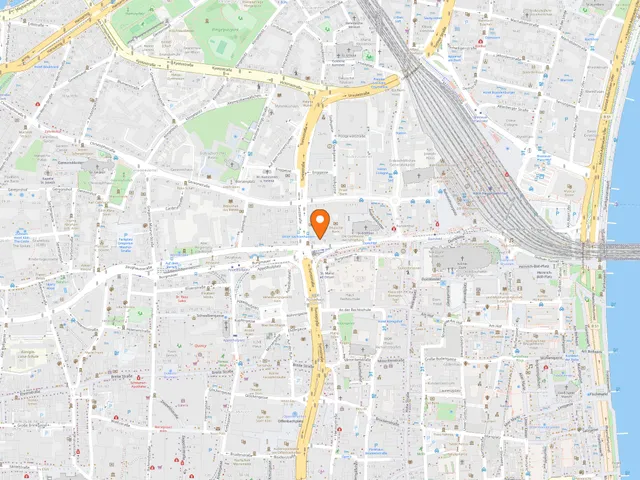
Map
Blue dots: other places nearby — tap to explore.
You might also like — related or nearby
Comments
- Loading comments…
Sources & links
Auto-generated, last verified: 2026-09-07
How this page is made
This page draws on open sources — Wikipedia, Wikidata, official websites and the city’s open data. Every statement is checked against the sources linked here, and pages are refreshed regularly.
Spotted a mistake anyway? Tell us below — we read every submission.