St. Gertrude's Convent (Old Cologne)
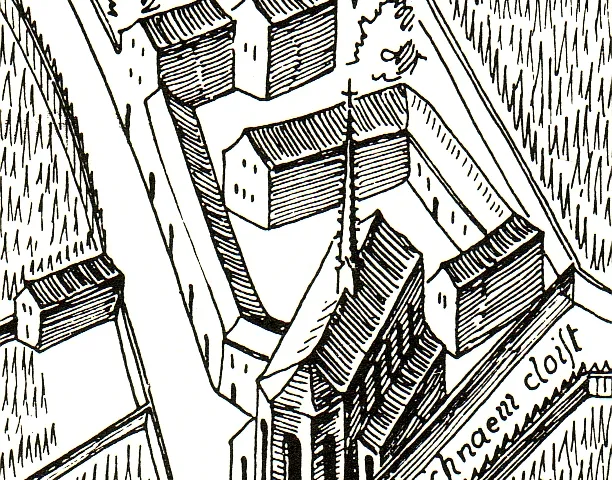
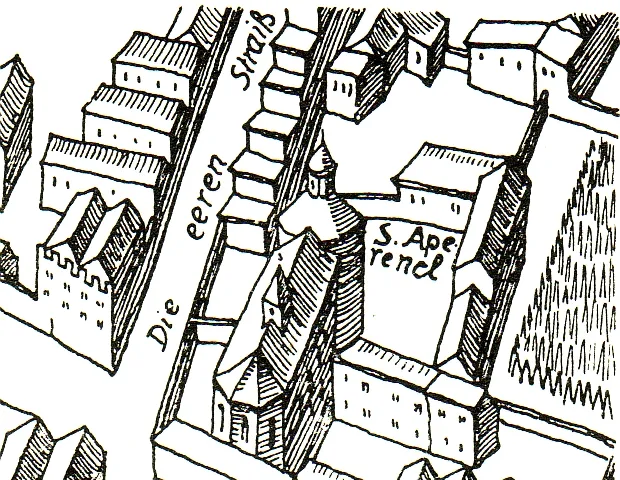
Former Dominican nuns' convent at the northwest corner of Neumarkt, founded before 1257 and dissolved in 1802.
For centuries this community of Dominican nuns shaped religious life at Cologne's Neumarkt, drawing members from the city's patrician and merchant elite.
Source: Wikipedia
At a Glance
- Type
- Former Dominican nuns' convent with church
- Location
- Northwest corner of Neumarkt; Altstadt-Süd district, Innenstadt borough
- Founded
- Before 1257; dissolved 1802
- Church
- Built around the turn of the 13th to 14th century
- Dedications
- Altars and chapels for John the Evangelist, Saint Augustine, and the Virgin Mary
- Relics
- Relics of Saint Gertrude
After the monastery was dissolved in 1802 during secularization, the building was auctioned off in 1808 and the buyer simply had the once-significant monastic complex demolished to create ordinary building lots.
History
A charter issued by Archbishop Konrad von Hochstaden in August 1257 records the move of the recluse Helwigis and her fellow sisters from a cell at St. Catherine's on Severinstraße to St. Gertrude's at Neumarkt. Pope Clement IV granted the community privileges on 1 August 1265, and it was incorporated into the Dominican Order in 1286/1287. Archbishop Siegfried von Westerburg consecrated the high altar in 1279.
Convent Life and Property
The convent relied on indulgences and endowments, with prominent Cologne families among its benefactors; incoming sisters were also required to bring a dowry for their upkeep. In the late Middle Ages the sisters came chiefly from Cologne's patriciate and wealthy merchant families, and in the early modern period from families of aldermen and officials. Members of the Overstolz family are recorded among the prioresses. The convent's holdings included estates in Cologne and surrounding villages such as Dansweiler, Deckstein, Junkersdorf, Lind, and Widdersdorf, all managed by the prioress.
Reform and Dissolution
By the 15th century the convent was seen as in need of reform, which was pushed through in 1466 with backing from the city council and archbishop, despite resistance from some sisters. The community remained untouched by the Reformation. In 1728 Cologne's vicar general complained of the convent's poor finances, yet Prioress Anna Herrestorf (1769–1778, 1785–1798) financed a new church choir from her own means. In the final decades of the 18th century the Archbishop of Cologne asserted jurisdiction and visitation rights over St. Gertrude's. On 14 September 1802 the last eleven sisters left the church and convent; the relics were transferred to St. Aposteln, and in 1808 the buildings were auctioned off and subsequently demolished.
Worth Knowing
The convent is credited with significance for German mysticism in the late 13th and 14th centuries. A collection of sermons—including works by Albertus Magnus—is thought to be linked to St. Gertrude's.
Timeline
- vor 1257Founding of St. Gertrud monastery
- August 1257Recluse Helwigis and fellow sisters move from St. Katharina to St. Gertrud
- 1. August 1265Community privileged by Pope Clemens IV
- 1273Community referred to as monasterium s. Gertrudis
- 1279Consecration of the main altar by Archbishop Siegfried von Westerburg
- 1286/1287Incorporation into the Dominican Order
- 1466Reform of the monastery with removals and new sisters
- 14. September 1802Dissolution of the monastery, last eleven sisters leave
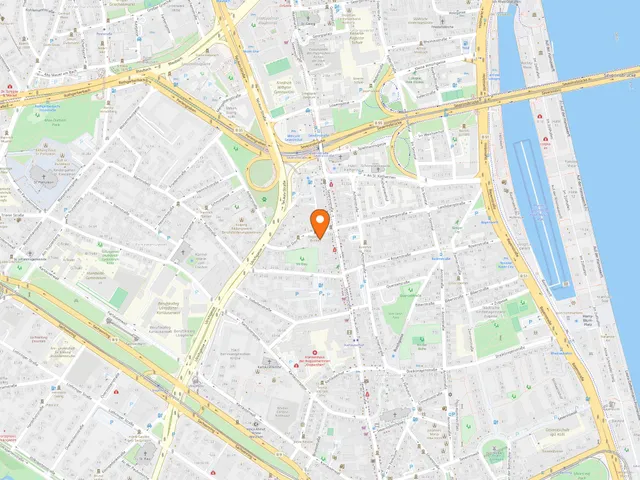
Map
Blue dots: other places nearby — tap to explore.
You might also like — related or nearby

Comments
- Loading comments…
Sources & links
Auto-generated, last verified: 2026-09-07
How this page is made
This page draws on open sources — Wikipedia, Wikidata, official websites and the city’s open data. Every statement is checked against the sources linked here, and pages are refreshed regularly.
Spotted a mistake anyway? Tell us below — we read every submission.