Ad Olivas Friary
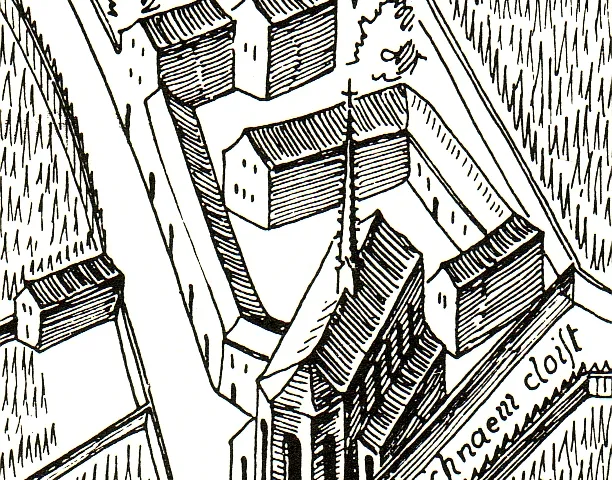
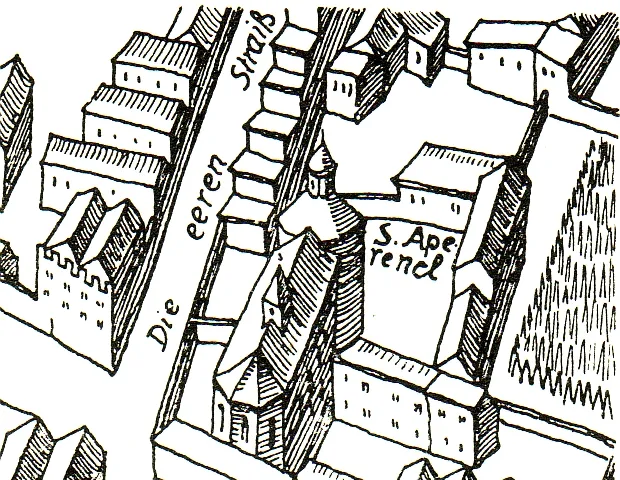
Former Franciscan friary of St. Agnes (1589–1802), where the Olivandenhof shopping arcade now stands near Cologne's Neumarkt; no buildings survive.
Religious communities lived on this site long before the Franciscans arrived: first Beghards from the late 13th century, then brothers of the Franciscan Third Order.
Source: Wikipedia
At a Glance
- Type
- Former convent of the Franciscan Recollects
- Existence
- 1589 to 1802, dissolved during secularization
- Location
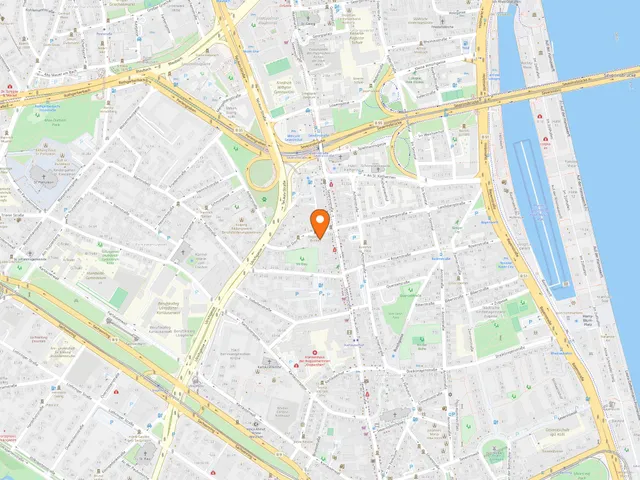
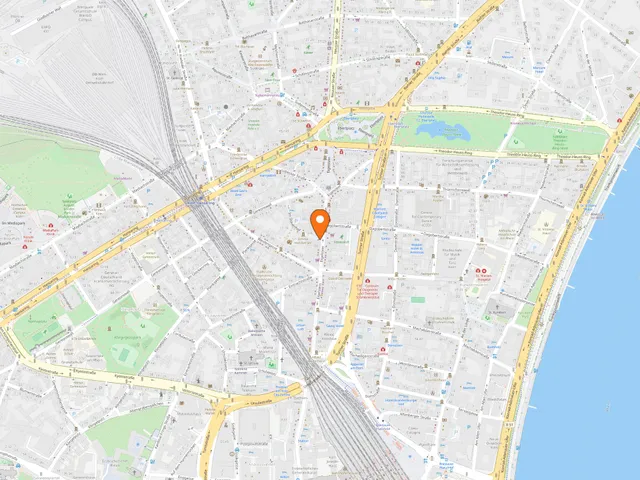
- Area of today's Olivandenhof shopping arcade near the Neumarkt, Altstadt-Nord (Innenstadt district)
- Church patron saint
- St. Agnes
- Size of the community
- 7 members in 1589, 62 in 1664
- Condition
- Church and monastery buildings no longer exist
In 1609, the Observant Franciscans of Ad Olivas planned to seize the Minorite monastery during a ceremonial procession to the Minorite church. The archbishop and most of the city council were already on board, but the plan was betrayed to the Minorites and failed.
Beghards and the “Haus zur Olvunde”
Towards the end of the 13th century, two Beghards settled in the area between the Neumarkt and Breite Straße. The street was called “Ad Olivas”; today Am alten Posthof, Zeppelinstraße and Richmodstraße run there. Their settlement was known as the “Haus zur Olvunde”, also “zum Elefanten” (“at the Elephant”). In 1310, a private chapel was consecrated in honor of the Holy Cross and St. Agnes.
Weaving as a Livelihood
Around 1328/29, the chapel and living quarters passed to Franciscan Tertiaries. They earned their living mainly from home weaving, with 32 looms operated by two brothers and seven paid weavers. By 1570, this convent had almost died out. Attempts were made to revive it with brothers from the Tertiary convent in Jüchen or to transfer it to the Benedictine abbey of Deutz; when this failed, the convent was dissolved.
A Fresh Start with Refugees from the Netherlands
In the 1570s, the Franciscans were driven out of the Netherlands in the course of the Reformation. Pope Gregory XIII wanted a convent of Observants in Cologne as well, since many Dutch Observants had already come to the city. After a stopover in a small house near St. Ursula, they took over the dissolved Tertiary convent on 28 June 1589. In 1609, they planned to seize the Minorite friary during a procession, but the plot was betrayed and foiled.
Church, Studium and Hospital
From 1598, the brothers expanded the dilapidated chapel into a church. As the convent kept growing, the buildings were enlarged several times. In 1610, the Cologne Province moved its order's studium of philosophy and theology from Brühl to Cologne, and from 1659 a hospital was established at the friary. In the 17th century, about 500 people attended services on Sundays. Because of the poor state of the sources, it is not known what the friary and church looked like.
From Friary to Shopping Center
When the friary was dissolved in 1802, 21 fathers and six brothers still lived in the convent. A department store stood on the former friary grounds from 1914; today a shopping center occupies the site.
Timeline
- um 1328/29Beghards hand chapel and residences over to Franciscan Tertiaries
- 1517Pope Leo X splits the Franciscan order into Observants and Minorites
- 1570Tertiary convent, nearly extinct, is dissolved
- 1589Observants take over the Tertiary convent and found the Conventus ad Olivas
- 1598Expansion of the chapel into St. Agnes church begins
- 1659Construction of a hospital at the monastery begins
- 1680–1689Rebuilding of further monastery parts; last wing completed in 1689
- 1802Monastery dissolved as a result of secularization
Map
Blue dots: other places nearby — tap to explore.
You might also like — related or nearby
Comments
- Loading comments…
Sources & links
Auto-generated, last verified: 2026-09-28
How this page is made
This page draws on open sources — Wikipedia, Wikidata, official websites and the city’s open data. Every statement is checked against the sources linked here, and pages are refreshed regularly.
Spotted a mistake anyway? Tell us below — we read every submission.