Maria im Spiegel (Sion Convent), Cologne
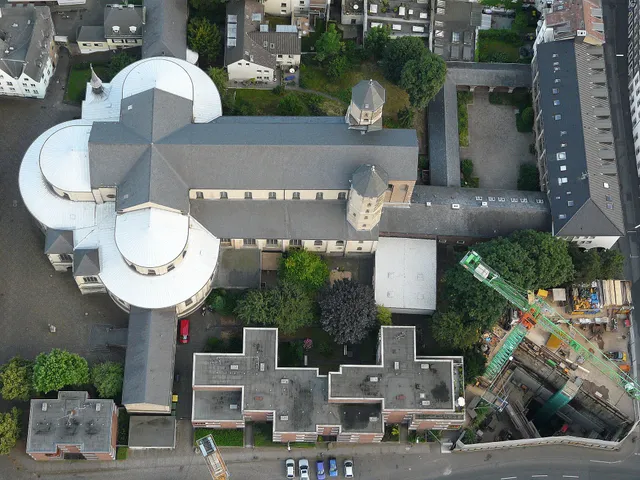
Former Cologne Cistercian convent, popularly known as Sion Convent, founded in 1246 on the site of an earlier Franciscan settlement.
The grounds along Severinstraße, leading out of the city, once formed a southern Roman burial ground before centuries of use for vineyards and farming, as recorded in drawings by cartographers Anton Woensam and Arnold Mercator.
Source: Wikipedia
At a Glance
- Type
- former Cistercian convent
- Location
- Altstadt-Süd, Innenstadt district
- Founded
- 1246
- Converted
- to a Bridgettine convent in 1613
- Dissolved
- 1802 during secularization
- Popular name
- Sion Convent
- Origins
- grew out of a former Franciscan settlement
The noblewoman Mechthild of Sayn chose to be buried not in her family tomb, but beneath the high altar she herself had endowed in the church of Maria im Spiegel monastery.
Land Ownership in the Middle Ages
In medieval times the site mostly belonged to religious institutions or the city's patrician elite. Daughters of these often intermarried families founded or entered convents, and thanks to their social standing, education, and dowries, they quickly rose to leading positions. As prioresses or abbesses, they used family connections to secular and ecclesiastical offices to increase their communities' wealth.
From Franciscans to Cistercian Nuns
In 1229 the Cologne patrician Gerhard Quatermart granted the Franciscans (Minorites) a plot in the parish of St. Severin, near the Katharinengraben in the "Sion Valley," for an oratory—their first permanent settlement since arriving in Cologne in 1222. Around 1245 they sold the property to Count Heinrich von Sayn and moved to the St. Kolumba parish, where they began building the Minorite Church.
Foundation and Founding Clause
Heinrich von Sayn (died 1246) and his wife Mechthild, née von Landsberg, transferred the former Minorite property to a Cistercian community that called itself "Maria im Spiegel" (de Speculo S. Mariae). The endowment stipulated that Mechthild would retain use of part of the garden and buildings, with the remainder passing to the convent only once there was no heir. Pope Innocent placed the convent under his protection in 1247, and in 1248 charged the Cistercian order's leadership with incorporating it under the oversight of the Abbot of Heisterbach.
Name and Founders
The name "Maria im Spiegel" (de Speculo S. Mariae) may derive from the Cologne patrician family "von Spiegel," from which the foundress came. After the Sayn founders, popular usage named the institution Sion Convent or Seyne; in Hermann von Weinsberg's time it was called the "Jungfernkloster zu Seien." In 1283 Countess Mechthild (died 12 November 1285) endowed the convent again, referring to "van mine Cloister ze Colne"; she was buried beneath the high altar she had donated to the convent church. Further endowments followed from Cuno von Horne in 1280 and Werner Overstolz in 1331.
The Convent Church
The church was built during a period of intense 13th-century construction, when numerous churches and monastic complexes were erected across Cologne. Whether it reached its later size already under the brief Franciscan tenure or only under Countess Mechthild remains unknown.
Traces in the Cityscape
Several surviving streets recall the convent and its founders: Seyengasse, Sionstal, and the Landsberg- and Mechtildisstraße, named after Mechthild. The former "Bozengasse" became today's Buschgasse.
Timeline
- 1229Gerhard Quatermart donates land in Sionstal to Franciscans
- um 1245Franciscans sell property to Count Heinrich von Sayn
- 1246Founding of the Cistercian convent 'Maria im Spiegel'
- 31. Dezember 1246Death of Count Heinrich von Sayn
- 1247Pope Innocent places the convent under his protection
- 1248Convent incorporated into the Cistercian order, supervised by Abbot of Heisterbach
- 1280Endowment by Cuno von Horne
- 1283Further endowment by Countess Mechthildis von Sayn
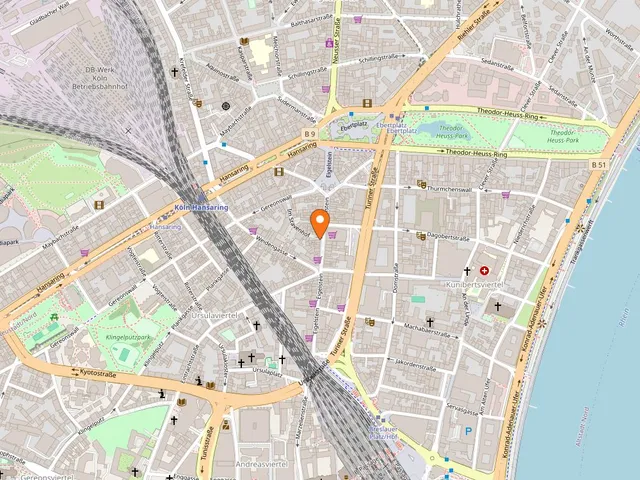
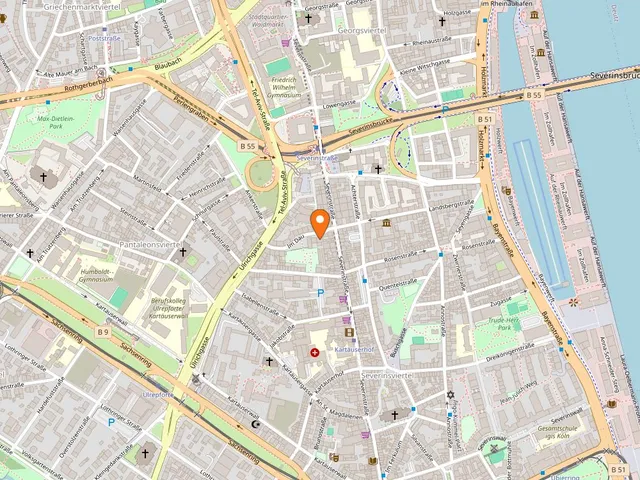
Map
Blue dots: other places nearby — tap to explore.
You might also like — related or nearby
Comments
- Loading comments…
Sources & links
Auto-generated, last verified: 2026-09-15
How this page is made
This page draws on open sources — Wikipedia, Wikidata, official websites and the city’s open data. Every statement is checked against the sources linked here, and pages are refreshed regularly.
Spotted a mistake anyway? Tell us below — we read every submission.