Kloster Herrenleichnam
An Augustinian canon monastery on Klingelpütz in Cologne's Altstadt-Nord, founded around a chapel commemorating a Eucharistic miracle.
At Klingelpütz in Cologne stood Kloster Herrenleichnam, an Augustinian canonry whose origins trace back to a chapel built in memory of a Eucharistic miracle.
Source: Wikipedia
At a Glance
- Type
- former Augustinian canonry
- Location
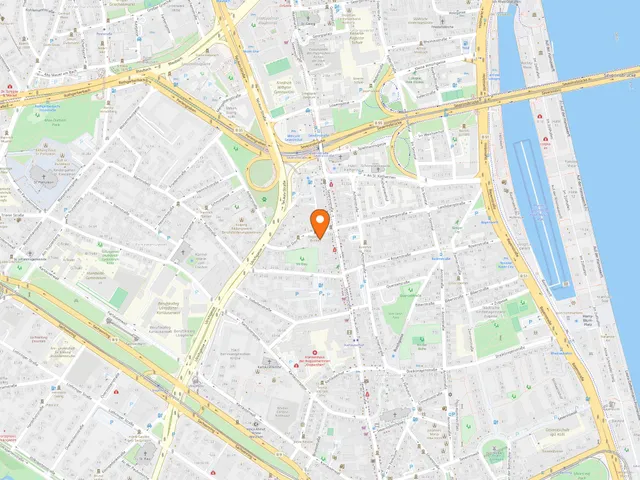
- Klingelpütz, Altstadt-Nord quarter, Innenstadt district
- Origin
- Chapel of Corpus Christi, founded 1331
- Monastery established
- 1426
- Dissolved
- 1787
- Named after
- Corpus Christi (Fronleichnam)
The monastery church was auctioned off in 1802 and demolished just three years later – yet its medieval stained glass survived: fragments were incorporated into Cologne Cathedral, where they can still be seen today as the so-called Throne of Grace window in the northern transept.
Things to do here
- Stroll through the Altstadt-Nord neighborhood on the trail of the vanished monastery
- Trace the eventful history from the Eucharistic miracle to the demolition
- Explore the historic site at Klingelpütz and capture some photos
- Admire the surviving Gnadenstuhl window from the old monastery church in Cologne Cathedral
History
The community grew from the Chapel of Corpus Christi, established in 1331 to commemorate a Eucharistic miracle. In 1404, the founding family transferred patronage to the City of Cologne, which thereafter appointed the incumbent priest. Donations from Cologne citizens funded a major expansion of the pilgrimage chapel between 1421 and 1423. With support from Archbishop Dietrich II of Moers, an Augustinian canonry was formally established on the site in 1426. In 1451 the community joined the Congregation of Windesheim.
Buildings
Following the foundation of the canonry, a larger church was erected; its high altar was consecrated in 1435. To expand the complex, land was purchased from the collegiate church of St Gereon in 1454, and chapels were added along both sides of the nave. A chapel dedicated to the Seven Joys of Mary was added on the south side in 1503.
Dissolution and Legacy
In 1787, the Cologne city council dissolved the monastery with the consent of the papal nuncio. The church and cloister initially served as a prison and hospital; the church was auctioned off in 1802 and demolished in 1805. Between 1822 and 1836, the Prussian state built a prison on the site. Fragments of the medieval stained glass were transferred to Cologne Cathedral after the demolition, where they survive in the north transept above the sacristy as the so-called Throne of Grace window.
Timeline
- 1331Chapel Corporis Christi founded in memory of a host miracle
- 1404Founding family transfers patronage of the chapel to the city of Cologne
- 1421–23Chapel significantly enlarged through donations by Cologne citizens
- 1426Augustinian canonry established with support of Archbishop Dietrich II of Moers
- 1435Consecration of the high altar of the newly built monastery church
- 1451Convent admitted to the Windesheim Congregation
- 1503Large chapel of the Seven Joys of Mary consecrated
- 1787Convent dissolved by the Cologne council with papal approval
- 1802Church auctioned off; demolished in 1805
- 1822–36Prussian state builds a prison on the monastery grounds
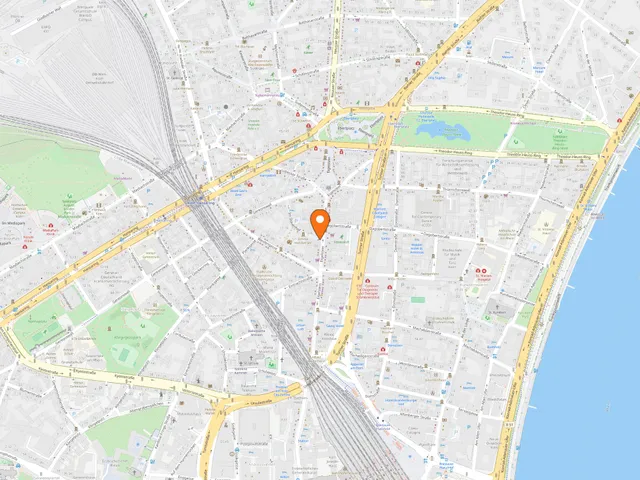
Map
Blue dots: other places nearby — tap to explore.
You might also like — related or nearby
Comments
- Loading comments…
Sources & links
Auto-generated, last verified: 2026-06-26
How this page is made
This page draws on open sources — Wikipedia, Wikidata, official websites and the city’s open data. Every statement is checked against the sources linked here, and pages are refreshed regularly.
Spotted a mistake anyway? Tell us below — we read every submission.