Historical Archive of the Archdiocese of Cologne
Founded in 1921, this archive holds the Archdiocese of Cologne's records — its oldest piece is a property deed from 942.
The archive is also known for safeguarding the personal papers of architects whose work shaped Cologne's postwar church building boom.
Source: Wikipedia
At a Glance
- Type
- Archive of the Archdiocese of Cologne (abbreviation AEK)
- Location
- Gereonstraße 2–4, Cologne-Altstadt-Nord (Innenstadt district)
- Founded
- 1921
- Holdings
- around 6,500 shelf meters, including approx. 5,300 charters
- Capacity
- 20 shelf kilometers
- Building
- constructed 1956–1958, listed as a historic monument since 1992
- Access
- open to researchers and the public, reading room with 20 seats
After the collapse of the Cologne city archive in 2009, the Archdiocese Archive took in 60,000 undamaged parchment charters as an emergency shelter, freeing up three kilometers of shelving on short notice.
History
Karl Joseph Cardinal Schulte, then Archbishop of Cologne, founded the archive as an institution for historical research. It initially held documents of the ecclesiastical administration predating 1801, the year the old Archdiocese was dissolved during secularization. Before World War II, records of the Vicariate General and parish archives from Cologne's city center were added. In 1958 the archive moved into a new Archdiocese building complex in Altstadt-Nord. Since 2024, historian and archivist Joachim Oepen has headed the institution.
Holdings
The archive collects records from the Cologne diocesan administration and other church organizations within the diocese, along with personal papers and special collections. Since the 1980s, archives of further Catholic institutions, associations, and organizations have also been included. Its holdings include the archive of the German Bishops' Conference, comprising 410 shelf meters from 1925 to 1990. The first architect's papers arrived in 1984 with the estate of Alfons Leitl, followed later by those of Rudolf Schwarz and Fritz Schaller, among others.
Refuge Archive After the City Archive Collapse
In March 2009, Cologne's Historical City Archive collapsed. The AEK swiftly provided three shelf kilometers of space for rescued holdings and served as a refuge archive, safeguarding 60,000 undamaged parchment documents.
Architecture
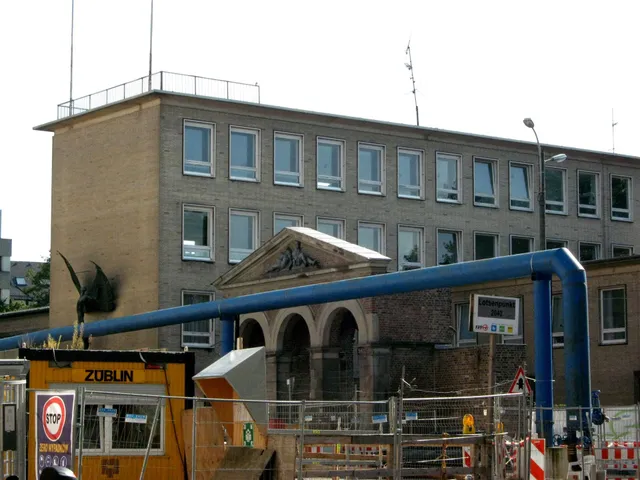
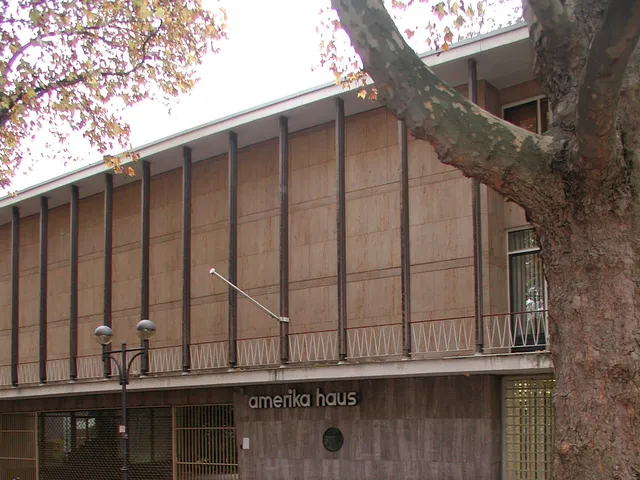
The archive sits within a building complex designed by Hans Schumacher and Willy Weyres, which also includes the archbishop's residence, the seminary, and the seminary church of St. Petrus Canisius. The archive building has three stories, an angular floor plan, a brick facade, and gabled roofs, closing off to the west with the eight-story "book tower." Between 2005 and 2007, a three-story underground extension was built, invisible from outside, adding 2,200 square meters of space. Since 2015, a wall relief by Monika Bartholomé has complemented the curved 1950s staircase — its slender rods reflecting, among other things, how an archive reduces documents to what is worth preserving.
Today
The reading room is located on the upper floor. The archive also houses the editorial office of the online portal for church archives.
Timeline
- 942Oldest document in the archive: land transfer deed of 29 January
- 1801Dissolution of the old archdiocese during secularization
- 1921Archive founded by Archbishop Karl Joseph Cardinal Schulte
- 1958Moved into new building complex in Cologne-Altstadt-Nord
- 1984First architect's estate (Alfons Leitl) acquired
- 1992Building placed under monument protection (19 June)
- 2005–2007Construction of underground extension adding 15 km of shelving
- 2009After collapse of Cologne city archive, took in rescued holdings
Gallery
Map
Blue dots: other places nearby — tap to explore.
You might also like — related or nearby
Comments
- Loading comments…
Sources & links
Auto-generated, last verified: 2026-09-26
How this page is made
This page draws on open sources — Wikipedia, Wikidata, official websites and the city’s open data. Every statement is checked against the sources linked here, and pages are refreshed regularly.
Spotted a mistake anyway? Tell us below — we read every submission.