Am Römerturm 3
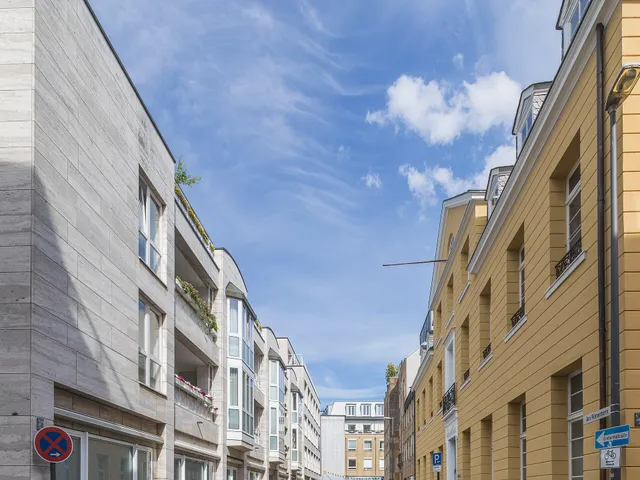
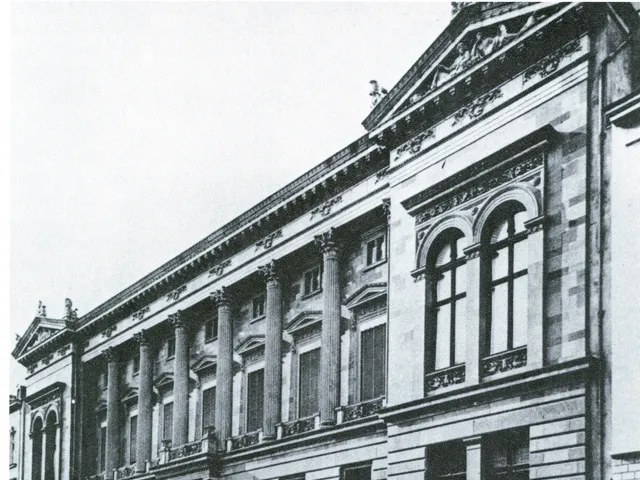
Neoclassical residence on the site of the former St. Clara Poor Clares' convent beside Cologne's Roman Tower – now an architects' office with the "Sancta-Clara-Keller" vault.
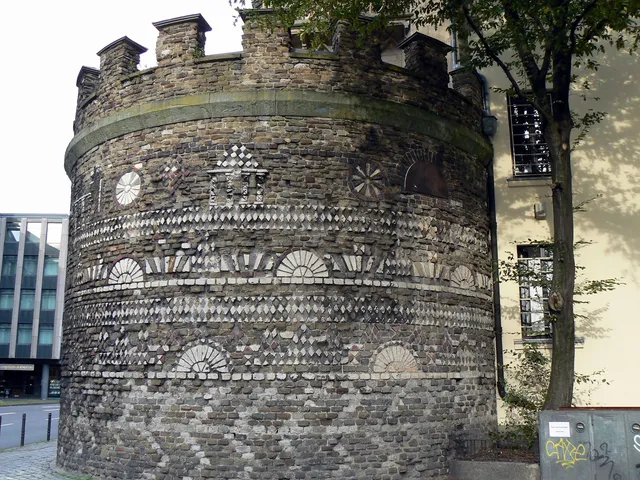
The site was once part of a princely town residence and later a convent, and its history reaches back to the early 13th century. It stands at the northwestern corner of the former Roman city wall, right next to the so-called Römerturm.
Source: Wikipedia
At a Glance
- Type
- Listed residential building (architectural monument in North Rhine-Westphalia)
- Location
- Cologne, Altstadt-Nord, Innenstadt district
- Neoclassical remodelling
- 1820–1822
- Reconstruction
- completed 1974 by architect Friedrich Wilhelm Kraemer
- Earlier buildings
- Parfusenhof, then St. Clara Poor Clares' convent (1306–1802)
- Use today
- Private apartment, architects' office, event cellar
The ruins of a princely court of the Counts of Jülich, destroyed in 1268, became the Poor Clare monastery of Sankt Clara in 1306; its vaulted "Sancta-Clara-Keller" even survived the incendiary bombs of World War II and is now used as an event venue.
From Town Residence to Convent
The Parfusenhof was built on several plots here for Richolf Parfuse, who at times served as mayor. In 1265 his son Werner and Werner's wife Gertrud sold it to Count William IV of Jülich and his wife Richardis, making it a princely seat within the city walls. In 1268 it fell victim to the conflict between the Overstolzen and the "Weisen". Richardis of Jülich bequeathed the grounds in her will for the founding of a convent. The Poor Clares' convent of St. Clara opened there in 1306 and lasted until secularisation in 1802.
Neoclassical Remodelling
In 1819 the property passed to Johann Gottfried Alexander Maria Hubert (von) Sandt, the public prosecutor general, after several earlier owners. Between 1820 and 1822 he had the present house given a neoclassical form, probably based on a design by Johann Martin Schauss. In 1833/34 he also had additional storeys added to the Römerturm, turning it into a three-storey residence with an office. After his death the grounds were auctioned in 1840, and Helenenstraße and the street Am Römerturm were subsequently laid out.
Bank, Destruction and Rebuilding
The private bank "Delbrück von der Heydt & Co.", founded in 1919, bought the building in its founding year and used it for its business. Incendiary bombs devastated the house in the Second World War, leaving essentially only the standing walls and the vaulted cellar. Neither a planned new building nor a later primary school project materialised. In 1972 Friedrich Wilhelm Kraemer took over the ruin, separated off the park, and rebuilt it by 1974 – with a modern garden side while preserving the rest of the historic structure.
Today
Besides a private apartment, the building houses "Kaspar Kraemer Architekten BDA", an office founded by Kaspar Kraemer, the architect's son. The "Sancta-Clara-Keller" is available for events and concerts. Much of the former garden behind the house is now part of a playground.
Timeline
- 1265Parfusenhof sold to Count Wilhelm IV of Jülich
- 1268Estate destroyed in conflict between Overstolzen and Weisen
- 1306Poor Clare convent of St. Clara established
- 1802Convent dissolved through secularization
- 1820–1822Rebuilt as Neoclassical residence under Johann von Sandt
- 1919Private bank Delbrück von der Heydt & Co. acquires the property
- 1954City of Cologne acquires the war-damaged site
- 1972–1974Purchase by Friedrich Wilhelm Kraemer and reconstruction
Map
Blue dots: other places nearby — tap to explore.
You might also like — related or nearby

Comments
- Loading comments…
Sources & links
Auto-generated, last verified: 2026-11-08
How this page is made
This page draws on open sources — Wikipedia, Wikidata, official websites and the city’s open data — plus basic place data and photos from Google Maps where a place is listed there. Every statement is checked against the sources linked here, and pages are refreshed regularly.
Spotted a mistake anyway? Tell us below — we read every submission.