Minoritenkloster Köln
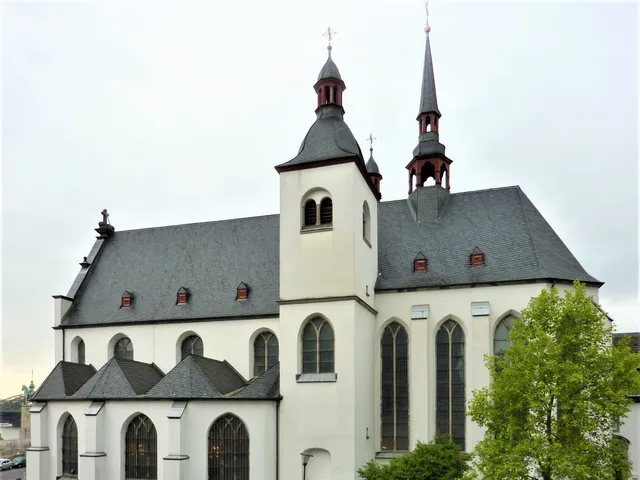
From 1307 John Duns Scotus taught here and lies buried in the abbey church: Cologne's Franciscan friary of the Friars Minor, founded in 1229.
Franciscan life in Cologne began modestly, with a few friars passing through, yet within a few decades the community grew into the principal house of an entire province and a respected centre of learning.
Source: Wikipedia
At a Glance
- Type
- Friary of the Order of Friars Minor (Franciscan Minorites)
- Founded
- 1229
- Branch of the order
- Conventuals (Minorites) since the split of the Franciscan Order in 1517
- Friary church
- Minoritenkirche, consecrated in 1260 under the title of the Holy Cross
- Studium generale
- from around 1260, with an average of 60 to 80 students
- Location
- Altstadt-Nord district, Innenstadt borough
For a time, the rector of the University of Cologne was regularly elected on 9 October in the refectory of the Minorite monastery – and the theologian Johannes Duns Scotus, who taught here from 1307, is buried in the monastery church.
Arrival and Foundation
Franciscans first reached Cologne in 1222 by way of Augsburg, Würzburg and Mainz, but at first they had no permanent lodging and did not stay. Archbishop Engelbert I received them kindly. According to the chronicler Caesarius of Heisterbach, when a large part of the Cologne clergy complained to the archbishop about the new mendicant orders, Engelbert is said to have replied: "As long as it goes well, let them stay." In the year of the foundation, the patrician Gerhard Quatermart (also Quatermarkt) gave the friars a plot for an oratory and a dwelling in the south of the city, in the "Sionstal" in the parish of St. Severin. In 1232 Archbishop Heinrich von Müllenark permitted them to preach and grant indulgences throughout the archdiocese.
Principal Friary of the Cologne Province
From 1239 the friary belonged to the Lower German "Cologne" Franciscan province (Colonia), as distinct from the Upper German Provincia Argentina (Strasbourg). Cologne became the permanent seat of the provincial minister and the province's principal house. In 1244, with the support of King William of Holland, the friars acquired a house and plot An der Rechtschule in the densely populated parish of St. Kolumba near the cathedral, and from there they built the church and a friary with a cloister around a courtyard. Heinrich von Lützelburg, a Franciscan and Bishop of Courland, performed the consecration.
Place of Study and Tomb of Duns Scotus
The order's own studium generale trained young Franciscans at university level in philosophy and theology. From 1307 John Duns Scotus taught there; he is buried in the church and was beatified in 1991. Students came from Germany as well as Ireland, Switzerland, Holland, Belgium, Spain, France and Italy. With the founding of the University of Cologne in 1388, the studium was absorbed into it, and about 40 Minorites later served there, mostly as professors of theology.
Work in the City
The friars earned high regard through their preaching, care of the sick and pastoral work at the Melaten leprosarium on behalf of the city. They celebrated services in the council chapel and preached in parish, collegiate and monastic churches on Sundays and feast days. They also gave spiritual guidance to Beguine and nuns' convents, above all the Poor Clares.
Dissolution and Today
The friary was dissolved in 1802. The Minoritenkirche still stands today. In 1929 the Minorites opened a new friary not far from it.
Timeline
- 1222Minorites arrive in Cologne, initially without permanent lodging
- 1229Gerhard Quatermart donates land in the Sionstal; monastery founded
- 1244Purchase of house and plot near the cathedral in St. Kolumba parish
- 1247/1248Construction of monastery church and monastery begins
- 1260Monastery church consecrated to the Holy Cross
- 1388Studium generale merges into the newly founded University of Cologne
- 1517Joins the Conventual branch after the split of the Franciscan order
- 1802Monastery dissolved
Map
Blue dots: other places nearby — tap to explore.
You might also like — related or nearby
Comments
- Loading comments…
Sources & links
Auto-generated, last verified: 2026-10-13
How this page is made
This page draws on open sources — Wikipedia, Wikidata, official websites and the city’s open data. Every statement is checked against the sources linked here, and pages are refreshed regularly.
Spotted a mistake anyway? Tell us below — we read every submission.