St. Lupus
Long-demolished medieval parish church with hospital near today's central station square — cited in Cologne's oldest written record of beer consumption.
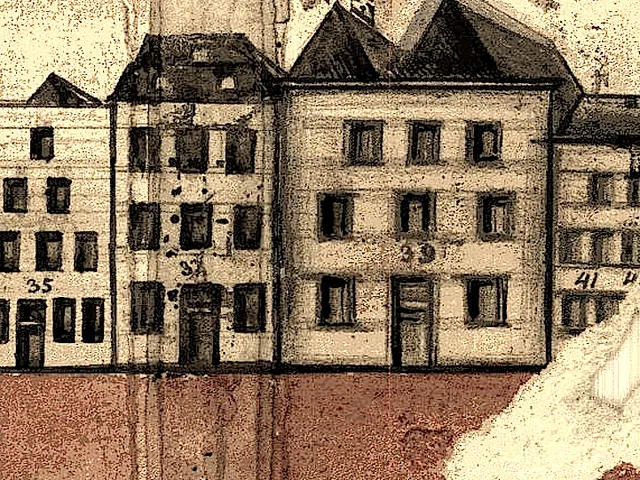
In Cologne's Altstadt-Nord district, roughly where Trankgasse runs today, stood the Catholic parish of St. Lupus, complete with a parish church and a hospital. The building occupied what is now the forecourt of the central station until its demolition in 1808.
Source: Wikipedia
At a Glance
- Type
- Former parish, parish church, and hospital
- Location
- Altstadt-Nord, Innenstadt borough; corner of Trankgasse and Maximinenstraße
- Patron saint
- Lupus of Sens
- First recorded as parish church
- 1171
- Demolished
- 1808
- Surviving piece
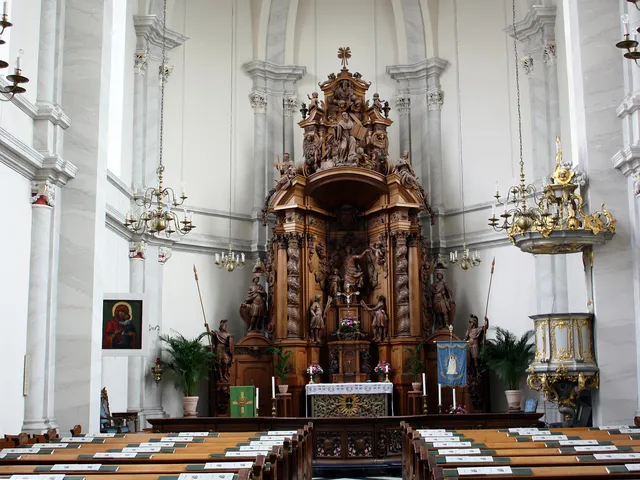
- Pulpit of 1630 (now in St. Brictius)
The oldest written record of the first consumption of beer in Cologne – noted upon the death of Archbishop Hermann III. in 1099 – explicitly mentions St. Lupus: the hospital there is thus inextricably linked to Cologne's brewing history.
History
The founding is attributed to St. Kunibert; the church was affiliated with the collegiate church of St. Kunibert and later served as the cathedral parish. Its earliest mention as a parish church dates to 1171, when it appeared alongside 13 other parishes and chapels in a foundation for the anniversary commemoration of Archbishop Rainald of Dassel. As early as 1099, St. Lupus is named together with the hospital — in a record written upon the death of Archbishop Hermann III of Hochstaden that constitutes the oldest written evidence of beer consumption in Cologne.
Architecture
The single-nave building featured a square tower crowned by a spire. It was comparable to the spire that once topped St. Ursula and the one that still adorns St. Severin today.
Brotherhood and Hospital
In 1515, with the approval of Cologne's Archbishop Hermann V of Wied, a Brotherhood of St. Joseph was established at St. Lupus. Those in need could join free of charge, provided they committed to praying three times every Sunday for the souls of deceased members.
Good to Know
One piece of the church's original furnishings survived the demolition: the pulpit of 1630, which today has a home in the parish church of St. Brictius.
Timeline
- 1099St. Lupus mentioned with hospital in connection with the death of Archbishop Hermann III
- 1171First mention as parish church in a foundation for Archbishop Rainald von Dassel
- 1515Foundation of a Brotherhood of St. Joseph with permission of Archbishop Hermann V of Wied
- 1630Pulpit created (today in the parish church of St. Brictius)
- 1808Demolition of the church at the intersection of Trankgasse/Maximinenstraße
Map
Blue dots: other places nearby — tap to explore.
You might also like — related or nearby
Comments
- Loading comments…
Sources & links
Auto-generated, last verified: 2026-06-27
How this page is made
This page draws on open sources — Wikipedia, Wikidata, official websites and the city’s open data. Every statement is checked against the sources linked here, and pages are refreshed regularly.
Spotted a mistake anyway? Tell us below — we read every submission.