St. Heribert
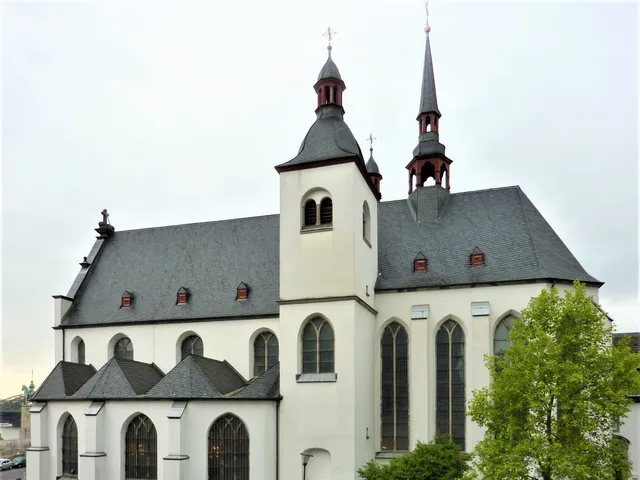
Parish church in Cologne-Deutz, nicknamed the "Düxer Dom" — home to the Heribert Shrine, completed around 1175.
Rising in the Deutz district of Cologne, St. Heribert is a three-aisled pillar basilica belonging to the Roman Catholic parish, affectionately known to locals as the "Düxer Dom" (the Cathedral of Deutz). Behind the high altar rests the Heribert Shrine, containing the relics of Archbishop Heribert of Cologne, who founded Deutz Abbey.
At a Glance
- Type
- Roman Catholic parish church, three-aisled pillar basilica
- Location
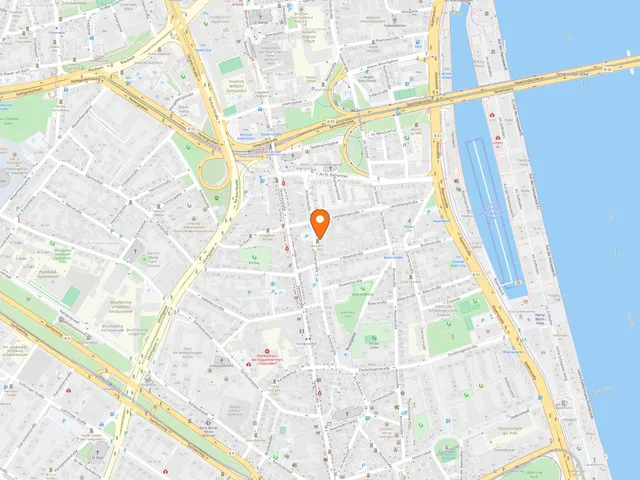
- Deutz district, Inner City borough
- Architectural style
- Neo-Romanesque
- Construction
- 1891–1896
- Architect
- Caspar Clemens Pickel
- Notable for
- the Heribert Shrine, completed around 1175
- Protected
- Listed monument in North Rhine-Westphalia
The church's bell ensemble is considered unique in its composition: it consists of six loaned bells, all originating from the former German eastern territories such as Pomerania and Silesia – including a bell from 1636 from Frankenstein in Lower Silesia.
Background
The church stands on the site of the former Tempelhof estate at Deutzer Freiheit, a name derived from the Knights Templar. When the order was dissolved in 1312, the Knights Hospitaller took over the property; secularisation in 1803 brought its expropriation. Mechtildis Neuhoff bequeathed the roughly 7,000 m² site to the Catholic parish three years before her death in 1881, stipulating in her will that construction must begin within ten years of her passing.
Construction and Reconstruction
Caspar Clemens Pickel designed the Neo-Romanesque building, completed between 1891 and 1896. The church suffered heavy bomb damage during the Second World War (1943–45), and most of its interior fittings were lost. Architects Rudolf Schwarz and Josef Bernard oversaw a rebuilt version from 1949 to 1951, with a full restoration following in 1986–88.
The Heribert Shrine
Completed around 1175, the shrine is a masterpiece of Romanesque goldsmithing, measuring 1.53 m in length, 0.68 m in height, and 0.42 m in width. Its oak core is covered with gilt-silver copper fittings and decorated with precious stones. The long sides alternate between figures of apostles and prophets; the end panels depict Christ with Saint Heribert and the Virgin Mary with the Christ Child. Twelve enamel medallions on the roof narrate scenes from the life of Saint Heribert. The shrine's original home was the abbey church of Alt St. Heribert at Deutz Abbey.
The Bells
The church towers house six "loaned bells" originating from the former German eastern territories, including Pomerania and Silesia. They replaced the original set of bells, almost entirely destroyed during the Second World War — only the smallest bell survived. A bell dating from 1636, brought from Frankenstein in Lower Silesia, also hangs in the ground-floor hall of the west tower.
Timeline
- um 1175Heribert Shrine completed as a masterpiece of Romanesque goldsmithing
- 1312Order of Templars dissolved; Tempelhof estate passes to the Knights Hospitaller
- 1803Secularisation: Tempelhof estate is expropriated
- 1881Mechtildis Neuhoff dies (23 Oct.); had bequeathed the Tempelhof to the parish
- 1891–1896Church built in Neo-Romanesque style under architect Caspar Clemens Pickel
- 1943–1945Church severely damaged in World War II; most furnishings lost
- 1949–1951Rebuilt in altered form by architects Rudolf Schwarz and Josef Bernard
- 1986–1988Comprehensive renovation of the church
Gallery
Map
Blue dots: other places nearby — tap to explore.
Address
Tempelstraße 2A
50679 Köln
Contact
You might also like — related or nearby
Comments
- Loading comments…
Sources & links
- Official website
- Official website (retrieved 2026-07-17)
- Wikidata (retrieved 2026-06-26)
- Wikipedia (retrieved 2026-06-26)
Auto-generated, last verified: 2026-06-27
How this page is made
This page draws on open sources — Wikipedia, Wikidata, official websites and the city’s open data. Every statement is checked against the sources linked here, and pages are refreshed regularly.
Spotted a mistake anyway? Tell us below — we read every submission.