Villa Marienburg
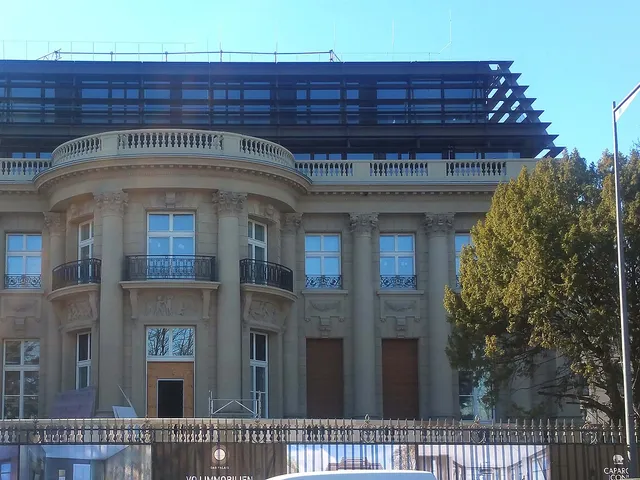
Cologne's Villa Marienburg, built in 1844/45, gave its name to a district and was the starting point for the villa suburb of Marienburg.
The story began at an auction: a hilltop by the Rhine that had once been a gallows hill became the site of a merchant's country estate, and later of an entire suburb.
Source: Wikipedia
At a Glance
- Type
- Villa, originally a neoclassical country house or manor
- Address
- Parkstraße 55, Marienburg district, Rodenkirchen borough
- Location
- Far southeast of the district, on a rise of just over 57 m above sea level, about 180 m from the Oberländer Ufer
- Park today
- 52,000 m², between Militärringstraße and Parkstraße
- Built
- 1844/45; present form results from remodelling in 1891/92 and 1906/07
- Status
- Listed building under heritage protection
The site of Villa Marienburg was originally the former gallows hill (Galgenberg) of the municipality of Rondorf; buyer Paul Joseph Hagen acquired it at auction in 1843 for 2,700 thalers and had to commit to building a structure worth at least 4,000 thalers within a year.
Hagen's Country Estate
In October 1843, Paul Joseph Hagen, a merchant, shipping agent and land speculator, bought the hilltop and its farmland for 2,700 thalers from the church board of Rodenkirchen parish church. The purchase contract required him to build a house worth at least 4,000 thalers within a year. Jacob Greiß, head of the Botanical Garden and the city's garden director, designed the grounds. A leasehold farm complex with a tenant's residence, bakehouse and smithy completed the estate. The house was named after Hagen's daughter Maria, probably also with a nod to his Alteburg estate.
A Country House of the Rhine Romantic Era
Few country houses were built outside Cologne's medieval city walls in the 1830s and 1840s, and Marienburg is one of them. Its design is attributed to Hagen's friend, the architect and former city master builder Johann Peter Weyer. The model was the Neuer Pavillon in Berlin-Charlottenburg, built in 1824/25. A balustrade running all around the roof was its distinctive feature.
Property Boom and Bust
Hagen was regarded as one of Cologne's most important real estate brokers and land speculators. When the city's property speculation collapsed, he had to sell the estate and most of its land to the Sal. Oppenheim bank in 1849.
Seed of a Villa Suburb
In 1868, the merchant Ernst Leybold and his business partner Adolph Davignon bought the empty villa, its park and extensive fields reaching to Bonner Straße. Leybold planned a villa colony combining city life with the countryside and extending as far as Rodenkirchen. He acquired 80 further plots, renovated the villa and moved in with his family in 1874.
Dining and Concerts
The villa project progressed slowly and the way into the city was arduous, so Leybold returned to Cologne around 1879. The Marienburg then served as a restaurant that also hosted concerts.
Timeline
- 1843Paul Joseph Hagen buys the former Galgenberg site at auction
- 1844/45Neoclassical Landsitz Marienburg built for Paul Joseph Hagen
- 1849Hagen sells the estate to the Sal. Oppenheim bank
- 1868Ernst Leybold and Adolph Davignon acquire the Marienburg
- 1871Leybold becomes sole owner of the Marienburg
- 1874Leybold moves into the renovated Marienburg with his family
- um 1879Leybold returns to Cologne; used as a restaurant and concert venue
- 1891/92Remodelling shapes the present-day appearance
Gallery
Map
Blue dots: other places nearby — tap to explore.
You might also like — related or nearby
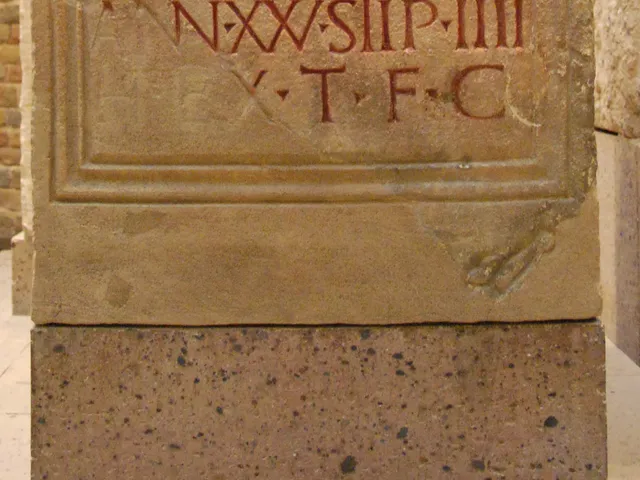
The Alteburg Fleet Fort – Headquarters of the Roman Rhine Fleet in Cologne-Marienburg
The district of Marienburg was once home to the headquarters of the Classis Germanica, Rome's Rhine fleet. Nothing of it survives above ground today – the fort lies entirely beneath the densely built-up Alteburg area.
Comments
- Loading comments…
Sources & links
Auto-generated, last verified: 2026-10-19
How this page is made
This page draws on open sources — Wikipedia, Wikidata, official websites and the city’s open data. Every statement is checked against the sources linked here, and pages are refreshed regularly.
Spotted a mistake anyway? Tell us below — we read every submission.