Schauspiel Köln
Cologne's storied spoken-theatre company, performing at the Mülheim Depot while its landmark home at Offenbachplatz undergoes renovation.
since 1898
Schauspiel Köln is the city's historic spoken-theatre company, one of Germany's most prestigious. While its landmark home at Offenbachplatz is being renovated, the ensemble performs at an interim venue in the Mülheim Depot.
At a Glance
- Type
- Spoken theatre / drama company
- Operator
- Part of Bühnen der Stadt Köln (together with Oper Köln)
- Main venue
- Offenbachplatz, Altstadt-Nord (city centre district), listed building
- Capacity
- 830 in the main auditorium, 120 in the Schlosserei, 60 in the Erfrischungsraum
- Architect of the current building (1962)
- Wilhelm Riphahn
- Interim venue
- Depot 1 and Depot 2, Schanzenstraße, Cologne-Mülheim (since September 2013)
When Cologne planned to stage The Threepenny Opera in 1929, the conservative Centre Party tried to block it – only through the mediation of the then-mayor Konrad Adenauer, later West Germany's first Chancellor, was a toned-down version allowed to be performed.
Age comparison
Age compared with other places in Cologne.
History
Cologne's theatrical roots stretch back to the Middle Ages. A first permanent theatre opened in 1782 on what later became Komödienstraße; its successor was destroyed by fire in 1869. In 1872 a new house on Glockengasse opened to designs by Julius Carl Raschdorff. By 1898 the city had commissioned a second major venue — the future opera house on Habsburgerring — giving Cologne two large stages that operated as opera house and drama theatre from the 1906/07 season onwards.
20th Century
In the 1920s, director Gustav Hartung brought Berlin stars such as Heinrich George to Cologne. In 1929, Brecht's The Threepenny Opera was set to premiere here; following mediation by Mayor Konrad Adenauer, the production was cleared to go ahead. Both venues were destroyed or heavily damaged in the Second World War. In August 1945, the company was the first theatre in the British occupation zone to resume performances, playing in makeshift spaces.
The Offenbachplatz Building
In 1957 the company moved into a multi-discipline arts complex at Offenbachplatz; the current drama theatre next door was completed in 1962 and inaugurated with Schiller's The Robbers. The venue went on to make theatre history: in 1989, intendant Klaus Pierwoß invited east German director Frank Castorf to stage Hamlet — the first time an east German director had worked at a west German theatre. Karin Beier's final production, Euripides' The Trojan Women, closed in January 2013.
Renovation and Today
Plans originally called for demolition and a complete rebuild, but the citizens' initiative Mut zu Kultur — Inhalt vor Fassade campaigned to preserve the listed building. Cologne City Council accepted a citizens' petition to that effect in April 2010. A return to Offenbachplatz had been planned for the 2024/25 season; in late August 2024, it was announced that the 2025/26 season would also be staged in the interim venue.
Timeline
- 1782First permanent theatre built on Schmierstraße
- 18691829 successor building destroyed by fire
- 1872New theatre built on Glockengasse (architect: Raschdorff)
- 1902New municipal theatre on Habsburgerring completed (1,800 seats)
- 1945Operations resumed in August in substitute venues after wartime destruction
- 1957Move to new multi-discipline venue at Offenbachplatz
- 1962New Schauspielhaus at Offenbachplatz opened (architect: Riphahn)
- 2013Move to interim venue Depot 1/2 in Cologne-Mülheim (season 2013/14)
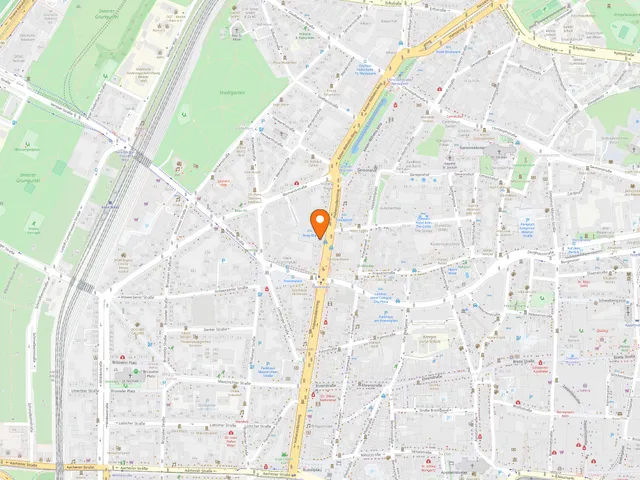
Map
Blue dots: other places nearby — tap to explore.
You might also like — related or nearby
Comments
- Loading comments…
Sources & links
- Official website
- Official Instagram (@schauspiel.koeln)
- Wikidata (retrieved 2026-06-23)
- Wikipedia (retrieved 2026-06-23, rev 266233017)
Auto-generated, last verified: 2026-06-27
How this page is made
This page draws on open sources — Wikipedia, Wikidata, official websites and the city’s open data. Every statement is checked against the sources linked here, and pages are refreshed regularly.
Spotted a mistake anyway? Tell us below — we read every submission.