Ehrentor
One of the gate-towers built around 1250 in Cologne's medieval ring wall, successor to the Roman "Ehrenpforte," demolished in 1882.
since 1250
The Ehrentor was one of the gate-towers built around 1250 in Cologne's medieval ring wall, created during the city's last expansion. It stood in the west of the city on Ehrenstraße and was the successor to the ancient Roman "Ehrenpforte" (porta honoris), which had been demolished around 1505.
Source: Wikipedia
At a Glance
- Built
- around 1250, one of the twelve late-Romanesque city gates
- Location
- western Cologne, on Ehrenstraße (today in the area of the ring roads)
- Purpose
- a defensive tower and city gate; no longer a toll gate, but the prescribed exit for those condemned to death
- Notable
- a twin-tower gate, similar to the still-surviving Severinstor; recorded with three prison rooms around 1709
- Demolished
- 1882
Age comparison
Age compared with other places in Cologne.
Name and Roman Predecessor
The name goes back to Ehrenstraße, whose oldest section (today's Breite Straße) had been the "platea honoris" of the Roman city. The Roman wall already had a passage here, the "porta honoris," which was only pulled down around 1505. The new Ehrentor of the westward-extended fortifications, built around 1250, took over the name and location of this ancient predecessor. Old depictions show a twin-tower gate with an octagonal upper section and a gate bell.
From Fortification to Demolition
The gate served defence and traffic, but it was also the prescribed exit through which those condemned by the high court were led to the place of execution — along the Melatener Weg to the "Rabenstein," today the site of the Melaten cemetery. On such occasions the gate bell tolled as a "poor sinner's bell." A record of 1709 lists three prison rooms inside the gate. From June 1881 Cologne's city wall was torn down to make room for the new ring roads (built 1889/1892 to plans by Karl Henrici under the direction of Josef Stübben). In this context the Ehrentor also disappeared in 1882.
Gallery
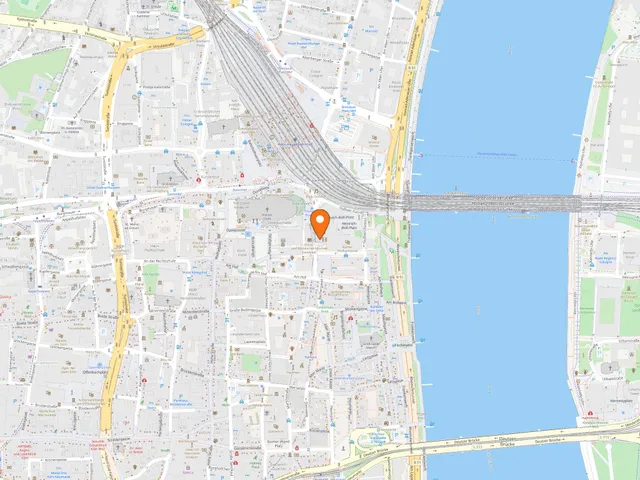
Map
Blue dots: other places nearby — tap to explore.
You might also like — related or nearby
Comments
- Loading comments…
Sources & links
Auto-generated, last verified: 2026-08-17
How this page is made
This page draws on open sources — Wikipedia, Wikidata, official websites and the city’s open data. Every statement is checked against the sources linked here, and pages are refreshed regularly.
Spotted a mistake anyway? Tell us below — we read every submission.