Kalker Kapelle
A pilgrimage chapel in Cologne's Kalk district, home to a 15th-century Pietà said to have miraculous powers — a destination for annual processions for centuries.
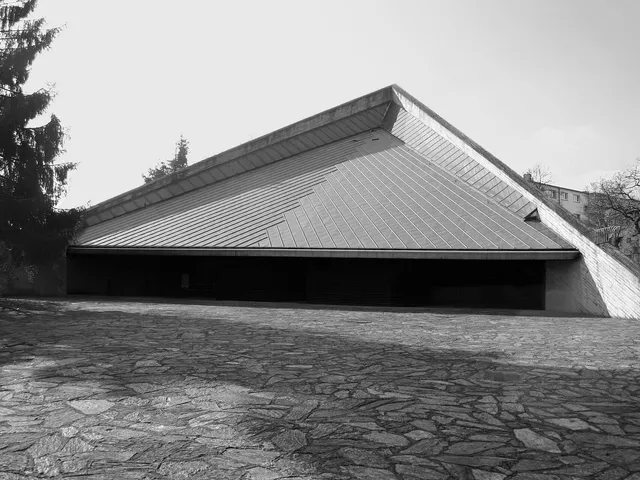
The Kalker Kapelle stands in Cologne's Kalk district and traces its origins to a Marian devotion of the 15th century. At its heart is a Pietà, long believed to possess miraculous powers, which drew pilgrims for hundreds of years.
At a Glance
- Type
- Pilgrimage chapel with Pietà
- Location
- Kalk district, at the fork of Kalker Hauptstraße and Kapellenstraße
- Pietà
- Vesper image, probably created around 1423
- Reconstruction
- 1948–1950 by Rudolf Schwarz
- Protection
- Listed monument in North Rhine-Westphalia
When a severe storm destroyed the chapel in 1703, the medieval Pietà inside was found completely undamaged – a fact that so boosted the shrine's reputation for miracles that donations poured in and the chapel was rebuilt the very next year.
Things to do here
- Admire the historic pilgrimage chapel from the outside
- Contemplate the 15th-century Pietà inside
- Pause for a quiet moment of reflection in the chapel
- Discover the post-war architecture by Rudolf Schwarz
- Photograph the building steeped in history
Origins and the Pietà
The chapel's beginnings date to the transition from the late Middle Ages to the early modern period, linked to St. Severin's collegiate church and 15th-century Marian devotion. Two documents from that era mention a wayside shrine in the Kalk fields. A Cologne provincial synod of 1423, convened under Archbishop Dietrich II, introduced a feast day in honour of the "Seven Sorrows of Mary." The Pietà was probably created in the year of the synod or shortly after; its sculptor is unknown. It is also called a Vesperbild — a vesper image — because Jesus died at the ninth hour, the hour of vespers.
Pilgrimage and Processions
Every year on 8 September, a procession made its way to the Kalk Pietà. Pilgrim groups set out from St. Severin in Cologne's Südstadt, and later from Ensen and Mülheim, meeting in Deutz before completing the final seven of fourteen stations together into Kalk. These stations represented the Passion of Christ, from his farewell to his mother to the Crucifixion. In 1709 Pope Clement XI encouraged the pilgrimage by granting a special indulgence; the Sunday after the Nativity of Mary became the principal day of pilgrimage.
Buildings and Destructions
After the plague subsided in the 1660s, a first chapel was built for the Pietà as an act of thanksgiving for the town's survival, with permission granted by Vicar General Paulus Aussenius. Growing demand later made a side chapel necessary. When a storm destroyed the building in 1703, the Pietà was rescued undamaged; a new structure funded by numerous donations was completed the very next year. After the chapel was destroyed in the Second World War, it was rebuilt between 1948 and 1950 to plans by church architect Rudolf Schwarz.
Timeline
- 1423Provincial synod in Cologne; Pietà likely created
- 1666/67First chapel built as thanksgiving after the plague subsided
- 1703Chapel destroyed by storm; Pietà remains undamaged
- 1704Chapel rebuilt thanks to numerous donations
- 1709Pope Clement XI grants special indulgence to pilgrims
- 1714Side chapel built due to increasing number of pilgrims
- Mitte 18. Jh.Sunday after the Nativity of Mary becomes the main pilgrimage day
- 1948–1950Chapel rebuilt after its destruction in World War II
Map
Blue dots: other places nearby — tap to explore.
Contact
You might also like — related or nearby

Comments
- Loading comments…
Sources & links
- Official website
- Official website (retrieved 2026-07-17)
- Wikidata (retrieved 2026-06-26)
- Wikipedia (retrieved 2026-06-26)
Auto-generated, last verified: 2026-06-26
How this page is made
This page draws on open sources — Wikipedia, Wikidata, official websites and the city’s open data. Every statement is checked against the sources linked here, and pages are refreshed regularly.
Spotted a mistake anyway? Tell us below — we read every submission.