Cologne Water Tower
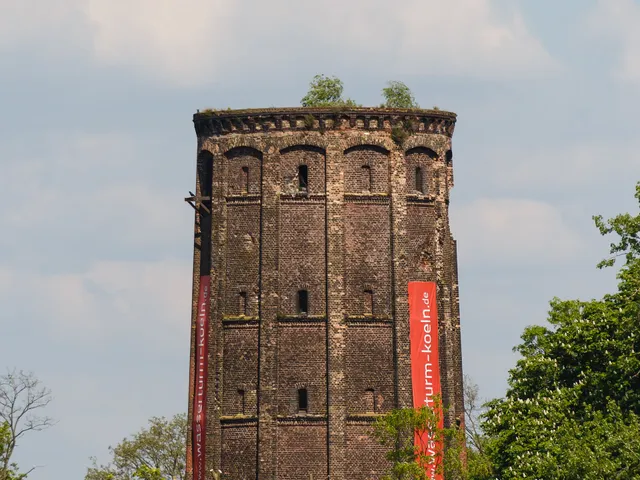
A historic water tower in Cologne's Altstadt-Süd, a five-star luxury hotel since 1990 — the city's most unusual place to stay.
The water tower in Cologne's Altstadt-Süd district is among the oldest surviving structures of its kind and today houses a luxury hotel. Built between 1868 and 1872, the round brick tower supplied the growing city with fresh water for decades and has been a listed monument since 1983.
At a Glance
- Location
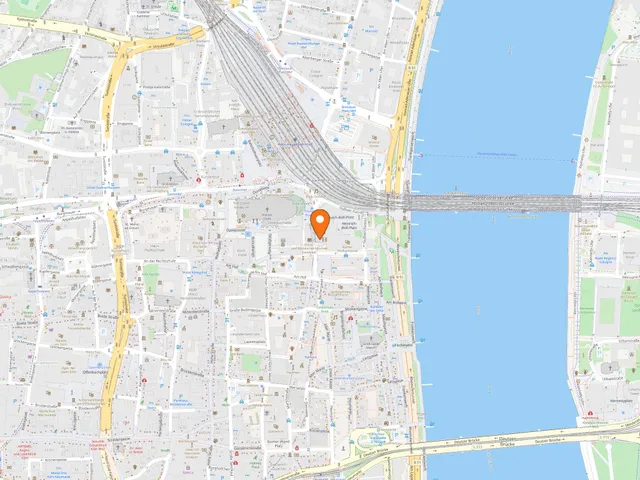
- Kaygasse 2, Altstadt-Süd district
- Built
- 1868 to 1872
- Today
- five-star superior luxury hotel with 88 rooms
- Heritage status
- listed since 1 September 1983 (monument no. 1599)
- Claim to fame
- Europe's largest water tower when completed in 1872
- Nickname
- the "kölsche Engelsburg" (Cologne's Castel Sant'Angelo)
History
Cologne's rapidly rising population forced the city in the 19th century to build a central water supply — its first since Roman times. Together with the Alteburg waterworks on Bonner Straße, the tower was meant to take on this task. In 1864 the London engineer John Moore won the commission for its design. His original plans, sized for around 170,000 residents, were scaled back considerably once construction began in September 1868. The tower supplied fresh water until roughly 1930 and is regarded as the first central water supply in the Rhineland.
Architecture
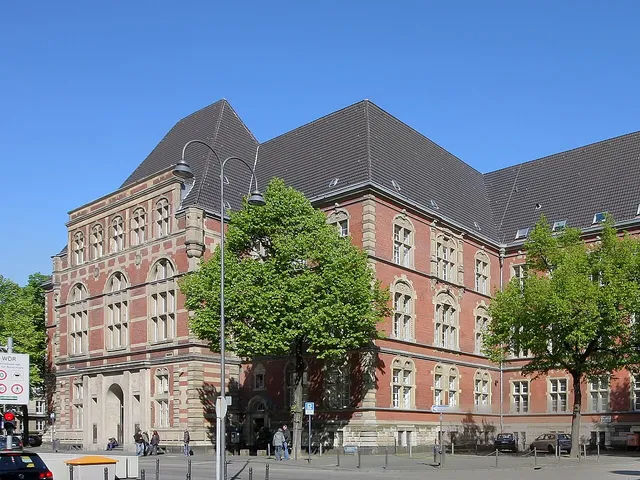
The cylindrical structure stood 35.6 metres tall with a diameter of 34 metres and held 3,650 cubic metres of water. The tank sat at a height of 25 metres and was made of forged, riveted steel plates — the largest flat-bottomed tank in Germany and the first to use a concentric double-tank design. The styling blends Rhenish Romanesque with Classicism: a round brick building with a recessed gallery storey, articulated by round windows and blind arches.
From War Damage to Hotel
The tower was damaged in the Second World War and, stripped of its top storey, stood 27 metres high. After years as a ruin — a planned conversion into a "robot car park" never happened — investors were found in 1985 for a conversion costing 20 million Deutschmarks. Architect Konrad L. Heinrich, a hotel specialist, worked within heritage-protection requirements. The Hotel im Wasserturm opened on 11 January 1990.
The Hotel Today
The five-star superior hotel offers 88 rooms (44 doubles, 10 singles and 34 suites), seven event spaces of up to 244 m² and an eleven-metre-high lobby crossed by walkable bridge connections. The interiors were designed by Paris designer Andrée Putman (1925–2013). Until July 2013 the glass dome on the top floor housed a restaurant awarded two Michelin stars; the "Himmel un Äd" that opened in 2014 earned a Michelin star the same year. Since 2019 the hotel has been run by the GCH Hotel Group.
Gallery
Map
Blue dots: other places nearby — tap to explore.
Address
Kaygasse 2
50676 Köln
You might also like — related or nearby
Comments
- Loading comments…
Sources & links
- Official website
- Wikidata (retrieved 2026-07-19)
- Wikipedia (retrieved 2026-07-19)
Auto-generated, last verified: 2026-07-19
How this page is made
This page draws on open sources — Wikipedia, Wikidata, official websites and the city’s open data. Every statement is checked against the sources linked here, and pages are refreshed regularly.
Spotted a mistake anyway? Tell us below — we read every submission.