Rheinpark
Riverside landscape park on former Prussian fortress grounds — host of the 1914 Cologne Werkbund Exhibition, listed as a heritage monument since 1989.
The Rheinpark is a public green space on the east bank of the Rhine in Cologne, offering city dwellers easy access to nature with sweeping views across the river to the Old Town.
At a Glance
- Type
- Public landscape park, part of Cologne's Green Belt
- Location
- East bank of the Rhine between Deutz and Mülheim; Deutz district, city centre borough
- Heritage status
- Listed as an architectural monument since 1989
- History
- Laid out on demolished fortress land; venue of the Werkbund Exhibition in 1914
- Highlights
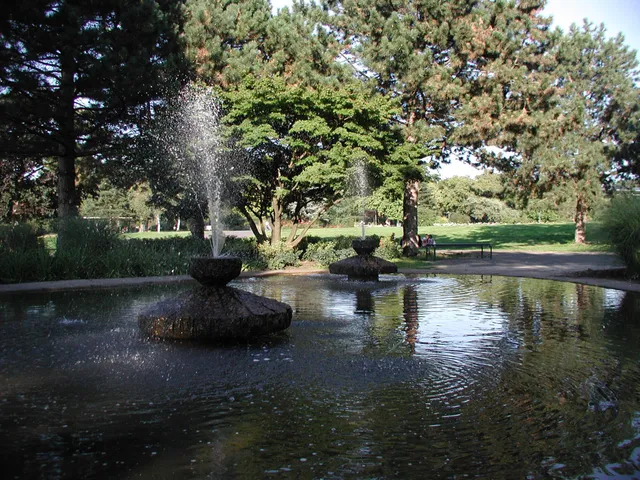
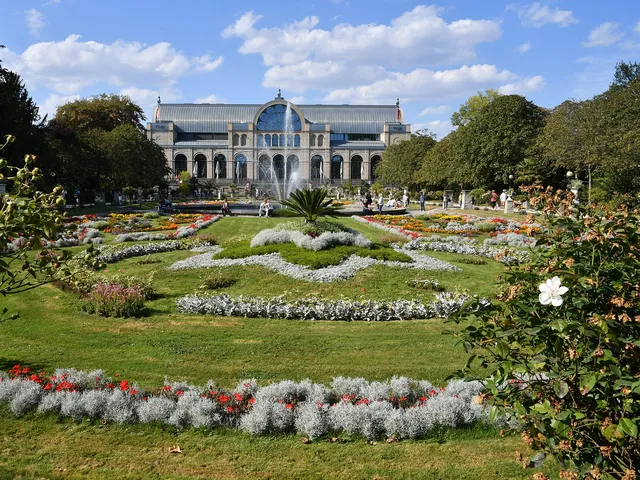
- Ornamental ponds, fountains, meadows, flower beds, sculptures, cable car and playgrounds
For the 1914 Cologne Werkbund Exhibition held in what is now the Rheinpark, Bruno Taut, Walter Gropius, and Henry van de Velde each built an exhibition structure – but World War I ended the show early, the military seized the grounds, and most buildings fell into ruin or were demolished.
Area comparison
Area compared with other Cologne parks and green spaces.
From Fortress to Park
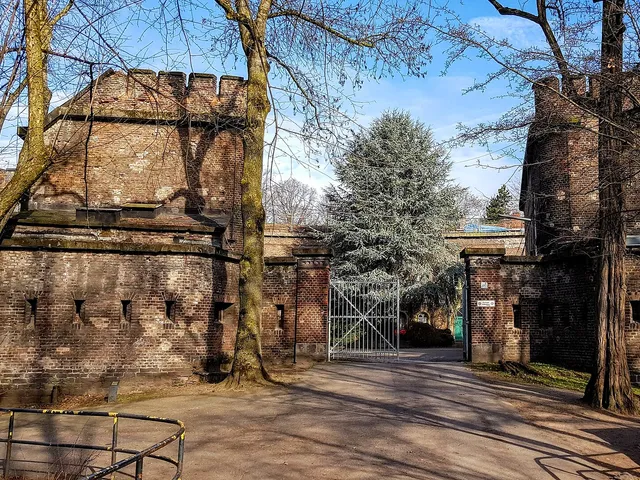
After the inner ring of Cologne's Prussian fortifications was dismantled, the land fell idle. From 1907 onwards, the city converted sections near Deutz into public green space following a purchase agreement with the imperial military authority. By 1913, city garden director Fritz Encke had laid out an initial park under Mayor Max Wallraf — intended to be named in honour of Kaiser Wilhelm, a plan cut short by the outbreak of the First World War.
The 1914 Werkbund Exhibition
The park came to international attention as the site of the Deutscher Werkbund Exhibition in 1914, which showcased buildings by leading architects including Bruno Taut's iconic Glass Pavilion, a factory hall by Walter Gropius, and a theatre by Henry van de Velde. These structures were temporary; only Wilhelm Kreis's neoclassical tea house was built to last, though it was demolished in 1957. The exhibition closed early when war broke out in August 1914, and the grounds were requisitioned by the military.
Rebuilding and the Trade Fair
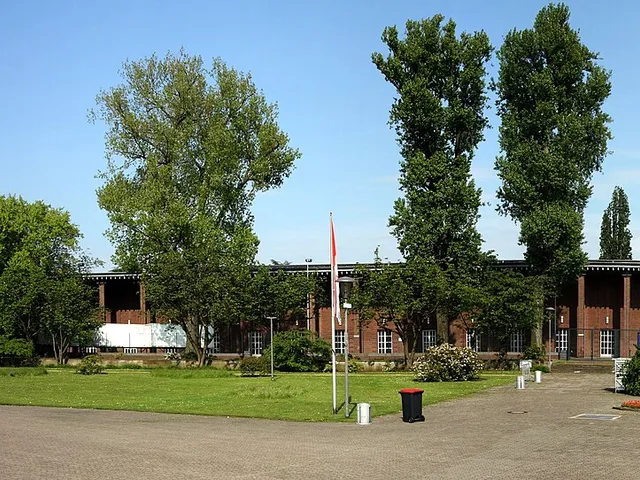
Encke rebuilt the park — now officially named Rheinpark — between 1920 and his retirement in 1926. To the north, Mayor Konrad Adenauer drove the construction of the first Cologne Trade Fair buildings from 1922; locals nicknamed them "Adenauer's Stables" for their resemblance to cavalry barracks. The curved Staatenhaus and the Rheinhallen with their trade fair tower still form the park's northern edge. For the international press exhibition Pressa in 1928, city architect Theodor Nußbaum added a rose garden and sunbathing lawns.
Today
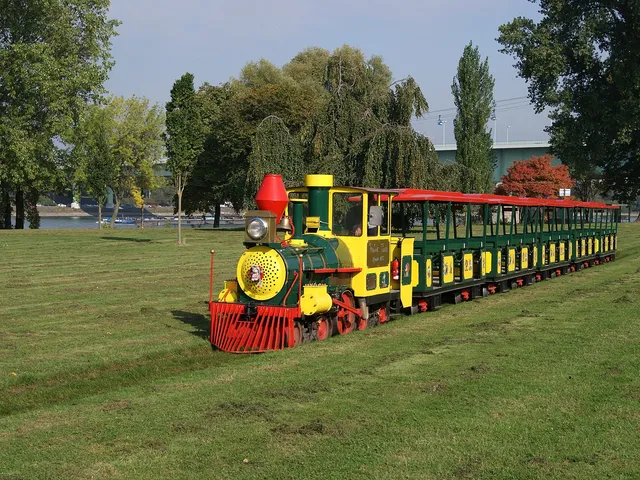
The Rheinpark remains a popular urban retreat with playgrounds, a cable car across the Rhine, and guided tours of the listed grounds. The Förderverein Kölner Rheinpark association works to preserve and develop the park's ponds, fountains, sculpture collection and green spaces for future generations.
Timeline
- 1907Contract with the Imperial Military Treasury; conversion of fortress land into parkland begins
- 1913First park completed based on a design by garden director Fritz Encke
- 1914Werkbund Exhibition held in the park; World War I ends it prematurely in August
- 1920Flood destroys many structures; British occupation withdraws; park named 'Rheinpark' for the first time
- 1922–1924First buildings of the Cologne Trade Fair erected on the northern park grounds
- 1928International Press Exhibition (Pressa) held; trade fair perimeter buildings with tower completed
- 1957The former teahouse (Parkhaus) is demolished
- 1989Rheinpark placed under heritage protection
Gallery
Map
Blue dots: other places nearby — tap to explore.
You might also like — related or nearby
Comments
- Loading comments…
Sources & links
- Official website
- Official website (retrieved 2026-06-25)
- Wikidata (retrieved 2026-06-23)
- Wikipedia (retrieved 2026-06-23, rev 263847515)
Auto-generated, last verified: 2026-06-27
How this page is made
This page draws on open sources — Wikipedia, Wikidata, official websites and the city’s open data. Every statement is checked against the sources linked here, and pages are refreshed regularly.
Spotted a mistake anyway? Tell us below — we read every submission.