Oper Köln
Cologne's opera house at Offenbachplatz — a 1957 Riphahn landmark under major renovation since 2012, now performing at the Staatenhaus in Deutz.
The Oper Köln is one of the flagship venues of Cologne's municipal theatre company, the Bühnen der Stadt Köln. Its historic home — the Riphahn Building at Offenbachplatz in the heart of the city — has been closed for a comprehensive renovation since 2012, with productions moving to a temporary venue.
Source: Wikipedia
At a Glance
- Type
- Opera house of the Bühnen der Stadt Köln
- Location
- Offenbachplatz, city centre (Altstadt-Nord)
- Building
- Riphahn Building, opened 1957
- Capacity
- approx. 1,300 seats
- Status
- under renovation since 2012
- Temporary venue
- Staatenhaus am Rheinpark in Cologne-Deutz (since 2015)
The murals by Sascha Schneider – illustrator of the Karl May books – in the old Cologne Opera were considered lost for decades, until private research revealed they are archived in the Cologne City Museum, where they languish inaccessible to the public and in a desolate state.
Things to do here
- Experience opera and music theatre performances
- Immerse yourself in the world of singing, orchestra and stage
- Visit the venue at the Staatenhaus by the Rheinpark in Deutz
- Plan a night at the theatre for the whole family
- Browse the programme and secure tickets in advance
Renovation
The Riphahn Building has been undergoing a full overhaul since 2012. In the years leading up to 2015, performances were spread across several temporary locations — including the Musical Dome, the Palladium in Cologne-Mülheim, and the Trinitatiskirche. From 2015 onward, the opera settled into the Staatenhaus am Rheinpark in Deutz. By January 2022, the total cost of renovating the Bühnen venues — which also include the Schauspiel Köln — had crossed the one-billion-euro mark; by March 2025, the bill had climbed to around 1.5 billion euros.
The Original Building on the Ring
Cologne's opera had its first home on Habsburgerring, where a house designed by architect Carl Moritz was built between 1900 and 1902. Moritz, a former municipal building inspector in Cologne, blended Baroque and Art Nouveau elements in his design. With 1,800 seats, the venue ranked among Germany's major theatres when it opened on 6 September 1902.
The Old Building and Its Fate
The five-storey structure was pale in colour and richly decorated with allegorical sculptures; its roofline featured turrets, domes, and gables. Inside, frescoes, stucco work, and wood carvings adorned the spaces. The murals in the foyer were created by Sascha Schneider, best known as the illustrator of Karl May's adventure novels — removed in 1937/38, they remained lost for many years. Under the Nazi regime, the Art Nouveau elements were almost entirely stripped out as "degenerate." In August 1943, a bomb strike destroyed the sculptural decoration on the central gable.
Timeline
- 1898City council resolves to build an opera house on Habsburgerring
- 1902Opening of the first Cologne Opera on Habsburgerring (1,800 seats)
- 1905City of Cologne takes over theatre operations directly
- 1937/38Wall paintings by Sascha Schneider removed from the interior
- 1943Building destroyed by bomb strike (August)
- 1957Opening of the new Riphahn building (1,300 seats)
- 2012Start of major renovation; opera moves to interim venues
- 2015Staatenhaus in Cologne-Deutz becomes the main interim venue
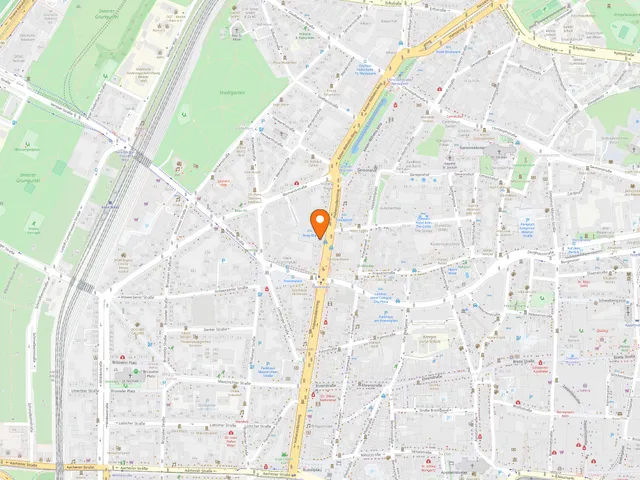
Map
Blue dots: other places nearby — tap to explore.
You might also like — related or nearby
Comments
- Loading comments…
Sources & links
Auto-generated, last verified: 2026-06-27
How this page is made
This page draws on open sources — Wikipedia, Wikidata, official websites and the city’s open data. Every statement is checked against the sources linked here, and pages are refreshed regularly.
Spotted a mistake anyway? Tell us below — we read every submission.