St. Paul
Neo-Gothic parish church consecrated in 1908 in Cologne's Neustadt-Süd, whose construction was championed by chocolate manufacturer Ludwig Stollwerck.
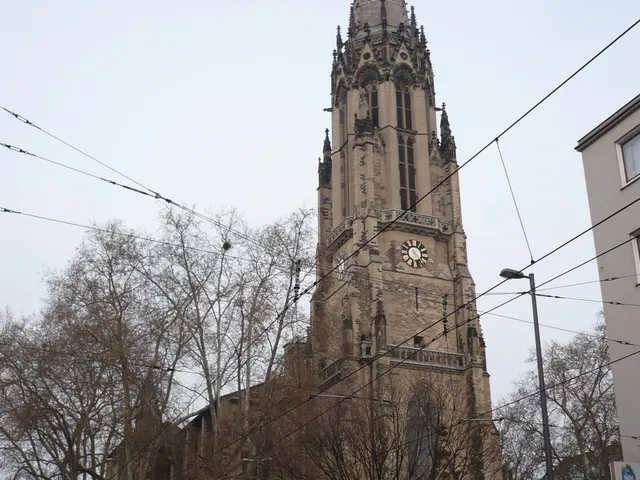
St. Paul is a neo-Gothic parish church consecrated in 1908, located at the corner of Vorgebirgstraße and Lothringer Straße near Sachsenring. The church takes its name from Cologne's Archbishop Paulus Melchers and continues the patronage of an earlier Romanesque church of the same name that was demolished in 1807.
At a Glance
- Type
- Catholic parish church
- Style
- Neo-Gothic
- Consecrated
- 1908
- Architect
- Stephan Mattar (1875–1943)
- Location
- Neustadt-Süd / Südstadt, Innenstadt district
- Status
- Listed monument in North Rhine-Westphalia
- Notable features
- Marian altar with portraits of the parish council; three bells in the tower (E5, F♯5, G♯5)
As a thank-you for his role in building the church, Ludwig Stollwerck had a box of Stollwerck chocolates made in 1908 featuring the Cologne Cathedral on the outside and the new St. Paul's Church on the inside – and personally presented it to the Pope at the Vatican.
Origins and Stollwerck's Role
As Cologne expanded into the "Neustadt" district, a new parish became necessary; in 1901 it was elevated to the parish of St. Paul from the rectorate of Maria Hilf. Chocolate manufacturer Ludwig Stollwerck campaigned for a new church building from 1901 onward, served on the parish council, and secured a loan of 500,000 marks through banker Louis Hagen. Archbishop Fischer was opposed to the project and pushed the budget down to 350,000 marks, also dictating the architectural style and the origin of the designers. Stollwerck prevented the project from collapsing by organising an architectural competition, which Cologne-based Stephan Mattar won with his neo-Gothic design bearing the motto in cruce sola salus ("salvation in the cross alone").
Construction and Interior
The foundation stone was laid on 13 May 1906 by building contractor Ferdinand Schmitz, Stollwerck's brother-in-law. A bay-like gallery was built into the upper section of the choir's south wall, reportedly reserved for the Stollwerck family as the church's principal benefactors. Of the Marian altar by sculptors August Schmidt and Alexander Iven, only the central group survives today; it depicts members of the parish council alongside the figure of Mary, including Ludwig Stollwerck himself, recognisable by his characteristic centre parting. The stained-glass windows were created by Otto Linnemann of Frankfurt.
Today
Along with St. Agnes, St. Paul is considered the best-preserved example of church architecture in Cologne's Neustadt. The three spired tower caps were not rebuilt after wartime destruction, so the tower today ends with a flat roof. Three bells remain in the tower.
Did You Know?
In 1908, Ludwig Stollwerck presented the Pope at the Vatican with a specially made box of Stollwerck chocolates to mark the new church — decorated on the outside with Cologne Cathedral and on the inside with the newly built St. Paul. In 1910, Stollwerck and other members of the building committee were appointed Knights of the Order of the Holy Sepulchre.
Timeline
- 1807Old St. Paul (Romanesque predecessor) demolished
- 1888Archdiocese of Cologne acquires the plot at today's Pauluskirche street
- 1901Parish of St. Paul established by elevation of the Maria Hilf rectorate
- 1903After Archbishop Simar's death, building planning handed to the parish board
- 1906Foundation stone laid on 13 May by contractor Ferdinand Schmitz
- 1907Death of first pastor Peter Haas (2 August); interior continued under Enshoff
- 1908Consecration of the Neo-Gothic parish church of St. Paul
- 1910Ludwig Stollwerck and building committee appointed Knights of the Holy Sepulchre
Map
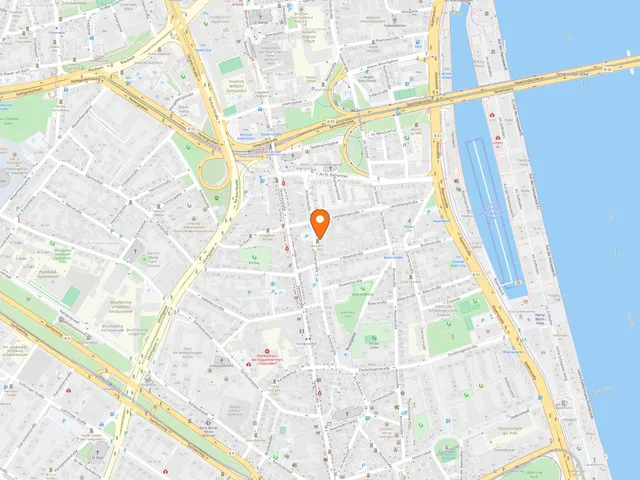
Blue dots: other places nearby — tap to explore.
Address
Kleingedankstraße 6
50677 Köln
Contact
You might also like — related or nearby
Comments
- Loading comments…
Sources & links
- Official website
- Official website (retrieved 2026-07-19)
- Wikidata (retrieved 2026-06-26)
- Wikipedia (retrieved 2026-06-26)
Auto-generated, last verified: 2026-06-27
How this page is made
This page draws on open sources — Wikipedia, Wikidata, official websites and the city’s open data. Every statement is checked against the sources linked here, and pages are refreshed regularly.
Spotted a mistake anyway? Tell us below — we read every submission.