German Sport & Olympic Museum
Museum in Cologne's Rheinauhafen dedicated to the history of sport from antiquity to the present — with rooms on the Olympics, football, boxing, and more.
since 1999
The German Sport & Olympic Museum (DSOM) in Cologne's Rheinauhafen traces the history of sport from ancient times to the modern day, covering national, international, and Olympic sport across disciplines.
At a Glance
- Type
- Sports museum
- Location
- Rheinauhafen, Altstadt-Süd district, city centre
- Opened
- 26 November 1999
- Building
- listed former "Customs Hall 10" dating from 1898
- Exhibition space
- 2,000 m² across two floors
- Collection
- around 2,000 items on permanent display; 120,000 objects in total
- Opening hours
- Tuesday to Sunday, 10 am – 6 pm
The museum is housed in a landmark-protected customs warehouse built in 1898 – and although it holds 120,000 objects in its collection, only around 2,000 are on display in the permanent exhibition, meaning visitors see less than 2 percent of the total holdings.
Things to do here
- Wander through the themed rooms on the Olympics, football, boxing and winter sports
- Get active yourself at the hands-on stations
- Follow the “Timeline” through sports history from antiquity to today
- Marvel at around 2,000 exhibits drawn from 120,000 objects
- Discover the heritage-listed warehouse building in the Rheinauhafen
Age comparison
Age compared with other places in Cologne.
History
After an unsuccessful first attempt in 1972, the German Sports Federation and the National Olympic Committee resolved in 1978 to establish a national sports museum in Cologne. A dedicated association was founded in 1982, bringing together numerous sports federations, the City of Cologne, the state of North Rhine-Westphalia, and the German Sport University Cologne. A supporting foundation was set up in 1998, and the museum opened its doors in November 1999.
Building
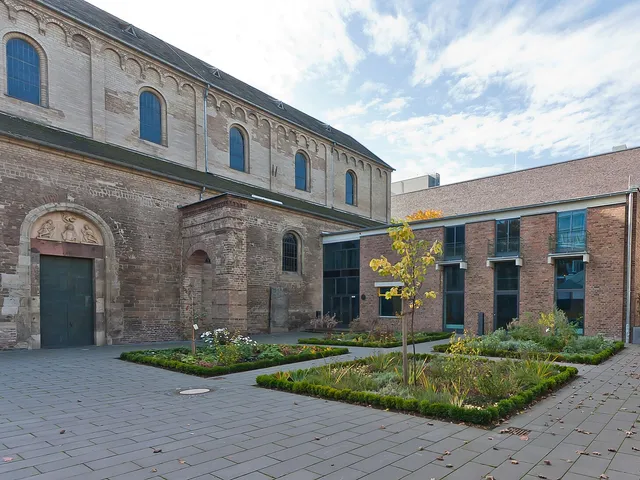
The museum is housed in the former "Customs Hall 10", a warehouse built in 1898 by Bernhard Below in the Rheinauhafen. The listed building was acquired in 1996 and converted for museum use between March 1998 and the summer of 1999.
Permanent Exhibition
The displays are organised into themed rooms covering antiquity, German gymnastics, English sport, the 1936 and 1972 Olympic Games, boxing, football, trend sports, and winter sports. At the heart of the exhibition is the "Timeline", a chronological journey from the workers' sport movement of the late 19th century to current events. Interactive stations invite visitors to get physically involved.
Collection
Beyond the 2,000 items on show, the museum holds a reserve collection of 120,000 objects stored across four depots in Cologne. Key collecting areas include the Olympic Games, German gymnastics, athletics, football, and the intersection of sport and art. Collecting, preserving, researching, and education are the museum's core responsibilities.
Timeline
- 1972First (unsuccessful) attempt to establish a national sports museum
- 1978DSB and NOC reaffirm the plan with resolutions; Cologne chosen as location
- 1982Dec 16: Foundation of the non-profit association 'German Sports Museum'
- 1898Construction of the later 'Customs Hall 10' by Bernhard Below
- 1996Acquisition of the listed Customs Hall 10 in the Rheinauhafen
- 1998Renovation works begin; Dec 15: Museum foundation established
- 1999Nov 26: Museum opens under founding director Karlheinz Wiegmann
- 2007Founding of Deutsche Kultur & Sport Marketing GmbH
Gallery
Map
Blue dots: other places nearby — tap to explore.
Address
Im Zollhafen 1
50678 Köln
Hours
Di: 10:00–18:00
Mi: 10:00–18:00
Do: 10:00–18:00
Fr: 10:00–18:00
Sa: 10:00–18:00
So: 10:00–18:00
You might also like — related or nearby
Comments
- Loading comments…
Sources & links
- Official website
- Official Instagram (@deutschessportmuseum)
- Wikidata (retrieved 2026-06-23)
- Wikipedia (retrieved 2026-06-23, rev 257861448)
Auto-generated, last verified: 2026-06-26
How this page is made
This page draws on open sources — Wikipedia, Wikidata, official websites and the city’s open data. Every statement is checked against the sources linked here, and pages are refreshed regularly.
Spotted a mistake anyway? Tell us below — we read every submission.