Deutz Bridge
The world's first steel box girder bridge (1947/48) – linking Heumarkt with Deutz; the Roman bridge once stood a few metres further north.
The Deutz Bridge spans the Rhine in Cologne, connecting the city centre at Heumarkt with the right-bank district of Deutz. Built in 1947/48, it was the world's first steel box girder bridge and remains a protected monument.
At a Glance
- Type
- Four-lane road bridge with its own two-track light rail corridor and pedestrian/cycle paths on both sides
- Spans
- 132 m – 185 m – 120 m, totalling 437 metres
- Total width
- 20.61 m plus 10.89 m, totalling 31.50 metres
- Location
- Deutz district, Innenstadt borough; along state road L 111
- Heritage listed
- Since 19 May 1989; owned by the City of Cologne
The current Deutzer Bridge (built 1947–1948) was the world's first steel box girder bridge – completed just two years after its predecessor collapsed during World War II.
Things to do here
- Stroll across the Rhine and enjoy the panorama of the cathedral and old town
- Photograph the boats and skyline from the pedestrian walkway
- Discover the listed chain link from the former suspension bridge
- Cross from the old town to Deutz on foot or by bike
- Marvel at the steel box girder design, the first of its kind worldwide
Length comparison
Length compared with other Cologne bridges.
Structure and Engineering
The current bridge was designed by Cologne architect Gerd Lohmer in collaboration with Fritz Leonhardt and inaugurated on 16 October 1948. Its hollow steel box construction made it a pioneering engineering achievement – the first of its kind in the world. Between 1976 and 1980 a second structure of identical profile was added alongside it, built in prestressed concrete for cost reasons and slid into position from the south; the light rail was given its own dedicated track bed in the middle.
Predecessor Structures
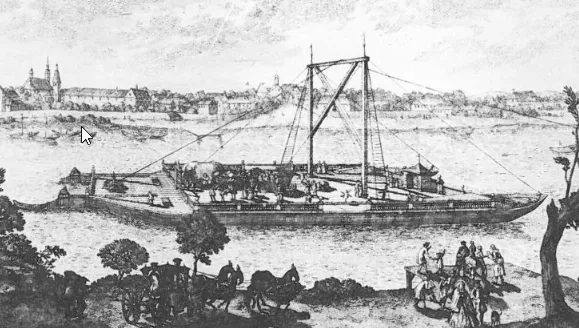
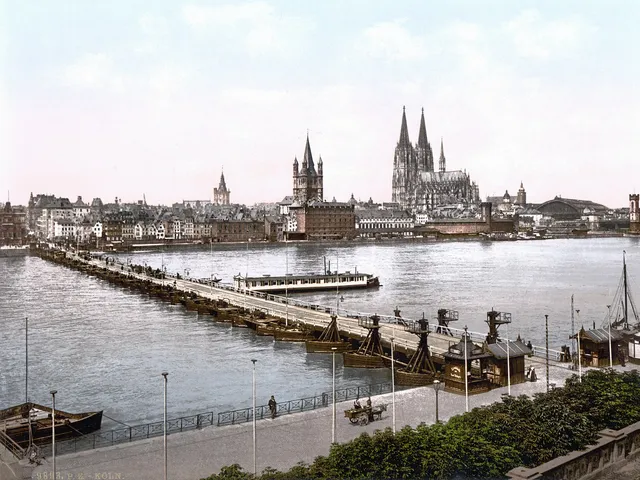
The first crossing at this location was built around 310 AD by the Romans under Constantine – a timber structure on stone piers, standing a few metres further north than today's bridge. A reaction ferry later linked the two banks, replaced in 1822 by a pontoon bridge of around 40 barges. From 1913 to 1915 a stiffened chain suspension bridge was erected (renamed Hindenburg Bridge in 1935), which collapsed on 28 February 1945 during repair works.
The Cologne Bridge Dispute
The winning design for the 1913 suspension bridge sparked a plagiarism controversy that attracted nationwide attention. A runner-up competitor claimed the prizewinning entry was largely based on his own submission. The case was heard before the Cologne Regional Court and eventually settled out of court in April 1914.
Worth Knowing
One of the chain links from the former suspension bridge stands today as a monument on the northern footpath on the left-bank side. Cologne has eight Rhine crossings in total, six of which carry road traffic.
Timeline
- 310Romans build first Rhine bridge at this location under Constantine
- 1822Wooden pontoon bridge (~400 m, ~40 boats) inaugurated on 16 November
- 1913–1915Deutzer suspension bridge built as reinforced chain suspension bridge
- 1935Renamed Hindenburgbrücke after Reich President Paul von Hindenburg
- 28. Februar 1945Suspension bridge collapses during repair work
- 16. Oktober 1948New bridge inaugurated – world's first steel box girder bridge (Leonhardt/Lohmer)
- 1976–1980Twin bridge added as prestressed concrete structure to the south
- 19. Mai 1989Deutzer Brücke listed as a protected monument
Gallery
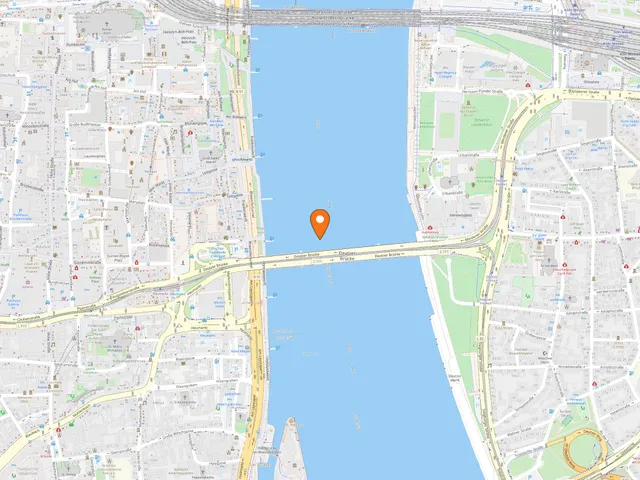
Map
Blue dots: other places nearby — tap to explore.
You might also like — related or nearby
Comments
- Loading comments…
Sources & links
- Official website
- Official website (retrieved 2026-06-25)
- Wikidata (retrieved 2026-06-23)
- Wikipedia (retrieved 2026-06-23, rev 268022755)
Auto-generated, last verified: 2026-06-26
How this page is made
This page draws on open sources — Wikipedia, Wikidata, official websites and the city’s open data. Every statement is checked against the sources linked here, and pages are refreshed regularly.
Spotted a mistake anyway? Tell us below — we read every submission.