Romano-Germanic Museum (RGM)
Cologne's archaeological museum — world's largest collection of Roman glass and the Dionysus Mosaic near the cathedral (currently at the Belgian House).
since 1946
The Romano-Germanic Museum of the City of Cologne (RGM) is the city's archaeological museum and the official authority for archaeological monument preservation within the city limits. It is renowned for the world's largest collection of Roman glass and the Roman Dionysus Mosaic at the foot of the cathedral.
At a Glance
- Type
- Archaeological museum and monument preservation authority
- Location
- Roncalliplatz, Altstadt-Nord (city centre), next to Cologne Cathedral
- Founded
- 1946
- New building opened
- 4 March 1974
- Architecture
- Award-winning Brutalist design
- Collection
- Finds from prehistoric times to the early Middle Ages
- Currently
- Main building closed since 2019 for renovation
The world-famous Dionysus mosaic – the museum's centrepiece – survived World War II in a purpose-built cathedral bunker (1942), and the museum was later constructed literally around it, with the mosaic remaining in situ to this day.
Age comparison
Age compared with other places in Cologne.
History
The museum's roots trace back to the Roman department of the Wallraf-Richartz-Museum and the Museum of Prehistory and Early History. It emerged from these institutions, closely linked to the Dionysus Mosaic, and was initially housed in the cathedral bunker, where it opened in 1961. An architectural competition held in 1960 was won by Heinz Röcke and Klaus Renner from Brunswick.
Architecture
The building on Roncalliplatz was conceived as a "window into Roman times". Its surrounding colonnades reference the Roman peristyle house beneath, with the Dionysus Mosaic visible from street level through the lower floor. The understated concrete structure was deliberately kept modest to avoid competing visually with the neighbouring cathedral, and was listed as a protected monument in 2016.
Collection
The finds trace the development of the Ubii settlement founded under Emperor Augustus into the capital of the province of Lower Germania. Highlights include remnants of the Roman Rhine harbour, wooden sections of Emperor Constantine's Rhine bridge, the central arch of the northern city gate inscribed CCAA, and a fully restored, road-worthy Roman travel carriage. The centrepiece is the world's largest collection of Roman glass.
Today
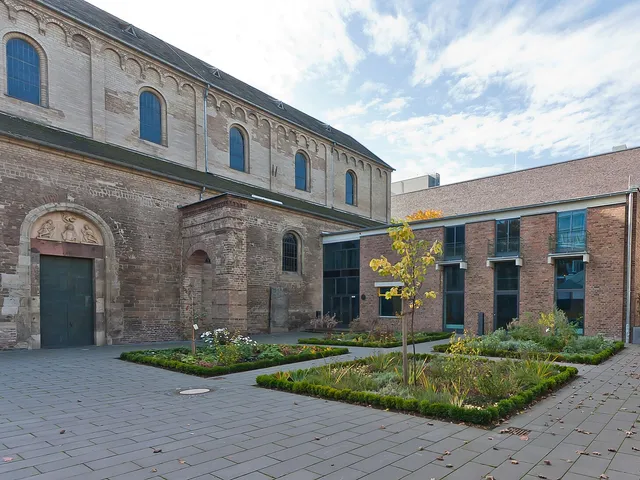
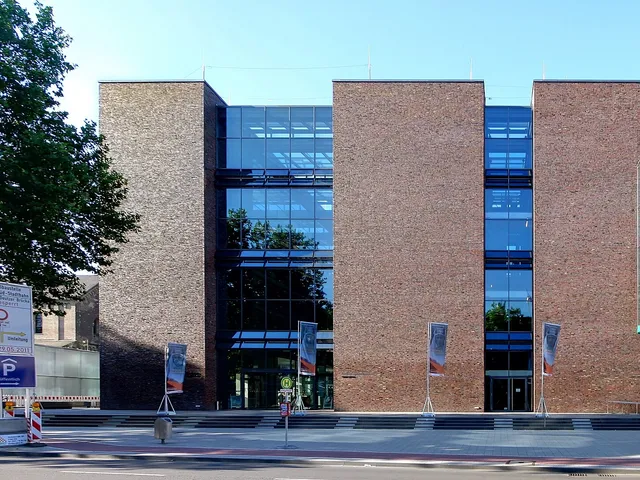
While the Roncalliplatz building undergoes major renovation, the museum has relocated to the Belgian House on Cäcilienstraße near Neumarkt. The archaeological collections of the city and surrounding region remain accessible there.
Timeline
- 1807Foundation of the Cologne antiquities collection (circular decree of 25 April 1807)
- 1861Wallraf-Richartz-Museum reopened with integrated Roman department
- 1946Foundation of the Romano-Germanic Museum (cathedral bunker, Dionysus mosaic)
- 1961Museum opens in the cathedral bunker (24 November 1961)
- 1967Construction of the new building at Roncalliplatz begins
- 1974New building opens (4 March 1974)
- 2016Building listed as a heritage monument, including passage and Rhine view axis (end of 2016)
- 2019Closed for major renovation; temporary quarters in the Belgian House
Treasures & artworks
A few highlights from the collection.
Roman floor mosaic (c. 220/230 AD), discovered in 1941 – the museum’s centrepiece.
Nearly 15 m tall tomb of a Roman veteran (1st c. AD).
Intricate cage cup from the 4th century – a masterpiece of Roman glassmaking.
Mosaic depicting ancient thinkers and poets.
Gallery
Map
Blue dots: other places nearby — tap to explore.
You might also like — related or nearby
Comments
- Loading comments…
Sources & links
- Official website
- Official Instagram (@roemischgermanischesmuseum)
- Wikidata (retrieved 2026-06-23)
- Wikipedia (retrieved 2026-06-23, rev 266236261)
- Official website (retrieved 2026-06-24)
Auto-generated, last verified: 2026-06-27
How this page is made
This page draws on open sources — Wikipedia, Wikidata, official websites and the city’s open data. Every statement is checked against the sources linked here, and pages are refreshed regularly.
Spotted a mistake anyway? Tell us below — we read every submission.