Japanese Cultural Institute
One of only three Japanese cultural institutes in Europe — Cologne's gateway to Japanese culture for the entire German-speaking world.
since 1969
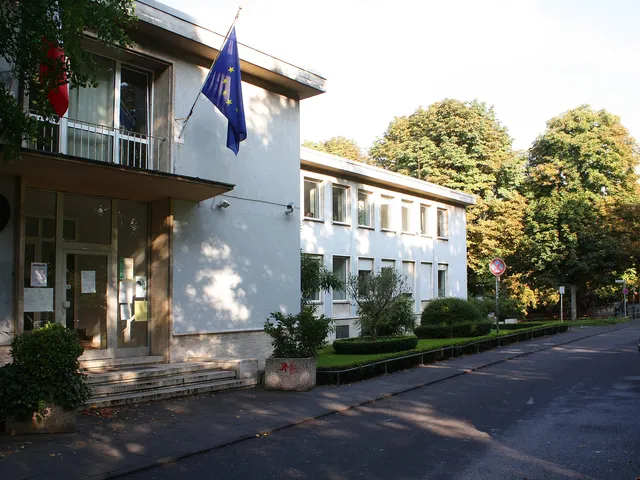
The Japanese Cultural Institute on Universitätsstraße serves as the cultural bridge between Japan and the German-speaking world. It is one of only three Japanese cultural institutes in Europe, alongside its counterparts in Rome and Paris.
At a Glance
- Type
- Japanese Cultural Institute
- Location
- Universitätsstraße, Neustadt/Süd (Innenstadt district)
- Opened
- September 1969
- Operator
- Japan Foundation (since 1972)
- Notable
- Forms an architectural ensemble with the Museum of East Asian Art
- Library
- Free public access
Until 1989, the institute housed a dedicated 'Japan Room' designed to immerse visitors in an authentic slice of Japanese atmosphere – a feature unique among Cologne's four foreign cultural institutes.
Things to do here
- Browse books and materials about Japan in the free-to-use library
- View an exhibition of contemporary or traditional Japanese art
- Attend a film evening featuring Japanese cinema
- Listen to concerts, readings or talks with a Japanese connection
- Admire the coordinated architecture of the ensemble with the Museum of East Asian Art
Age comparison
Age compared with other places in Cologne.
History
The institute was built and opened by the Japanese Embassy in 1969, then transferred in 1972 to the Japan Foundation, which operates under Japan's Ministry of Foreign Affairs. Among Cologne's four foreign cultural institutes, it is the youngest. Since April 2023, the institute has been directed by Harufumi Murata.
Architecture
Designed by Tokyo architect Yoshimi Ohashi, the building blends traditional Japanese aesthetics with modern forms. The two-storey structure is raised on pillars and projects out over the ground floor. Together with the Museum of East Asian Art at the Aachener Weiher, it forms a carefully coordinated architectural ensemble. Inside are conference and lecture rooms, language learning facilities, and a library. Until 1989, a dedicated Japanese room offered visitors an immersive glimpse into Japanese atmosphere.
Programme
The institute hosts exhibitions of both contemporary and traditional Japanese art, alongside concerts and stage performances with a Japanese focus — increasingly including pop, rock, and jazz. Literary readings introduce Japanese authors and literature, while lectures, panel discussions, and symposia explore topics from the humanities and social sciences. Film screenings of Japanese cinema take place roughly three times a week, with the institute collaborating with film museums and community organisers across Germany.
Library
The library holds reference works, periodicals, and audiovisual materials covering scientific, social, and cultural topics relating to Japan. Materials are available in Japanese, German, and English, and access is free of charge.
Timeline
- 1969Opened in September, designed by architect Yoshimi Ohashi
- 1972Placed under the Japan Foundation, affiliated with Japan's Ministry of Foreign Affairs
- 1989Japanese room closed (had been a special feature since opening)
- April 2023Harufumi Murata appointed as new director of the institute
Map
Blue dots: other places nearby — tap to explore.
Address
Universitätsstraße 98
50674 Köln
Hours
Mo: 09:00–13:00
Mo: 14:00–17:00
Di: 09:00–13:00
Di: 14:00–17:00
Mi: 09:00–13:00
Mi: 14:00–17:00
Do: 09:00–13:00
Do: 14:00–17:00
Fr: 09:00–13:00
Fr: 14:00–17:00
Sa: 13:30–17:00
Contact
You might also like — related or nearby


Comments
- Loading comments…
Sources & links
- Official website
- Official website (retrieved 2026-07-17)
- Wikidata (retrieved 2026-06-26)
- Wikipedia (retrieved 2026-06-26)
Auto-generated, last verified: 2026-06-26
How this page is made
This page draws on open sources — Wikipedia, Wikidata, official websites and the city’s open data. Every statement is checked against the sources linked here, and pages are refreshed regularly.
Spotted a mistake anyway? Tell us below — we read every submission.