Italian Cultural Institute Cologne
Landmarked Italian Rationalist building combining Italy's cultural institute and consulate general in Cologne
The Istituto Italiano di Cultura is one of 89 Italian cultural institutes worldwide, and one of only four foreign cultural institutes still active in Cologne today.
Source: Wikipedia
At a Glance
- Type
- Italian cultural institute housed alongside the Italian Consulate General
- Location
- Lindenthal district, close to the university
- Founded
- 1931 as the Petrarca-Haus in the southern Neustadt
- New building opened
- 29 June 1954
- Library
- around 18,000 books
- Theatre
- roughly 250 seats
Konrad Adenauer, then mayor of Cologne, founded the institute's predecessor, the Petrarca-Haus, in 1931 in close cooperation with fascist Italy – having previously expressed admiration for Mussolini in a letter – and of its roughly 11,000-volume library only about 400 books survived the war.
Origins as the Petrarca-Haus
Shortly before the end of the Weimar Republic, Mayor Konrad Adenauer established the first German-Italian cultural institute, named after the Italian poet and historian Petrarch. Located on Overstolzenstraße at the edge of the Volksgarten, it was led until 1936 by Italian scholar Arturo Farinelli. The institute operated until 1944 and was destroyed near the war's end, likely by air raids; only about 400 of its roughly 11,000 volumes survived, later forming the core of the new library.
Ties to the Fascist Regime
The Petrarca-Haus embodied the city's cooperation with Fascist Italy: Adenauer signed the founding agreement with Education Minister Giovanni Gentile, chief ideologue of Italian Fascism. As early as 1929, Adenauer had written admiringly to Mussolini, declaring his name would be inscribed "in golden letters" in the history of the Catholic Church. The aim was to spread knowledge of Italian culture in Germany.
A New Start on Universitätsstraße
The city provided the plot at the edge of the inner green belt for the postwar building. Its opening ceremony drew Chancellor Adenauer, Italian Education Minister Gaetano Martino, Ambassador Francesco Babuscio Rizzo and Archbishop Josef Frings, though the institute officially began operating only that autumn, once Germany and Italy had settled its legal status.
Architecture
Designed by Cologne architect Hanns Koerfer, the U-shaped complex sits on a narrow side street parallel to Universitätsstraße. Its uniformly two-storey wings with flat roofs are typical of 1950s design; the western side wings enclose a private garden, while the northern wing along Danteweg runs alongside the open Lindenthal canal. A university-affiliated extension for the Petrarca Institute was added in the 1970s.
Interior and Programme
The ground floor holds a foyer, a long library hall, a reading/teaching room and offices, with white-washed corridor walls used for rotating exhibitions. The upper-floor theatre has full stage technology. The library focuses on Italian literature and area studies, including German-language works, while the programme features art, music, literature, theatre, current-affairs discussions and Italian language courses.
Timeline
- 1931Founding of the first German-Italian cultural institute as Petrarca-Haus in Cologne
- 1931–1936Arturo Farinelli directs the Petrarca-Haus
- 1938Institute's library comprises around 11,000 volumes
- 1944Petrarca-Haus active until then, likely destroyed by air raids afterward
- 29. Juni 1954Ceremonial opening of the new building on Universitätsstraße
- Herbst 1954Official opening of the Italian Cultural Institute after signing of agreements
- 1970er JahreBuilding extended with an annex for the Petrarca Institute
Gallery
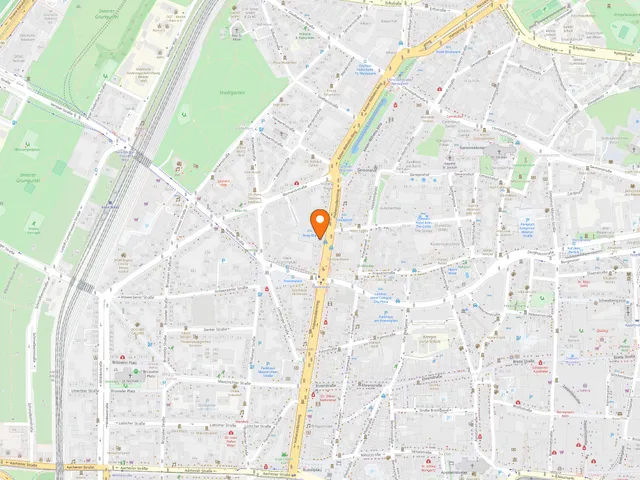
Map
Blue dots: other places nearby — tap to explore.
You might also like — related or nearby
Comments
- Loading comments…
Sources & links
Auto-generated, last verified: 2026-09-26
How this page is made
This page draws on open sources — Wikipedia, Wikidata, official websites and the city’s open data. Every statement is checked against the sources linked here, and pages are refreshed regularly.
Spotted a mistake anyway? Tell us below — we read every submission.