Melanchthonkirche
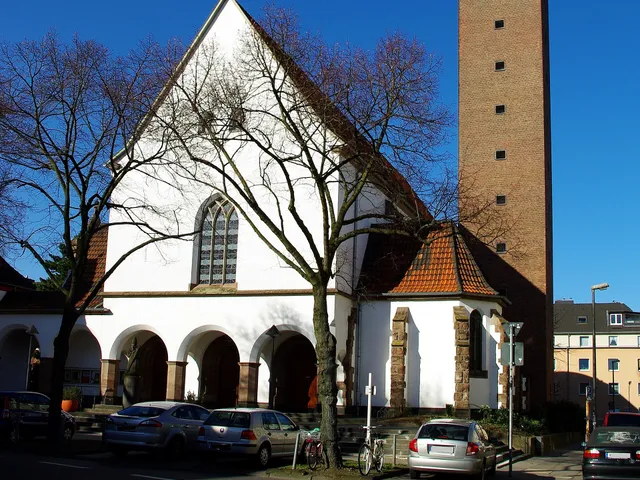
Protestant church from 1929/30 in Zollstock — one of Germany's early examples with the worship hall upstairs and a community centre below.
Standing beside Rosenzweigpark in Cologne's Zollstock district, the Protestant Melanchthonkirche was among the earliest churches in Germany to stack its worship hall and community centre on separate floors.
At a Glance
- Type
- Protestant church
- Location
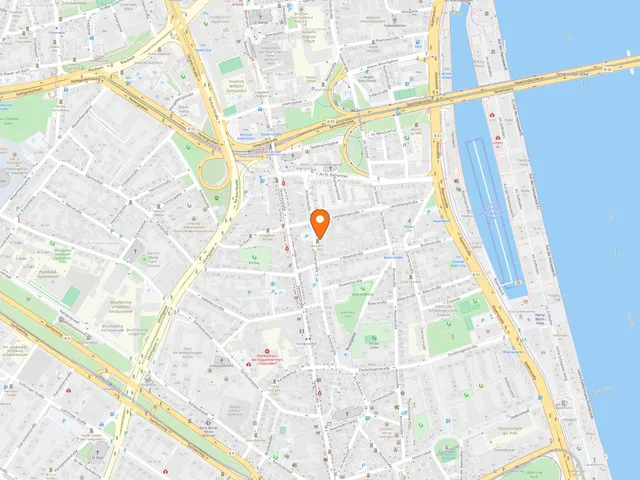
- Zollstock (Rodenkirchen borough), beside Rosenzweigpark
- Built
- 1929–1930
- Architect
- Theodor Merrill
- Named after
- Philipp Melanchthon
- Listed
- Heritage monument in North Rhine-Westphalia
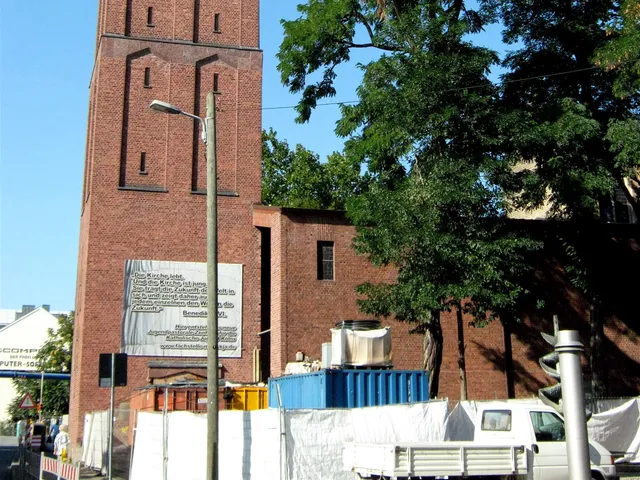
The Melanchthonkirche was among the first Protestant churches in Germany to combine a worship space and community centre under one roof – a pioneering concept at the time. However, when it was rebuilt after the war, it lost its most distinctive architectural feature: the semicircular west wall characteristic of the 1920s 'Neues Bauen' style.
Things to do here
- Discover the unusual design with the worship room above and the community center below
- Admire the 1929/30 listed building from the outside
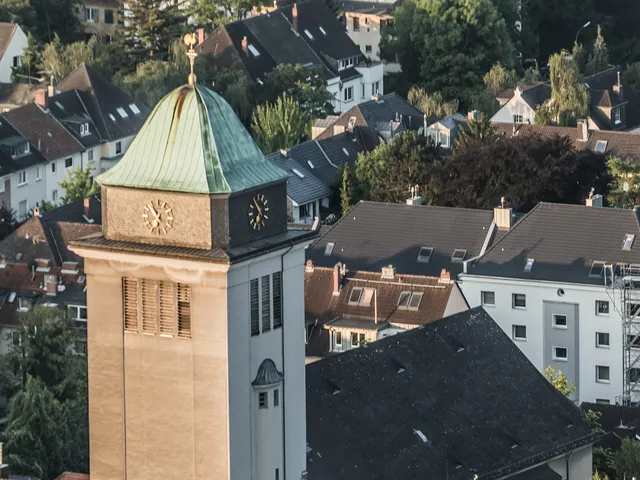
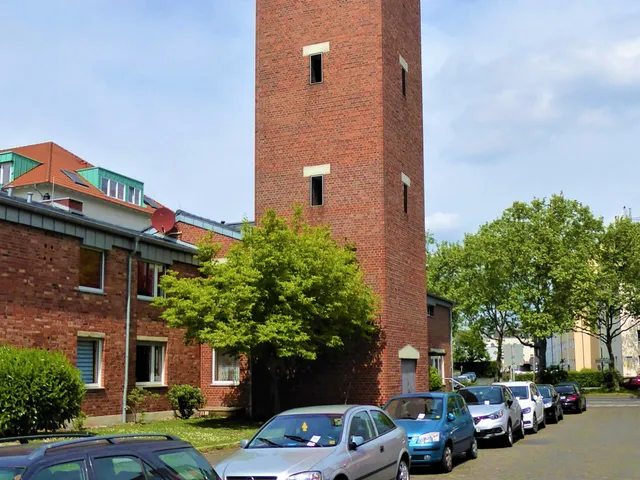
- Listen to the chimes of the three bells from the tower
- Photograph the church and spot the post-war annex
- Take a break in the adjacent Rosenzweigpark
Design Concept
The worship hall occupies the upper floor, while the community centre sits in the basement. The ground floor was originally planned to house rooms for parish associations and a confirmation hall.
History
The impetus for the building came from a petition by the Protestant civic association to the Bayenthal presbytery. The foundation stone was laid on 8 September 1929, and the church was consecrated on 15 June 1930. An air raid on 28 October 1944 destroyed the nave, sacristy and chancel. Reconstruction was agreed in 1948, though the semicircular west wall — a hallmark of the 1920s New Building movement — could not be preserved; a rectangular addition in the post-war style took its place.
Congregation
The Melanchthon congregation broke away from the Bayenthal parish in 1936. The community kindergarten opened on 27 September 1954. When Cologne's church districts were reorganised in 1963, the congregation joined the Köln-Süd district; since 2026 it has belonged to the newly formed Köln-Linksrheinisch district.
Bells
Three bells cast by the bell foundry Rincker of Sinn make up the peal in the tower. Only the smallest bell survives from the original 1929 set. The pitch and inscriptions of the two larger bells, cast in 1957, match those of their predecessors that were confiscated and lost during the Second World War. The peal is carried on straight steel yokes in a two-storey steel bell frame.
Timeline
- 1929Foundation stone laid on 8 September 1929
- 1930Consecration on 15 June 1930
- 1936Melanchthon congregation separated from Bayenthal parish
- 1944Church, sacristy and chancel destroyed in air raid (28 October)
- 1948Reconstruction decided on 17 March 1948
- 1954Parish kindergarten opened (27 September)
- 1957Two new bells cast (replacing wartime losses)
- 1963Congregation assigned to Kirchenkreis Köln-Süd
Map
Blue dots: other places nearby — tap to explore.
Address
Breniger Str. 20
50969 Köln
Contact
You might also like — related or nearby
Comments
- Loading comments…
Sources & links
- Official website
- Official website (retrieved 2026-07-17)
- Wikidata (retrieved 2026-06-26)
- Wikipedia (retrieved 2026-06-26)
Auto-generated, last verified: 2026-06-26
How this page is made
This page draws on open sources — Wikipedia, Wikidata, official websites and the city’s open data. Every statement is checked against the sources linked here, and pages are refreshed regularly.
Spotted a mistake anyway? Tell us below — we read every submission.