Bismarckturm
A Bismarck monument in Cologne-Marienburg designed as a fire column — featuring a monolithic figure of Bismarck as Roland in armour with an eagle shield.
since 1902
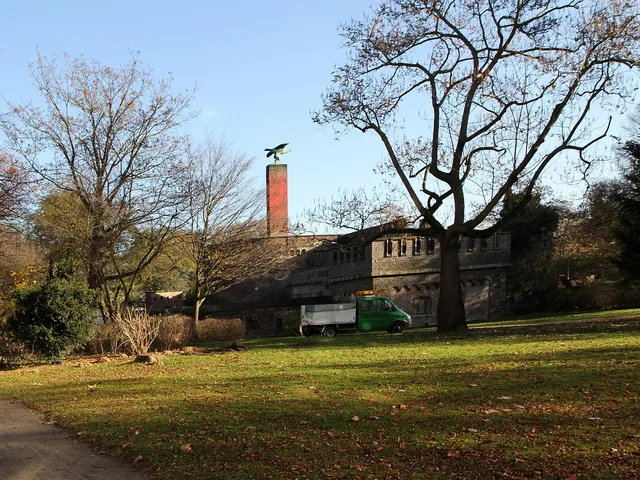
Standing at the corner of Gustav-Heinemann-Ufer and Bayenthalgürtel, the Bismarckturm — also known as the Bismarcksäule — commemorates Otto von Bismarck. The monument was conceived in the form of a fire column.
At a Glance
- Type
- Bismarck monument in the form of a fire column
- Location
- Cologne-Marienburg, Rodenkirchen district
- Inaugurated
- 21 June 1903
- Height
- 27 metres total
- Material
- Basalt lava and greywacke
- Listed heritage
- since 1 July 1980
The Cologne Bismarck Tower was largely financed by chocolate manufacturer Heinrich Stollwerck, who owned a neighbouring villa called "Bismarckburg" – the Bismarck figure on the façade stands 15 metres tall with a shoulder width of five metres.
Things to do here
- Admire the Bismarck tower designed as a flame column
- Take in the blocky Bismarck figure as Roland with eagle shield
- Photograph the historic monument from 1903
- Spot the hidden structure among the tall oak trees
- Take a quiet stroll at the Gustav-Heinemann-Ufer corner
Age comparison
Age compared with other places in Cologne.
History
After students across Germany called for Bismarck column competitions in 1899, a dedicated Bismarck Committee in Cologne gathered design proposals; Berlin architect Arnold Hartmann won the commission. Donations for a site in Bayenthal came in from 1900, with construction beginning in 1902. The lion's share of the total cost — 48,000 marks including the foundations — was contributed by Cologne chocolate manufacturer Heinrich Stollwerck (1843–1915), whose villa "Bismarckburg" stood close by. The sculptural work was executed by Cologne artist Adolf Berchem, and the construction itself by Wilhelm Asbach of Cologne. Restoration works followed in 1999, 2001, and 2008.
Architecture
The original concept called for a fire to blaze atop the column at the summer solstice; the fire basin at the tower's crown last burned in 1939. Rising from a stocky base, the figure of Bismarck merges with the taller rectangular tower to evoke a burning torch. The sculptor modelled the surfaces only after the stone blocks had been laid. On the front, Bismarck is depicted in blocky fashion as Roland in armour bearing a tall eagle shield — five metres wide at the shoulders and fifteen metres from foot to crown.
Surroundings
The gardens were designed by Fritz Encke, completing his first Cologne commission of this kind. Low, dense planting at Bismarck's feet was intended to set the column off to best effect; the 230-metre-long hedge of pedunculate oaks was finished in 1904. The trees have since grown so tall that they have completely obscured the monument from view since the early 21st century.
Notable Facts
Bismarck's face mask was added after construction and is carved from a single block of stone.
Timeline
- 1899Student association holds competition; Bismarck committee founded in Cologne
- 1900Fundraising campaign begins
- 1902Construction of the tower (fire column) begins
- 1903Inauguration on 21 June 1903
- 1904Fritz Encke completes garden with 230 m English oak hedge
- 1939Last use of the fire basin on top of the tower
- 1980Tower listed as protected monument from 1 July 1980
- 1999, 2001, 2008Renovation works on the tower and surroundings
Gallery
Map
Blue dots: other places nearby — tap to explore.
Address
Bayenthalgürtel 5
50968 Köln
Hours
So: 00:00–24:00
You might also like — related or nearby
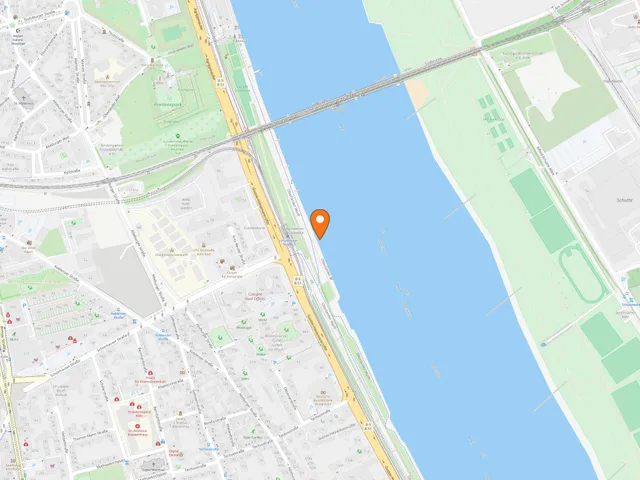
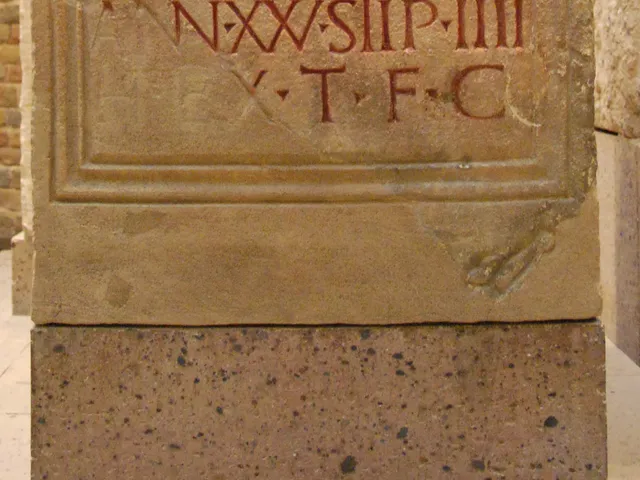
The Alteburg Fleet Fort – Headquarters of the Roman Rhine Fleet in Cologne-Marienburg
The district of Marienburg was once home to the headquarters of the Classis Germanica, Rome's Rhine fleet. Nothing of it survives above ground today – the fort lies entirely beneath the densely built-up Alteburg area.
Comments
- Loading comments…
Sources & links
- Official website
- Official website (retrieved 2026-06-25)
- Wikidata (retrieved 2026-06-24)
- Wikipedia (retrieved 2026-06-24, rev 259407166)
- offenedaten-koeln.de (retrieved 2026-06-30)
Auto-generated, last verified: 2026-06-25
How this page is made
This page draws on open sources — Wikipedia, Wikidata, official websites and the city’s open data. Every statement is checked against the sources linked here, and pages are refreshed regularly.
Spotted a mistake anyway? Tell us below — we read every submission.