Aachener Weiher
A 1920s artificial lake in Cologne's Inner Green Belt, framed by a beer garden, East Asian art, and the Hiroshima-Nagasaki Park.
Tucked into Cologne's Inner Green Belt at the corner of Aachener Straße and Universitätsstraße, the Aachener Weiher is an artificial lake in the Neustadt/Süd district. Its shores are lined with a beer garden, parkland, and two cultural buildings designed by Japanese architects.
At a Glance
- Type
- Artificial lake in the Inner Green Belt
- Location
- Corner of Aachener Straße/Universitätsstraße, Neustadt/Süd (Innenstadt district)
- Area
- Approx. 40,000 m²
- Created
- Early 1920s
- On the shores
- Beer garden, Museum of East Asian Art, Japanese Cultural Institute, Hiroshima-Nagasaki Park
- Named after
- Aachener Straße
The Aachener Weiher was created in the early 1920s at the initiative of Mayor Konrad Adenauer – later Germany's first Federal Chancellor – built on the grounds of the city's former inner fortification ring.
Things to do here
- Stroll along the shore and watch the ducks and geese
- Enjoy a cool drink in the Aachener beer garden
- Picnic on the meadow and soak up the sun
- Jog or take a lap along the lakeside paths
- Discover East Asian art at the museum by the water
- Pause in the Hiroshima-Nagasaki Park and take in the atmosphere
Water area comparison
Water area compared with other lakes in Cologne.
History
The lake was created in the early 1920s on the site of the Inner Fortress Ring. Urban planner Fritz Schumacher provided the master plan, then-mayor Konrad Adenauer gave the initiative its impetus, and parks director Fritz Encke carried out the construction.
Location and Surroundings
The lake takes its name from Aachener Straße, which — as the ancient Via Belgica — already connected Colonia Claudia Ara Agrippinensium with Boulogne-sur-Mer (Gesoriacum) in Roman times. A green buffer strip borders the lake on the street sides, crossed by the Frieda-Fischer-Weg with a small bridge near the Museum of East Asian Art. To the south, the Hiroshima-Nagasaki Park extends as far as Bachemer Straße.
The Lake
A concrete base seals the lake bed to prevent seepage. To combat declining water quality — especially in summer — two fountains now aerate the water with oxygen. The lake is home to eels, perch, bream, carp, roach, and pike-perch; fishing is permitted through the Coelner Angel- und Gewässerschutzverein. Upkeep is shared between the city's parks department, the angling club, and the volunteer-run Kölner Grün Stiftung.
Today and How It's Used
The lakeside paths are well-frequented, and the adjacent meadows even more so — at dawn, grazing geese share the grass with joggers, while walkers join the mix throughout the day. Summers bring barbecue gatherings and open-air concerts, and the city has even installed dedicated posts for slacklining. Right on the waterfront, the Aachener Biergarten offers 900 seats, with a tented section of 150 open year-round.
Culture on the Waterfront
Two complementary buildings by Japanese architects stand directly at the water's edge: the Japanese Cultural Institute and the Museum of East Asian Art, the latter complete with a museum café and a Japanese garden.
Timeline
- RömerzeitAachen road serves as Via Belgica connecting Cologne with Boulogne-sur-Mer
- Anfang 1920er JahreConstruction of the pond based on Fritz Schumacher's general plan, initiated by Konrad Adenauer
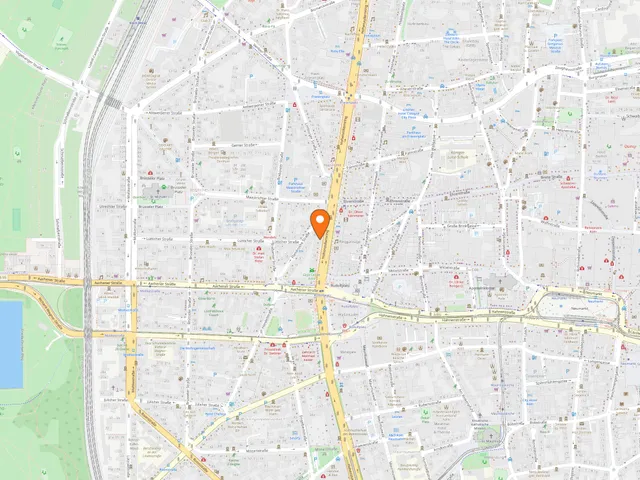
Map
Blue dots: other places nearby — tap to explore.
Address
Aachener Weiher
50674 Köln
You might also like — related or nearby

Comments
- Loading comments…
Sources & links
Auto-generated, last verified: 2026-06-26
How this page is made
This page draws on open sources — Wikipedia, Wikidata, official websites and the city’s open data. Every statement is checked against the sources linked here, and pages are refreshed regularly.
Spotted a mistake anyway? Tell us below — we read every submission.