Bier-Esel – Cologne's Oldest Mussel House in the Old Town
A traditional tavern in Cologne's Old Town with over 700 years of inn history, calling itself the city's oldest mussel house.
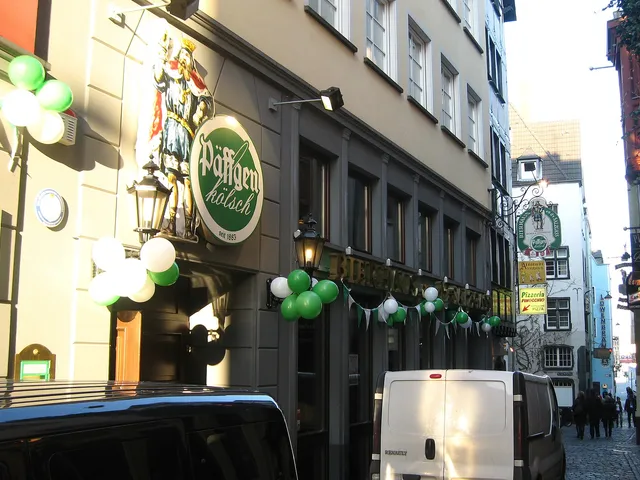
In the heart of Cologne's northern Old Town stands the Bier-Esel, a tavern whose roots reach back to the Middle Ages. The house lays claim to more than 700 years of tradition as one of the „Altkölnische Wirtschaften“ (old Cologne taverns) and describes itself as Cologne's oldest mussel house.
At a Glance
- Location
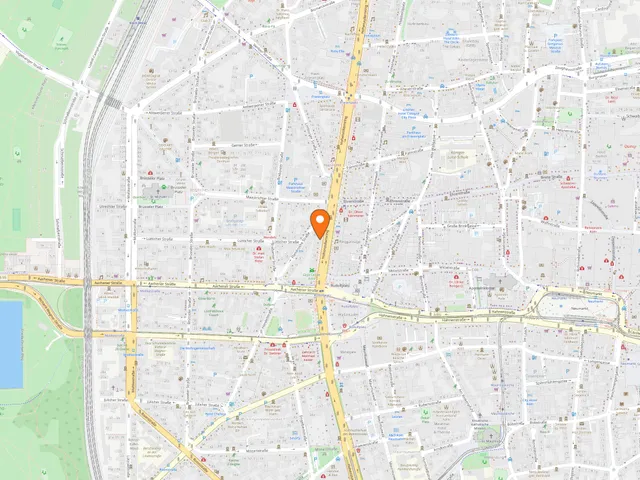
- Cologne, Altstadt-Nord district, Breite Straße 114
- Type
- Traditional tavern, historic brewhouse
- First mentioned
- 1297 as the house „Zum Esel“
- Tradition
- over 700 years, one of the „Altkölnische Wirtschaften“
- Specialty
- fresh mussels – „the oldest mussel house in Cologne“
- Brewing ended
- 1873 with the death of the last master brewer
Medieval Origins
The first written record of the house „Zum Esel“ on Breite Straße dates to 1297. Just a few decades later, in 1319, it appears as a „brewhouse called zum Esel.“ In 1400 the building changed hands: the neighbouring convent of St. Clara am Römerturm sold it to Gerhard the brewer.
Guild and Cologne's Purity Law
From 1414 the „Zum Esel“ brewhouse is listed in a magistrate's decree among 21 qualified breweries belonging to the guild that were permitted to brew beer exclusively within the city under Cologne's purity law. In 1476 it appears as „Wilhelm zum Esel“ in historical records. For the following imperial-city era concrete evidence is missing, because the brewers' brotherhood lists recorded only the names of individual brewers.
From Brewhouse to Mussel House
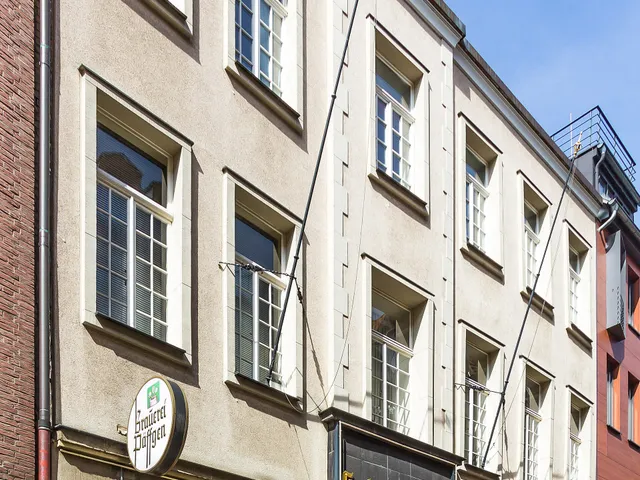
The brewing tradition ended in 1873 with the death of the last master brewer, Everhard Badorff; the old „Großer Esel“ was demolished. After an extensive rebuild – in which the stepped gable was removed and the windows given a „modern“ shape – the brewer Wirtfeld carried the business on. In 1892 the Sünner brewery from Cologne-Kalk acquired the house. When Fritz Austermühle took over the tavern in 1912, he specialised in fresh North Sea mussels. A close friendship between the Sünner family and northern German mussel farmers turned the Bier-Esel into the „First Cologne Mussel House.“
Destruction and Reconstruction
During the Second World War the Bier-Esel was largely destroyed by air raids. Reconstruction began in 1948, and by 1962 the restoration of the restaurant and taproom was complete. Until 1977 the tavern was run by Willy Austermühle, a son of Fritz Austermühle.
Good to Know
In the 19th century the „Esel“ had – as was usual in good brewhouses of the time – a general parlour and a gentlemen's parlour. The furnishings consisted of solid oak tables and benches; the walls were panelled with oak to head height and painted white above.
Map
Blue dots: other places nearby — tap to explore.
Address
Breite Str. 114
50667 Köln
Hours
Mo: 12:00–21:30
Di: 12:00–21:30
Mi: 12:00–21:30
Do: 12:00–21:30
Fr: 12:00–22:00
Sa: 12:00–22:00
Contact
You might also like — related or nearby
Comments
- Loading comments…
Sources & links
- Official website
- Wikipedia (retrieved 2026-07-18, rev 254220765)
- Wikidata (retrieved 2026-07-18)
- Official website (retrieved 2026-07-18)
Auto-generated, last verified: 2026-07-18
How this page is made
This page draws on open sources — Wikipedia, Wikidata, official websites and the city’s open data. Every statement is checked against the sources linked here, and pages are refreshed regularly.
Spotted a mistake anyway? Tell us below — we read every submission.