Brauhaus Schreckenskammer
A tradition-steeped Cologne brewpub in the northern old town, family-run for generations and serving its own Kölsch.
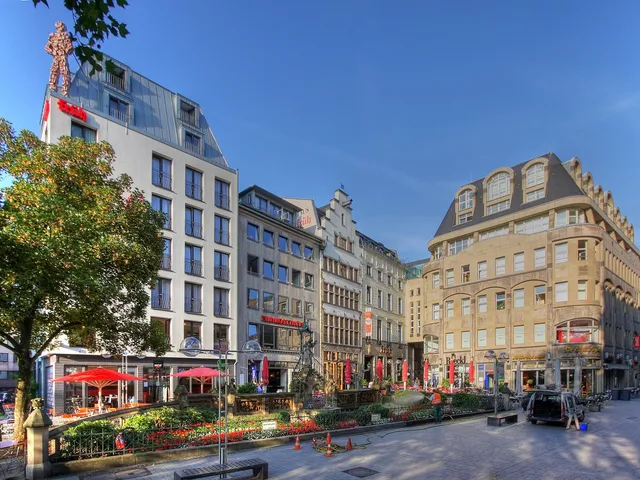
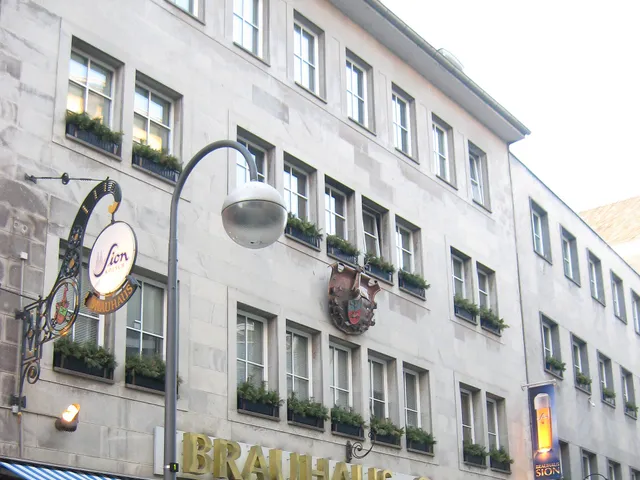
In Cologne's northern old town, just a stone's throw from the Romanesque church of St. Ursula, Brauhaus Schreckenskammer stands in the tradition of one of the city's oldest breweries and to this day has its own style of Kölsch brewed for it.
At a Glance
- Type
- Kölsch brewpub with its own beer brand
- Address
- Ursulagartenstraße 11-15, Cologne (northern old town)
- Operator
- The Wirtz family (since 1933)
- Beer
- Schreckenskammer-Kölsch, 5.0% alcohol
- Roots
- Brewing tradition documented back to the 15th century
- At present site
- since 1960, expanded in 2009
History
Its origins lie in the Goldgasse: according to the house's own chronicle, the building there was first mentioned in a Schreinsbuch (property register) in 1442 and listed as a brewhouse in a tax record in 1487. Over the centuries the name and owners changed several times – the name "Zum Mailaen" is recorded for 1589, and a new building in the 1650s was called "Zum Marienbildchen". Its last guild-certified brewmaster was Christian Firmenich in 1798, shortly before the French revolutionary government dissolved Cologne's guilds.
From Krips to Wirtz
In 1912 Cologne's address book lists the brewer Johann Krips as owner of the Schreckenskammer, and that same year he had a new building erected. In November 1933 he sold the brewhouse to the brewer Ferdinand Wirtz and his son Cornelius – father and grandfather of today's partners Hermann-Josef Maria Wirtz and Georg Wirtz. The business has been in family hands ever since.
A Fresh Start on Ursulagartenstraße
In 1943 Allied bombing destroyed the building at the old site. After the war a municipal bus station was built there; as compensation, Cornelius Wirtz received the plot on Ursulagartenstraße. Only in 1960 could the tavern reopen here – still under the name Schreckenskammer. In 2009 it was expanded and extended into an adjacent building.
Where the Name Comes From
The origin of the name "Schreckenskammer" (roughly "chamber of terror") is unclear. One anecdote holds that exams for a neighbouring railway training school took place in these rooms, which could become a "terror" for the candidates. Another theory suggests that condemned prisoners received their last meal here on the way to the Weckschnapp execution site.
The Beer
The house pours its own Schreckenskammer-Kölsch. Until 2017 it was brewed under contract by the Radeberger Group; since 2018 it has been made by Cologne's Früh brewery – and since then it has also been sold in beverage shops and supermarkets. At 5.0% alcohol it sits slightly above the Kölsch average of around 4.8% and is traditionally bottled in 0.5-litre Euro bottles without added carbonation; since April 2020 a 0.33-litre version has been available as well.
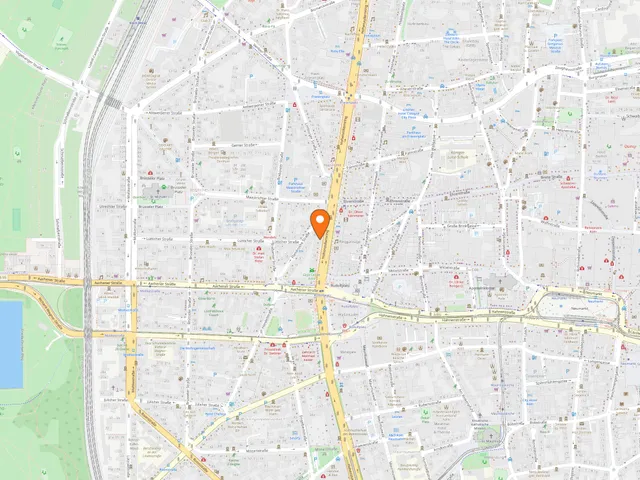
Map
Blue dots: other places nearby — tap to explore.
Address
Ursulagartenstraße 11-15
50668 Köln
Hours
Di: 16:30–23:00
Mi: 16:30–23:00
Do: 16:30–23:00
Fr: 11:00–14:00
Fr: 16:30–00:00
Sa: 11:00–14:00
Sa: 16:30–00:00
Contact
You might also like — related or nearby
Comments
- Loading comments…
Sources & links
- Official website
- Wikipedia (retrieved 2026-07-18, rev 263128102)
- Wikidata (retrieved 2026-07-18)
- Official website (retrieved 2026-07-18)
Auto-generated, last verified: 2026-07-18
How this page is made
This page draws on open sources — Wikipedia, Wikidata, official websites and the city’s open data. Every statement is checked against the sources linked here, and pages are refreshed regularly.
Spotted a mistake anyway? Tell us below — we read every submission.