Kiesgrubensee Gremberghoven
A nature reserve around a former gravel pit lake in Cologne-Humboldt — nesting ground for sand martins, kingfishers, and great crested grebes.
since 1989
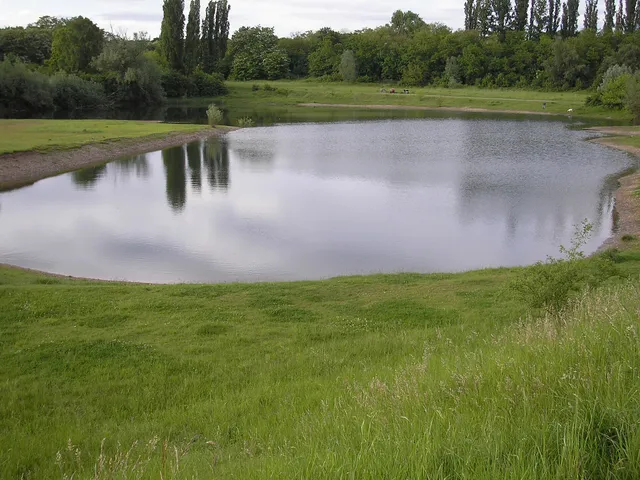
The Kiesgrubensee Gremberghoven is a nature reserve in the Cologne district of Humboldt, formed from a decommissioned gravel extraction lake that now dominates almost the entire site.
At a Glance
- Type
- Nature reserve around a former gravel pit lake
- Area
- 37.65 hectares
- Location
- Humboldt district, Kalk borough
- Designated
- 1989
- Distance
- Approx. 7 km each to Cologne city centre and Bergisch Gladbach
- Transport
- S-Bahn Cologne stop nearby
The vertical cliff edges of the former gravel pit are so steep and structurally rich that they now shelter entire sand martin colonies as well as kingfishers and great crested grebes – an industrial wasteland transformed into a breeding paradise.
Things to do here
- Watch rare birds like kingfishers and great crested grebes
- Marvel at the steep pit slopes and sand martin colonies
- Stroll along the paths around the nature reserve
- Photograph the quiet lake and the undisturbed nature
- Discover the wild plant life from birch to pondweed
Water area comparison
Water area compared with other lakes in Cologne.
Age comparison
Age compared with other places in Cologne.
Origin and Protection
The gravel pit was shut down in the 1980s and designated a nature reserve in 1989. The lake fills nearly the entire former excavation; a small island protrudes from the water in the north. The creation of shallow-water habitats is barely feasible here.
Shores and Embankments
The narrow sandy-gravelly shoreline is largely free of vegetation. Behind it, tall, steep embankments rise with pioneer vegetation of mosses, fungi, and lichens alongside planted shrubs. The eastern slope in particular features numerous slope collapses and open bare-soil surfaces. Several near-vertical embankment tops provide ideal conditions for sand martin colonies; kingfishers and great crested grebes also breed at the lake.
Habitat and Plant Life
The site is classified as an oligotrophic to mesotrophic calcareous water body with stoneworts. Habitat types include extraction lakes and sand and gravel workings. The flora ranges from silver birch, goat willow, and Scots pine to dog rose and privet, as well as aquatic plants such as various pondweeds.
Management and Conservation Goals
Leisure activities, unsympathetic water management, pollution, and fly-tipping are identified as threats. Protective measures include fencing off sensitive areas, restricting fishing and other recreational uses, and litter removal. The site is otherwise left to natural succession, in part to preserve the lake as a resting habitat for migratory waterbirds.
Timeline
- 1980erGravel pit lake Gremberghoven decommissioned
- 1989Designated as nature reserve
Gallery
Map
Blue dots: other places nearby — tap to explore.
You might also like — related or nearby
Comments
- Loading comments…
Sources & links
Auto-generated, last verified: 2026-06-26
How this page is made
This page draws on open sources — Wikipedia, Wikidata, official websites and the city’s open data. Every statement is checked against the sources linked here, and pages are refreshed regularly.
Spotted a mistake anyway? Tell us below — we read every submission.