Escher Seen
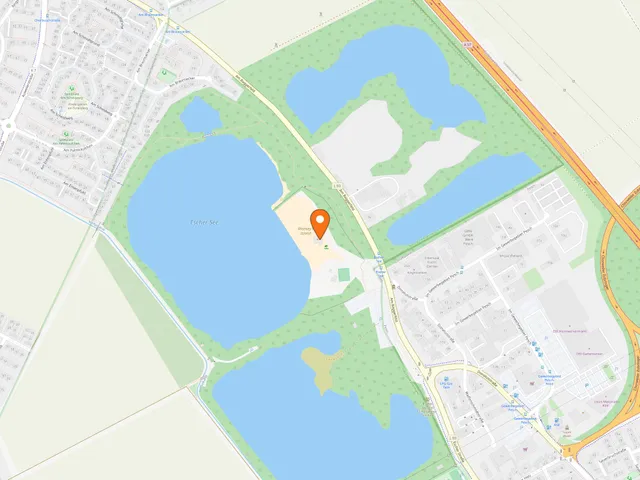
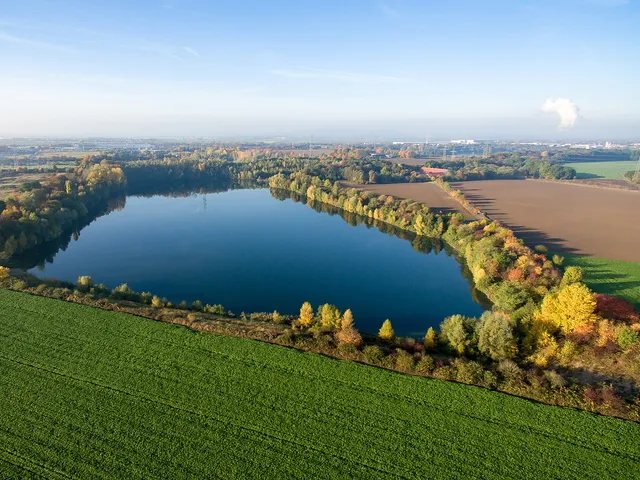
Two gravel-pit lakes in Cologne's northwest — the northern one is a public bathing lake, the southern a fenced-off fishing reserve.
The Escher Seen are two gravel-pit lakes lying close together in the Cologne district of Esch. Created through sand and gravel extraction, they are today used in two very different ways.
At a Glance
- Type
- Two former gravel pits (North and South)
- Location
- Northwest Cologne, between the districts of Pesch and Esch
- District
- Esch (Chorweiler borough)
- Total area
- 28.2 hectares (North 16.2 ha, South 12 ha)
- Depth
- up to 16 m (North) and 18 m (South)
- Origin
- Gravel extraction, 1950s to 1980s
Although the Escher Seen only came into existence between the 1950s and 1980s through gravel extraction, the southern lake reaches a depth of 18 metres – deeper than many natural mountain lakes.
Things to do here
- Swim in the northern lake and bathe at the open-air pool shore
- Sunbathe and relax on the grassy lawn
- Stroll around the two lakes
- Photograph the tranquil lakeside scenery
- Watch the anglers at the southern lake
Water area comparison
Water area compared with other lakes in Cologne.
Created by Gravel Extraction
Neither lake is natural — both are the result of decades of gravel quarrying that left two separate bodies of water behind.
Two Lakes, Two Uses
The northern lake has been open to the public since 1988 as an outdoor bathing lake. The southern lake is fenced off and inaccessible to the general public; it is managed by an angling club. The two lakes thus sit side by side with entirely separate purposes: open swimming in the north, private fishing in the south.
Timeline
- 1950er–1980erCreated through gravel extraction (quarry lakes)
- 1988Northern lake opened as public outdoor swimming area
Map
Blue dots: other places nearby — tap to explore.
Address
Escher See
50765 Köln
You might also like — related or nearby
Comments
- Loading comments…
Sources & links
Auto-generated, last verified: 2026-06-26
How this page is made
This page draws on open sources — Wikipedia, Wikidata, official websites and the city’s open data. Every statement is checked against the sources linked here, and pages are refreshed regularly.
Spotted a mistake anyway? Tell us below — we read every submission.