Volkspark Raderthal
Laid out by Fritz Encke from 1922, this listed park features a natural theatre, reading garden and dance lawn — a landmark of social green space in Cologne's south.
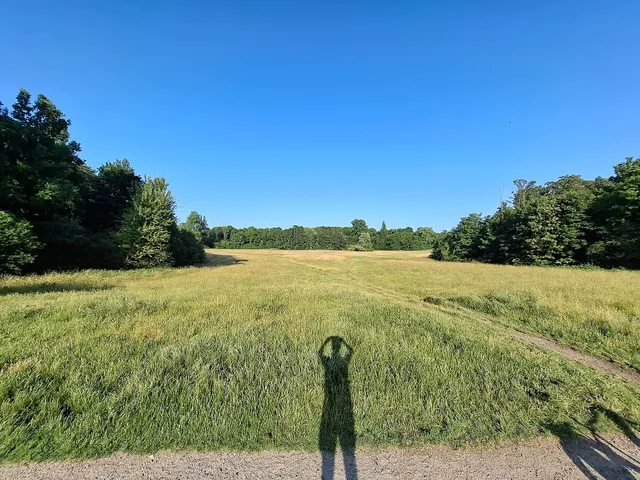
The Volkspark Raderthal — also known as the Fritz-Encke-Volkspark after its creator — lies within the southern green corridor connecting Cologne's inner and outer Greenbelt, and was designed by city garden director Fritz Encke.
At a Glance
- Type
- Public park, listed monument (North Rhine-Westphalia)
- Also known as
- Fritz-Encke-Volkspark
- Location
- Between Brühler Straße and Bonner Straße, bordering Militärring to the south
- District
- Raderthal (Rodenkirchen borough)
- Laid out
- 1922–1926
- Highlights
- Natural theatre, dance lawn (Reigenplatz), and reading garden as active park spaces
Instead of the originally planned café, a radio broadcasting station was built right in the middle of the park in 1927 and operated until 1932 – meaning a radio station was temporarily broadcasting from within a public park.
Things to do here
- Stroll the paths through this historic park
- Picnic on the lawn or relax in the sun
- Discover Fritz Encke's heritage-listed garden design
- Explore the open-air theatre, dance green and reading garden
- Let the kids romp on the playground
- Go for a jog or a walk along the southern green belt
Origins
The park was created on the site of the former peace powder magazine of Cologne's old ring fortress. Its guiding principle was social green space: a park for the broader public, with playgrounds, gathering areas, and a fountain set within a round temple. A planned "community house" at the northern main entrance was never built due to financial constraints. In 1927, the Cologne-Raderthal radio transmitter was erected in place of the originally planned café; it operated until 1932.
Encke's Vision
Encke saw cultural education as a core purpose of a public park and created dedicated spaces to that end: a natural theatre, a dance lawn, and a reading garden. These features remain the Fritz-Encke-Volkspark's most distinctive characteristic and are considered of supra-regional significance.
The Flower Gardens
At the entrance, Encke laid out two flower gardens divided by beds and hedges into twelve smaller specialty gardens, grouped in threes and connected by a central path. Among them were two rock gardens for cushion plants, with paths sunken by half a metre so that seated visitors sat almost at eye level with the stone beds. More than fifty small, hedge-enclosed rest spots provided seating for around three hundred people. The western flower garden has since been largely built over.
The Natural Theatre
The stage was enclosed by walls of trees, with hedge walls serving as backdrops; the rising rows of seats were grassed, and a sunken orchestra pit lay between stage and audience. Until the Second World War, the Raderthaler Volksbühne performed here; from the 1950s, the British used it as an open-air cinema. A garden-city housing estate built in the park's surroundings between 1949 and 1952 for the British occupation forces resulted in significant loss of parkland.
What Has Been Lost
Only part of the original layout survives. Alongside the western flower garden, the two children's playgrounds, the large sand play area, and the paddling pool have all been built over. A new playground now occupies the site of the former public meadow.
Timeline
- 1922/1926Park laid out by Fritz Encke on the site of the former peace powder magazine
- November 1923Fritz Encke draws the site plan of Volkspark Raderthal
- 1926Encke describes the concept of the modern Volkspark in an encyclopaedia article
- 1927Radio transmitter Köln-Raderthal erected in the park instead of the planned café
- 1932Radio transmitter Köln-Raderthal ceases operation
- bis 1939Outdoor theatre used by the Raderthaler Volksbühne until World War II
- 1949–1952Garden city settlement built for British occupation forces in and around the park
- ab 1950erOutdoor theatre used by the British as an open-air cinema
Map
Blue dots: other places nearby — tap to explore.
Address
Volkspark
50968 Köln
You might also like — related or nearby
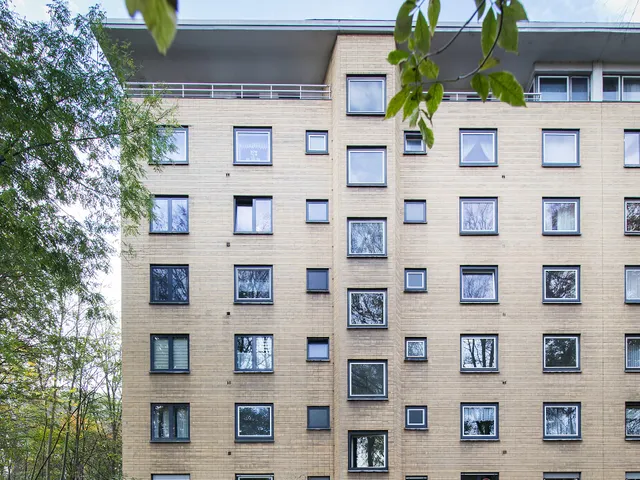
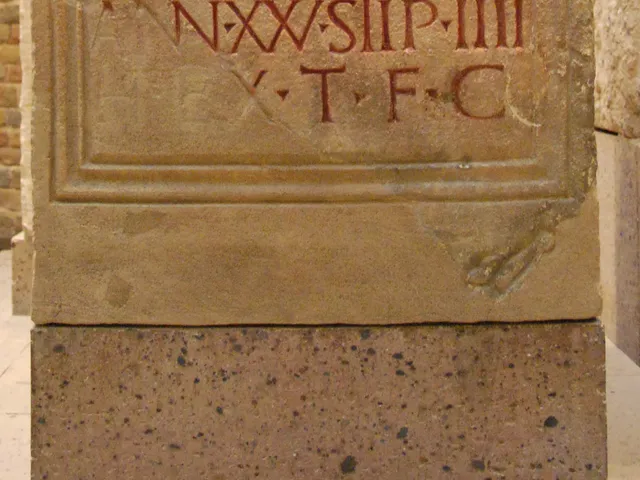
The Alteburg Fleet Fort – Headquarters of the Roman Rhine Fleet in Cologne-Marienburg
The district of Marienburg was once home to the headquarters of the Classis Germanica, Rome's Rhine fleet. Nothing of it survives above ground today – the fort lies entirely beneath the densely built-up Alteburg area.
Comments
- Loading comments…
Sources & links
Auto-generated, last verified: 2026-06-26
How this page is made
This page draws on open sources — Wikipedia, Wikidata, official websites and the city’s open data. Every statement is checked against the sources linked here, and pages are refreshed regularly.
Spotted a mistake anyway? Tell us below — we read every submission.