Galopprennbahn Weidenpesch
Cologne's oldest sports venue: a gallop racecourse open since 1898, hosting internationally significant races and a landmark-listed historic football stand.
Weidenpescher Park is a 55-hectare green space in the north of Cologne that has been home to organised sport for well over a century, centred on a gallop racecourse of international standing and a historic football ground.
Source: Wikipedia
At a Glance
- Type
- Gallop racecourse and sports complex within the 55-hectare Weidenpescher Park
- Location
- Weidenpesch district, Nippes borough
- Opened
- Racing in operation since 3 September 1898
- Operator
- Kölner Renn-Verein 1897 e. V.
- Capacity
- Up to 20,000 spectators; around 140,000 visitors per season
- Listed status
- Racecourse grandstand listed since 1983; football stand since 1989
- Distinction
- Cologne's oldest surviving sports venue
In September 1969, the racetrack hosted a one-off camel race featuring camels flown in from the personal collection of King Hassan II of Morocco, drawing 18,000 spectators to what was officially dubbed the 'Camel Cup' – a promotional stunt for a cigarette brand.
Things to do here
- Stroll across the historic 1898 racecourse and admire the listed grandstand
- Watch the gallop races and the lively atmosphere on a race day
- Take a walk and relax in the vast 55-hectare Weidenpescher Park
- Discover and photograph the venerable 1920 wood-and-steel football grandstand
- Browse the regular flea market on the former football pitch
- Explore the site's history in the footsteps of Cologne's first sports venue
History of the Racecourse
Mayor Wilhelm von Becker proposed bringing gallop racing to Cologne in 1896. The Kölner Renn-Verein was founded on 29 April 1897, groundbreaking followed shortly after, and racing began the next year. The two-storey grandstand was designed by architect and racecourse specialist Otto March and has been a listed building since 1983.
Major Races
The track hosts several internationally significant Group races. The most prominent is the Preis von Europa, Germany's largest international race. Also run here is the Oppenheim-Union-Rennen — Germany's oldest race, dating to 1834 and held in Cologne since 1947 — along with the Gerling-Preis and the Mehl-Mülhens-Rennen.
Stadion Weidenpescher Park
Alongside the racecourse stood one of Germany's largest football stadiums of its era, with 16,000 places. From 1903 to 2002 it was home to VfL Köln 1899, the city's oldest football club; the German championship finals of 1905 and 1910 were played here. The timber-and-steel grandstand, built in 1920, is one of the oldest surviving football stands in Germany. In 2002 it served as a filming location for Sönke Wortmann's film The Miracle of Bern; the former pitch now regularly hosts flea markets.
The Park and Other Facilities
A sports centre was taking shape here even before the First World War; Cologne's first golf course also lay on the grounds. The KTC Weidenpescher Park tennis club, founded in 1920, uses courts on the site, and an indoor tennis hall with three courts opened in December 1990.
German Jockey School
Since March 2003 the site has housed the German Jockey School — the only institution of its kind in Germany — training students in equestrian sport with a focus on race riding.
Worth Knowing
In September 1969 a one-off camel race drew 18,000 spectators to the track. The camels, flown in specially, belonged to King Hassan II of Morocco and competed under the name "Camel Cup" as a promotion for a cigarette brand.
Timeline
- 1896Mayor Wilhelm von Becker proposes horse racing in Cologne
- 1897Foundation of Kölner Renn-Verein 1897 e. V. on 29 April
- 1898Racing operations commenced on 3 September
- 1921Gerling-Preis founded as "Preis von Birlinghoven"
- 1934Gerling-Preis funded and renamed after Robert Gerling
- 1952Stall Asterblüte built on the premises
- 1969One-off camel race (Camel Cup) with 18,000 spectators in September
- 1983Spectator grandstand listed as a protected monument
- 2003Germany's only jockey school (German Jockey School) opened in March
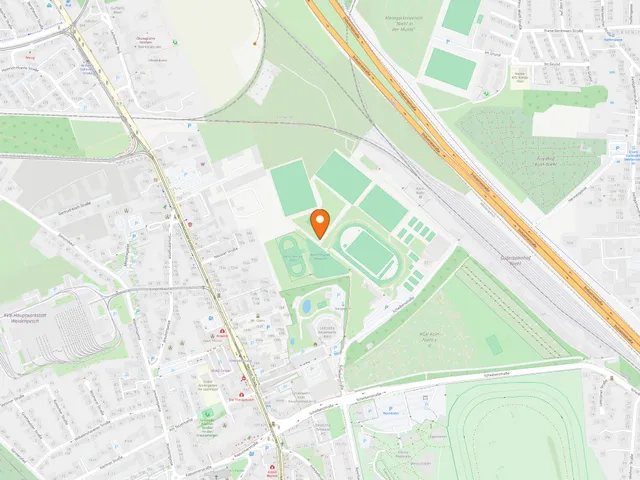
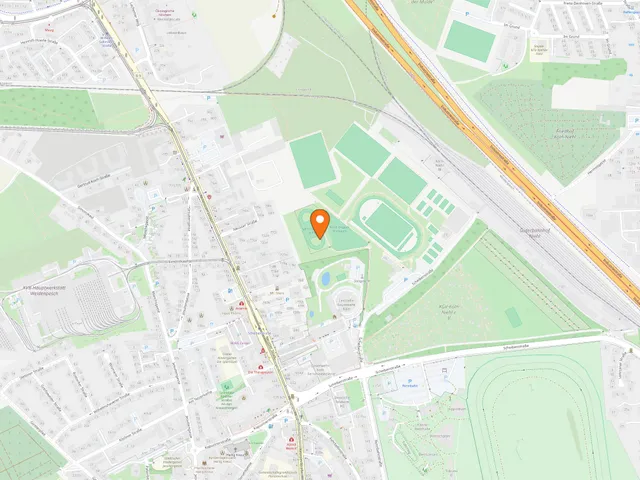
Map
Blue dots: other places nearby — tap to explore.
You might also like — related or nearby
Comments
- Loading comments…
Sources & links
Auto-generated, last verified: 2026-06-26
How this page is made
This page draws on open sources — Wikipedia, Wikidata, official websites and the city’s open data. Every statement is checked against the sources linked here, and pages are refreshed regularly.
Spotted a mistake anyway? Tell us below — we read every submission.