Kiesgruben Meschenich
A species-rich Cologne nature reserve on a former gravel pit on the southern edge of Meschenich, with excavation lakes, reed beds and valuable bare-ground habitats.
since 1991
Kiesgruben Meschenich is a nature reserve on the southern edge of the Cologne district of Meschenich, developed on the site of a former gravel-extraction area. Open water, reed beds and bare gravel flats combine here to form a species-rich mosaic.
Source: Wikipedia
At a Glance
- Location
- On the southern outskirts of Cologne-Meschenich
- Protection status
- Nature reserve since 1991, classified as worthy of protection
- Area
- 26.51 hectares
- Highlight
- Excavation lake with two islands and Red-List aquatic plants
- Significance
- Regionally important for waterfowl, amphibians, lizards and butterflies
- Context
- Part of a network of interconnected gravel-pit habitats in the Cologne area
Area comparison
Area compared with other Cologne parks and green spaces.
Age comparison
Age compared with other places in Cologne.
Location & Character
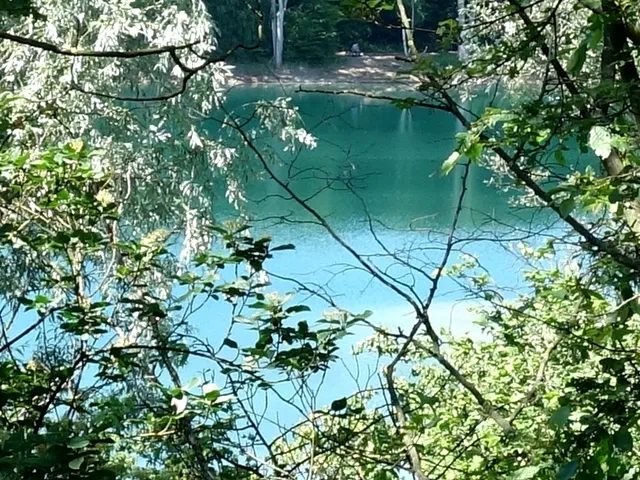
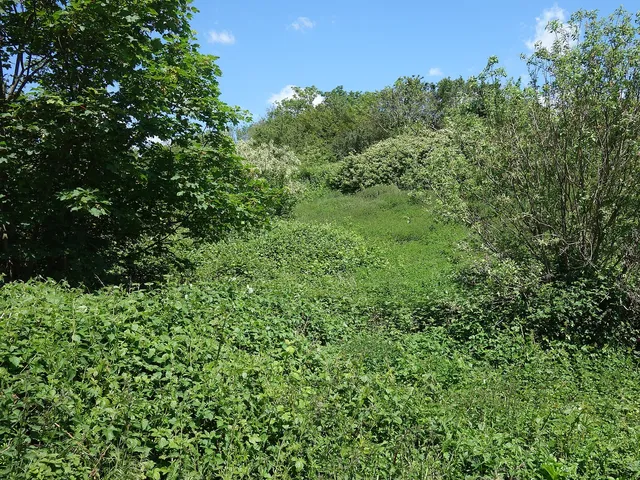
An old road, now almost completely overgrown, runs through the site and divides it into two halves. The eastern part is dominated by a larger excavation lake with two islands; its shore is only loosely fringed with reeds, while a more extensive reed bed borders the lake to the northwest. Along the western bank lies a mound of gravel forming an area of open, bare ground. The western section takes in a smaller pit with stands of common reed and reedmace as well as dry grassland. Planted shrubs and trees, together with self-seeded growth, run through and frame the entire area.
Protection Status & Goals
The site has been designated a nature reserve and classified as worthy of protection since 1991. Management focuses on preserving the open water surface, the reed beds and the sparsely vegetated areas of bare ground. The habitat types deemed worthy of protection include natural nutrient-rich lakes (around 8.95 ha), scrub and groups of trees (about 13.21 ha), and marshes and reed beds.
Wildlife
The gravel pits are of regional importance for waterfowl, amphibians, lizards and butterflies. That the bird life here also attracts attention was underlined in 2018 by a report in the Kölner Stadt-Anzeiger, which addressed concerns over species such as the sedge warbler and the grey partridge.
Plant Life
The documented species list is remarkably extensive. In and around the water grow white water lily, common reed, broadleaf cattail and various pondweeds, among others. The tree stock includes white willow, black alder, pedunculate oak, large-leaved and small-leaved lime, sycamore and field maple, silver birch, black locust, walnut and wild cherry, along with shrubs such as blackthorn, black elder, fly honeysuckle, wayfaring tree and privet. The meadow areas support species such as red clover, yarrow and false oat-grass, together with numerous other herbaceous plants including cranesbill, willowherb, ragwort and various thistles.
Map
Blue dots: other places nearby — tap to explore.
You might also like — related or nearby
Comments
- Loading comments…
Sources & links
Auto-generated, last verified: 2026-08-09
How this page is made
This page draws on open sources — Wikipedia, Wikidata, official websites and the city’s open data. Every statement is checked against the sources linked here, and pages are refreshed regularly.
Spotted a mistake anyway? Tell us below — we read every submission.