Südfriedhof
At more than 61 hectares, Cologne's largest cemetery — a parkland from 1901 holding Commonwealth war graves and tens of thousands of WWII bombing dead.
since 1901
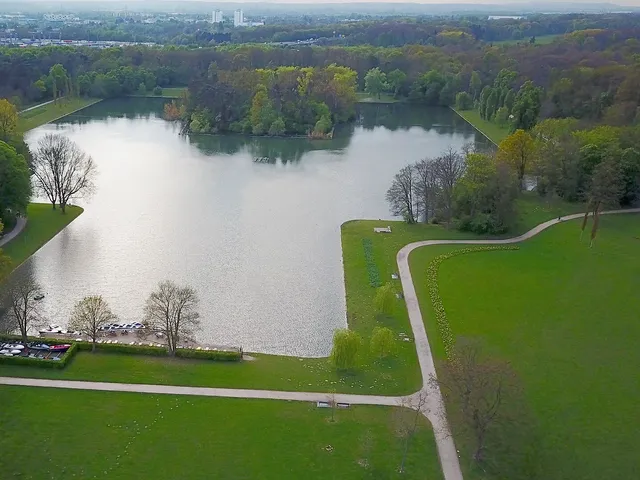
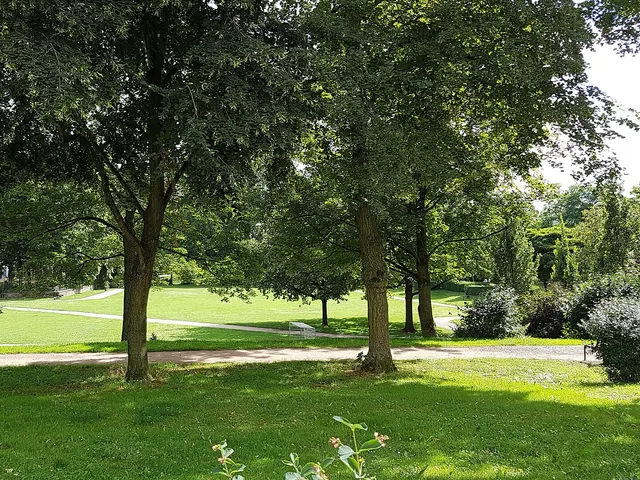
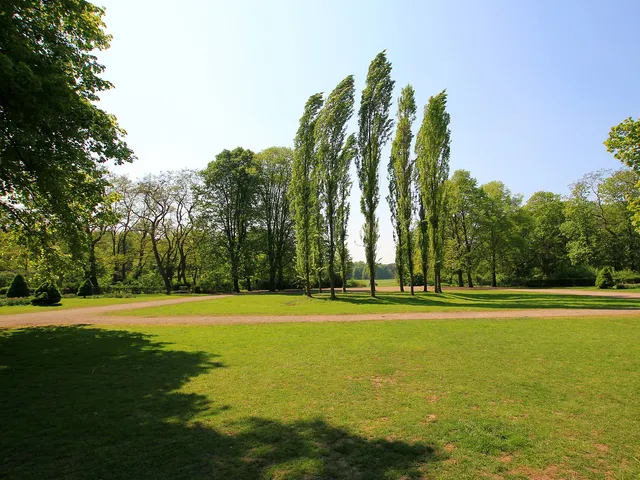
The Südfriedhof (South Cemetery) is Cologne's largest cemetery, laid out as a wooded parkland. Alongside its graves it holds military burials and the remains of roughly 40,000 civilians killed in the wartime bombing of the city.
At a Glance
- Type
- Municipal cemetery in a parkland layout
- Area
- Over 61 hectares — Cologne's largest cemetery
- Opened
- 1901 (planned from 1899)
- Designer
- Landscape architect Adolf Kowallek
- Resting place of
- WWII civilian bombing victims, Commonwealth and Italian prisoners of war
- Notable burials
- Composers, architects, a sculptor, an author and the philosopher Max Scheler
Age comparison
Age compared with other places in Cologne.
History
Planning began in 1899, and the first burials followed two years later. Adolf Kowallek shaped the grounds with dense planting that gave them a woodland character; he died the year after the opening and was interred near the entrance. The cemetery was enlarged several times — in 1915 during the First World War, again in the 1930s, and lastly in 1963.
War Graves
During the First World War, British Commonwealth prisoners who died in captivity in the region were buried here, joined by members of the British occupation garrison who died between 1918 and 1926. From 1922 the site took in Commonwealth reburials gathered from the Hanover, Hessen, Rhineland and Westphalia regions. More than 130 Commonwealth personnel of the Second World War rest here too, mostly from the allied occupation force. In all, the cemetery holds 2,596 Commonwealth and over 1,900 Italian prisoners of war, and the Commonwealth War Graves Commission also tends 676 non-war graves and 30 graves of service members of other nationalities.
The Cologne Memorial
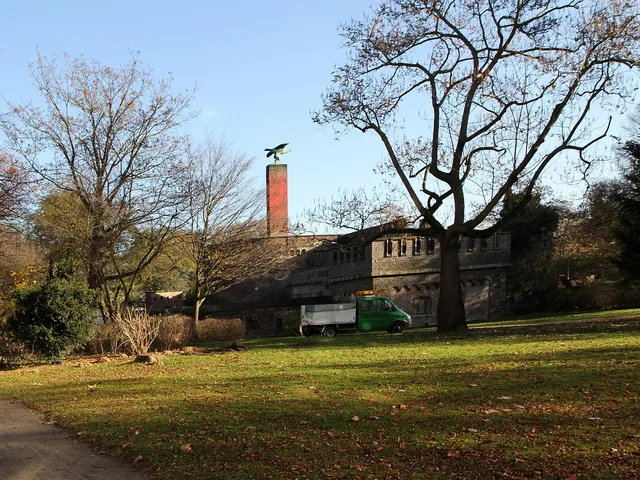
The Cologne Memorial stands in the shelter building at the entrance to the Commonwealth War Graves section. Its four plaques name 25 British personnel who died in Germany but whose graves were not located, or who drowned and were not recovered.
Civilian Victims and Notable Burials
The grounds also hold the remains of around 40,000 civilians who died in the bombing of Cologne during the Second World War. Among those buried here are the composer Karl Berbuer, the philosopher Max Scheler, the boxer Peter Müller, the author Werner Koj, the sculptor Wolfgang Wollner and the architects Dominik Böhm, Otto Bongartz and Adolf Nöcker.
Gallery
Map
Blue dots: other places nearby — tap to explore.
Address
VWXR+QP
50969 Köln
Hours
Mo: 07:00–20:00
Di: 07:00–20:00
Mi: 07:00–20:00
Do: 07:00–20:00
Fr: 07:00–20:00
Sa: 07:00–20:00
So: 07:00–20:00
Contact
You might also like — related or nearby
Comments
- Loading comments…
Sources & links
- Official website
- Official website (retrieved 2026-07-20)
- Wikidata (retrieved 2026-06-30)
- Wikipedia (retrieved 2026-06-30, rev 268175613)
Auto-generated, last verified: 2026-06-30
How this page is made
This page draws on open sources — Wikipedia, Wikidata, official websites and the city’s open data. Every statement is checked against the sources linked here, and pages are refreshed regularly.
Spotted a mistake anyway? Tell us below — we read every submission.