Rheinaue Worringen-Langel
A nature reserve on the Rhine in northern Cologne, with floodplain forest, river meadows and a Glan-cattle grazing scheme, home to 93 bird species.
since 1991
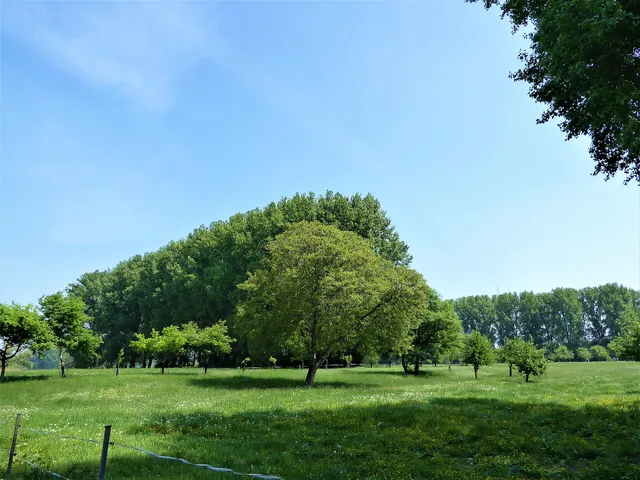
The Rheinaue Worringen-Langel is a sprawling floodplain along Cologne's Rhine bank, where meadows, riparian woodland and quiet watercourses come together to form a richly varied river landscape. The constant shift between flooding and dry spells shapes a habitat that is forever in flux.
At a Glance
- Location
- along the Rhine in the north of Cologne (Worringen/Langel)
- Protected status
- nature reserve since 1991
- Area
- around 240 hectares
- Length
- roughly 3.8 kilometres of riverbank
- Landward boundary
- a flood-protection dike
- Neighbouring area
- adjoins the Rheinaue Langel-Merkenich nature reserve (247.5 ha) to the south-east
- What makes it special
- land management through grazing with Glan cattle
Area comparison
Area compared with other Cologne parks and green spaces.
Age comparison
Age compared with other places in Cologne.
Location & Landscape
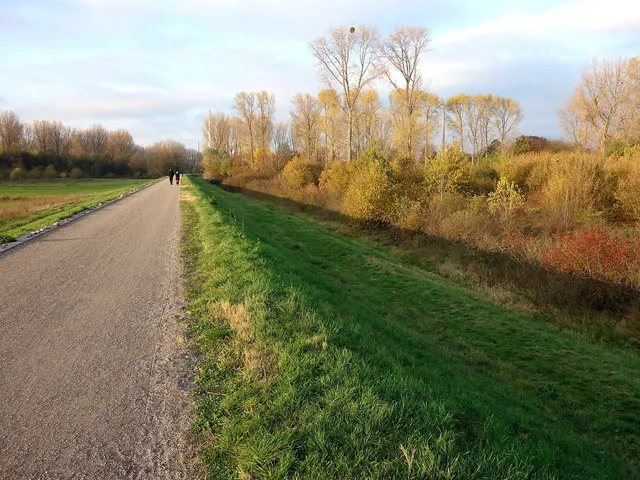
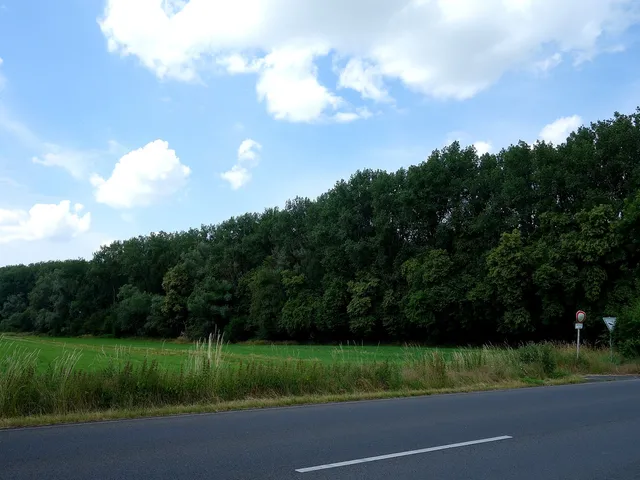
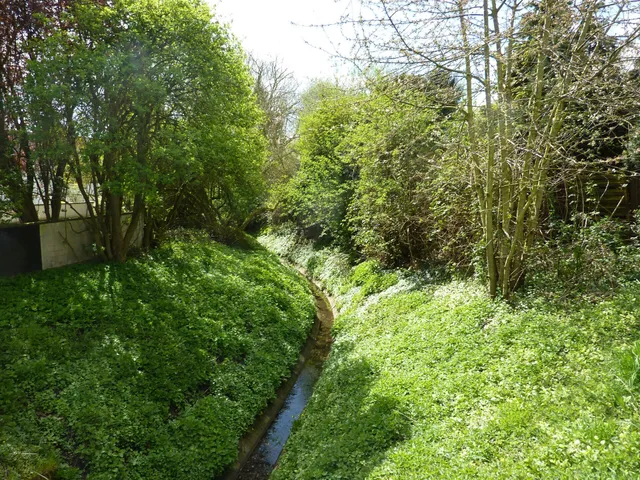
The reserve stretches for almost four kilometres along the Rhine and is bounded on its landward side by a flood-protection dike. It is made up of wooded stretches, extensively used grassland and agricultural land. The wide meadows are threaded with softwood and hardwood floodplain forests, pools and oxbow lakes. In the north, an old arm of the Rhine still shows as a deep channel; in 2010 it was deepened, restored to a more natural state and linked to a string of small still-water bodies fringed with reeds and rushes. Immediately to the south, the neighbouring Rheinaue Langel-Merkenich nature reserve begins.
Life on the River
The interplay of the Rhine defines this place: at times the river floods the floodplain, at others it falls dry. As the water level rises and falls, the river carries nutrients along with sand and gravel in and out again, ceaselessly reshaping the habitat. The bank margins in particular — still close to their natural state in places and bordering meadows and pastures — are of great ecological value. Rhine meadows, reed beds and flood channels create a wealth of structural diversity.
Flora & Fauna
This diversity offers a home to rare and threatened species. 93 bird species have been recorded here — among them little ringed plover, common sandpiper, white wagtail, marsh warbler, little grebe, meadow pipit and lapwing — which breed, rest and overwinter in the floodplain. In and around the water live 50 animal species such as fish, mussels and crayfish, along with rare dragonflies, butterflies and other insects. In addition there are 28 rare and protected plant species, including flowering rush, marsh cranesbill and meadow sage.
Grazing with Glan Cattle
On around 31 hectares along the Rhine bank graze Glan cattle — a hardy old domestic breed often put to work in land management. The fenced-off area is one of the compensatory measures for the construction of the new Leverkusen Rhine bridge. By grazing down the pastures, the animals keep the land from turning to scrub and, in doing so, protect the breeding and nesting sites of rare species. The scheme is intended to safeguard the nature reserve for the long term.
Map
Blue dots: other places nearby — tap to explore.
Hours
So: 00:00–24:00
You might also like — related or nearby
Comments
- Loading comments…
Sources & links
Auto-generated, last verified: 2026-08-09
How this page is made
This page draws on open sources — Wikipedia, Wikidata, official websites and the city’s open data. Every statement is checked against the sources linked here, and pages are refreshed regularly.
Spotted a mistake anyway? Tell us below — we read every submission.